A Moment Frozen in Time: William Tylee Ranney’s “The Fallen Trapper”
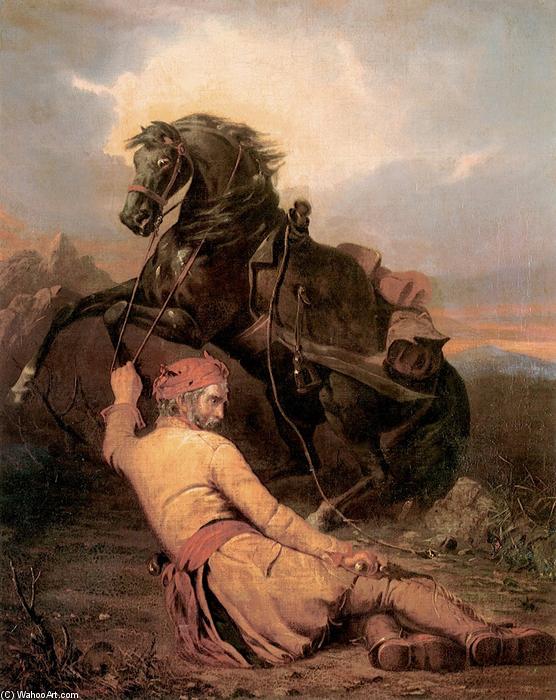
William Tylee Ranney's "The Fallen Trapper," painted in 1852, isn’t merely a depiction of a solitary figure; it’s a poignant encapsulation of the American West at a pivotal moment. The painting immediately draws the eye to a man, weathered and weary, slumped against a horse beneath the imposing shadow of the Rocky Mountains. He's not a heroic adventurer or a triumphant frontiersman, but rather a vulnerable individual, stripped bare by circumstance – a hunter brought low, perhaps by hardship, illness, or simply the relentless indifference of nature. This deliberate lack of grandiosity is central to Ranney’s artistic vision; he eschewed romanticized narratives in favor of honest portrayals of everyday life, reflecting his own experiences and observations during his time in Texas.
The scene unfolds within a carefully constructed landscape, rendered with a remarkable attention to detail. The rugged mountains, painted with a muted palette of browns, grays, and ochres, convey both the grandeur and the unforgiving nature of the territory. Notice how Ranney utilizes atmospheric perspective – distant peaks fade into a hazy blue, creating a sense of depth and vastness that emphasizes the man’s isolation. The horse, a sturdy Appaloosa with distinctive spotted markings, is not merely a mount but an integral part of the scene, its presence grounding the figure in this harsh environment. The subtle variations in texture – the rough bark of the trees, the worn leather of the saddle, the folds of the man’s clothing – speak to Ranney's meticulous technique and his ability to capture the tactile qualities of the world around him.
A Pioneer Painter: Contextualizing Ranney’s Vision
To fully appreciate “The Fallen Trapper,” it’s essential to understand William Tylee Ranney’s unique position in American art history. Born in Middletown, Connecticut, in 1813, he was a self-taught artist who emerged during a period of rapid westward expansion and profound social change. Unlike many artists of his time who trained in European academies, Ranney developed his style through direct experience – his service in the Texas Army following the Battle of the Alamo profoundly shaped his artistic sensibilities. This firsthand encounter with frontier life instilled in him a deep respect for the resilience and resourcefulness of those who carved out a living in the wilderness.
Ranney’s work stands apart from the prevailing romanticized depictions of the West that often glorified conquest and heroism. Instead, he presented a more nuanced and realistic portrayal of frontier life, focusing on the struggles and vulnerabilities of ordinary people. His paintings frequently depicted scenes of hunting, trapping, and exploration, but always with an emphasis on human dignity and quiet contemplation. He was considered one of the first major genre painters to work in New Jersey, and his art reflects a unique blend of Romanticism and Realism.
Symbolism and Emotional Resonance
The painting’s power lies not just in its technical skill but also in its subtle symbolism. The fallen trapper represents more than just a single individual; he embodies the broader themes of hardship, loss, and the precariousness of life on the frontier. His slumped posture and weary expression convey a sense of defeat, yet there's also an underlying dignity – a quiet acceptance of fate. The horse, tethered to the ground, symbolizes both dependence and restraint, suggesting the limitations imposed by circumstance.
Ranney’s masterful use of light and shadow further enhances the emotional impact of the painting. The diffused sunlight filtering through the mountains creates a melancholic atmosphere, reinforcing the sense of isolation and vulnerability. The muted color palette contributes to this mood, evoking a feeling of quiet contemplation and understated sadness. “The Fallen Trapper” is not a triumphant celebration of the West; it’s a poignant meditation on its challenges and its human cost.
Bringing Ranney's Vision Home: Reproductions and Legacy
Today, "The Fallen Trapper" continues to resonate with viewers who appreciate its honest portrayal of frontier life. High-quality reproductions offer an accessible way to experience the painting’s beauty and emotional depth. Whether displayed in a study, living room, or gallery, this artwork serves as a powerful reminder of the sacrifices made by those who shaped the American West. Consider commissioning a custom reproduction from TopImpressionists.com to bring this iconic image into your own space – a tangible connection to a pivotal moment in American art and history.


 Eelvaade
 Osta käsitsi maalitud maal
 Saada
Saada Jaga
Jaga
 Teave teose kohta

 Laadi alla
 Sarnased teosed
 Röntgenuuring
 Slaidietendus


 Loe lähemalt






































 Klaasivalik on saadaval ainult suuruses kuni 110 cm



