Atelier — Tasuta kohaletoimetamine üle maailma — Tarneaeg 2–6 nädalat
      André Derain, 1880 – 1954

      André Derain: The 100 Best-Known Paintings

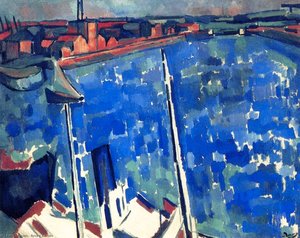
      Of all André Derain's paintings, bathers (1907) is the most famous. Close behind come London Bridge (1906) and Charing Cross from sw (1906). Among the 354 works by André Derain in our catalogue, these 100 are the most celebrated, each shown with its date, its museum and its story.

      Ranked by our popularity score, which combines the searches, visits and orders for each work. Updated oktoober 2026. Each painting on this page can be ordered as an oil reproduction painted by hand on linen canvas, or as a fine art print, made to the size you choose.

      Portrait of André Derain
      André Derain · 1880 – 1954
      Born · died
      1880 – 1954, Chatou
      Movement
      Fauvism
      Works in our catalogue
      354
      Most famous
      bathers (1907)
      Most works at
      Statens Museum For Kunst

      André Derain's 10 most celebrated paintings

      bathers (1907) by André Derain
      1

      bathers

      1907 · Oil On Canvas

      To stand before André Derain's Bathers is to step directly into the exhilarating heart of the early twentieth century art revolution. This painting, executed in 1907, is not merely a depiction of figures by water; it is a pure explosion of color and emotion rendered through the lens of Fauvism. The very air around the canvas seems charged with the energy of bold pigment. Derain, a key figure alongside Henri…

      London Bridge (1906) by André Derain
      2

      London Bridge

      1906 · Oil On Canvas · MoMA - Museum of Modern Art, New York

      In the heart of 1906, a revolution was unfolding on canvas, and André Derain was one of its most daring architects. His masterpiece, London Bridge, is far more than a mere architectural study; it is a visceral explosion of emotion captured through the lens of Fauvism. While the London fog is traditionally associated with muted greys and somber tones, Derain defies the atmospheric reality of the Thames to present a…

      Charing Cross from sw (1906) by André Derain
      3

      Charing Cross from sw

      1906 · Oil On Canvas · National Gallery of Art, Washington

      Charing Cross from SW: A Fauvist Symphony of London André Derain’s “Charing Cross from SW” isn't merely a depiction of a London landmark; it’s an explosion of feeling, a vibrant declaration of the Fauvist movement at its peak. Painted in 1906, this artwork captures a bustling scene along the Thames, dominated by the iconic Charing Cross bridge, yet rendered through a lens entirely unique to Derain's revolutionary approach to color…

      Landscape at L'Estaque (1906) by André Derain
      4

      Landscape at L'Estaque

      1906 · Oil On Canvas

      To stand before André Derain’s Landscape at L'Estaque is not merely to observe a scene; it is to be enveloped by a burst of pure, unadulterated chromatic energy. Painted in 1906, this oil on canvas stands as a vibrant manifesto of the Fauvist movement—a style that dared to liberate color from the shackles of mere description. Here, the natural world of L'Estaque is rendered not with photographic accuracy, but with…

      Hyde Park (1906) by André Derain
      5

      Hyde Park

      1906 · Oil On Panel · Musee d'Art Moderne de Troyes, Troyes

      To gaze upon André Derain's Hyde Park is to step directly into the effervescent heart of early 20th-century Parisian life. This painting, executed in 1906, is far more than a mere depiction of an afternoon stroll; it is a vibrant celebration of modern leisure captured through the revolutionary lens of Fauvism. The scene unfolds with an almost palpable energy—a tapestry woven from bold color and dynamic movement. We see figures…

      Cypresses (1907) by André Derain
      7

      Cypresses

      1907 · Oil On Panel

      To stand before André Derain’s "Cypresses" is to step directly into the vibrant heart of early twentieth-century French modernism. This captivating oil-on-panel, dating from 1907, is far more than a mere depiction of a landscape; it is an explosion of color and emotion captured by an artist at the zenith of his revolutionary period. The scene unfolds with a profound sense of natural grandeur: a field dotted with resilient pine…

      Portrait of Madame Paul Guillaume with a large hat (1928) by André Derain
      8

      Portrait of Madame Paul Guillaume with a large hat

      1928 · Oil On Canvas

      To stand before André Derain’s Portrait of Madame Paul Guillaume with a large hat is to step directly into the vibrant, charged atmosphere of an early twentieth-century artist's studio. This painting is far more than a mere likeness; it is a meditation on creativity itself. The subject, seated amidst the beautiful chaos of artistic tools—canvases leaning against unseen supports, palettes bearing the ghosts of color—commands our attention with a serene…

      Drying the Sails (1905) by André Derain
      9

      Drying the Sails

      1905 · Oil On Canvas · Pushkini riiklik kunstimuuseum, Moskva

      André Derain’s “Drying the Sails,” painted in 1905, isn't merely a depiction of a harbor scene; it’s an explosion of color and emotion—a quintessential embodiment of the Fauvist movement. Born from a confluence of artistic influences and a desire to break free from traditional representation, this painting captures a fleeting moment on the French coast, imbued with a raw energy that continues to resonate with viewers today. Derain, alongside Henri…

      Mountains at Collioure by André Derain
      10

      Mountains at Collioure

      Oil On Canvas

      In the annals of modern art, few moments capture the raw, unbridled energy of a revolution quite like André Derain’s Mountains at Collioure. Painted during the feverish summer of 1905, this masterpiece serves as a vibrant manifesto of the Fauvist movement, a period when color was liberated from the shackles of reality to serve the needs of pure emotion. As one gazes upon this canvas, the eye is immediately swept…

      André Derain paintings ranked 11 to 100

      Harbour of Collioure (1905) by André Derain
      #13

      Harbour of Collioure

      1905 · Staatsgalerie Stuttgart

      In this oil on canvas, André Derain presents Harbour of Collioure, a work from 1905. The painting captures a Mediterranean port, focusing on the specific light and atmosphere…

      Have it painted by hand →
      Black Scarf (1935) by André Derain
      #14

      Black Scarf

      1935

      To stand before André Derain's "Black Scarf" is to step directly into the effervescent, color-drenched heart of early 20th-century Paris. Painted in 1935, this oil on canvas transcends…

      Order this canvas →
      Landscape (Blue) (1906) by André Derain
      #16

      Landscape (Blue)

      1906

      To stand before André Derain’s Landscape (Blue) is to step directly into the exhilarating heart of early twentieth-century modernism. This painting, executed in 1906, is not merely a…

      Have it painted by hand →
      Landscape near Chatou (1904) by André Derain
      #17

      Landscape near Chatou

      1904

      In the annals of early twentieth-century modernism, few moments capture the raw, unbridled energy of artistic revolution quite like André Derain’s Landscape near Chatou. Painted in 1904, this…

      Have it painted by hand →
      Landscape at Collioure (1905) by André Derain
      #18

      Landscape at Collioure

      1905

      To stand before André Derain’s Landscape at Collioure is to witness the moment when the traditional boundaries of nature were dissolved by a sudden, brilliant explosion of light…

      Bring this light home →
      The Dance (1906) by André Derain
      #19

      The Dance

      1906

      In the annals of modern art, few moments capture the raw, unbridled spirit of rebellion quite like the emergence of Fauvism, and few works embody this revolution as…

      Have it painted by hand →
      Still Life with Fruit (1940) by André Derain
      #20

      Still Life with Fruit

      1940 · Harris Museum - Art Gallery

      André Derain’s Still Life with Fruit – A Fauvist Vision of Rural Tranquility The painting “Still Life with Fruit,” executed by André Derain in 1940, stands as a…

      Have it painted by hand →
      Cassis by André Derain
      #21

      Cassis

      The artwork titled Cassis, also known as Landscape at Cassis, is an oil on canvas painting. This work was executed by the French artist André Derain in 1907.…

      Bring this light home →
      Music (1904) by André Derain
      #23

      Music

      1904

      The early 20th century was a transformative period for modern art, with the emergence of various movements that challenged traditional techniques and aesthetics. One such movement was Fauvism,…

      Order this canvas →
      Head of a Young Woman (1923) by André Derain
      #25

      Head of a Young Woman

      1923 · Statens Museum For Kunst

      A soulful portrait emerges from a palette of ochre, sienna, and cream. The subject is positioned in a close-up, centered composition that forces an intimate encounter between the…

      Bring this light home →
      Sorrowful Landscape (1946) by André Derain
      #26

      Sorrowful Landscape

      1946

      The Sorrowful Landscape by André Derain is a masterpiece that embodies the essence of Expressionism, a style characterized by its emphasis on conveying intense emotions and inner experiences.…

      Order this canvas →
      Landscape at Cadaques (1913) by André Derain
      #27

      Landscape at Cadaques

      1913

      Landscape at Cadaques is a landscape oil on canvas created by André Derain in 1913. This work belongs to the Cubism and Post-Impressionism movements, reflecting a period of…

      Bring this light home →
      Collioure (1905) by André Derain
      #28

      Collioure

      1905

      The sun hangs heavy over the Mediterranean as we find ourselves in 1905, witnessing the lively scene of Collioure. This oil on canvas by André Derain captures a…

      Bring this light home →
      Martigues (1908) by André Derain
      #30

      Martigues

      1908

      The painting Martigues by André Derain is a quintessential example of the Fauvist art movement. Created in 1908, this oil on canvas work embodies the essence of Fauvism,…

      Bring this light home →
      Harlequin (1923) by André Derain
      #31

      Harlequin

      1923 · Statens Museum For Kunst

      This 1923 oil painting on canvas presents a solitary figure dressed as a Harlequin, captured in a moment of quiet introspection. The subject is seated and holds a…

      Have it painted by hand →
      Boy's Head (1914) by André Derain
      #33

      Boy's Head

      1914 · Statens Museum For Kunst

      In Boy's Head by André Derain, the composition centers on a close-up study of a single human figure. The subject's face is positioned slightly turned to the left,…

      Bring this light home →
      The beautiful model (1923) by André Derain
      #37

      The beautiful model

      1923

      The painting The Beautiful Model by André Derain is a stunning example of Fauvism, a style characterized by vivid colors and emotive brushstrokes. Created in 1923, this oil…

      Order this canvas →
      Fishing Boats, Colioure (1905) by André Derain
      #38

      Fishing Boats, Colioure

      1905 · Metropolitan Museum of Art

      Introduction to the Painting Fishing Boats, Colioure, painted in 1905 by André Derain, is a quintessential example of the Fauvist art movement. This vibrant oil on canvas painting…

      Order this canvas →
      Boats at Colliure by André Derain
      #41

      Boats at Colliure

      André Derain, a French artist and co-founder of the Fauvist movement, created a captivating piece titled Boats at Colliure. This painting is a quintessential representation of the Fauvist…

      Bring this light home →
      The Lighthouse at Collioure (1905) by André Derain
      #42

      The Lighthouse at Collioure

      1905 · Musée d’Art Moderne de la Ville de Paris

      André Derain’s “The Lighthouse at Collioure,” painted in 1905, isn't merely a depiction of a coastal scene; it’s an immersive experience—a vibrant explosion of color and movement that…

      Bring this light home →
      Nude with Folded Arms (1924) by André Derain
      #43

      Nude with Folded Arms

      1924 · Statens Museum For Kunst

      The oil on canvas work titled Nude with Folded Arms was executed by the artist André Derain. This specific painting dates to 1924. It is currently held within…

      Have it painted by hand →
      Golden age (1940) by André Derain
      #44

      Golden age

      1940

      In the sweeping expanse of André Derain’s "Golden Age," viewers are transported into a primordial realm where the boundaries between humanity and nature dissolve into a dramatic, cinematic…

      Bring this light home →
      Fishing Boats, Collioure (1905) by André Derain
      #56

      Fishing Boats, Collioure

      1905 · MoMA - Museum of Modern Art

      Introduction to the Painting Fishing Boats, Collioure, painted in 1905 by André Derain, is a quintessential example of Fauvism, an art movement characterized by bold and vivid colors.…

      Have it painted by hand →
      Landscape (1907) by André Derain
      #57

      Landscape

      1907

      In this mesmerizing 1907 masterpiece, titled Landscape, André Derain invites the viewer into a world where reality is reimagined through the fractured lens of early modernism. The canvas…

      Have it painted by hand →
      Still Life with Pipe (1911) by André Derain
      #58

      Still Life with Pipe

      1911 · Statens Museum For Kunst

      In the 1911 work Still Life with Pipe by André Derain, the composition is centered on a wooden table or ledge. The arrangement consists of a tall reddish-brown…

      Bring this light home →
      Pinewood near Sausset-les-Pins (1913) by André Derain
      #59

      Pinewood near Sausset-les-Pins

      1913 · Statens Museum For Kunst

      The landscape unfolds through a series of leaning, organic forms that define a grove of pine trees. Thick, sweeping brushstrokes trace the bark of the trunks, creating a…

      Order this canvas →
      Le Phare de Collioure by André Derain
      #60

      Le Phare de Collioure

      In the annals of modern art history, few movements captured the raw, unbridled energy of light and emotion quite like Fauvism. At the heart of this revolution stands…

      Order this canvas →
      The Last Supper (1911) by André Derain
      #61

      The Last Supper

      1911 · Art Institute of Chicago

      A Moment of Sacred Tension The air in the room feels heavy, thick with the weight of a final meal. In this 1911 oil on canvas, the scene…

      Order this canvas →
      The road (1932) by André Derain
      #65

      The road

      1932

      To gaze upon André Derain’s The Road is to step into a moment suspended in the golden haze of memory. This oil on canvas, dating from 1932, captures…

      Bring this light home →
      Bacchus dance (1906) by André Derain
      #66

      Bacchus dance

      1906

      Bacchus Dance: A Fauvist Celebration of Movement The early 20th century witnessed a seismic shift in art, marked by movements that boldly challenged established norms. Among these was…

      Have it painted by hand →
      L'Estaque (1906) by André Derain
      #72

      L'Estaque

      1906

      The painting L'Estaque by André Derain is a quintessential example of Fauvism, a style characterized by the use of bold, vibrant colors and energetic brushstrokes. Created in 1906,…

      Bring this light home →
      Boats at Collioure (1905) by André Derain
      #73

      Boats at Collioure

      1905

      Gazing upon André Derain's "Boats at Collioure," one is immediately transported to the sun-drenched shores of the French Riviera. This painting captures more than just a seascape; it…

      Order this canvas →
      Harlequin ja Pierrot (1924) by André Derain
      #75

      Harlequin ja Pierrot

      1924 · Musée de l'Orangerie

      Harlequin and Pierrot – André Derain: A Fauvist Dance of Emotion André Derain’s “Harlequin and Pierrot” isn't merely a depiction of two figures; it’s an embodiment of the…

      Bring this light home →
      Portrait of Alice Derain (1921) by André Derain
      #78

      Portrait of Alice Derain

      1921

      To gaze upon André Derain’s Portrait of Alice Derain is to step through a painted portal into a moment suspended in time—a quiet afternoon imbued with the warmth…

      Order this canvas →

      André Derain's canvases, period by period

      What André Derain painted most

      The four subjects that return most often on these canvases, each with its best-loved example.

      Where André Derain's canvases hang

      The 8 museums that hold the most of the paintings on this page.

      Museum City Works by André Derain Paintings from this list
      Statens Museum For Kunst, KooberemaaStatens Museum For Kunst Kooberemaa 17 Head of a Young Woman, Harlequin, Sitting Female Model, Semi-Nude
      Metropolitan Museum of Art, New YorkMetropolitan Museum of Art New York 4 Houses of Parliament at Night, London, Fishing Boats, Colioure, Lucien Gilbert
      Musée d’Art Moderne de la Ville de Paris, PariisMusée d’Art Moderne de la Ville de Paris Pariis 7 The Lighthouse at Collioure, The Gypsy
      MoMA - Museum of Modern Art, New YorkMoMA - Museum of Modern Art New York 4 London Bridge, Fishing Boats, Collioure
      Art Institute of Chicago, ChicagoArt Institute of Chicago Chicago 3 The Last Supper, Cagnes
      National Gallery of Art, WashingtonNational Gallery of Art Washington 2 Charing Cross from sw
      Musee d'Art Moderne de Troyes, TroyesMusee d'Art Moderne de Troyes Troyes 2 Hyde Park
      Pushkini riiklik kunstimuuseum, MoskvaPushkini riiklik kunstimuuseum Moskva 2 Drying the Sails

      Decade by decade: André Derain's most celebrated canvas

      1. 1890s
      2. 1900s
        bathers (1907) by André Derain
        Canvas 1 of 100

        bathers

        Age 20 – 29

        To stand before André Derain's Bathers is to step directly into the exhilarating heart of the early twentieth century art revolution. This painting, executed in 1907, is not…

      3. 1910s
        Landscape at Cadaques (1913) by André Derain
        Ranked 27 of 100

        Landscape at Cadaques

        Age 30 – 39

        Landscape at Cadaques is a landscape oil on canvas created by André Derain in 1913. This work belongs to the Cubism and Post-Impressionism movements, reflecting a period of…

      4. 1920s
        Portrait of Madame Paul Guillaume with a large hat (1928) by André Derain
        Ranked 8 of 100

        Portrait of Madame Paul Guillaume with a large hat

        Age 40 – 49

        To stand before André Derain’s Portrait of Madame Paul Guillaume with a large hat is to step directly into the vibrant, charged atmosphere of an early twentieth-century artist's…

      5. 1930s
        Black Scarf (1935) by André Derain
        14 of 100

        Black Scarf

        Age 50 – 59

        To stand before André Derain's "Black Scarf" is to step directly into the effervescent, color-drenched heart of early 20th-century Paris. Painted in 1935, this oil on canvas transcends…

      6. 1940s
        Still Life with Fruit (1940) by André Derain
        Canvas 20 of 100

        Still Life with Fruit

        Age 60 – 69 · Harris Museum - Art Gallery

        André Derain’s Still Life with Fruit – A Fauvist Vision of Rural Tranquility The painting “Still Life with Fruit,” executed by André Derain in 1940, stands as a…

      Your questions on André Derain's paintings, answered

      Which is the most celebrated painting by André Derain?Read the answer

      bathers (1907), followed by London Bridge (1906) and Charing Cross from sw (1906).

      How old was André Derain at the time of bathers?Read the answer

      André Derain, born in 1880, was 27 years old: bathers dates from 1907.

      Which ten paintings is André Derain most famous for?Read the answer

      bathers, London Bridge, Charing Cross from sw, Landscape at L'Estaque, Hyde Park, The Turning Road, L'Estaque - (129.5x195), Cypresses, Portrait of Madame Paul Guillaume with a large hat, Drying the Sails and Mountains at Collioure. Each canvas in the ranking above comes with its year and its museum.

      How many paintings by André Derain are known?Read the answer

      354 works by André Derain are in our catalogue, dated 1899 to 1946.

      Which museums hold André Derain's best-known canvases?Read the answer

      Mostly in Statens Museum For Kunst (Kooberemaa), Metropolitan Museum of Art (New York) and Musée d’Art Moderne de la Ville de Paris (Pariis); the list above names each museum and its canvases.

      In which years did André Derain paint the most celebrated canvases?Read the answer

      In 1900s, which gave 45 of the 100 works on this page, bathers among them.

      What are the first and the last of André Derain's famous canvases?Read the answer

      The earliest canvas here is Funeral (1899); the latest is Sorrowful Landscape (1946).

      Which subjects return most often in André Derain's paintings?Read the answer

      Landscape (18), Trees (12) and Boats (10), across the 100 works on this page.

      What did André Derain usually paint with?Read the answer

      Oil On Canvas, used in 49 of the 100 works on this page.

      To which art movement does André Derain belong?Read the answer

      Fauvism, as the canvases on this page show.

      What can I see by André Derain at the Statens Museum For Kunst?Read the answer

      The Statens Museum For Kunst, Kooberemaa holds 10 of the works on this page, among them Head of a Young Woman, Harlequin and Sitting Female Model, Semi-Nude.

      Can I order a hand-painted copy of a painting by André Derain?Read the answer

      Yes. Every painting on this page can be ordered from its own page as an oil reproduction painted by hand, or as a fine art print, in the size you choose.

      André Derain: the painter's story

      Varajane elu, pere ja õppimine

      Aastal 1880 jõudis maailma Chatou, Prantsuse Yvelinesi piirkonnas asuv küla, kus sündis André Derain. Tema varajased aastad said vormuda Île-de-France'i vaiklavates maastikudes, kus ümbrivillast tulenev loomulik uudishimik hakkas temameedis juurduma. Kuni 1995. aastani oli ta juba alustanud iseseisvat õppimist, püüdes maailma visuaalsust mõista oma silmadega, mitte läbi ametliku õpetuse. See enesearenduse periood võimaldas tal arendada oma isikupärast vaatamisviisi veel enne, kui akadeemiline rangus oleks tema tahtele oma vormi sundinud.

      Maalari tee ei olnud tema ainuke kaalukohas. 1988. aastal otsis ta struktureeritumat haridust, õppides lühiajal inseneriks Académie Camillos. Just needes akadeemilistes saalides tegi tema elu otsustava pöörde; ta osales Eugène Carrière'i juhendamisel toimuvatel maaliõppetundidel ja kohtus seal Henri Matisse'iga. See kohtumine muutus tema elu kulku, tõstes ta ingliseid täpsest insinööritööst vastu lamedat, ekspressiivset lõuendit. Tema ambitsioonid olid tugevad, kuid kodanikulised kohustused katkestasid tema progressi. Septembrist 1901 kuni 1904. aastani täitis ta oma teenistuse Commercys, olles eraldatud oma kunstilise arenguga, mis peatus ajutiselt tema kasvava karjääri kohal.

      Fauvistlik revolutsioon ja Collioure

      1905. aasta suve päikesekõrgus tõi ootamatut ja valguskastet muutust André Derain ja Henri Matisse elule. Nad rändasid koos kalastajatepõlve Collioure'i, kohta, kus kohalik valgus näis nõudvat täiesti uut vaatamise viisi. See rannikumaastik sundis kunstnikku lahkuma traditsioonilistest esitlusreeglitest ja uuesti avastama maailma värvitoonide kaudu. Tema 1905.–1906. aastatel loodud tööd olid määratletud rahutul ja lühikesel kompromissitud värvilisusega, mis šokeeris neid, kes olid harjunud pehmematele ja vaarampõlvedele. Kasutades lihtsustatud jooni ja ekstreemset värvide kasutamist, püüdis ta tabama maastiku olemust, eelistades intensiivseid, segamatuid toone maailma loomulikele, pehmetele toonidele.

      See radikaalne lähenemine maali kunstile tekitas tugeva reaktsiooni nii avalikkuse kui ka pressi poolt. Kunstnikud kohtusid sellise üllatusega, et nad said oma uue nime all tuntuks Les Fauves ehk metsikud loomad. Kuigi see nimi oli algastavalt mõeldud nende väetabelis oleva kontrollivõimet üle naljakas pealmine, võtsid kunstnikud selle endale üle. André Derain'i linate sel aastal ei püüdnud ta imitaatiliselt koopia teha loodusest nagu fotograaf, vaid kasutas värvi kui otsest emotsiooni väljendust. Julge børdsitamine ja hämmastavad värvipaletid tähistasid täielikku murdu kõigest senise kunstihangetest.

      Londoni maalid ja tellimused

      Märtsis 1906 nägi kunstikaupmees Ambroise Vollard kunstnikus uut suunda ja saatis ta Londoni. See ei olnud pelgalt ekskursioon, vaid sihtotstarbeline tellimus tabada linna olemust, mis oli olnud paljude maalijate teema juba pikke aega. André Derain jõudis Inglise pealinna ning hakkas nägema linnamaastikku intensiivse värvi prisma kaudu, liikudes eemale Prantsuse maapiirkonna vaiksusest. Ta püüdis metropoliside energiat tõlkida midagi sellist, mida ei pelgalt nähta, vaid sügavalt tunda.

      See periood andis kunstnikule kolmkümmend uut maali, pöörates tähelepanu Thamesi jõele ja linna massiivsele arhitektuurile. Ta ei püüdnud reprodutseerida jõega sageli seostatud halli udukaudust; selle asemel kasutas ta julgeid toone vee liikumise ja sildade siluettide kirjeldamiseks. Tema visioon linnast oli radikaalne kõrvalekaldumine neist atmosfääristunud uuringutest, mida olid teinud tema e predecessorid. Ta keskendus mälestusmärkidest koosnevale struktuursele kaalule ja linnakeskkonna rütmile ning muutuvale valgusele.

      Need teosed jäid tema populaarsemate loomingute hulka, kuna need pakkusid värske vaatepunkti juba hädaväljaks muutunud tuntud keskkondadele. Keskendudes Thamesile ja Tower Bridge'ile, tabas ta moderniseeritud tunnet ja rahutut liikumist. Paksu värvikihituse ja ebatraditsioonilise värvigavanduse abil suutis ta portretteerida linna kui elava, hingava entiteetina, mis koosnes valgusest ja varjust.

      Evoluutioon klassilismi ja gootika stiili suunas

      Aja möödudes hakkasid tema noorekonu metsikud impulssid rahunema. Umbes 1907. aastal tekkis tema käes ja silmas märandav muutus ning tema kunstiline väljund muutis asjaolusemaks ja rangemaks. Varem tema linatele omast kontrollimatust värvilisusest sai trimmud disiplinatlikum lähenemine. See üleminek ei olnud äkiline murre, vaid järk-järguline liikumine struktuuri ja vormi suunas. Ta otsis uut tüüpi tõet, mis ei tulnud värvi šokist, vaid kompositsiooni vaiksel jõust.

      Aastatel 1911 kuni 1914 astus ta faasi, mida paljud on nimetanud tema gootika perioodiks. Sel ajal muutus tema huvi Vana Maali kunstnike ja klassikaliste vormide vastu veelgi silmapaistavamaks. Ta lahutas oma varasemate aastate valjustest ja segimata pigmente, otsides selle asemel kontrollitud ja intellektuaalselt ranget vaatamise viisi. See oli otsingu periood, mil ta pöörduis tagasi kunsti alustele, et leida uusi teid edasiliikumiseks.

      Suur sõda muutis tema elu ja kunsti maastiku veel kord. Konflikti järel astus ta välja uue liikumise, tuntud kui "Tagasipöördu minek korda", juhtina. See uus klassikalisus püüdis leida stabiilsust ja selgust sügavate muutuste ajastul. Ta sai osaks sellest taassünnist, aidates suunata kunsti poole struktureeridama ja traditsioonilisema esteetika. Tema tööd peegeldasid seda järjekindlust ja korras oleva olemist, mis oli puudunud tema eksperimentaalsetel aastatel.

      Huvilahud ja viimased aastad

      Aja möödudes laenas kunstniku huvi kaugele puuvillastega lõendatud lõendist, sagedades ulatuma ka teatri maailma. 1919. aastal suunas ta oma loovvaate lavale, pannes kokku balleti La Boutique Fantasque Ballets Russes'i trupile. See uurinemismatk seltskonnas, kus mängiti lavakujunduse ja kostüümide maailmas, paljastas tema töös uue rütmi ja suurepärase visuaalse spektakli, mis täiendas orgaaniselt tema arenevat esteetikat. Tema võime püüda tähelepanu vormide ja värvide abil jäi jätkuvalt tema kollegade seas tunnustatud, mis viis lõpuks 1928. aastal Carnegie auhju võitmiseni.

      Tema elu viimased kümned olid iseloomustatud pideva uurinemise ja uue klassicismi otsinguga, mis kujendas täielikku nurgapööret tema noorekonnu metsikatele impulssidele. André Derain jäi aktiivseks kunstimaailma keskses, isegi kui Euroopa poliitiline maastik tema ümber pidevalt muutis. Lõpuks jägi ta maailmast 8. septembril 1954, jättes jätkud eeskuju ja kunstilise pärandi, mis oli läbinud nii palju erinevaid väljendusviise kui ka kunstiline evolutsioon.

      Pärand ja mõju

      Fauvismist liikumuse kaja, mille tõttu André Derain koos Henri Matisse’iga uusi horisonte avas, ulatus kaugele tema algaste värvivalguse šokist. Murdes traditsioonilised sidemed sellele, kuidas värv peegeldab füüsilist maailma, avas ta teele struktuursed innovatsioonid kubismis ja emotsionaalse intensiivsuse kaasaegses ekspressionismis. Tema pidev ulanek on uue visuaalse keele järele tähendas, et Collioure päikeseküllastes maastikudes õpitud õppetunnid rändasid lõpuks põhja poole, mõjutades saksa ekspressionismi arengut. Ta ei lihtsalt maalib; ta aitas ümberdefineerida hääliku ja pintsl strokes olemuse.

      Tema mõju jäi püsivaks kaasasotsijaks järgnevaid kunstnikke, kes püüdisid leida tasakaal tema varajaste aastate råbeda energia ja hilisemate teoste struktureeritud disipliini vahel. Isegi kui tema oma stiil liikus suunas austere ja klassikalise lähenemise poole, jätkus tema noorekonnu radikaalne vaim edasi kõlumis. Ta tõi esile, et kunstnik võib liiguda oma noorekonnu metsikute, segimata toonide ja kontrollitud, intellektuaalse ranguse vahel, ilma et kaotaks oma loomingulist tõde. See kohanemismõõdukus tagas tema vankumatu koha moderniseeritud kunsti ajaloos, isegi kui liikumised, mille sünni ta oli kaasapõletus, arenesid täiesti uutesse vormidesse.

      • Charing Cross Bridge, London
      • Harlequin and Pierrot
      • The Last Supper of Jesus

      All 354 works by André Derain →