

 Esikatselu
 Jaa teos
 Jaa
Jaa
 Tiedot
 Opas
Opas

 Lataa kuva
 Samanlaisia kohteita
 Röntgenkuvaus
 Diaesitys
 Kysymykset ja vastaukset
 Tilastot
Pavilion

- 23.0 x 16.0 cm


Abanindranath Tagore's 'Pavilion' is a stunning pencil sketch capturing a majestic building with iconic domes, reflecting Mughal and Rajput influences & Swadeshi values. A masterpiece of Indian art.
 Lue lisää
Tutustu Abanindranath Tagoreen (1871–1951), modernin intialaisen taiteen uranuurtajaan ja Bengal Schoolin perustajaan! Tutki hänen Mughal-, Rajput- ja orientalistisia maalauksiaan, jotka heijastavat Swadeshi-arvoja ja lyriikkaa.
Giclée- ja taideprintit
Museolaatuisia giclée- tai kankaitaulun tulosteita nopealla tuotannolla ja joustavilla viimeistelyvaihtoehdoilla. ( Osta käsinmaalattu taideteos Siirry digitaaliseen kuvaan)




P118B €10

P118H €10

P118W €10

P438Z €10

P508JH €12

P508YH €12

P805H €10

P805Z €10

P919BZ €10

P919G €10

P919XJ €10

P959ZH €10

P968JZ €12

W106C €8

W218G €10

W218JH €8

W218Y €10

W307PJ €10

W316G €10

W316PJ €8

W316Y €10

W398PJ €8

W4111J €10

W500HY €15

W500JH €15

W692G €12

W849H €8

W940BG €15

W953PJ €8




Vakiokoko
räätälöity
CM
INCH
Valitse valmiista mitoistamme sellaiset, jotka vastaavat teoksen alkuperäisiä mittasuhteita.
Loading sizes...

leveys
korkeus
Syötä tarvitsemasi leveys ja korkeus, jotta tuloste sopii kehyksiisi tai seinällesi. Tulostetta voidaan vain leikata, sitä ei voida koskaan suurentaa alkuperäistä kuvaa suuremmaksi, joten eri muotoinen koko aiheuttaa osan kuvasta katoamisen. Lähetämme sinulle digitaalisen mallikuvan hyväksyttäväksi ennen kuin aloitamme tulostuksen. Tällä sivulla näkyvä kuva ei näytä lopullista rajausta — vain mallikuva näyttää sen.
Maailmanlaajuinen toimitus () 2 viikossa tavallisen 4–5 viikon sijaan. (9 marraskuu)

Ilmainen pikatoimitus ympäri maailman

Korkealaatuinen pellavakangas

Kattava kuljetusvakuutus

Tulliveron palautustakuu

Takuu täydellisestä värien vastaavuudesta

100 päivän palautusoikeus (vain valmistusvirheet)

100% rahat takaisin -takuu

Määräalennus tarjolla
 Lasivaihtoehto on saatavilla vain alle 110 cm kokoisille teoksille

Pavilion
Giclée- ja taideprintit
Replikaatin koko
-


Kokonaishinta
€ 62
Abanindranath Tagore’s “Pavilion”: A Bridge Between East and West
The artwork presented here, Abanindranath Tagore's "Pavilion," isn’t merely a depiction of a building; it’s a carefully constructed visual poem, a pivotal moment in the history of Indian art. Painted in 1907, during a period of intense nationalistic fervor and artistic experimentation, this work represents Tagore’s audacious attempt to synthesize traditional Indian aesthetics with Western influences – a strategy that fundamentally reshaped the landscape of modern Indian painting. It's a piece brimming with symbolism, inviting viewers to contemplate themes of spirituality, identity, and the evolving relationship between tradition and modernity.
Tagore, deeply influenced by the Japanese aesthetic—particularly its emphasis on calligraphy and flattened perspective—and inspired by the Mughal and Rajput miniature traditions, sought to create an art form that resonated with Indian sensibilities. He deliberately rejected the academic realism prevalent in Western art schools, which he viewed as cold and devoid of spiritual depth. Instead, he drew upon the rich visual vocabulary of ancient India – its vibrant colors, stylized forms, and symbolic imagery—and infused it with a distinctly modern sensibility. “Pavilion” exemplifies this approach perfectly; it’s not a photographic representation but rather an evocative interpretation, prioritizing mood and feeling over strict adherence to reality.
A Symphony of Color and Symbolism
The painting immediately captivates the eye with its rich palette—a deliberate departure from the muted tones favored by Western artists. Deep blues and greens dominate the composition, evoking a sense of tranquility and spirituality, while bursts of crimson, gold, and saffron inject vibrancy and energy. These colors aren’t simply decorative; they carry profound symbolic weight. Blue represents the heavens and spiritual realms, red signifies passion and life force, and gold embodies divinity and enlightenment. The use of these hues is deeply rooted in Hindu iconography and reflects Tagore's desire to reconnect with India’s ancient spiritual heritage.
The pavilion itself—a structure reminiscent of Mughal palaces but imbued with a distinctly Indian character—is rendered with a flattened perspective, echoing the style of Japanese woodblock prints. The arched doorway, framed by intricate floral motifs and stylized clouds, serves as a focal point, drawing the viewer’s eye into the heart of the composition. Notice the deliberate simplification of forms – a hallmark of both Mughal and Japanese art—which contributes to the painting's serene and contemplative atmosphere. The figures depicted within the pavilion are not realistically rendered but rather presented as stylized silhouettes, further emphasizing the work’s symbolic nature.
Historical Context and Artistic Significance
“Pavilion” was created during a crucial period in Indian history—the early 20th century—a time marked by growing nationalist sentiment and a desire to reclaim India's cultural identity after centuries of colonial rule. Tagore’s art played a significant role in this movement, providing a visual language for expressing Indian values and traditions. He founded the Bengal School of Art, which championed a distinctly Indian style of painting that drew inspiration from both ancient and contemporary sources. This school challenged the dominance of Western artistic styles and paved the way for a new generation of Indian artists.
Tagore’s work wasn't without its critics. Some accused him of diluting traditional Indian art by incorporating Western elements, while others praised his innovative approach to blending Eastern and Western aesthetics. However, “Pavilion” remains a testament to Tagore’s artistic vision—a bold and ambitious attempt to create an art form that was both deeply rooted in India's cultural heritage and open to new influences. It stands as a pivotal work in the development of modern Indian painting, demonstrating the power of art to shape national identity and express complex ideas.
A Timeless Masterpiece for Your Space
Reproduced on high-quality canvas or paper, Abanindranath Tagore’s “Pavilion” offers a captivating glimpse into India's rich artistic heritage. Its serene composition, vibrant colors, and evocative symbolism make it an ideal addition to any home or office space. Whether you are drawn to its spiritual depth, its historical significance, or simply its aesthetic beauty, this artwork is sure to inspire contemplation and add a touch of timeless elegance to your surroundings. Consider commissioning a hand-painted reproduction from TopImpressionists.com for a truly authentic experience.
Kysymykset ja vastaukset
Mitä väripalettia teoksessa Abanindranath Tagore:n "Pavilion" käytetään?
Teoksen "Pavilion" värit muodostavat Neutrals-väripaletin. Tämä luokitus kuvaa hallitsevia väriperheitä.
Mihin käyttöön Abanindranath Tagore:n "Pavilion" -teoksen reproduktio soveltuu?
Abanindranath Tagore:n "Pavilion"-teoksen reproduktio on suositeltava Statement. Tämä suositus perustuu teoksen aiheeseen, tunnelmaan ja väreihin.
Miten "Pavilion" asettuu osaksi Abanindranath Tagore'n muuta tuotantoa?
"Pavilion" jakaa Abanindranath Tagore'n muiden teosten kanssa Bengal School of Art-tyylin sekä toistuvat teemat: mughal, rajput, indian traditions, swadeshi values, nationalist art, colonial calcutta, urban life, tagore’s artistic synthesis”.
Taiteilijan elämäkerta
Varhaiset vuodet ja tausta
- Syntynyt: 7. toukokuuta 1861, Joransanko, Calcutta, Brittiläinen Intia
- Kuollut: 5. joulukuuta 1951
- Suku: Kuuluisaan Tagore-sukuun kuuluva taiteilija; Rabindranath Tagoren veljenpoika. Hänen isoisänsä oli Girindranath Tagore ja isänsä Gunendranath Tagore.
- Koulutus: Opiskeli Sanskrit Collegeissa, Kolkatassa 1880-luvulla ja myöhemmin Calcutta School of Art -taidekoulussa.
Taiteellinen kehitys ja vaikutteet
- Varhaiset opinnot: Opetteli pastellitekniikkaa O. Ghilardilta ja öljymaalausta Charles Palmerilta Calcutta School of Artissa.
- Moguli- ja Rajput-tyylit: Pyrki modernisoimaan näitä perinteisiä tyylejä hyläten samalla länsimaiset taidemallit.
- Swadeshi-arvot: Sisälsi Swadeshi-ideologian taiteeseensa edistäen intialaisia perinteitä.
- Whistlerin estetiikka: Sai vaikutteita Whistlerin esteettisistä periaatteista.
- Japanilaiset vaikutteet: Yhdisti myöhemmin tyyliinsä kiinalaisia ja japanilaisia kalligrafisia perinteitä tavattuaan taiteilijat Tikan ja Hesida.
Merkittävät teokset ja taiteelliset panokset
- Rohini II: Huomionarvoinen teos, joka osoittaa hänen taiteellisen taitonsa.
- Passing of Shajahan: Toinen merkittävä maalaus, joka heijastaa hänen ainutlaatuista tyyliään.
- Season Flower in a Vase: Osoittaa hänen mestaruutensa tekniikassa ja aihevalinnassa.
- Arabian Nights -sarja (1930): Pidetään yhtenä hänen hienoimmista saavutuksistaan; hän käytti Tuhat ja yksi yö -tarinoita tutkiessaan siirtomaa-ajan Calcuttaa.
- Bharat Mata: Merkittävä maalaus, joka symboloi Äiti Intiaa.
- Bengal School of Artin perustaja: Pelasi keskeistä roolia modernin intialaisen maalaustaiteen muovaamisessa ja nationalistisen taiteen edistämisessä.
- Indian Society of Oriental Art (1907): Perusti tämän seuran edistääkseen perinteisiä intialaisia taidemuotoja.
Perintö ja historiallinen merkitys
- Modernin intialaisen maalaustaiteen uranuurtaja: Tunnetaan keskeisenä hahmona modernin intialaisen taiteen kehityksessä.
- Vaikutus seuraaviin taiteilijoihin: Toimi mentorina merkittäville taiteilijoille, kuten Nandalal Bose, Asit Halder, Kshitindranath Majumdar ja Jamini Roy.
- Perinteisten taidemuotojen elvyttäminen: Atoa perinteisiin intialaisiin tekniikoihin ja tyyleihin.
- Vaikutus bengaliin lastenkirjallisuuteen: Kirjoitti vaikutusvaltaisia lastenkirjoja, kuten Rajkahini, Budo Angla, Nalak ja Khirer Putul.
- Kansalliset taideteokset: Hänen teoksiaan pidetään kansallisina taideteoksina.

Abanindranath Tagore
1871 - 1951 , Intia
Pähkinänkuoressa
- Artistic Movement Or Style: Bengal School of Art
- Artists Or Movements Influenced By This Artist:
- Nandalal Bose
- Kshitindranath Majumdar
- Jamini Roy
- Artists Who Influenced This Artist:
- Whistler
- Mogulitaiteilijat
- Rajput-taiteilijat
- Date Of Birth: 7. toukokuuta 1871
- Date Of Death: 5. joulukuuta 1951
- Full Name: Abanindranath Tagore
- Nationality: Intialainen
- Notable Artworks:
- Rohini II
- Passing of Shajahan
- Season Flower in a Vase
- Place Of Birth: Jorasanko, Intia
Aiheeseen liittyvät artikkelit

Raja Ravi Varma: Bridging Tradition & Modernity in 19th-Century Indian Art
Explore the life & art of Raja Ravi Varma, a pioneer who fused European techniques with Indian iconography. Discover his iconic paintings, lasting legacy, and influence on modern Indian art at TopImpressionists.

Shadow Catcher: Edward S. Curtis & the Ethnographic Portraiture of a Vanishing West
Explore the life & work of Edward S. Curtis, the 'Shadow Catcher,' and his groundbreaking photographic documentation of Native American cultures. Discover iconic images from *The North American Indian* and a critical look at his lasting legacy.
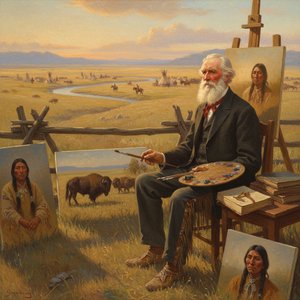
Joseph Henry Sharp: Capturing the Spirit of the Plains – Life, Art & Legacy
Explore the life & art of Joseph Henry Sharp, a founding member of the Taos Society of Artists renowned for his realistic depictions of Native American culture and Western landscapes. Discover his legacy with TopImpressionists.

Thomas Daniell: Navigating Light, Landscape & Cultural Exchange in Early 19th-Century India
Explore the captivating landscapes of Thomas Daniell, a pioneering artist who documented India's beauty in the 19th century. Discover his 'Oriental Scenery,' aquatint technique & lasting legacy. Hand-painted reproductions available at TopImpressionists.

Marianne Northin 25 mestariteosta: Taidetta ja luontoa kotiisi – TopImpressionists.com
Tutustu Marianne Northin 25 upeimpaan maalaukseen! Viktoriaanisen ajan kasvitaiteen mestariteoksia, jotka kertovat tarinoita luonnosta ja itsenäisestä taiteilijasta. Löydä inspiraatiota kotiisi TopImpressionists.comista – korkealaatuiset taidetulosteet ja sisustusehdotukset.
Tutustu teoksiin, jotka on järjestetty aiheiden, tyylien ja ominaisuuksien mukaan.
