
 Esikatselu
 Jaa teos
 Jaa
Jaa
 Tiedot
 Opas
Opas

 Lataa kuva
 Samanlaisia kohteita
 Röntgenkuvaus
 Diaesitys
 Kysymykset ja vastaukset
 Tilastot
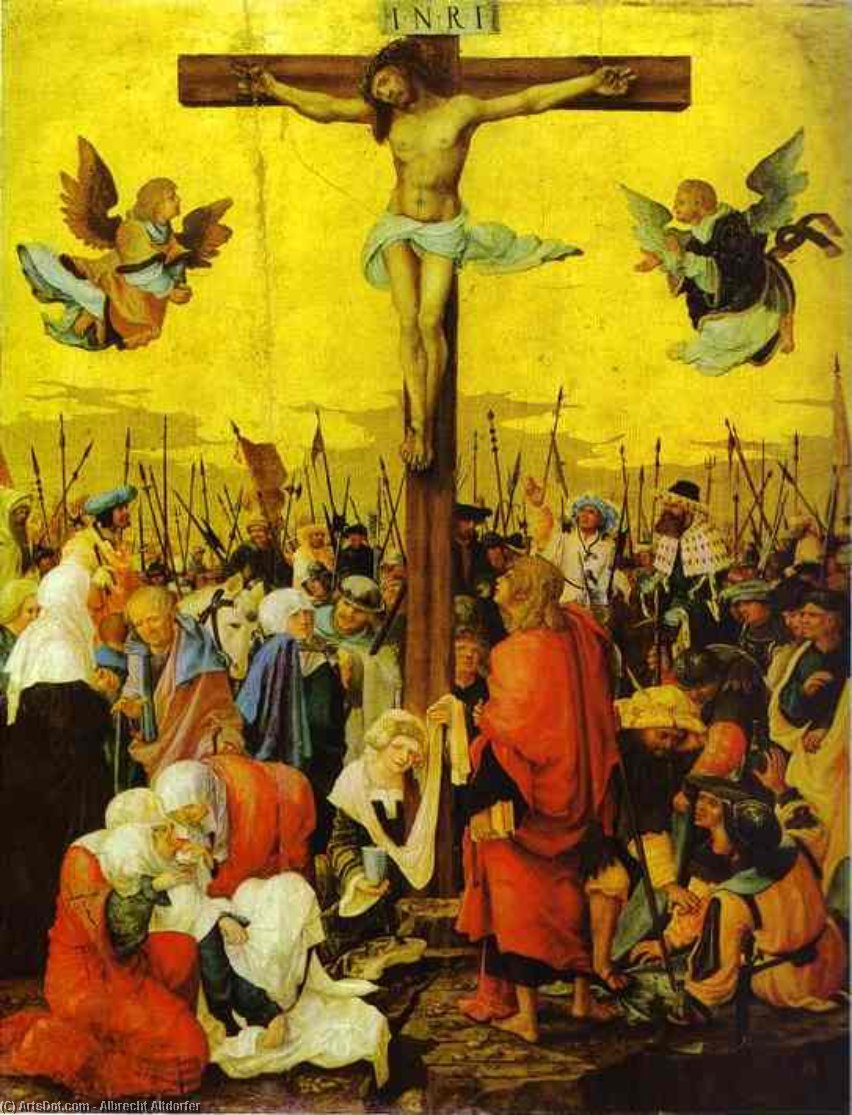
Crucifixion

- 29.0 x 21.0 cm


Albrecht Altdorfer's "Crucifixion" (1526) is a dramatic, evocative depiction of Christ’s suffering, showcasing the artist's pioneering landscape style and masterful use of color within the Northern Renaissance.
 Lue lisää
Albrecht Altdorfer (1480-1538) oli merkittävä saksalainen taidemaalari, tunnettu erityisesti uudenlaisesta maisemamaalaustyylistään ja Danubion koulun edustajana. Tutustu hänen teoksiinsa!
Saat tulostusvalmiin tiedoston, jonka laatu ylittää verkkonäkymän huomattavasti. Jokainen myymämme digitaalinen kuva on peräisin arkistomme korkearesoluutioisesta mestariteoksesta — yleensä 5 000–15 000 pikselin levyisenä — joten voit tulostaa suuria kokoja, rajata tiukasti tai toistaa hienovaraiset yksityiskohdat luottavaisin mielin.
Mikään tiedosto ei lähde studiostamme muuttamatta. Digitaalinen asiantuntija vertaa värejä alkuperäiseen maalaukseen ja korjaa niitä tarvittaessa, minkä jälkeen hän parantaa kuvan selkeyttä ja yksityiskohtia ammattimaisilla retusointityökaluilla — säilyttäen aina uskollisena taiteilijan siveltimenjäljen ja tyylin. Lopputuloksena on kuva, joka näyttää maalaukselta, eikä suodatetulta skannaukselta.
Hyväksyt työn ennen valmistumistaan: asiantuntijamme lähettää kuvan tarkistettavaksi sähköpostitse 72 tunnin kuluessa. Etkö ole tyytyväinen? Pyydä parannuksia tai korjauksia, tai pyydä hyvitystä, mikäli laatu ei vastaa odotuksia.
Tämä on laatua, johon kustantamot, design-studiot, galleriat ja painotalot luottavat.
Digitaalinen kuva
Lataa korkearesoluutioinen tiedosto henkilökohtaiseen näyttelyyn, tulostamiseen ja luoviin projekteihin. ( Vaihda tulosteeseen Osta käsinmaalattu taideteos)
Sisältyy jokaiseen digitaalisen kuvan tilaukseen
Asiantunteva digitaalinen toimitus, laatu taattu
Kun valitset TopImpressionists.com-palvelun, et saa vain kuvaa – saat ammattimaisesti viimeistellyn digitaalisen taideteoksen, joka on luotu tarkkuudella ja jonka takaa tulee tyytyväisyystakuu. Tässä on kaikki, mitä tilauksesi sisältää, automaattisesti:

Nopea sähköpostitoimitus
Saat korkearesoluutioisen digitaalisen kuvatiedostosi sähköpostiisi 72 tunnin kuluessa tilauksesta – valmiina käytettäväksi välittömästi.

Tekoälyllä parannettu digitaalinen tiedosto
Teoksesi on optimoitu ammattimaisesti edistyneiden tekoälytyökalujen ja manuaalisen jälkikäsittelyn avulla, mikä takaa maksimaalisen yksityiskohtaisuuden, selkeyden ja väritarkkuuden.

Ilmainen uudelleenlähetys elinikäisesti
Oletko vahingossa poistanut tai kadottanut tiedostosi? Ei hätää – lähetämme sen sinulle uudelleen milloin tahansa täysin maksutta.

Ei tuontimaksuja – koskaan
Nauti taiteestasi välittömästi ilman tullimaksuja, veroja tai toimituskuluja – digitaaliset lataukset ovat aina verovapaita.

Värintoiston tarkkuustakuu
Varmistamme, että digitaalinen kuvasi vastaa alkuperäisiä värejä mahdollisimman tarkasti käyttämällä ammattilaistason työkaluja ja värinhallintaa.

100 päivän tyytyväisyystakuu
Jos et ole tyytyväinen digitaaliseen kuvaasi, muokkaamme sitä tai palautamme 100% hinnan 100 päivän kuluessa – kysymystä ei esitetä.

100% Rahat takaisin -takuu
Et ole tyytyväinen? Saat täyden hyvityksen 100 päivän kuluessa digitaalisen tiedostosi vastaanottamisesta – kysymystä ei esitetä.

Määräalennukset
Osta 3 kuvaa, säästä 10% - Osta 5, säästä 15% - Osta 10+, säästä 20%. Erinomainen valinta luoviin projekteihin, gallerioille ja toimistoille.
The Weight of Sorrow: Albrecht Altdorfer’s “Crucifixion”
Albrecht Altdorfer's "Crucifixion," painted in 1526, isn’t merely a depiction of a pivotal religious event; it’s a visceral experience. Emerging from the burgeoning German Renaissance, Altdorfer wasn’t simply replicating biblical narratives; he was forging a new visual language, one deeply rooted in the natural world yet imbued with profound spiritual intensity. This particular rendition transcends simple illustration, becoming a landscape saturated with grief and a haunting meditation on sacrifice. The painting immediately commands attention not through grand scale – it's remarkably intimate, measuring just 29 x 21 cm – but through its masterful manipulation of light, color, and composition to evoke an overwhelming sense of sorrow.
The scene unfolds against a dramatically rendered landscape—a brooding, almost primeval forest. The trees, rendered in thick, layered brushstrokes of deep greens, browns, and purples, seem to writhe with the weight of the event. This isn’t a picturesque vista; it's a wilderness imbued with an unsettling energy. Altdorfer deliberately eschews traditional depictions of serene backgrounds, instead presenting a landscape actively participating in the drama. The distant mountains, shrouded in mist and shadow, amplify the feeling of isolation and despair. Notice how the artist uses atmospheric perspective – lighter hues for objects further away – to create a sense of depth and distance, drawing the viewer’s eye into the heart of the scene.
A Pioneer of Landscape
Albrecht Altdorfer stands as a pivotal figure in art history, largely credited with establishing landscape painting as an independent artistic subject within Europe. Prior to his work, landscapes were typically relegated to mere backgrounds for religious or mythological scenes. However, Altdorfer recognized the power of the natural world to convey emotion and meaning. His meticulous observation of nature—evident in the detailed rendering of foliage, rocks, and atmospheric conditions—transformed the landscape from a passive backdrop into an active participant in the narrative. This shift was revolutionary, paving the way for later generations of landscape artists like Albert Bierstadt and Frederic Church.
His background as a town architect and council member further informs his artistic approach. Altdorfer possessed a keen eye for spatial relationships and a deep understanding of how to create a sense of harmony and balance within a composition. This skill is brilliantly demonstrated in “Crucifixion,” where the human figure—Jesus—is carefully positioned within the landscape, creating a dynamic interplay between the earthly realm and the divine.
Symbolism and Emotional Resonance
Beyond its technical brilliance, "Crucifixion" resonates deeply with viewers through its potent symbolism. The stark simplicity of Jesus’s pose – arms outstretched, head bowed – is profoundly moving. Altdorfer avoids any overtly dramatic or theatrical elements, opting instead for a quiet, understated portrayal of suffering. The figures surrounding the cross—angels and soldiers—are rendered in muted tones, emphasizing the central tragedy. Even the light itself seems to weep, casting long shadows across the landscape.
The choice of a dark, foreboding forest as the setting is particularly significant. Forests have historically been associated with death, mourning, and the unknown. In this context, it serves as a powerful metaphor for the spiritual darkness surrounding Jesus’s sacrifice. The painting isn't simply depicting an event; it’s exploring the profound emotional consequences of that event—the grief, despair, and sense of loss experienced by those who witnessed it.
A Timeless Masterpiece
“Crucifixion” is more than just a religious painting; it’s a testament to Altdorfer's artistic genius and his ability to capture the essence of human emotion. The meticulous detail, masterful use of color and light, and profound symbolism combine to create an unforgettable image that continues to resonate with viewers centuries after its creation. Reproductions, like this one, offer a remarkable opportunity to experience the power and beauty of this iconic work, bringing its haunting message into our own spaces.
Kysymykset ja vastaukset
Minkä tyyppinen teos Albrecht Altdorfer:n "Crucifixion" on?
"Crucifixion" on WallArt-teos.
Miten "Crucifixion" asettuu osaksi Albrecht Altdorfer'n muuta tuotantoa?
"Crucifixion" jakaa Albrecht Altdorfer'n muiden teosten kanssa German Renaissance Landscape-tyylin sekä toistuvat teemat: danube school landscape influence, medieval religious symbolism strong, early renaissance artistic trends, german cultural identity depicted, altdorfer's innovative landscape role.
Onko teos "Crucifixion" säilytyksessä tekijänsä kotimaassa?
Ei - teos sijaitsee ulkomailla. Albrecht Altdorfer on syntynyt maassa Saksa, ja teoksen "Crucifixion" alkuperäiskappaleen säilyttävä museo sijaitsee maassa Germany.
Taiteilijan esittely
Albrecht Altdorfer: Pohjoisen Renaissanceen Uusi Henki
Albrecht Altdorfer, syntynyt noin 1480 Regensburgissa Saksassa, on merkittävä hahmo, joka yhdistää myöhäiskeskiajan ja varhaisen saksan renessanssin. Hän ei ollut pelkästään aikansa taiteilija; hän muutti aktiivisesti taiteellista suuntaviivaa, erityisesti maisemamaalauksen saralla. Altdorferin perhe oli syvällä taiteellisessa perinteessä – hänen isänsä, Ulrich Altdorfer, oli maalari ja miniaturisti. Nuori Altdorfer erottui heti esiin ei vain seurajana, vaan innovaattorina. Regensburg, vapaavaltio strategisesti sijaiten Donaujoen varrella, tarjosi eläväisen kulttuuritaustan hänen varhaiselle kehitykselleen. Tämä paikka muokkasi voimakkaasti hänen taiteellisia aistejaan, luoden yhteyden luontoon, joka myöhemmin tuli hänen teoksensa keskeiseksi elementiksi. Taiteen lisäksi Altdorfer oli myös kaupungin arkkitehti ja neuvoston jäsen – todiste hänen monipuolisista lahjoistaan. Kuitenkin taiteen kautta – erityisesti varhaiset kaiverrukset ja piirustukset noin 1506, kuten *Stygmata of St. Francis* ja *St. Jerome* – hän paljasti ainutlaatuisen taiteellisen äänensä, vihjaillen samalla kypsään yksityiskohtaisuuteen ja tunteelliseen intensiteettiin, jotka olivat tyypillisiä hänen täsmällisemmille teoksilleen.Danubia-koulu ja vallankumouksen näkemys
Altdorfer tunnetaan parhaiten Danubia-koulun johtavana jäsenenä, vaikutusvaltaisena taiteilijaryhmänä, joka toimi Saksan eteläosassa varhaisella 1600-luvulla. Tämä taiteellinen ryhmä jakoi intohimon tutkia maisemamaalauksen tunteellista potentiaalia ja nostaa sen itsenäiseksi teemaksi. Ennen Altdorferia maisemat palvelivat pääasiassa uskonnollisia tai historiallisia tarinoita taustakuvina; hän uskalsi maalata luontoa *itsensä* vuoksi, täynnä tunnelmaa ja tunteellista resonanssia. Noin 1511 tapahtunut matka Donaujoen varrella ja Alpeille oli ratkaiseva hänen taiteelliselle kehitykselleen. Dramatiset näkymät, tiheät metsät ja vaikuttavat vuoret sytyttivät hänessä intohimon luonnon kuvaamiseen ennennäkemättömällä tarkkuudella ja tunteella. Hänestä tuli pohjimmiltaan moderni maisema-maalari, ei vain jäljittelemään sitä, mitä hän näki, vaan välittämään kokemuksen – ihailun, mysteerin ja jopa hengellisen yhteyden tunteen. Tämä ei ollut pelkästään topografista tarkkuutta; kyse oli *kokemuksen* vangitsemisesta luonnossa. Hänen teoksensa, kuten "The Large Spruce", osoittaa tämän muutoksen, tarjoten rauhallisen ja monimutkaisen kuvan luonnon kauneudesta.Mestariteokset ja taiteelliset vaikutteet
Koko uransa aikana Altdorfer loi monipuolisen teosten kokoelman, joka sisälsi maalauksia, kaiverruksia, piirustuksia ja arkkitehtisuunnitelmia. Hänen merkittävimpiin saavutuksiinsa kuuluu *The Battle of Alexander at Issus* (1529), jonka herttuakunta Bavaria oli tilannut. Tämä monumentaalinen maalaus ei ainoastaan osoita hänen mestarillista taitoaan kompositioissa ja yksityiskohdissa, vaan myös innovatiivisen käytön maisemasta taistelun draaman korostamisessa. Pyörivät pilvet, jyrkänmutkaisten vuoret ja sotilaiden kaoottinen ryhmittymä luovat tunteen ylivoimaisesta energiasta ja spektaakkelista. Hänen yhteistyönsä keisari Maximilian I:n kanssa Innsbruckissa vuosina 1513 laajensi hänen taiteellisia horisojaan ja tarjosi mahdollisuuksia suuria projekteja varten. Altdorferin tyyli ei ollut syntynyt eristyksissä; hän omaksui vaikutteita monista lähteistä. Giorgionen runollisuus, Lucas Cranach the Elderin tunteelliset hahmot ja Albrecht Dürerin tarkka yksityiskohtaisuus jättivät jälkensä hänen teoksiinsa. Kuitenkin hän synteesoi nämä vaikutteet ainutlaatuiseksi henkilökohtaiseksi visioikseen, joka oli luonnettu tunteellisella intensiteetillä, dramaattisella valaistuksella ja lumoavilla maisemilla. Hänen kaiverruksensa, kuten "Mucius Scaevola Burning His Hand", osoittavat hänen taitoaan tässä muodossa, esittäen herkän linjan ja monimutkaiset yksityiskohdat usein liikkeen ja draaman tunteen.Perintö ja pysyvä vaikutus
Albrecht Altdorferin taiteellinen perintö ulottuu hänen elämänsä aikana luomansa 55 panelin, 120 piirustuksen ja lukemattomien kaiverrusten yli. Hän muutti olennaisesti tapaa, jolla taiteilijat lähestyivät maisemamaalausta, avaamalla tien tuleville sukupolville tutkia sen tunteellisia mahdollisuuksia. Hänen vaikutuksensa näkyy myöhempien saksalaisten romantiikan taiteilijoiden teoksissa, jotka etsivät samalla tavalla luonnon ihastuttavan kauneuden ja emotionaalisen voiman vangitsemista. Nykyään Altdorferin taidetta esitetään laajalti maailmanlaajuisissa museoissa, mukaan lukien Museum Ostdeutsche Galerie Saksassa – jossa sijaitsee hänen *Madonna (Beautiful Maria of Regensburg)* - ja Kunstsammlungen und Museen Augsburgissa Itävallassa. Hänen innovatiivinen henkensä, tekninen taito ja syvä yhteys luontoon inspiroivat edelleen taiteilijoita ja lumoavat yleisöjä vuosisatojen jälkeen hänen kuolemansa vuonna 1538. Hän on ylpeä hahmo saksalaisessa renessanssissa, todellinen pioneeri, joka uskalsi nähdä maiseman ei vain maisemana vaan voimakkaana elementtinä, joka voi herättää syvän tunteen ja hengellisen merkityksen. Hänen teoksensa ovat todiste taiteen kestävästä voimasta muuttaa käsitystämme maailmasta ympärillämme – perintö, joka resonoituu edelleen katsojien kanssa tänään.Tutkimus Altdorferin monipuolisista teoksista
Altdorferin taiteellisen laajuuden ulkopuolella hän loi uskonnollisia aiheita, myyttisiä tarinoita ja jopa arkkitehtisuunnitelmia. Hänen uskonnollisten tarinoiden kuvauksensa, kuten "Abraham's Sacrifice", ovat täynnä dramaattista intensiteettiä ja tunteellista syvyyttä, jotka erottavat ne aiemmista tulkinnoista. Hän ei vain kuvannut opetuksia; hän tutki ihmiskunnan olemusta uskon näkökulmasta. * **Kaiverrukset:** Altdorferin kaiverrukset, kuten "Mucius Scaevola Burning His Hand", osoittavat hänen taitoaan linjassa ja yksityiskohtien suhteen, usein välittäen tunteen liikkeestä ja draamasta. * **Piirustukset:** Hänen piirustuksensa tarjoavat intiimejä näkymiä luovaan prosessiinsa, paljastaen tarkkaavaisuutensa ja tunteellisen käytön varjoissa. * **Arkkitehtisuunnitelmat:** Kaupungin arkkitehtinä Regensburgissa Altdorfer osallistui kaupungin linnoitusten ja kaupunkisuunnittelun kehittämiseen, osoittaen sekä käytännöllisiä että taiteellisia lahjojaan. Hänen kykynsä yhdistää tekninen taito tun
Albrecht Altdorfer
1480 - 1538 , Saksa
Pähkinänkuoressa
- Artistic Movement Or Style: Danube School, Renessanssi
- Artists Or Movements Influenced By This Artist: ['Saksalainen romantiikka']
- Artists Who Influenced This Artist:
- Giorgione
- Cranach
- Date Of Birth: c. 1480
- Date Of Death: 1538
- Full Name: Albrecht Altdorfer
- Nationality: Saksalainen
- Notable Artworks:
- Aleksanterin taistelu
- Suuri koivu
- Place Of Birth: Regensburg, Saksa