


 Katso seinällä
 Lähetä
 Jaa
Jaa
 Tarkemmat tiedot
 Opas
Opas

 Lataa kuva
 Samanlaisia kohteita
 Röntgenkuvaus
 Diaesitys
 Tilastot
Two Baguettes
 Contemporary Realism
 1990
1990- Contemporary
 25.0 x 73.0 cm
 Tel Aviv Museum of Art
Experience the realistic textures of freshly baked bread in Avigdor Arikha's Two Baguettes, a 1990 masterpiece that captures everyday beauty through masterful detail and invites you to bring this timeless charm home.
Avigdor Arikha, Victor Długacz, Postmoderni realismia, Muotokuva maalaus, Maisema taide, Israelilainen artisti, Pariisin maalari, Piirustus
 Lue lisää
Tällä sivulla esitettyä taideteosta suojaa tekijänoikeuslaki, mikä tarkoittaa, ettemme voi laillisesti luoda tai myydä täsmälleen samanlaista jäljennöstä. Tämä suoja toteutetaan kansainvälisten sopimusten, kuten esimerkiksi Berne-konventio ja kansallisilla laeilla, mukaan lukien niillä määritellyt Yhdysvaltain tekijänoikeuslaki – Luku 17. Kaikki oikeudet pidätetään. Luvaton kopiointi tai jäljittely on kielletty.
Tämä menetelmä noudattaa täysin tekijänoikeussäännöksiä, sillä se ei sisällä suojatun taideteoksen kopioimista tai jäljentämistä. Sen sijaan kyseessä on luova uudelleentulkinta – uusi maalaus, joka ammentaa vaikutteita alkuperäisestä, mutta ei ole sen identtinen kopio.
Giclée- ja taideprintit
Museolaatuisia giclée- tai kankaitaulun tulosteita nopealla tuotannolla ja joustavilla viimeistelyvaihtoehdoilla. ( Tilaa käsinmaalattu jäljennös Siirry digitaaliseen kuvaan)




P118B €10

P118H €10

P118W €10

P438Z €10

P508JH €12

P508YH €12

P805H €10

P805Z €10

P919BZ €10

P919G €10

P919XJ €10

P959ZH €10

P968JZ €12

W106C €8

W218G €10

W218JH €8

W218Y €10

W307PJ €10

W316G €10

W316PJ €8

W316Y €10

W398PJ €8

W4111J €10

W500HY €15

W500JH €15

W692G €12

W849H €8

W940BG €15

W953PJ €8




Vakiokoko
mittatilaustyö
CM
INCH
Valitse valmiista mitoistamme sellaiset, jotka vastaavat teoksen alkuperäisiä mittasuhteita.
Loading sizes...

leveys
korkeus
Kirjoita tarvitsemasi leveys ja korkeus, jotta tuloste sopii kehyskokoon tai seinällesi. Tulostetta voidaan vain leikata, sitä ei voi koskaan tehdä suuremmaksi kuin alkuperäinen kuva, joten eri muotoinen koko aiheuttaa osan kuvasta katoamisen. Lähetämme sinulle digitaalisen mallikuvan hyväksyttäväksi ennen kuin aloitamme tulostuksen. Tällä sivulla näkyvä kuva ei näytä lopullista leikkausta — vain mallikuva näyttää sen.
Maailmanlaajuinen toimitus () 2 viikossa tavallisen 4–5 viikon sijaan. (26 lokakuu)

Ilmainen pikatoimitus ympäri maailman

Korkealaatuinen pellavakangas

Kattava kuljetusvakuutus

Tulliveron palautustakuu

Takuu täydellisestä värien vastaavuudesta

100 päivän palautusoikeus valmistusvirhetapauksissa

100% rahat takaisin -takuu

Määräalennus saatavilla
 Lasivaihtoehto on saatavilla vain alle 110 cm kokoisille teoksille

Two Baguettes
Giclée- ja taideprintit
Replikaatin koko
-


Kokonaishinta
€ 61


Taiteilijan elämäkerta
Avigdor Arikha – Romanian Roots, Parisian Vision
Victor Długacz (later Avigdor Arikha) was born in Radauti, Bukovina (Romania), April 28, 1929, to German-speaking Jewish parents. His early life was marked by displacement and hardship; his family endured the horrors of Nazi persecution during World War II, culminating in forced deportation to Transnistria Governorate where his father tragically perished due to violence inflicted by Romanian gendarmes. This formative experience profoundly shaped Arikha’s artistic sensibility—a sensitivity honed through meticulous observation and a deep understanding of human suffering. He grew up in Czernowitz, Bukovina, continuing to develop his artistic skills at Bezalel Academy of Art and Design in Jerusalem (1946-1949), where he studied under Mordecai Ardon and Isidor Ascheim.- Early Career & Abstraction: Arikha’s initial artistic explorations centered around abstract painting in the late 1950s, influenced by movements like Surrealism and exploring geometric forms as a means of conveying emotion and psychological depth.
- The Turning Point – Drawing from Life: Recognizing the limitations of abstraction, Arikha embarked on a radical stylistic shift in 1965—abandoning painting altogether and dedicating himself solely to drawing from life. This uncompromising approach lasted for eight years, during which he meticulously captured fleeting moments and textures with unparalleled precision.
- Signature Style & Influences: Arikha’s distinctive technique involved painting directly from observation, utilizing natural light only—a method strikingly reminiscent of Henri Cartier-Bresson's “instant décisif.” He drew inspiration from Chinese brush painting, prioritizing spontaneity and capturing the essence of a subject rather than striving for photographic realism.
Major Achievements & Recognition
Arikha’s artistic reputation soared throughout his career, earning him widespread acclaim as "perhaps the best painter from life in the last decades of the 20th century," according to *The Economist*. His commissions included portraits of Queen Elizabeth II and Lord Home, both housed at the Scottish National Portrait Gallery. He also undertook notable projects depicting Catherine Deneuve for France’s state and Pierre Mauroy for Lille. Arikha’s exhibitions spanned London and New York, showcasing over twenty solo shows—a testament to his enduring influence on the art world. His retrospective at Tel Aviv Museum of Art (paintings) and Jerusalem Museum (prints and drawings) in 1998 solidified his place as a pivotal figure in contemporary art history. He received numerous honors including Chevalier des Arts et Lettres, Grand Prix des Arts de la Ville Paris, Prix des Arts des Lettres et des Sciences, and Chevalier of the Légion d’honneur—recognitions reflecting both his artistic prowess and intellectual curiosity.Art Historical Significance
Marco Livingstone eloquently described Arikha as bridging “the modernist avant-garde of pure abstraction with traditions of observational drawing and painting stretching back to the Renaissance.” He championed a “post-abstract representational artist,” prioritizing spatial composition derived from abstract principles while retaining the immediacy of direct observation—a distinction that underscored his profound understanding of artistic evolution. Arikha’s unwavering commitment to capturing the decisive moment, mirroring Cartier-Bresson's photographic philosophy, distinguished him as an innovator who honored both tradition and experimentation. His legacy continues to inspire artists today, ensuring that his distinctive style—characterized by meticulous draughtsmanship and a singular approach to painting—remains relevant in the 21st century.Art Historian & Writer
Beyond his artistic accomplishments, Arikha possessed considerable scholarly expertise as an art historian and writer. He meticulously documented Poussin and Ingres at the Louvre, producing detailed catalogues that illuminated their stylistic innovations. His books explored themes of perception and representation—examining how artists convey meaning through visual language. Arikha lectured extensively at prestigious institutions like Princeton University, Yale University, and The Frick Collection, disseminating his knowledge and fostering dialogue about art history.
Avigdor Arikha
1929 - 2010 , Romania
Tietoa taiteilijasta
- Artistic Movement Or Style: Post-abstract realism
- Artists Or Movements Influenced By This Artist: ['Mondrian']
- Artists Who Influenced This Artist:
- Henri Cartier-Bresson
- Pablo Picasso
- Date Of Birth: 28. huhtikuuta 1929
- Date Of Death: 29. huhtikuuta 2010
- Full Name: Avigdor Arikha
- Nationality: Romania
- Notable Artworks:
- Beckettin kasvot
- Kuningatar Elisabet I.
- Lord Home
- Place Of Birth: Rădăuţi, Romania
Aiheeseen liittyvät artikkelit

The Tactile Soul of Impressionism: Elevating Interiors with the Depth of Impasto and Plaster Art
Discover the sensory beauty of Impressionist texture. Learn how impasto brushstrokes and plaster art bring depth and light to your home with museum-quality, hand-painted reproductions from TopImpressionists.com.
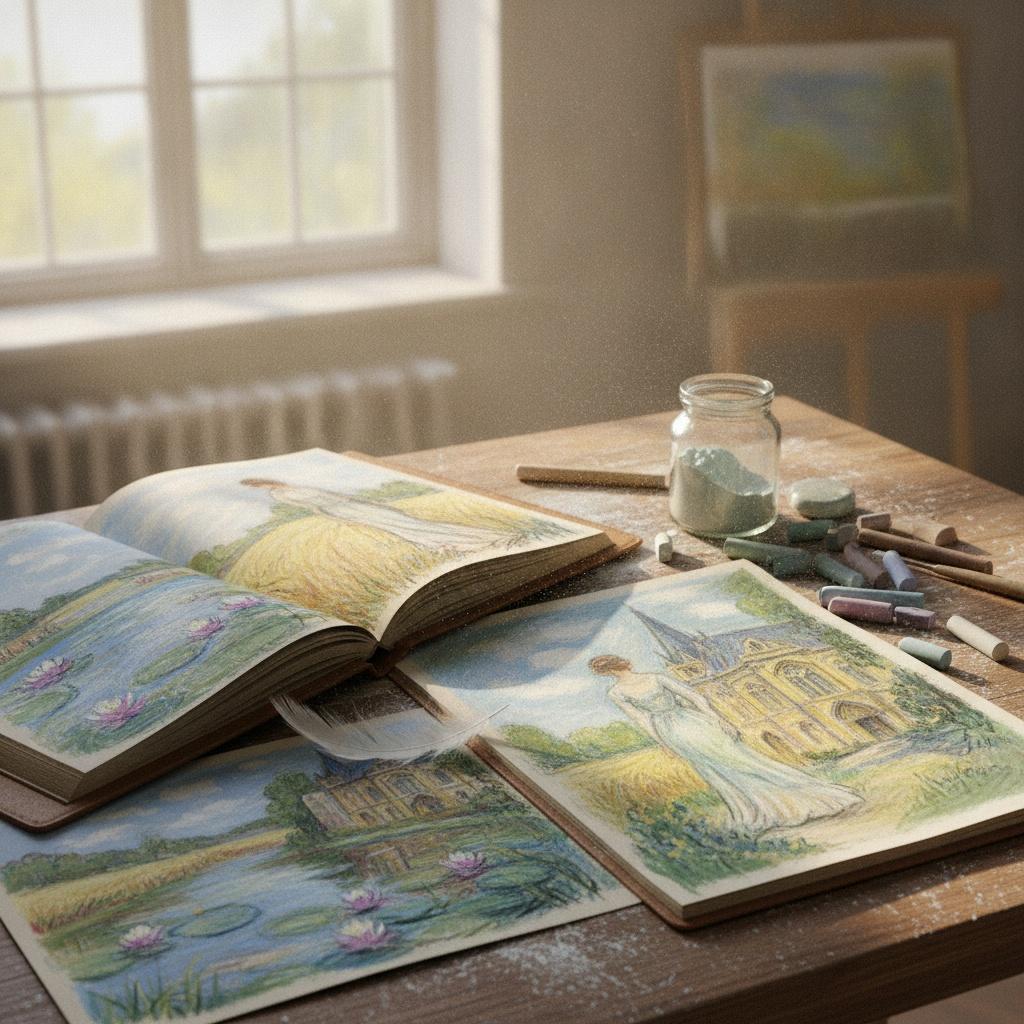
The Soft Magic of Chalk: Capturing Light, Texture, and the Ethereal Soul of Impressionist Masterpieces
Discover the ethereal beauty of pastel and chalk art. Explore how Impressionist masters like Van Gogh and Degas captured light and texture to create timeless, soulful masterpieces for the discerning collector.