
Shown: · With its frame:
 Esikatselu
 Jaa teos
 Jaa
Jaa
 Tiedot
 Opas
Opas

 Lataa kuva
 Samanlaisia kohteita
 Röntgenkuvaus
 Diaesitys
 Q&A
Q&A Tilastot
 Öljyväri kankaalle
- Seinätaide
- Daubigny’s work foreshadowed Impressionism.
 1851
1851- luku
 196.0 x 135.0 cm
 Musée d'Orsay
€ 259
Käsinmaalattu öljyvärinen jäljennös
Käsinmaalattu öljyväri kankaalle haluamassasi koossa ja kehyksissä, taiteilijoidemme valmistamana tilauksesta. ( Vaihda tulosteeseen Siirry digitaaliseen kuvaan)
Size
·Vakiokoko
räätälöity
CM
INCH
Valitse valmiista mitoistamme sellaiset, jotka vastaavat teoksen alkuperäisiä mittasuhteita.
Loading sizes...

leveys
korkeus
Kirjoita tarvitsemasi leveys ja korkeus, jotta teos sopii kehyksiisi tai seinällesi. Koska kyseessä on käsinmaalattu teos, taiteilija voi maalata hieman enemmän kuvan ympärille tai rajata sitä hieman, jos haluat eri muotoisen koon — valinta on sinun. Lähetämme sinulle digitaalisen mallikuvan hyväksyttäväksi ennen kuin maalaus alkaa. Tällä sivulla näkyvä kuva ei vastaa lopullista tulosta — vain mallikuva näyttää sen.
 Lue lisää
Finish
·
White €1

Blurside €1

Extended €1

P118B €10

P118H €10

P118W €10

P438Z €10

P508JH €12

P508YH €12

P805H €10

P805Z €10

P919BZ €10

P919G €10

P919XJ €10

P959ZH €10

P968JZ €12

W106C €8

W218G €10

W218JH €8

W218Y €10

W307PJ €10

W316G €10

W316PJ €8

W316Y €10

W398PJ €8

W4111J €10

W500HY €15

W500JH €15

W692G €12

W849H €8

W940BG €15

W953PJ €8

H24-GOLD €30

H24-SILVER €30

H36-GOLD €45

H36-SILVER €45
Shipped in a protective tube, ready for your own framer.
Above 105 cm the frame is shipped as a kit for a professional framer — read the details.
Extras
optionalWhat do the extras include?
Examples of what can be changed: Replace face with customer photo; Add pet (e.g., replace cat with dog); Include hidden message in background; Change background landscape or elements.
After order, TopImpressionists.com team will email client for instructions and provide a mockup preview
After order, TopImpressionists.com team will email client for instructions and provide a mockup preview
Maailmanlaajuinen toimitus () 3–4 viikossa tavallisen 5 viikon sijaan. (29 lokakuu). Laadusta ei tingitä.
Suojalakkaus
Nimilaatta
Kaiverretun pronssilaatan tiedot
This elegant plaque features the artist's name and the title of the artwork, finely engraved for a timeless presentation.
It is made from bronze with a refined, elegant finish. The text is precisely laser-engraved for a sharp and permanent result. Measuring 9x2 cm, the plaque is compact yet easy to read. It's built to be durable and scratch-resistant, offering a professional, museum-quality look. Mounting is simple thanks to the included adhesive backing.
Läpinäkyvän akryylilaatan tiedot
The plaque includes essential engraved details such as the artist's name, the title of the artwork, the date it was created, the type of media used-like oil on canvas or watercolor-a brief description of the piece, and a QR code that links to the complete artwork information.
It is crafted from clear acrylic, offering a sleek, modern appearance. The text is UV-engraved in black to ensure strong visual contrast. With a size of 10x15 cm, it ensures optimal readability. It comes equipped with two metal hooks for secure wall mounting. The plaque is designed to be weather-resistant, making it suitable for various environments, and it includes interactive features that work seamlessly with smartphone scanning.
Mustan akryylilaatan tiedot
This elegant plaque includes engraved information such as the artist's name, the title of the artwork, the date it was created, the type of media used (like oil on canvas or watercolor), a short description of the artwork, and a QR code for quick access to more information.
The plaque itself is made from refined black acrylic with a premium finish. The text is laser-engraved in white for high contrast and readability. Its size is 10x15 cm, designed to be easy to read. It comes with two metal hooks for professional mounting. The design is sleek and fits any interior style. It is also weather-resistant and durable, with built-in digital integration for mobile compatibility.
Lasivaihtoehto on saatavilla vain alle 110 cm kokoisille teoksille
 Lasivaihtoehto on saatavilla vain alle 110 cm kokoisille teoksille
- Ilmainen pikatoimitus ympäri maailman
- Korkealaatuinen pellavakangas
- Kattava kuljetusvakuutus
- Tulliveron palautustakuu
- Takuu täydellisestä värien vastaavuudesta
- 100 päivän palautusoikeus (vain valmistusvirheet)
- 100% rahat takaisin -takuu
- Määräalennus tarjolla


Keräilykohteen kuvaus
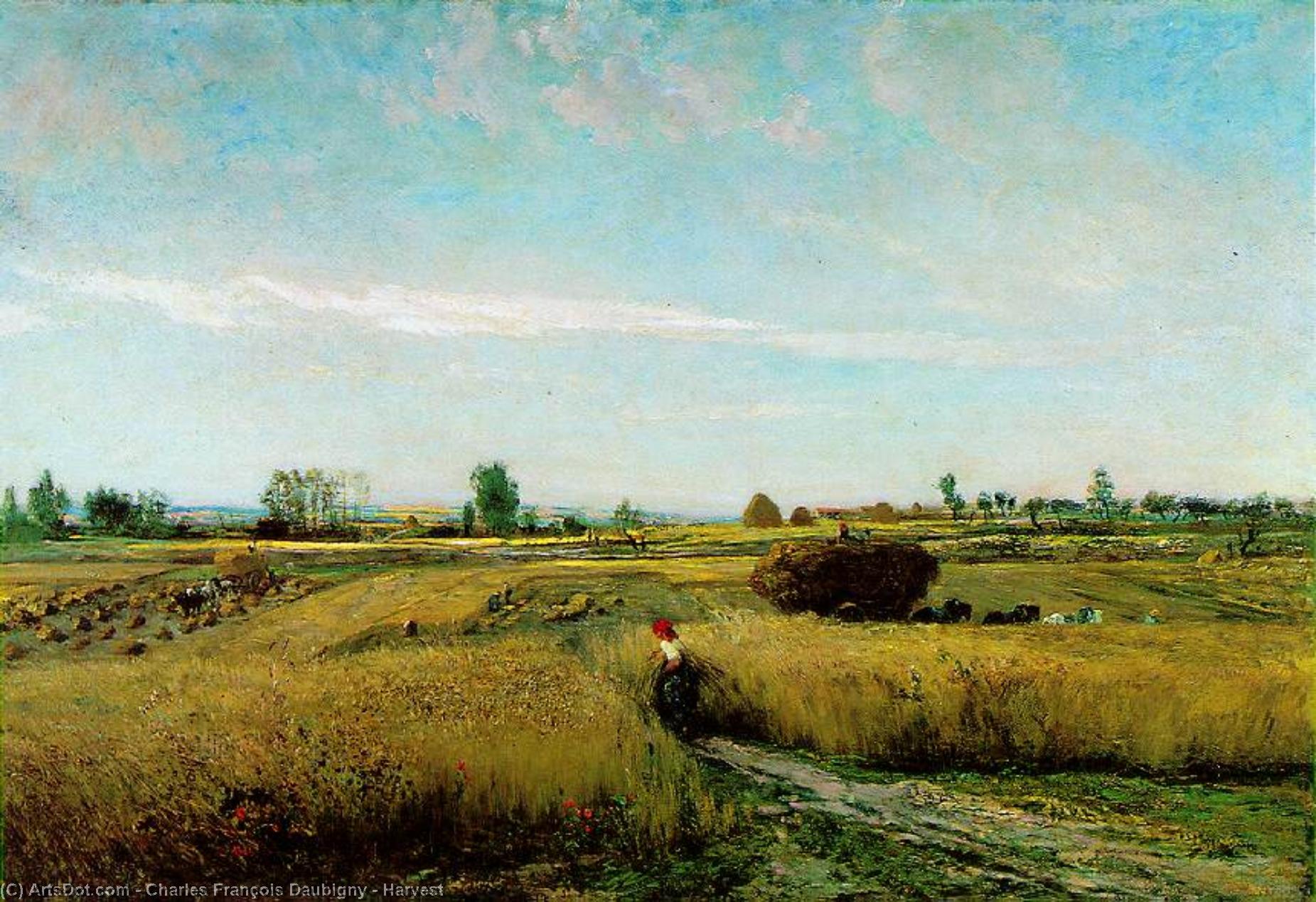
Charles-François Daubignyyn rauhallinen maalaismaisema 'Sato' (1851) Barbizonin koulun mestariteos. Uppoudu luonnonläheiseen tunnelmaan ja ihaile yksityiskohtaista maisemaa!
Taiteilijan elämäkerta
Charles-François Daubigny (1817–1878) oli ranskalainen maisemapeite, joka yhdisti Barbizonin koulun ja impressionismin. Tunnettu luonnonkauniista ja tunnelmallisista maalauksistaan, kuten 'Sadonkorjuu'. Tutustu hänen taiteeseensa!
About the painting
Charles-François Daubigny’s “Harvest”: A Serene Vision of Rural France
Charles-François Daubigny’s "Harvest" (1851) is more than just a depiction of a wheat field; it's an immersion into the heart of 19th-century French rural life, rendered with a sensitivity and precision that firmly establishes its place within the Barbizon School. This captivating landscape invites us to step onto the sun-drenched earth, feel the gentle sway of the tall grass beneath our feet, and witness a moment of quiet industry – a testament to Daubigny’s profound connection with nature and his pioneering approach to capturing its essence on canvas. The painting's enduring appeal lies not only in its visual beauty but also in the palpable sense of peace and harmony it evokes, making it an ideal addition to any space seeking a touch of timeless tranquility.
The Barbizon School and Daubigny’s Innovation
To truly appreciate “Harvest,” one must understand its context within the Barbizon School. This movement, emerging in the mid-19th century, represented a radical departure from the academic traditions dominating French art at the time. Artists like Daubigny rejected the studio and sought to create their works *en plein air* – directly outdoors – meticulously observing and recording the nuances of light and color as they appeared in nature. Daubigny wasn’t simply painting what he saw; he was striving to capture the very spirit of the French countryside, its rhythms, and its profound connection to human labor. This commitment to direct observation laid crucial groundwork for the Impressionist movement that would follow, establishing Daubigny as a pivotal figure in the transition from Realism to modern art.
A Symphony of Color and Light
Daubigny’s masterful use of color is immediately striking. The palette leans heavily into earthy tones – deep greens, rich browns, and sun-baked yellows – creating an incredibly naturalistic feel that draws the viewer directly into the scene. However, it's the interplay of light that truly elevates the painting. The soft, diffused sunlight casts a warm glow across the field, highlighting the texture of the wheat stalks and creating a sense of depth and atmosphere. The vibrant red hat worn by the solitary figure acts as a bold focal point, drawing our eye along the winding path and adding a touch of human presence to this otherwise serene landscape. Notice how Daubigny employs broken brushstrokes – small, distinct marks of color – to build up form and texture, giving the painting a remarkable sense of materiality.
Symbolism and the Rhythm of Rural Life
"Harvest" is rich in subtle symbolism. The scene depicts not just a field of wheat but also the cycle of rural life – the labor of farmers, the gathering of crops, and the connection between humanity and the land. The winding path suggests a journey, perhaps a reflection on the passage of time or the enduring spirit of the countryside. The solitary figure, rendered with quiet dignity, embodies both resilience and solitude. Daubigny’s ability to capture these nuanced details transforms the painting from a simple landscape into a poignant meditation on the beauty and significance of rural existence. It's a reminder of a slower pace of life, deeply rooted in tradition and connected to the natural world – values that continue to resonate with us today.
Technical Details & Reproduction
Painted in 1851, “Harvest” measures 196 x 135 cm and is executed in oil on canvas. Daubigny’s meticulous attention to detail is evident in the carefully rendered textures of the wheat, the subtle variations in color, and the atmospheric perspective that creates a sense of vastness. A high-quality reproduction captures these nuances beautifully, allowing you to appreciate the full depth and richness of this remarkable work. Consider how the brushstrokes themselves contribute to the painting’s overall effect – they convey movement, texture, and a palpable sense of immediacy. Bringing “Harvest” into your home is not simply acquiring a beautiful image; it's bringing a piece of French landscape history and artistic innovation into your life.
Kysymykset ja vastaukset
Miten teoksen Charles-François Daubigny:n "Sato" väripaletti on kuvattu?
Teoksen Charles-François Daubigny:n "Sato" väripalettia kuvataan sanoin Neutraalit sävyt. Se on tiivis kuvaus teoksen väreistä.
Onko teoksessa "Sato" voimakkaita valon ja varjon kontrasteja?
Teoksen Charles-François Daubigny:n "Sato" kontrastitaso on Lausunto.
Ovatko teoksen "Sato" värit voimakkaita vai hillittyjä?
Charles-François Daubigny:n "Sato"-teoksen värit ilmentävät Tasapainoisen pehmeä kylläisyyttä ja Tasapainoinen voimakkuutta.
Quick facts and art quiz
About Charles-François Daubigny

Charles-François Daubigny
1817 - 1878, Ranska
Taiteilijan elämäkerta
Charles-François Daubigny: Valon ja Luonnon Maalaaja
Charles-François Daubigny, syntynyt Pariisissa vuonna 1817, nousi varhain taiteelliseen perheeseen – hänen isänsä Edmé François Daubigny ja veljensä Pierre Daubigny olivat molemmat tunnettuja maalareita. Vaikka hän sai vahvan pohjan klassisen maalaustekniikan osalta, nuori Charles pyrki nopeasti luomaan oman, ainutlaatuisen tyylinsä, poistuen akatemian rajoitusten ulkopuolelle ja syventyen suoraan luonnon kokemiseen. Alkuperäinen opiskeluaika Paul Delarochen johdolla antoi hänelle arvokkaita taitoja, mutta Italiaan tehty matka vuonna 1836, Henri Mignanin kanssa, sytytti hänen taiteellisen näkemyksensä täysin uudelleen. Tämä kokemus herätti hänessä syvän kunnioituksen maisemaa kohtaan ja halun vangita sen olemus – ei idealisoituna maisemana, vaan elävänä, hengittävänä olentona. Palattuaan Pariisiin Daubigny tasapainoili kaupallista työtä – kuvitteellisten kirjojen ja koristeellisten paneelien maalaamista – kasvavan intohimonsa *en plein air* -maalauksen kanssa, käytännön tekniikka, joka määrittäisi hänen uransa. Hän oli osa taiteellista yhteisöä Rue des Amandiers-Popincourtissa, edistäen yhteistyötä ja uusien taiteellisten lähestymistapojen tutkimista.Barbizonin Koulu ja Luonnon Omaksuminen
Daubigny’n taiteellinen polku kääntyi merkittävästi vuonna 1843, kun hän asettui Barbizoniin, pienessä kylässä Fontaineblau metsän sisällä. Tämä merkitsee hänen virallista liittymistään Barbizonin kouluun, ryhmään taiteilijoita, jotka hylkasivat akatemian maalauksen pinnallisen ja keinotekoisen ulkonäön puolesta ja keskittyivät suoraan maaseudun elämään ja maisemaan. Toisin kuin aiemmat maisemamaalarit, jotka usein piirsivät ulkona ja loivat teoksensa studiossa, Barbizonin taiteilijat – kuten Théodore Rousseau, Jean-François Millet ja Camille Corot – omaksuivat *en plein air* -maalauksen perusperiaatteeksi. Daubigny’n ystävyyssuhde Corotin kanssa oli erityisen vaikutuksellinen; yhdessä he tutkivat Fontaineblau’n metsiä, vangiten niiden hienovaraiset valon ja tunnelman vivahteet. Tänä aikana Daubigny kehitti innovatiivisen "Botin"-veneen, jonka hän rakensi ja jolla hän navigoi Ranskan joilla – erityisesti Seinen ja Oisen – päästäen itsensä saavuttamaan monipuolisia maisemia ja luomaan syvän yhteyden luontoon. Tämä liikkuva studio symboloi hänen taiteellista käytäntöään, korostaen sitoutumista maalaamiseen suoraan elävässä tilassa.Silta Realismin ja Impressionismin Välissä
Daubigny’n työ sijoittuu 1800-luvun taiteen historiaan ainutlaatuiseen asemaan, toimien sekä Barbizonin koulun että impressionismin nousun välisenä linkkinä. Vaikka hän oli vahvasti sitoutunut Barbizonin perinteeseen luonnon uskottavan ja rehellisen esittämisen suhteen, hänen maalauksensa korostivat yhä enemmän tunnelman, hetkellistä valoa ja subjektiivista havaintoa – piirteitä, jotka enteilivät Monet’n, Renoir’n ja muiden taiteilijoiden innovaatioita. Hän kokeili uusia tekniikoita, kuten *cliché verre* -menetelmää, yhdistämällä valokuvan ja printtausprosessin, osoittaen avoimuutta uusille taiteellisille mahdollisuuksille. Hänen maisemansa ovat tunnettuja laajoista, löysistä siveltimistä, hillitystä värimaailmasta ja kyvystä vangita valon ja sään hetkelliset ominaisuudet – mikä vie katsojan syvälle Ranskan maaseudulle. Hän ei ainoastaan tallentanut sitä, mitä näki, vaan myös välitti tunteen siitä, miltä tuntui olevan läsnä siinä hetkessä.Merkittäviä Teoksia ja Perintö
Charles-François Daubigny kuoli Pariisissa vuonna 1878, jättäen jälkeensä rikastuttavan taiteellisen perinnön, joka resonoi edelleen tänään. Hänen vaikutuksensa ulottui hänen välittömän opiskelijoiden ympärille – mukaan lukien hänen poikansa Karl, Achille Oudinot ja Hippolyte Camille Delpy – inspiroiden sukupolvia maisemamaalareita. Hän oli keskeisessä roolissa Barbizonin koulun ja impressionismin nousun välisen yhteyden luomisessa, esitellen Claude Monet’n ja Paul Cézannen uusille tavoista nähdä ja maalata. Hänen sitoutumisensa *en plein air* -maalaukseen, hänen kokeilukykynsä tunnelman vangitsemisessa ja avoimuutensa uusille mahdollisuuksille loi tien radikaaleille taiteellisille muutoksille, jotka määrittelivät 1800-luvun loppua. Daubigny’n maalauksia säilytetään nykyisin monissa maailman suurimmissa museoissa, kuten Musée d'Orsay Pariisissa ja Cincinnati Art Museumissä, toimien todisteena hänen pysyvästä panoksestaan taiteen historiaan. Hän on edelleen keskeinen hahmo – luonnon tunnelmallisen realismin mestari, joka ennusti impressionismin saapumista ja muotoili modernin maalaustaidon kulkua.Quick facts about Charles-François Daubigny
- Artistic Movement Or Style: Barbizon ja impressionismi
- Artists Or Movements Influenced By This Artist:
- Impressionismi
- Barbizonin koulu
- Artists Who Influenced This Artist:
- Camille Corot
- Gustave Courbet
- Date Of Birth: 15 helmikuuta 1817
- Date Of Death: 19 helmikuuta 1878
- Full Name: Charles-François Daubigny
- Nationality: Ranskalainen
- Notable Artworks:
- Sadonkorjuu (1857)
- Gylieun lammet (1864)
- Kuutamo (1865)
- Place Of Birth: Pariisi, Ranska
Samankaltaisia teoksia

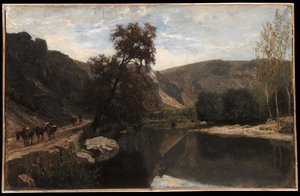


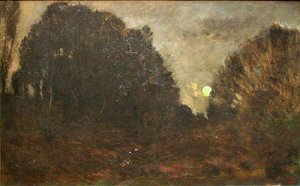


Tutustu teoksiin, jotka on järjestetty aiheiden, tyylien ja ominaisuuksien mukaan.


Charles-François Daubigny
Sato
() ·
With its frame: · Hand-painted in oil on linen
Total