

Shown: · With its frame:
 Esikatselu
 Jaa teos
 Jaa
Jaa
 Tiedot
 Opas
Opas

 Lataa kuva
 Samanlaisia kohteita
 Röntgenkuvaus
 Diaesitys
 Q&A
Q&A Tilastot
 Acrylic On Canvas
- WallArt
- Early Renaissance
 1268
1268- Renaissance
 45.0 x 28.0 cm
 San Domenico
€ 259
Käsinmaalattu öljyvärinen jäljennös
Käsinmaalattu öljyväri kankaalle haluamassasi koossa ja kehyksissä, taiteilijoidemme valmistamana tilauksesta. ( Vaihda tulosteeseen Siirry digitaaliseen kuvaan)
Size
·Vakiokoko
räätälöity
CM
INCH
Valitse valmiista mitoistamme sellaiset, jotka vastaavat teoksen alkuperäisiä mittasuhteita.
Loading sizes...

leveys
korkeus
Kirjoita tarvitsemasi leveys ja korkeus, jotta teos sopii kehyksiisi tai seinällesi. Koska kyseessä on käsinmaalattu teos, taiteilija voi maalata hieman enemmän kuvan ympärille tai rajata sitä hieman, jos haluat eri muotoisen koon — valinta on sinun. Lähetämme sinulle digitaalisen mallikuvan hyväksyttäväksi ennen kuin maalaus alkaa. Tällä sivulla näkyvä kuva ei vastaa lopullista tulosta — vain mallikuva näyttää sen.
 Lue lisää
Finish
·
White €1

Blurside €1

Extended €1

P118B €10

P118H €10

P118W €10

P438Z €10

P508JH €12

P508YH €12

P805H €10

P805Z €10

P919BZ €10

P919G €10

P919XJ €10

P959ZH €10

P968JZ €12

W106C €8

W218G €10

W218JH €8

W218Y €10

W307PJ €10

W316G €10

W316PJ €8

W316Y €10

W398PJ €8

W4111J €10

W500HY €15

W500JH €15

W692G €12

W849H €8

W940BG €15

W953PJ €8

H24-GOLD €30

H24-SILVER €30

H36-GOLD €45

H36-SILVER €45
Shipped in a protective tube, ready for your own framer.
Above 105 cm the frame is shipped as a kit for a professional framer — read the details.
Extras
optionalWhat do the extras include?
Examples of what can be changed: Replace face with customer photo; Add pet (e.g., replace cat with dog); Include hidden message in background; Change background landscape or elements.
After order, TopImpressionists.com team will email client for instructions and provide a mockup preview
After order, TopImpressionists.com team will email client for instructions and provide a mockup preview
Maailmanlaajuinen toimitus () 3–4 viikossa tavallisen 5 viikon sijaan. (29 lokakuu). Laadusta ei tingitä.
Suojalakkaus
Nimilaatta
Kaiverretun pronssilaatan tiedot
This elegant plaque features the artist's name and the title of the artwork, finely engraved for a timeless presentation.
It is made from bronze with a refined, elegant finish. The text is precisely laser-engraved for a sharp and permanent result. Measuring 9x2 cm, the plaque is compact yet easy to read. It's built to be durable and scratch-resistant, offering a professional, museum-quality look. Mounting is simple thanks to the included adhesive backing.
Läpinäkyvän akryylilaatan tiedot
The plaque includes essential engraved details such as the artist's name, the title of the artwork, the date it was created, the type of media used-like oil on canvas or watercolor-a brief description of the piece, and a QR code that links to the complete artwork information.
It is crafted from clear acrylic, offering a sleek, modern appearance. The text is UV-engraved in black to ensure strong visual contrast. With a size of 10x15 cm, it ensures optimal readability. It comes equipped with two metal hooks for secure wall mounting. The plaque is designed to be weather-resistant, making it suitable for various environments, and it includes interactive features that work seamlessly with smartphone scanning.
Mustan akryylilaatan tiedot
This elegant plaque includes engraved information such as the artist's name, the title of the artwork, the date it was created, the type of media used (like oil on canvas or watercolor), a short description of the artwork, and a QR code for quick access to more information.
The plaque itself is made from refined black acrylic with a premium finish. The text is laser-engraved in white for high contrast and readability. Its size is 10x15 cm, designed to be easy to read. It comes with two metal hooks for professional mounting. The design is sleek and fits any interior style. It is also weather-resistant and durable, with built-in digital integration for mobile compatibility.
Lasivaihtoehto on saatavilla vain alle 110 cm kokoisille teoksille
 Lasivaihtoehto on saatavilla vain alle 110 cm kokoisille teoksille
- Ilmainen pikatoimitus ympäri maailman
- Korkealaatuinen pellavakangas
- Kattava kuljetusvakuutus
- Tulliveron palautustakuu
- Takuu täydellisestä värien vastaavuudesta
- 100 päivän palautusoikeus (vain valmistusvirheet)
- 100% rahat takaisin -takuu
- Määräalennus tarjolla


Keräilykohteen kuvaus
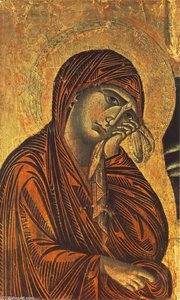
Explore Cimabue’s ‘Crucifix (detail)’ – a poignant 1268 panel painting showcasing early Renaissance emotion & technique. Discover its layered impasto, halo effect, and profound sorrow.
Taiteilijan elämäkerta
Cimabue (1240-1302): Italian taiteilija, joka yhdisti bysanttilaisen ja renessanssin tyylit. Hänen vaikutuksensa Giottoon on merkittävä! Tutustu mestariteoksiin.
About the painting
A Glimpse into Divine Sorrow: Cimabue’s *Crucifix (detail)*
This exquisite detail from Cimabue's larger *Crucifix* (circa 1268) offers a profoundly moving encounter with the Virgin Mary and infant Jesus. Painted during a pivotal moment in art history, this work transcends mere religious iconography to become a powerful expression of maternal grief and spiritual contemplation. It’s a piece that resonates across centuries, offering both artistic beauty and emotional depth.Historical Context & Artistic Transition
Cimabue – or *Cenni di Pepo* as he was known – stands at the cusp of the Italian Renaissance. He was one of the first artists to actively move away from the rigid conventions of the Italo-Byzantine style, which had dominated Italian painting for generations. While still exhibiting elements of Byzantine formality—note the gold halo and stylized drapery—Cimabue infused his work with a nascent naturalism. This is visible in the attempt to render more lifelike proportions and introduce subtle shading, paving the way for artists like Giotto, who would fully embrace Renaissance ideals. The artwork originates from Florence, Italy, a city rapidly becoming a center of artistic innovation. Originally created for the church of San Francesco in Pisa, it now resides at the Barts Hospital in London.Subject & Symbolism
The detail focuses intensely on the Madonna and Child. Mary cradles the infant Jesus, her expression one of profound sorrow and premonition. This isn’t a joyful depiction of motherhood; rather, it foreshadows the suffering to come – Christ's Passion and crucifixion. Key symbolic elements amplify this emotional weight:- The veil draped over Mary’s head signifies her purity and modesty, traditional attributes associated with the Virgin.
- Her downcast gaze is a powerful visual cue of grief, sorrow, and acceptance of her son's destiny.
- The gold halo surrounding both figures denotes their holiness and divine status.
Technique & Materials
Cimabue masterfully employed tempera paint on a gesso-prepared wood panel. This technique, common in the period, involved layering pigments mixed with egg yolk to create luminous colors. The artist’s skillful use of impasto – applying thick layers of paint – is particularly evident in the folds of Mary's cloak and her skin tones, adding a tactile quality and enhancing the sense of volume. Despite its age, the artwork retains a remarkable vibrancy thanks to the enduring qualities of tempera and the inclusion of gold leaf for highlights. The shallow perspective and limited atmospheric depth are characteristic of panel painting from this era.Emotional Impact & Aesthetic Qualities
The overall effect is one of solemnity, piety, and profound emotional resonance. Cimabue doesn’t simply depict a religious scene; he invites the viewer to share in Mary's sorrow and contemplate the weight of faith and sacrifice. The warm earthy tones – ochre, terracotta, and gold – create a rich, aged aesthetic that evokes a sense of timelessness. While not striving for photorealistic detail, Cimabue’s stylized approach imbues the figures with a dignified grace and emotional power. This *Crucifix (detail)* is more than just an artwork; it's a window into the spiritual world of medieval Italy and a testament to the enduring power of human emotion. It would be a stunning focal point in any collection, adding depth and historical significance to both classic and contemporary interiors.Kysymykset ja vastaukset
Onko teos Cimabue:n "Crucifix (detail)" koettu valoisaksi vai tummaksi?
Kokonaisuudessaan teoksen "Crucifix (detail)" kirkkaus on kirjattu arvoon balanced. Koettu kirkkaus kuvaa sitä, kuinka vaaleana tai tummana teos vaikuttaa.
Mistä voin löytää tilastoja teoksesta Cimabue:n "Crucifix (detail)"?
Cimabue:n "Crucifix (detail)"-teoksen Tilastot esittää julkiset käyntitilastot: teoksen kuukausittaiset vierailut, vertailun taiteilijan katsotuimpiin teoksiin sekä tiedot siitä, mistä vierailijat ovat kotoisin.
Mikä väri erottuu eniten teoksessa "Crucifix (detail)"?
Clay (#a8713a) on Cimabue:n "Crucifix (detail)" -teoksen hallitseva väri.
Quick facts and art quiz
About Cimabue

Cimabue
1240 - 1302, Italia
Taiteilijan elämäkerta
Giovanni Cimabue: Firenzeen Aamun Nousu – Byzantiin ja Renaissanceen Siirtymä
Giovanni Cimabue, syntyi Cenni di Pepo noin vuonna 1240 Firenzessä, ja hän on merkittävä hahmo – silta vakiintuneiden bysanttilaisen taiteen perinteiden ja Italian renesanssin kohoavan innovaation välillä. Hänen elämänsä, vaikka sekin osittain hämärtynyt ajan myötä ja romantisoitu Giorgio Vasarin kirjoituksissa vuosisatoja myöhemmin – merkitsee väistämätöntä käännekohtaa länsimaiseen taiteeseen. Cimabue ei ollut pelkästään maalaaja; hän oli rohkea innovaattori, joka uskalsi haastaa taiteellisia konventioita hienovaraisesti, asettaen pohjan vallankumouksellisille muutoksille, jotka pian levisivät koko Italiaan. Jopa hänen lempinimensä, uskomuksen mukaan "jässikänpää", vihjaa vahvaan tahtoon ja ehkä kapinalliseen henkeen – ominaisuudet, jotka ilmenevät selvästi hänen rohkeudessaan kokeilla muotoja ja ilmaisua. Hän edusti ratkaisevaa hetkeä, jossa taide alkoi siirtyä yksinomaan uskonnollisesta kuvauksesta johonkin inhimillisempiin ja tunteikkaampiin suuntiin.Varhaiset Vaikutukset ja Taiteellinen Kehitys
Aluksi upotettuna Italo-byzanttiseen tyyliin, joka oli vallitseva Firenzessä, Cimabuen varhaisessa työssä noudatettiin tiukasti vakiintuneita esteettisiä periaatteita: tasaiset hahmot, koristeltuina hohtavalla kullalla, symbolisia eikä realistisia esityksiä tilasta ja syvä keskittyminen uskonnolliseen ikonografiaan. Kuitenkin jopa näiden rajoitusten sisällä nousi kehittyvä halu naturalismia. Hän ei ollut tyytyväinen vain toistamaan olemassa olevia muotoja; hän pyrki antamaan maalauksilleen suuremman elämän ja tunteellisen syvyyden. Vaikka varhaisten koulutuksen tarkka luonne on edelleen kiistanalaista, on todennäköistä, että hän hiontasi taitojaan Firenzen työpajoissa, imien sisäänsä ajan tekniikoita ja vaikutteita samalla kun kehitti oman ainutlaatuisen taiteellisen äänensä. Byzantiininen tyyli, sen muodollisuus ja hengellisyys tarjosivat hänelle vankan perustan, mutta Cimabue alkoi hienovaraisesti esittelemään elementtejä, jotka enteilivät tulevaa renessanssia – suurempi huomio tilavuudesta, ilmaisuvoimaisemmat kasvot ja kehittyvä ymmärrys tilanjakamisesta. Tämä ei ollut äkillinen poikkeama perinteestä, vaan pikemminkin asteittainen evoluutio, hienovarainen tasapaino menneisyyden kunnioittamisen ja uusien mahdollisuuksien omaksumisen välillä.Merkittävät Teokset ja Taiteelliset Innovaatiot
Cimabuen perintö on lujitettu sarjalla upeita teoksia, jotka osoittavat hänen kehittyvää tyyliään. *Maestà* (Louvre), alun perin luotu S. Francesco -kirkolle Pisan kaupungissa, on yksi hänen kuuluisimmista mestariteoksistaan. Tämä monumentaalinen alttarityö esittelee hänen taitojaan komposiitissa ja kullin käytössä, samalla kuitenkin vihjaillen poikkeamasta bysanttilaisista konventioista. Hahmot ovat edelleen jonkin verran muodollisia, mutta niissä on uusi tunne tilavuudesta ja läsnäolosta. *Kruunisaatio* (San Domenico, Arezzo), joka on valmistunut noin vuonna 1270, on erityisen merkittävä hänen poikkeaman bysanttilaisista normeista osoituksena. Tässä hahmot ovat mittasuhteiltaan realistisempia ja kohtauksen tunteellinen paino on läsnä – täysin toisin kuin aiemmissa uskonnollisissa kuvauksissa. Lisäksi Cimabuen innovatiivisen henkeä voidaan nähdä teoksessa *Kristuksen ristiinnaulitseminen* (Frick Collection), jota hänen työpajansa on todennäköisesti tehnyt. Tämä monimutkainen komposiitio osoittaa kehittyvän ymmärryksen perspektiivistä ja tilanjakamisesta, esitellen kasvavaa kiinnostusta luomaan mukaansatempaavampia ja uskottavampia kohtauksia. Hänen panoksensa eivät rajoittuneet paneelimaalauksiin; Cimabue oli myös erinomainen mosaiikkitaiteilija, osallistuen merkittävästi Firenzen Baptisteryn koristeluun – vaikka nämä mosaiikit ovat valitettavasti kärsineet ajan myötä.Päättävä Opettaja: Giotto ja Sen Jälkeen
Ehkä Cimabuen pysyvin perintö on hänen roolinsa Giotto di Bondonen opettajana. Vaikka historiallisia tietoja heidän suhteestaan on vähän, laajalti hyväksytään, että Giotto sai keskeisen koulutuksen Cimabuen ohjauksessa. Kuitenkin Giotto nousi lopulta mestarikseen, mullistaen italialaista taidetta jopa radikaalimmalla naturalismin ja tunteellisen realismin omaksumisella. Se on Cimabuen opettajan taitojen osoitus, että hän edisti niin lahjukkaita oppilaita, vaikka tiesi, että heidän menestyssaavutuksensa voisi ylittää hänen omat saavutuksensa. Tarina, usein toisteltu Vasarin kirjoituksissa, Gioton leikkisästä piirustuksesta Cimabuen kasvoille kertoo paljon heidän dynamiikastaan – kapinallinen kilpailu, joka ajoi molempia taiteilijoita suurempiin korkeuksiin. Cimabuen vaikutus ulottui Gioton lisäksi ja vaikutti monien muiden aikakauden taiteilijoiden työhön. Hän haastoi hänen aikansa taiteelliset normit osoittamalla, että taidetta voitiin olla enemmän kuin pelkkää uskonnollista symboliikkaa; se voisi myös heijastaa ihmisen tunteita ja kokemuksia. Hänen muotojen, mittasuhteiden ja ilmaisun kokeilut asettivat pohjan renessanssin innovaatioille ja vahvistivat hänen asemaansa ratkaisevana siirtymäfiguurina länsimaiseen taiteeseen.Kestävä Merkitys
Cimabue kuoli vuonna 1302 Pisassa, jättäen jälkeensä teosten sarjan, joka vangitsee edelleen ja inspiroi. Vaikka hänen panoksiaan koskien myöhempää elämää on vähän tietoa, hänen taiteellinen perintönsä resonoituu voimakkaasti hänen opiskelijoidensa ja italialaisen taiteen kehityksen kautta. Hän edusti ratkaisevaa hetkeä länsimaista taidetta, siirtyen bysanttilaisen tyylin vakiintuneista konventioista inhimillisempiin ja tunteikkaampiin suuntiin. Hänen maalauksensa eivät ole vain historiallisia esineitä; ne ovat ikkunoita ratkaisevaan taiteelliseen hetkeen – aikaan, jolloin taiteilijat alkoivat kyseenalaistaa vakiintuneita normeja ja tutkia uusia mahdollisuuksia. Hän oli pioneeri, visioiva henkilö, joka uskalsi haastaa vallitsevan järjestyksen ja asettaa pohjan renessanssin taiteelle. **Cimabuen teokset muistuttavat meitä siitä, että perinteessäkin on aina tilaa innovoinnille, ja että todellinen taide löytyy rohkeudesta rikkoa rajoja ja tutkia uusia horisontteja.**Quick facts about Cimabue
- Artistic Movement Or Style: Byzantinainen ja renessanssi
- Artists Or Movements Influenced By This Artist: ['Giotto di Bondone']
- Artists Who Influenced This Artist:
- Giunta Pisano
- Coppo di Marcovaldo
- Date Of Birth: c. 1240
- Date Of Death: 1302
- Full Name: Giovanni Cimabue
- Nationality: Italian
- Notable Artworks:
- Maestà
- Ristinkuvaus
- Place Of Birth: Firenze, Italia
Tutustu teoksiin, jotka on järjestetty aiheiden, tyylien ja ominaisuuksien mukaan.


Cimabue
Crucifix (detail)
() ·
With its frame: · Hand-painted in oil on linen
Total