

Shown: · With its frame:
 Esikatselu
 Jaa teos
 Jaa
Jaa
 Tiedot
 Opas
Opas

 Lataa kuva
 Samanlaisia kohteita
 Röntgenkuvaus
 Diaesitys
 Q&A
Q&A Tilastot

€ 239
Käsinmaalattu öljyvärinen jäljennös
Käsinmaalattu öljyväri kankaalle haluamassasi koossa ja kehyksissä, taiteilijoidemme valmistamana tilauksesta. ( Vaihda tulosteeseen Siirry digitaaliseen kuvaan)
Size
·Vakiokoko
räätälöity
CM
INCH
Valitse valmiista mitoistamme sellaiset, jotka vastaavat teoksen alkuperäisiä mittasuhteita.
Loading sizes...

leveys
korkeus
Kirjoita tarvitsemasi leveys ja korkeus, jotta teos sopii kehyksiisi tai seinällesi. Koska kyseessä on käsinmaalattu teos, taiteilija voi maalata hieman enemmän kuvan ympärille tai rajata sitä hieman, jos haluat eri muotoisen koon — valinta on sinun. Lähetämme sinulle digitaalisen mallikuvan hyväksyttäväksi ennen kuin maalaus alkaa. Tällä sivulla näkyvä kuva ei vastaa lopullista tulosta — vain mallikuva näyttää sen.
 Lue lisää
Finish
·
White €1

Blurside €1

Extended €1

P118B €10

P118H €10

P118W €10

P438Z €10

P508JH €12

P508YH €12

P805H €10

P805Z €10

P919BZ €10

P919G €10

P919XJ €10

P959ZH €10

P968JZ €12

W106C €8

W218G €10

W218JH €8

W218Y €10

W307PJ €10

W316G €10

W316PJ €8

W316Y €10

W398PJ €8

W4111J €10

W500HY €15

W500JH €15

W692G €12

W849H €8

W940BG €15

W953PJ €8

H24-GOLD €30

H24-SILVER €30

H36-GOLD €45

H36-SILVER €45
Shipped in a protective tube, ready for your own framer.
Above 105 cm the frame is shipped as a kit for a professional framer — read the details.
Extras
optionalWhat do the extras include?
Examples of what can be changed: Replace face with customer photo; Add pet (e.g., replace cat with dog); Include hidden message in background; Change background landscape or elements.
After order, TopImpressionists.com team will email client for instructions and provide a mockup preview
After order, TopImpressionists.com team will email client for instructions and provide a mockup preview
Maailmanlaajuinen toimitus () 3–4 viikossa tavallisen 5 viikon sijaan. (31 lokakuu). Laadusta ei tingitä.
Suojalakkaus
Nimilaatta
Kaiverretun pronssilaatan tiedot
This elegant plaque features the artist's name and the title of the artwork, finely engraved for a timeless presentation.
It is made from bronze with a refined, elegant finish. The text is precisely laser-engraved for a sharp and permanent result. Measuring 9x2 cm, the plaque is compact yet easy to read. It's built to be durable and scratch-resistant, offering a professional, museum-quality look. Mounting is simple thanks to the included adhesive backing.
Läpinäkyvän akryylilaatan tiedot
The plaque includes essential engraved details such as the artist's name, the title of the artwork, the date it was created, the type of media used-like oil on canvas or watercolor-a brief description of the piece, and a QR code that links to the complete artwork information.
It is crafted from clear acrylic, offering a sleek, modern appearance. The text is UV-engraved in black to ensure strong visual contrast. With a size of 10x15 cm, it ensures optimal readability. It comes equipped with two metal hooks for secure wall mounting. The plaque is designed to be weather-resistant, making it suitable for various environments, and it includes interactive features that work seamlessly with smartphone scanning.
Mustan akryylilaatan tiedot
This elegant plaque includes engraved information such as the artist's name, the title of the artwork, the date it was created, the type of media used (like oil on canvas or watercolor), a short description of the artwork, and a QR code for quick access to more information.
The plaque itself is made from refined black acrylic with a premium finish. The text is laser-engraved in white for high contrast and readability. Its size is 10x15 cm, designed to be easy to read. It comes with two metal hooks for professional mounting. The design is sleek and fits any interior style. It is also weather-resistant and durable, with built-in digital integration for mobile compatibility.
Lasivaihtoehto on saatavilla vain alle 110 cm kokoisille teoksille
 Lasivaihtoehto on saatavilla vain alle 110 cm kokoisille teoksille
- Ilmainen pikatoimitus ympäri maailman
- Korkealaatuinen pellavakangas
- Kattava kuljetusvakuutus
- Tulliveron palautustakuu
- Takuu täydellisestä värien vastaavuudesta
- 100 päivän palautusoikeus (vain valmistusvirheet)
- 100% rahat takaisin -takuu
- Määräalennus tarjolla


Keräilykohteen kuvaus
Taiteilijan elämäkerta
Tutustu impressionismin mestari Claude Monetiin, joka tunnetaan katoavan valon ja värin vangitsemisesta ikonisissa maisemissa, kuten Vesiliileissä ja heinäsuoissa.
About the painting
A Moment Suspended in Light: Claude Monet’s ‘Argenteuil, Late Afternoon’
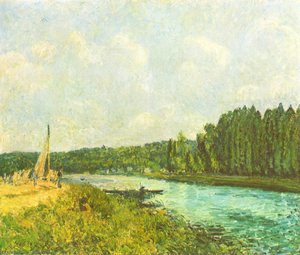
Claude Monet's “Argenteuil, Late Afternoon,” painted in 1872, isn’t merely a depiction of a Parisian suburb; it’s an exquisite distillation of Impressionist philosophy – a fleeting capture of light, atmosphere, and the very essence of a summer’s day. This work, housed within the esteemed collection of the Museum Barberini, offers a serene glimpse into a pivotal moment in art history, showcasing Monet's revolutionary approach to landscape painting. The scene unfolds along the banks of the Seine near Argenteuil, a town rapidly transforming under the influence of industrialization, yet here, Monet chooses to focus on its tranquil beauty, inviting us to pause and contemplate the interplay between nature and burgeoning modernity. The composition is deceptively simple: a gently rippling river reflecting the sky, punctuated by three boats – one nestled near the left bank, another in the middle distance, and a third drifting towards the right – each subtly suggesting human presence within this idyllic setting. A solitary figure can be discerned amidst the activity, perhaps lost in contemplation or engaged in tending to their vessel, adding a layer of quiet narrative to the scene.Impressionist Techniques: Capturing the Ephemeral
Monet’s genius lies not just in his subject matter but in his masterful execution of Impressionistic techniques. The painting is a vibrant testament to *plein air* painting – working directly from nature, capturing the immediate sensory experience rather than relying on meticulous detail or pre-planned compositions. Loose, energetic brushstrokes dominate the canvas, creating a sense of movement and immediacy. Notice how Monet doesn’t attempt to render every ripple in the water with precision; instead, he uses short, broken strokes of color to convey the *impression* of fluidity and reflection. The palette is remarkably restrained yet intensely evocative – soft blues and greens mingle with hazy pinks and yellows as the late afternoon sun casts its golden glow upon the scene. This deliberate avoidance of sharp outlines and precise forms is central to Monet’s goal: to represent not a fixed reality, but rather the subjective experience of light and color at a specific moment in time. The subtle gradations of tone and hue create an almost palpable sense of warmth and tranquility.Historical Context & The Rise of Impressionism
“Argenteuil, Late Afternoon” was created during a period of profound artistic change. Following the rigid conventions of academic painting, a group of avant-garde artists – including Monet, Renoir, Pissarro, and Sisley – began to challenge established norms, seeking new ways to represent the world around them. The Impressionists rejected the Salon’s emphasis on historical or mythological subjects in favor of contemporary life, landscapes, and scenes of everyday experience. Monet's choice to depict a relatively unremarkable location—a small town along the Seine—was deliberate. He wasn’t interested in grand narratives or heroic figures; instead, he sought to capture the beauty of the ordinary, the fleeting moments that often go unnoticed. The painting reflects the broader social and cultural shifts occurring at the time – the rise of industrialization, urbanization, and a growing interest in leisure and recreation. Argenteuil itself was undergoing rapid transformation, and Monet’s work captures both its charm and its underlying tension between tradition and modernity.Symbolism & Emotional Resonance
Beyond its technical brilliance, “Argenteuil, Late Afternoon” is rich in symbolic meaning. The river, a recurring motif in Monet's oeuvre, represents the flow of time and the interconnectedness of all things. The boats symbolize human activity and connection to nature. The solitary figure suggests introspection and contemplation – an invitation for the viewer to lose themselves in the scene’s peaceful atmosphere. The late afternoon light itself carries significant weight, evoking a sense of nostalgia and melancholy. It's a time of transition, when day gives way to night, and the world seems to slow down. Monet masterfully captures this feeling of quietude and reflection, inviting us to appreciate the beauty of the present moment. The painting’s overall effect is one of serene contemplation—a reminder that even in the midst of rapid change, there are moments of enduring beauty to be found.Considering the exquisite detail and masterful execution of a hand-painted reproduction from TopImpressionists, you can bring this evocative scene into your home or office, allowing its tranquil atmosphere to inspire and uplift.
Kysymykset ja vastaukset
Kuka on teoksen "Argenteuil, Late Afternoon" taiteilija ja mikä on sen tyyli?
Claude Monet loi teoksen "Argenteuil, Late Afternoon" Impressionism-suuntauksen piirissä.
Miten Claude Monet:n "Argenteuil, Late Afternoon" yhdistää Impressionism-suuntauksen taiteilijan kotimaahan?
"Argenteuil, Late Afternoon" yhdistää Impressionism-suuntauksen Ranska-maahan teoksen luojan syntymämaan kautta.
Milloin teos Claude Monet:n "Argenteuil, Late Afternoon" on luotu?
"Argenteuil, Late Afternoon" on peräisin vuodelta 1872. Teoksen valmistumisajankohta sijoittaa sen Claude Monet uran ja aikakauden kontekstiin.
Quick facts and art quiz
About Claude Monet

Claude Monet
1840 - 1926, Ranska
Taiteilijan elämäkerta
Valon valossa uppoutunut elämä: Claude Monetin maailma
Oscar-Claude Monet, nimi joka on synonyymi impressionismille, ei ollut pelkästään maisemamaalari; hän oli katoavien hetkien kronikoija, valon ja värin runoilija. Hän syntyi Pariisissa 14. marrasta 1840, mutta hänen varhaiset vuotensa saivat odottamattoman käänteen, kun perhe muutti Le Havreen Normandiaan viisivuotiaana. Vaikka hänen isänsä toivoi hänestä alun perin kaupallista uraa, nuoren Clauden luontainen taiteellinen lahjakkuus nousi nopeasti esiin ilmestyen ensin paikallisesti myydyissä hiilipiirroskarikatyyreissä – todisteena sekä hänen taidostaan että yrittäjähengestään. Kuitenkin ratkaisevaksi osoittautui kohtaaminen Eugène Boudinin kanssa. Boudin ei opettanut Monet’ta vain *miten* maalata; hän istutti häneen vallankumouksellisen ajatuksen maalata en plein air – suoraan luonnosta – käytännöstä, joka määrittäisi hänen koko taiteellisen matkansa.
Monetin virallinen koulutus alkoi Pariisissa, lyhyesti Académie Suessa ja myöhemmin Charles Gleyn alaisuudessa. Juuri täällä hän solmi pysyviä ystävyyssuhteita muiden taiteilijoiden, kuten Auguste Renoirin, kanssa – siteen, joka rakennettiin yhteisten taiteellisten turhautumisten ja halun varaan vapautua perinteisen akateemisen maalaustavan rajoitteista. Hänen varhaiset teoksensa osoittivat teknistä taituruutta, mutta niistä puuttui vielä se omaleimainen ääni, joka pian määrittelisi hänen tyylinsä. Seuraa epävarmuuden aika – Franco-Preussin sota pakotti Monet’n etsimään turvapaikkaa Lontoosta, missä hän uppoutui englantilaisten maisemamestareiden, kuten J.M.Wh Turnerin, työhön ja omaksui heidän ilmakehän vaikutelmia sekä innovatiivista värinkäyttöään.
Esteettisen vallankumouksen synty
Palattuaan Ranskaan Monet nousi kasvavan taiteellisen kapinan keskeiseksi hahmoksi. Tyytymättömänä Salonin konservatiivisiin standardeihin, hän liittyi muiden sammallaisten taiteilijoiden joukkoon järjestääkseen itsenäisiä näyttelyitä. Vuoden 1874 näyttely osoittautui käännekohdaksi ei vain Monetille, vaan koko taidemaailmalle. Juuri täällä esitettiin hänen maalauksensa ”Impression, soleil levant” (Impression, Sunrise) – usvainen kuvaus Le Havren satamasta aamunkoitteessa – ja siitä alkuperäisin tuo ivallinen termi "impressionismi". Nimi kuitenkin jäi elämään ja kehittyi kunnianmerkiksi liikkeelle, joka pyrki vangitsemaan kohteen subjektiivisen *vaikutelman* pikemminkin kuin sen tarkan esityksen.
Monetin tunnusomainen tyyli kukoisti tänä aikana: rennot, näkyvät siveltimenvedot, eloisat ja usein sekoittamattomat värit rinnakkain asetettuina (tekniikka, joka tunnetaan nimellä ”broken color”) sekä järkkymätön keskittyminan valon katoavaisuuden vangitsemiseen. Hän tavoitteli periksiantamattomasti plein air -harjoitustaan työskennellen nopeasti tallentaakseen välittömät havaintonsa ennen kuin muuttuvat olosuhteet muuttivat näkymää. Tämä omistautuminen ei koskenut vain sitä, mitä hän *näki*, vaan pikemminkin sitä, miltä hän *tuntui* vastauksena siihen – radikaali poikkeama taiteellisista konventioista.
Giverny: Valon ja heijastusten paratiisi
Vuonna 1883 Monet asettui Givernyyn, Pariisin luoteispuolelle, perustaaen kodin ja puutarhan, josta tulisi sekä hänen pyhättönsä että hänen suurin inspiraationlähteensä. Hän muutti kiinteistön huolellisesti hienostuneeksi paratiisiksi, joka sisälsi eksoottisia kukkia, itkuojia ja kuuluisimman osan: japanilaista siltaa reunustavan lumpeelammikon. Tämä ei ollut pelkkä koristepuutarha; se oli elävä laboratorio, jossa Monet saattoi tutkia valon vaikutuksia veteen, lehdistöön ja heijastuksiin hallituissa olosuhteissa.
Hänen elämänsä viimeiset vuosikymmenet omistettiin lähes kokonaan Givernyn lumpeelammikon maalaamiselle. Hän aloitti monumentaalisen Water Lilies -sarjan (Nymphéas), luoden valtavia kangasta, jotka esittivät lammen pinnan jatkuvasti muuttuvana värien ja valon kudoksena. Nämä eivät olleet vain maalauksia kukista; ne olivat upottavia kokemuksia, joiden tarkoituksena oli kietoa katsoja seesteisen kauneuden ja mietiskelevän tyynen maailman syleilyyn. Näiden teosten mittakaava on henkeäsalpaava, työntäen perinteisen maalaustaiteen rajoja ja ennakoiden abstraktia ekspressionismia.
Perintö: Pysyvä vaikutus taidehistoriaan
Claude Monet’n vaikutus taidehistoriaan on mittaamaton. Hän ei ollut ainoastaan impressionismin perustaja; hän muutti perustavanlaatuisesti tapaa, jolla taiteilijat havaitsevat ja esittävät ympäröivää maailmaa. Hänen painotuksensa subjektiiviseen kokemukseen, plein air -maalaustavan omaksuminen ja innovatiiviset tekniikat ravasivat tietä modernin taiteen tutkimuksille abstraktiosta ja epärepresentatiivisista muodoista.
Monet saavutti elinaikanaan huomattavaa kaupallista menestystä – mikä oli harvinaista hänen aikansa avantgarde-taiteilijoille. Hänen työnsä jatkavat ihailun herättämistä ja lumoavat yleisöjä ympäri maailmaa, vahvistaen hänen paikkansa yhtenä läntisen taiteen tärkeimmistä hahmoista. Hän kuoli 5. joulukuuta 1926 jättäen jälkeensä perinnön, joka resonoi sukupolvien yli taiteilijoiden ja taiteen ystävien keskuudessa. Hänen mestariteoksiaan säilytetään arvostetuissa instituutioissa, kuten Pariisin Musée d’Orsayssa ja Musée Marmottan Monetissa, varmistaen, että hänen visionsa jatkaa maailman valaisemista.
Keskeiset taiteelliset tekniikat
- Plein Air -maalaus: Keskeistä kehityksessään, mahdollistaen valon ja ilmakehän suoran havainnoinnin.
- Broken Color (Rikkonainen väri): Puhdasta väriä olevien pienten vetojen asettaminen rinnakkain optisen sekoittumisen saavuttamiseksi.
- Sarjamaalaus: Saman aiheen esittäminen eri valaistus- ja sääolosuhteissa – osoittaen ajan ja valon muuntautumisvoiman.
Quick facts about Claude Monet
- Artistic Movement Or Style: Impressionismi
- Artists Or Movements Influenced By This Artist: ['Moderni taide']
- Artists Who Influenced This Artist:
- Eugène Boudin
- J.M.W. Turner
- Date Of Birth: 14. marraskuuta 1840
- Date Of Death: 5. joulukuuta 1926
- Full Name: Oscar-Claude Monet
- Nationality: Ranskalainen
- Notable Artworks:
- Auringonnousu
- Vesililjat
- Heinäkasat
- Place Of Birth: Pariisi, Ranska
Samankaltaisia teoksia




Tutustu teoksiin, jotka on järjestetty aiheiden, tyylien ja ominaisuuksien mukaan.


Claude Monet
Argenteuil, Late Afternoon
() ·
With its frame: · Hand-painted in oil on linen
Total