


 Katso seinällä
 Lähetä
 Jaa
Jaa
 Tarkemmat tiedot
 Opas
Opas

 Lataa kuva
 Samanlaisia kohteita
 Röntgenkuvaus
 Diaesitys
 Tilastot
Jacket


Discover Balenciaga’s exquisite ‘Jacket’ (1947). A stunning Spanish creation adorned with beading & tassels – a masterpiece of sculptural design & 18th-century Majzo inspiration.
 Lue lisää
Cristóbal Balenciaga: Espanjalainen muotisuunnittelija, tunnettu elegantista ja innovatiivisesta tyylistään. Hänen suunnitelmansa inspiroivat sukupolvia! Tutustu teoksiin.
Tällä sivulla esitettyä taideteosta suojaa tekijänoikeuslaki, mikä tarkoittaa, ettemme voi laillisesti luoda tai myydä täsmälleen samanlaista jäljennöstä. Tämä suoja toteutetaan kansainvälisten sopimusten, kuten esimerkiksi Berne-konventio ja kansallisilla laeilla, mukaan lukien niillä määritellyt Yhdysvaltain tekijänoikeuslaki – Luku 17. Kaikki oikeudet pidätetään. Luvaton kopiointi tai jäljittely on kielletty.
Kunnioittavana ja laillisena vaihtoehtona tarjoamme alkuperäisestä inspiroituneita, yksilöllisiä ja käsinmaalattuja taideteoksia. Taitavat ja ammattimaiset taiteilijamme tutkivat huolellisesti alkuperäisen teoksen tyyliä, tunnelmaa ja taiteellista ydintä luodakseen uuden, ainutlaatuisen teoksen, joka herättää saman tunteen – säilyttäen samalla oman itsenäisen alkuperäisyytensä.
Tämä menetelmä noudattaa täysin tekijänoikeussäännöksiä, sillä se ei sisällä suojatun taideteoksen kopioimista tai jäljentämistä. Sen sijaan kyseessä on luova uudelleentulkinta – uusi maalaus, joka ammentaa vaikutteita alkuperäisestä, mutta ei ole sen identtinen kopio.
Käsinmaalattu öljyvärinen jäljennös
Käsinmaalattu öljyväri kankaalle haluamassasi koossa ja kehyksissä, taiteilijoidemme valmistamana tilauksesta. ( Vaihda tulosteeseen Siirry digitaaliseen kuvaan)




P118B €10

P118H €10

P118W €10

P438Z €10

P508JH €12

P508YH €12

P805H €10

P805Z €10

P919BZ €10

P919G €10

P919XJ €10

P959ZH €10

P968JZ €12

W106C €8

W218G €10

W218JH €8

W218Y €10

W307PJ €10

W316G €10

W316PJ €8

W316Y €10

W398PJ €8

W4111J €10

W500HY €15

W500JH €15

W692G €12

W849H €8

W940BG €15

W953PJ €8




Vakiokoko
mittatilaustyö
CM
INCH
Valitse valmiista mitoistamme sellaiset, jotka vastaavat teoksen alkuperäisiä mittasuhteita.
Loading sizes...

leveys
korkeus
Kirjoita tarvitsemasi leveys ja korkeus, jotta teos sopii kehyskehyksiisi tai seinällesi. Koska kyseessä on käsinmaalattu teos, taiteilija voi maalata hieman enemmän kuvan ympärille tai rajata sitä hieman, jos haluat eri muotoisen koon — valinta on sinun. Lähetämme sinulle digitaalisen mallikuvan hyväksyttäväksi ennen kuin maalaus alkaa. Tällä sivulla näkyvä kuva ei vastaa lopullista tulosta — vain mallikuva näyttää sen.
Esimerkkejä muokattavista asioista: Vaihda kasvot asiakkaan omaan valokuvaan; Lisää lemmikki (esim. korvaa kissa koiralla); Lisää taustalle piilotettu viesti; Muuta taustan maisemaa tai elementtejä.
Tilauksen jälkeen TopImpressionists.com -tiimi lähettää asiakkaalle sähköpostitse ohjeet ja esikatselukuvan.
Tilauksen jälkeen TopImpressionists.com -tiimi lähettää asiakkaalle sähköpostitse ohjeet ja esikatselukuvan.
Maailmanlaajuinen toimitus () 3–4 viikossa tavallisen 5 viikon sijaan. (25 lokakuu). Laadusta ei tingitä.

Ilmainen pikatoimitus ympäri maailman

Korkealaatuinen pellavakangas

Kattava kuljetusvakuutus

Tulliveron palautustakuu

Takuu täydellisestä värien vastaavuudesta

100 päivän palautusoikeus valmistusvirhetapauksissa

100% rahat takaisin -takuu

Määräalennus saatavilla
 Lasivaihtoehto on saatavilla vain alle 110 cm kokoisille teoksille

Jacket
Reproduktiotapa
Replikaatin koko
-


Kokonaishinta
€ 236
Cristóbal Balenciaga: The Architect of Elegance
The Spanish couturier Cristóbal Balenciaga (1895–1972) stands as an undisputed titan amongst the figures who shaped 20th-century fashion. More than just a designer, he was an artist—a sculptor of fabric—whose uncompromising vision redefined elegance and established a legacy that continues to inspire creatives today. His influence transcends eras, demonstrating how meticulous craftsmanship combined with avant-garde experimentation can yield timeless masterpieces. Balenciaga’s approach wasn't merely about dressing; it was about crafting experiences, encapsulating emotion within meticulously constructed silhouettes.- Early Life and Artistic Roots: Born in Getaria, Basque Country, Balenciaga’s formative years were steeped in the traditions of his homeland—a region renowned for its artisanal textiles and sculptural stone carvings. These influences profoundly impacted his aesthetic sensibilities, fostering a deep appreciation for form and texture that would permeate his entire oeuvre. Notably, he studied painting at San Sebastián Art Academy, where he honed his observational skills and developed an understanding of composition and color theory – elements crucial to translating artistic concepts into wearable art.
- The Avant-Garde Embrace: Balenciaga’s breakthrough came during the tumultuous years following World War I, when he embraced the burgeoning avant-garde movement—particularly Surrealism and Cubism—drawing inspiration from artists like Picasso and Matisse. This embrace manifested in bold geometric shapes, unconventional drapery techniques, and a deliberate rejection of ornamentation, signaling a radical departure from prevailing fashion trends.
- Signature Style: Balenciaga’s distinctive style is characterized by its sculptural quality—he treated fabric as if it were clay, shaping it into fluid forms that defied gravity and challenged conventional notions of beauty. His designs prioritized simplicity and restraint, emphasizing the interplay between volume and surface texture. He famously stated, “Fashion isn't about clothes; it’s about sculpting.”
The Jacket: A Testament to Innovation
Balenciaga’s ‘Jacket,’ created in 1930s Paris, exemplifies this sculptural ethos perfectly. It represents a pivotal moment in fashion history—a conscious rejection of the prevailing corset-driven silhouettes of the time and an assertion of female independence through form and drapery. The jacket's design incorporates a square collar, three-quarter sleeves, and meticulous piping and glass-paste beading that create floral motifs – elements reflecting Balenciaga’s fascination with natural forms and his masterful manipulation of embellishments.- Historical Context: Produced during the Great Depression, the jacket embodies a spirit of resilience and understated glamour. It speaks to a desire for elegance amidst economic hardship, prioritizing refined aesthetics over ostentation.
- Technique & Materials: Crafted from silk satin and adorned with delicate lace and beads, the jacket showcases Balenciaga’s unparalleled skill in textile manipulation. The intricate beadwork—inspired by Basque stone carvings—creates mesmerizing patterns that capture light and movement, enhancing the garment's visual impact.
- Symbolism: Beyond its aesthetic beauty, the jacket symbolizes liberation from restrictive corsets—a gesture of defiance against societal expectations and a celebration of feminine grace. The floral motifs evoke notions of springtime renewal and femininity.
Balenciaga’s Influence on Contemporary Design
Cristóbal Balenciaga's legacy extends far beyond his own creations, profoundly impacting subsequent generations of designers. His sculptural approach to fashion continues to inspire artists today who strive for innovation and artistic expression. The meticulous attention to detail—the masterful use of fabric—the exploration of form and texture—these principles remain central to the aesthetic sensibilities of many contemporary creatives. Balenciaga’s unwavering commitment to uncompromising standards serves as a reminder that true artistry lies in elevating craftmanship to an art form itself. “Fashion isn't about clothes; it’s about sculpting.” – Cristóbal BalenciagaKysymykset ja vastaukset
Minkä tunteen kanssa "Jacket" yhdistetään?
"Jacket" välittää Romantic tunnelman. Emotionaalinen sävy kuvaa teoksen antamaa vaikutelmaa.
Onko "Jacket" yksi Cristóbal Balenciaga'n suosituimmista teoksista?
Teoksella Cristóbal Balenciaga:n "Jacket" on Iconic suosioaste. Tämä luokitus heijastaa teoksen tunnettuutta.
Kuka on teoksen "Jacket" tekijä ja mihin taidesuuntaukseen se kuuluu?
Teoksen "Jacket" takana ovat Cristóbal Balenciaga ja Art Deco-suuntaus.
Taiteilijan elämäkerta
Early Life and Artistic Beginnings
Cristóbal Balenciaga Eizaguirre, a name synonymous with revolutionary elegance in the world of haute couture, was born in 1895 in Getaria, a picturesque fishing village nestled on the rugged coast of Basque Country, Spain. His early life was deeply intertwined with the rhythms of the sea and the traditions of his family – his father, José Balenciaga Basurto, a skilled skipper and local mayor, and his mother, Martina Eizaguirre Embil, a talented seamstress who instilled in him an appreciation for meticulous craftsmanship from a very young age. Balenciaga’s childhood was spent amidst the sounds of the waves and the scent of salt air, experiences that would profoundly shape his artistic sensibilities. He began his apprenticeship at the tender age of twelve, learning the fundamentals of tailoring under the guidance of a local master craftsman, absorbing techniques and developing an innate understanding of fabric and form. A pivotal moment in his formative years occurred when he was presented with a challenge by the marchioness of Casa Torres, a prominent figure in Getaria society – to recreate one of her exquisite gowns using the finest materials available. This commission not only honed his skills but also introduced him to the world of aristocratic patronage, an experience that would prove crucial to his future success. Balenciaga’s early exposure to both the practicalities of tailoring and the refined aesthetics of high fashion laid the foundation for his groundbreaking career.The Rise in San Sebastián and Early Parisian Influence
Following his apprenticeship, Balenciaga moved to San Sebastián, a vibrant coastal city known for its artistic community and fashionable clientele. There, he established his first couture house, Eisa, in 1917, quickly gaining recognition for his impeccable tailoring and innovative designs. His early collections were heavily influenced by the Spanish Renaissance, evident in the opulent fabrics, intricate embroidery, and dramatic silhouettes that defined his style. The patronage of Queen María Cristina further elevated his status, solidifying his position as a leading designer within Spain’s elite circles. However, Balenciaga's ambition extended beyond the borders of his homeland. In 1937, amidst the turmoil of the Spanish Civil War, he bravely relocated to Paris, the undisputed center of the fashion world. This move marked a significant turning point in his career, exposing him to new influences and allowing him to collaborate with some of the most influential figures in the industry. He quickly established himself as a respected couturier, attracting discerning clients from across Europe. His time in Paris was also characterized by a deep appreciation for the work of other masters, including Coco Chanel and Elsa Schiaparelli, whose innovative approaches to design inspired him to push the boundaries of traditional couture.Revolutionizing Silhouette and Defining Modern Style
Balenciaga’s genius lay not merely in his technical skill but in his ability to fundamentally reshape women's silhouettes. Rejecting the prevailing hourglass shapes popularized by Christian Dior after World War II, he introduced a series of groundbreaking designs that redefined elegance and sophistication. His signature “balloon” jackets, with their voluminous sleeves and sculpted forms, created an illusion of height and movement, while his sack dresses – simple, straight-cut garments devoid of a waistline – challenged conventional notions of femininity. Balenciaga’s influence extended beyond individual garments; he pioneered new construction techniques, utilizing innovative draping methods and experimenting with unconventional fabrics to achieve breathtaking results. He was a master of volume, expertly manipulating fabric to create shapes that were both sculptural and fluid. His designs were characterized by their understated elegance, a testament to his belief that true style lay in simplicity and refinement. Balenciaga’s willingness to experiment and challenge established norms cemented his reputation as a visionary designer who consistently pushed the boundaries of fashion.Legacy and Lasting Impact
Cristóbal Balenciaga's career spanned several decades, culminating in his retirement in 1968. Despite the rise of ready-to-wear and changing trends, his designs continued to be admired for their timeless elegance and impeccable craftsmanship. His influence can still be seen in contemporary fashion, with designers frequently referencing his iconic silhouettes and innovative techniques. Balenciaga’s legacy extends far beyond the world of haute couture; he is regarded as a true artist whose work transcends mere clothing—it's an exploration of form, texture, and movement. His meticulous attention to detail, combined with his unwavering commitment to quality, established him as one of the greatest couturiers of all time. Balenciaga’s name remains synonymous with sophistication, innovation, and enduring style, a testament to his remarkable talent and lasting impact on the world of fashion.
Cristóbal Balenciaga
1895 - 1972 , Espanja
Tietoa taiteilijasta
- Artistic Movement Or Style: Avant-garde / Surrealismi
- Artists Or Movements Influenced By This Artist: ['Velázquez']
- Artists Who Influenced This Artist:
- Chanel
- Dior
- Date Of Birth: 21. tammikuuta 1895
- Date Of Death: 23. maaliskuuta 1972
- Full Name: Cristóbal Balenciaga Eizaguirre
- Nationality: Espanjalainen
- Notable Artworks:
- Song of Songs IV
- Tree Roots
- Acrobat
- Place Of Birth: Getaria, Espanja
Aiheeseen liittyvät artikkelit
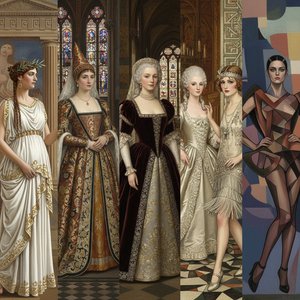
Style Through the Ages: Iconic Artworks That Defined the Evolution of Fashion Design
Explore the breathtaking intersection of fine art and high fashion. Discover how iconic masterpieces from Art Deco to Impressionism have shaped the world of luxury couture and timeless design in this curated visual journey.

Draped Narratives: Fashion as Symbol & Subject in Historical Art
Explore the fascinating history of fashion as a symbol of power & status in art! Discover masterpieces from Gainsborough to Tissot and learn how clothing shaped societal narratives. Find museum-quality reproductions at TopImpressionists.

Cristóbal Balenciaga: Deconstructing Haute Couture's Architectural Legacy
Explore the revolutionary world of Cristóbal Balenciaga, the 'couturier's couturier'. Discover his architectural designs, lasting influence on haute couture, and guide to collecting rare pieces. A connoisseur’s resource.

Style on Canvas: The Timeless Allure of Fashion Illustration Artworks
Discover the exquisite world of fashion illustration art. From Art Deco elegance to bespoke oil reproductions, explore how timeless sartorial beauty transforms luxury interiors through masterfully crafted canvas works and curated historical masterpieces.

Gianfranco Ferré: Deconstructing Haute Couture – A Legacy of Architectural Form
Explore the revolutionary world of Gianfranco Ferré, 'the architect of fashion.' Discover his architectural approach to haute couture, iconic Dior designs, and lasting influence on luxury style. A deep dive for collectors & enthusiasts.
Tutustu teoksiin, jotka on järjestetty aiheiden, tyylien ja ominaisuuksien mukaan.

