

 Esikatselu
 Jaa teos
 Jaa
Jaa
 Tiedot
 Opas
Opas

 Lataa kuva
 Samanlaisia kohteita
 Röntgenkuvaus
 Diaesitys
 Kysymykset ja vastaukset
 Tilastot
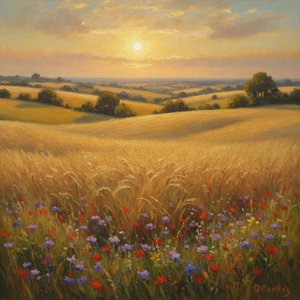
Meadow Lands


A serene impressionistic meadow filled with sunlit grass and lush trees by American Impressionist Dennis Miller Bunker captures a tranquil countryside mood, inviting you to bring this peaceful landscape into your home.
 Lue lisää
Dennis Miller Bunker (1861-1890) oli lyhyenä eläneen, mutta merkittävän amerikkalaisen impressionistimaalarin, jonka lumoavat maisemat ja hienostuneet muotokuvat edustavat myöhäisromantiikan ja modernismin välistä siirtymää. Hänen työnsä on tunnettu luonnonvalon ja tunnelman vangitsemisesta.
Giclée- ja taideprintit
Museolaatuisia giclée- tai kankaitaulun tulosteita nopealla tuotannolla ja joustavilla viimeistelyvaihtoehdoilla. ( Osta käsinmaalattu taideteos Siirry digitaaliseen kuvaan)




P118B €10

P118H €10

P118W €10

P438Z €10

P508JH €12

P508YH €12

P805H €10

P805Z €10

P919BZ €10

P919G €10

P919XJ €10

P959ZH €10

P968JZ €12

W106C €8

W218G €10

W218JH €8

W218Y €10

W307PJ €10

W316G €10

W316PJ €8

W316Y €10

W398PJ €8

W4111J €10

W500HY €15

W500JH €15

W692G €12

W849H €8

W940BG €15

W953PJ €8




Vakiokoko
räätälöity
CM
INCH
Valitse valmiista mitoistamme sellaiset, jotka vastaavat teoksen alkuperäisiä mittasuhteita.
Loading sizes...

leveys
korkeus
Syötä tarvitsemasi leveys ja korkeus, jotta tuloste sopii kehyksiisi tai seinällesi. Tulostetta voidaan vain leikata, sitä ei voida koskaan suurentaa alkuperäistä kuvaa suuremmaksi, joten eri muotoinen koko aiheuttaa osan kuvasta katoamisen. Lähetämme sinulle digitaalisen mallikuvan hyväksyttäväksi ennen kuin aloitamme tulostuksen. Tällä sivulla näkyvä kuva ei näytä lopullista rajausta — vain mallikuva näyttää sen.
Maailmanlaajuinen toimitus () 2 viikossa tavallisen 4–5 viikon sijaan. (6 marraskuu)

Ilmainen pikatoimitus ympäri maailman

Korkealaatuinen pellavakangas

Kattava kuljetusvakuutus

Tulliveron palautustakuu

Takuu täydellisestä värien vastaavuudesta

100 päivän palautusoikeus (vain valmistusvirheet)

100% rahat takaisin -takuu

Määräalennus tarjolla
 Lasivaihtoehto on saatavilla vain alle 110 cm kokoisille teoksille

Meadow Lands
Giclée- ja taideprintit
Replikaatin koko
-


Kokonaishinta
€ 62
A Symphony of Light and Serenity
In the quietude of Meadow Lands, painted in 1890, we encounter a masterclass in American Impressionism that feels less like a static image and more like a captured breath. Dennis Miller Bunker, an artist whose brilliance was tragically extinguished at the age of twenty-nine, possessed a rare ability to translate the ephemeral qualities of light into enduring visual poetry. This particular landscape invites the viewer into a lush, verdant sanctuary where the boundaries between earth and sky seem to soften under a warm, golden glow. The composition is anchored by a sprawling field of grass, rendered with such sensitivity that one can almost feel the gentle sway of the blades in a summer breeze. Scattered throughout this idyllic setting are trees and bushes that provide structural depth, acting as silent sentinels within a landscape that celebrates the harmonious coexistence of flora and sunlight.
The technique employed in Meadow Lands reflects the profound influence of the Barbizon school and the sophisticated brushwork of contemporaries like John Singer Sargent. Bunker utilizes a delicate interplay of color to evoke texture; the greenery is not merely a single shade of emerald, but a complex tapestry of moss, lime, and deep forest tones that catch the light at varying angles. His approach to the meadow's flowers and shrubs adds a layer of intricate detail that rewards close inspection, revealing a painterly touch that prioritizes atmosphere over rigid anatomical precision. This soft-focus brilliance is a hallmark of the Impressionist movement, where the goal was not to document reality, but to capture the sensory experience of a fleeting moment in time.
An Invitation to Tranquility and Timeless Elegance
Beyond its technical mastery, this artwork serves as a profound emotional vessel. The symbolism within the piece is rooted in the concept of the pastoral ideal—a nostalgic return to a state of nature that remains untouched by the industrial anxieties of the late 19th century. The warmth radiating from the sun-drenched meadow evokes feelings of peace, nostalgia, and a deep-seated connection to the natural world. It is a painting that does not demand attention through loud or jarring colors, but rather earns it through a subtle, rhythmic beauty that settles the soul.
For the discerning collector or interior designer, Meadow Lands offers an unparalleled opportunity to introduce a sense of calm and historical prestige into a living space. As a high-quality reproduction, this piece functions as a sophisticated focal point that complements both classical and contemporary decor. Whether placed in a sunlit library, a quiet study, or a grand hallway, the painting brings with it the luminous spirit of the American Impressionist era. It is more than a mere decoration; it is an atmospheric window into a lost era of pastoral grace, offering any room a sense of enduring light and restorative harmony.
Kysymykset ja vastaukset
Mihin tilaan Dennis Miller Bunker:n "Meadow Lands" sopii parhaiten?
Suositeltu tila teokselle Dennis Miller Bunker:n "Meadow Lands" on Living Room. Suositusta voidaan tietysti mukauttaa sisustukseesi sopivaksi.
Mihin taidesuuntaukseen ja mihin aikakauteen Dennis Miller Bunker:n "Meadow Lands" kuuluu?
Dennis Miller Bunker:n "Meadow Lands" kuuluu American Impressionism-suuntaukseen ja sijoittuu tekijänsä luku aikakaudelle.
Kuinka vanha Dennis Miller Bunker oli tehdessään "Meadow Lands"?
Dennis Miller Bunker oli 29 vuotias luodessaan teoksen "Meadow Lands" vuonna 1890. Ikä on laskettu taiteilijan syntymävuodesta 1861.
Samankaltaisia teoksia


Taiteilijan elämäkerta
Dennis Miller Bunker – Fleeting Brilliance: The Life and Art of an American Impressionist
Dennis Miller Bunker, a name perhaps less immediately recognized than those of his contemporaries like Sargent or Cassatt, nevertheless occupies a pivotal position in the narrative of American Impressionism. His tragically short life – he succumbed to meningitis at just twenty-nine years old – belies an artistic output brimming with innovation and sensitivity, a testament to a talent that burned intensely but briefly. Born in New York City in 1861, Bunker’s path toward becoming a significant painter was nurtured by a supportive family background; his father held a position with the Union Ferry Company, while his mother came from a lineage of artistic inclination through her brother, the celebrated illustrator Sol Eytinge Jr. This early exposure to creative pursuits undoubtedly played a role in shaping young Dennis's aspirations. He formally began his training at the Art Students League and the National Academy of Design in 1876, laying a foundation steeped in academic tradition that would later be beautifully disrupted by his embrace of more modern techniques.Early Influences and Artistic Formation
Bunker’s formative years were marked by exposure to both classical art and burgeoning artistic trends. His father's profession instilled in him a sense of practicality alongside an appreciation for craftsmanship, while his mother’s brother’s success as an illustrator fostered a fascination with visual storytelling. Crucially, he enrolled at the Art Students League and the National Academy of Design in 1876, immersing himself in the teachings of William Merritt Chase and honing his skills in traditional oil painting techniques. This academic grounding provided him with invaluable tools for later exploring Impressionistic principles—a synthesis that would define his artistic vision. Notably, he studied under Jean-Léon Gérôme at the École nationale supérieure des beaux-arts in Paris from 1880 to 1882, absorbing the lessons of realism and tonal gradation – skills that would serve as a counterbalance to the vibrant colors and loose brushwork characteristic of Impressionism.Parisian Exploration and Barbizon Inspiration
His travels to Paris proved transformative, introducing him to the influential Barbizon school—a group renowned for their direct observation of nature and naturalistic approach to painting. Artists like Théodore Rousseau and Jean-François Millet championed *plein air* painting, prioritizing capturing the immediacy of light and atmosphere over meticulous studio rendering. Bunker’s engagement with this movement instilled in him a deep appreciation for tonal subtlety and textural richness—elements that would permeate his landscapes and portraits alike. During his Parisian sojourn, he collaborated closely with fellow students Charles A. Platt and Kenneth R. Cranford, embarking on expeditions through France and Brittany where they encountered the breathtaking beauty of the Breton countryside. These excursions fueled his artistic imagination and solidified his commitment to portraying natural scenes with unparalleled accuracy and emotional depth. The resulting paintings—particularly those depicting Breton churches and cemeteries—demonstrate Bunker’s masterful command of color and brushwork, foreshadowing his later stylistic innovations.The Emergence of Impressionistic Style
By 1885, Bunker had achieved recognition as a talented painter and was elected to the Society of American Artists, marking a significant milestone in his artistic career. Simultaneously, he secured a teaching position at Cowles Art School in Boston, where he instructed students in figure drawing and composition—a role that allowed him to refine his skills while nurturing the next generation of artists. His style underwent a dramatic evolution during this period, influenced by John Singer Sargent’s encouragement to embrace brighter hues and looser brushwork. Bunker abandoned the rigid conventions of academic painting for a more expressive approach, prioritizing capturing fleeting moments of light and emotion—a hallmark of Impressionism. He experimented with bold color palettes and textured surfaces, creating landscapes that pulsed with vibrancy and portraits imbued with psychological nuance. His summer paintings in England alongside Sargent at Calcot Mill further cemented this stylistic shift, demonstrating his ability to synthesize Barbizon techniques with Impressionistic sensibilities.Legacy and Recognition
Bunker’s artistic output culminated in a celebrated exhibition at the St. Botolph Club in Boston in 1890—a poignant testament to his talent and ambition. Shortly thereafter, he succumbed to meningitis at the age of twenty-nine, tragically ending his promising career. Despite his untimely demise, Bunker’s paintings continue to captivate audiences today, demonstrating a remarkable fusion of academic rigor and Impressionistic dynamism. His work stands as an enduring symbol of American artistic innovation—a testament to a brief but brilliant life dedicated to capturing the beauty and complexity of the natural world and human experience. He remains a cornerstone of late 19th-century art history, inspiring artists across generations with his unwavering commitment to artistic excellence and his masterful execution of Impressionistic principles.
Dennis Miller Bunker
1861 - 1890 , Yhdysvallat
Pähkinänkuoressa
- Artistic Movement Or Style: Impressionismi
- Artists Or Movements Influenced By This Artist: ['Barbizon koulukunta']
- Artists Who Influenced This Artist:
- Jean-Léon Gérôme
- John Singer Sargent
- Date Of Birth: November 6, 1861
- Date Of Death: December 28, 1890
- Full Name: Dennis Miller Bunker
- Nationality: Amerikkalainen
- Notable Artworks:
- Eleanor Hardy Bunker
- Marshland, Medfield
- The Station
- Place Of Birth: New York City, USA
Aiheeseen liittyvät artikkelit
Golden Fields & Sun-Drenched Meadows: Capturing the Soul of Impressionist Landscapes
Immerse yourself in the luminous world of Impressionist landscapes. Discover how masters like Monet and Gauguin captured ephemeral light through plein air painting, and learn to bring the soul of sun-drenched meadows into your home with exquisite, hand-painted oil reproductions.

Capturing the Soul: The Most Emotionally Moving Impressionist and Post-Impressionist Masterpieces
Discover the profound emotional depth of Impressionist and Post-Impressionist masterpieces. Explore how legends like Monet, Van Gogh, and Gauguin captured light and soul through evocative landscapes and vibrant brushwork for a timeless connection to art history.

Whispers of the Meadow: Capturing the Serenity of the Quiet Countryside in Impressionist Masterpieces
Embark on a visual journey through Impressionist masterpieces. Discover how masters like Monet and Renoir captured the serene beauty of the countryside through light, color, and emotion. Explore timeless landscapes designed to bring tranquility and cultural elegance to your home sanctuary.

The Beauty of Impermanence: Capturing Decay through Impressionist Eyes
Explore the profound beauty of impermanence through Impressionist and Post-Impressionist eyes. Discover how masters like Monet and Van Gogh captured fleeting light and the poetic essence of nature's transitions in our deep dive into art history and emotional landscapes.

Beyond the Light: Capturing Raw Emotion and Subjective Vision in Post-Impressionist Landscapes
Explore the profound emotional depth of Post-Impressionist landscapes. Discover how masters like Van Gogh moved beyond light to capture raw human feeling through vibrant color and expressive texture in this expert art history retrospective.