
 Esikatselu
 Jaa teos
 Jaa
Jaa
 Tiedot
 Opas
Opas

 Lataa kuva
 Samanlaisia kohteita
 Röntgenkuvaus
 Diaesitys
 Q&A
Q&A Tilastot
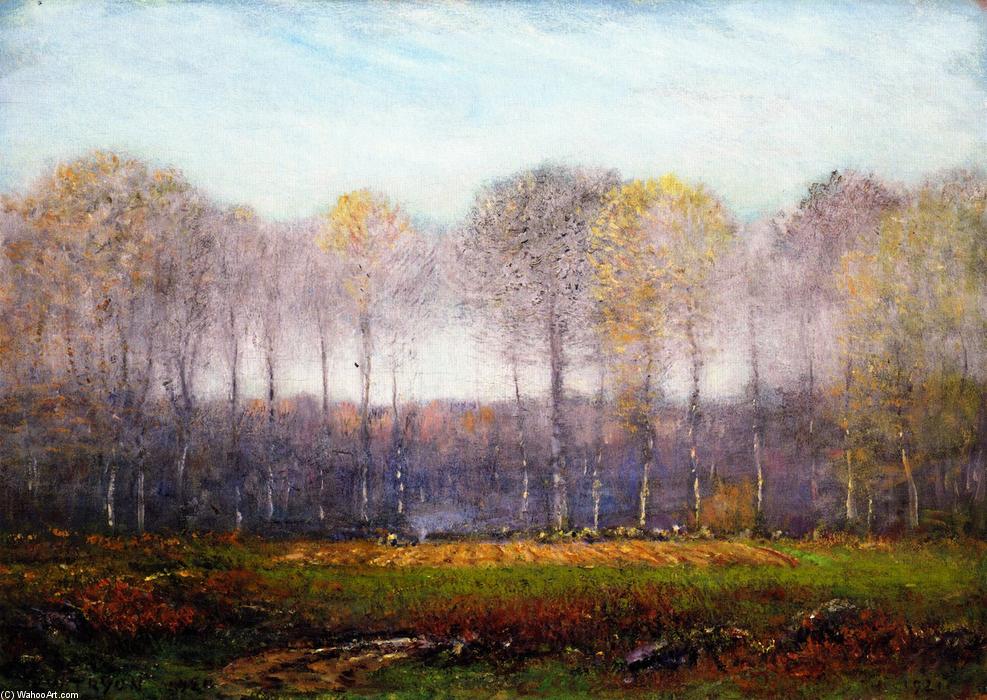
October Morning


Discover "October Morning" by Dwight William Tryon – a serene landscape painting capturing autumn's beauty. Explore its history, value & more at Invaluable.
 Lue lisää
Dwight William Tryon (1849-1925) oli arvostettu amerikkalainen tonalistimaalaaja, joka tunnetaan rauhallisista maisemista ja merimaisemista. Hänen herkät värit ja tunnelmallinen tyyli muistuttavat Whistlerin teoksia ja ovat keskeisessä asemassa luonnonkauniiden kuvausten taiteessa.
Giclée- ja taideprintit
Museolaatuisia giclée- tai kankaitaulun tulosteita nopealla tuotannolla ja joustavilla viimeistelyvaihtoehdoilla. ( Osta käsinmaalattu taideteos Siirry digitaaliseen kuvaan)




P118B €10

P118H €10

P118W €10

P438Z €10

P508JH €12

P508YH €12

P805H €10

P805Z €10

P919BZ €10

P919G €10

P919XJ €10

P959ZH €10

P968JZ €12

W106C €8

W218G €10

W218JH €8

W218Y €10

W307PJ €10

W316G €10

W316PJ €8

W316Y €10

W398PJ €8

W4111J €10

W500HY €15

W500JH €15

W692G €12

W849H €8

W940BG €15

W953PJ €8




Vakiokoko
räätälöity
CM
INCH
Valitse valmiista mitoistamme sellaiset, jotka vastaavat teoksen alkuperäisiä mittasuhteita.
Loading sizes...

leveys
korkeus
Syötä tarvitsemasi leveys ja korkeus, jotta tuloste sopii kehyksiisi tai seinällesi. Tulostetta voidaan vain leikata, sitä ei voida koskaan suurentaa alkuperäistä kuvaa suuremmaksi, joten eri muotoinen koko aiheuttaa osan kuvasta katoamisen. Lähetämme sinulle digitaalisen mallikuvan hyväksyttäväksi ennen kuin aloitamme tulostuksen. Tällä sivulla näkyvä kuva ei näytä lopullista rajausta — vain mallikuva näyttää sen.
Maailmanlaajuinen toimitus () 2 viikossa tavallisen 4–5 viikon sijaan. (31 lokakuu)

Ilmainen pikatoimitus ympäri maailman

Korkealaatuinen pellavakangas

Kattava kuljetusvakuutus

Tulliveron palautustakuu

Takuu täydellisestä värien vastaavuudesta

100 päivän palautusoikeus (vain valmistusvirheet)

100% rahat takaisin -takuu

Määräalennus tarjolla
 Lasivaihtoehto on saatavilla vain alle 110 cm kokoisille teoksille

October Morning
Giclée- ja taideprintit
Replikaatin koko
-


Kokonaishinta
€ 61
October Morning: A Symphony of Autumnal Light by Dwight William Tryon
Dwight William Tryon’s “October Morning” isn't merely a landscape painting; it’s an immersion into the heart of a fleeting autumnal moment, captured with a delicate precision and imbued with a profound sense of tranquility. Painted in 1921, during a period when American art was increasingly embracing tonalism – a style prioritizing mood and atmosphere over sharp detail – this piece exemplifies Tryon's signature approach: a quiet contemplation of the natural world rendered through subtle color shifts and luminous washes.
The scene unfolds within a gently sloping meadow, bisected by a meandering stream reflecting the soft hues of the sky. A carefully arranged row of trees dominates the midground, their branches reaching upwards like supplicating arms, each leaf painted with an almost impossibly delicate gradation of greens, yellows, and ochres – a testament to Tryon’s mastery of layering thin glazes of oil paint. These aren't the bold, vibrant colors of Impressionism; instead, they are muted, atmospheric, evoking the fading warmth of the sun as it dips below the horizon. The distant trees recede into a hazy blue-grey, creating an illusion of depth and vastness that draws the viewer’s eye into the painting’s serene embrace.
The Tonalist's Palette: Technique and Style
Tryon’s technique is characterized by its meticulous attention to light and shadow. He employed a ‘wet-on-wet’ approach, applying paint while it was still wet on the canvas, allowing colors to blend seamlessly and creating soft edges that contribute to the painting's ethereal quality. The absence of harsh outlines or defined forms reinforces this sense of atmospheric depth. The use of thin glazes – multiple layers of translucent color applied over each other – builds up the image gradually, resulting in a luminous surface that seems to glow from within. This technique is deeply rooted in the Barbizon school of painting, which emphasized capturing the essence of nature rather than its literal representation.
Notably, Tryon’s work aligns with the broader artistic currents of his time. Influenced by James McNeill Whistler's emphasis on tonal harmony and color relationships, he sought to evoke a feeling of quiet contemplation and spiritual connection through his art. His paintings are often described as “luminist,” though he predates the more formalized Luminist movement, sharing its core principles of capturing fleeting moments of light and atmosphere.
Symbolism and Emotional Resonance
“October Morning” is rich in symbolic meaning, reflecting a deep connection to the rhythms of nature. The row of trees, stretching towards the horizon, can be interpreted as a symbol of resilience and endurance – mirroring the steadfastness of nature through the changing seasons. The stream, flowing gently across the meadow, represents the passage of time and the cyclical nature of life. The muted colors evoke feelings of peace, nostalgia, and melancholy—a poignant reminder of the beauty of impermanence.
More than just a depiction of a landscape, “October Morning” is an invitation to pause, reflect, and connect with the natural world. It’s a painting that speaks to our deepest longings for tranquility and connection, offering a moment of respite from the complexities of modern life. The soft light and muted colors create a sense of warmth and serenity, inviting the viewer to lose themselves in the beauty of this autumnal scene.
A Legacy of Serenity: Tryon’s Enduring Appeal
Dwight William Tryon's work continues to resonate with audiences today due to its timeless appeal. His paintings capture a sense of quietude and beauty that transcends time, offering viewers a glimpse into the heart of nature. His dedication to capturing subtle nuances of light and color has earned him recognition as one of America’s most important landscape painters. Reproductions of “October Morning” are prized by collectors and interior designers alike, bringing a touch of serenity and autumnal charm to homes and galleries around the world.
Kysymykset ja vastaukset
Mikä on teoksen Dwight William Tryon:n "October Morning" hallitseva väri?
Teoksen Dwight William Tryon:n "October Morning" hallitseva väri on Putty (#dbe5e5).
Onko teoksessa "October Morning" voimakkaita valon ja varjon kontrasteja?
Teoksessa Dwight William Tryon:n "October Morning" on Statement kontrasti vaaleiden ja tummien alueiden välillä.
Miten teoksen Dwight William Tryon:n "October Morning" väripaletti on kuvattu?
Teoksen Dwight William Tryon:n "October Morning" väripalettia kuvataan sanoin Neutrals. Se on tiivis kuvaus teoksen väreistä.
Samankaltaisia teoksia


Taiteilijan elämäkerta
Dwight William Tryon: A Master of Atmospheric Landscapes
Dwight William Tryon, a name synonymous with serene beauty and subtle color, emerged from the heartland of Connecticut in 1849. Born in Hartford to Anson Tryon and Delia O. Roberts, his early life was marked by both tranquility and profound loss – the untimely death of his father shaped his artistic sensibilities, fostering a deep connection to nature that would become the cornerstone of his work. Growing up on his grandparents’ farm instilled within him an intimate understanding of the rural landscape, a foundation upon which he would build his distinctive artistic vision. Without formal training initially, Tryon's innate talent blossomed organically; he began sketching the surrounding countryside, meticulously translating the shifting light and shadows onto paper – a practice that foreshadowed his later mastery of atmospheric effects. His early sales, modest yet encouraging, paved the way for exhibitions that hinted at the considerable potential within him, culminating in acceptance into the prestigious National Academy of Design in 1873.European Influences: Shaping a Distinct Style
Driven by an ambition to refine his skills and immerse himself in the artistic currents of Europe, Tryon embarked on a transformative journey in 1876. He traveled to France, seeking formal training at the École des Beaux-Arts in Paris. This period proved pivotal, exposing him to a diverse range of artistic styles and techniques. While he studied under Jacquesson de la Chevreuse, his education extended far beyond the classroom walls; he actively sought guidance from luminaries such as Charles-François Daubigny, Henri Harpignies, and Jean Baptiste-Antoine Guillemet – artists who profoundly influenced his approach to color, composition, and brushwork. Initially, Tryon’s style leaned towards Luminism, a movement characterized by its emphasis on capturing the effects of light and atmosphere. However, he soon gravitated toward the principles of the Barbizon School, a French artistic movement that prioritized direct observation of nature and a more subdued palette. The Barbizon School's focus on depicting the natural world with honesty and restraint resonated deeply with Tryon’s sensibilities, shaping his distinctive style and aesthetic. Notably, James McNeill Whistler’s tonalist approach – emphasizing harmonious arrangements of color and subtle gradations of tone – exerted a significant influence on Tryon’s artistic development, contributing to the quiet intensity and evocative mood that characterize many of his works.The Development of a Signature Style: Composition and Atmosphere
By the late 1880s, Dwight William Tryon had fully realized his iconic style—a signature approach that would define his legacy as a leading American Tonalist. His canvases often feature a distinctive composition: a grouping or broken row of trees positioned in the middle distance, acting as a visual bridge between a luminous sky above and a foreground marsh or pasture below. These scenes are frequently imbued with autumnal hues, evoking a sense of tranquility and melancholy. Beyond landscapes, Tryon also excelled at seascapes, utilizing pastel to capture the expansive beauty of water, sky, and beach under varying weather conditions. His mastery lay in his ability to convey atmosphere—the subtle shifts in light, the delicate play of color, and the overall mood of a scene. *Salt-Marsh, December*, which garnered first prize at the Tennessee Centennial Exposition in 1897, stands as a prime example of this skill, showcasing his talent for capturing the serene beauty of the natural world. His works were consistently exhibited nationally, finding favor at prestigious venues like the Pennsylvania Academy of Fine Arts and the Montross Gallery.Recognition and Legacy: Patronage and Enduring Influence
The trajectory of Tryon’s career was significantly enhanced by his relationship with Charles Lang Freer, a discerning collector who became his most important patron. Freer acquired dozens of Tryon's works and even collaborated with the artist on interior design projects for his Detroit home. This generous support allowed Tryon to fully dedicate himself to his art, and many of these paintings now reside in the esteemed Freer Gallery of Art as part of the Smithsonian Institution. Further recognition came in 1908 when he received the Carnegie Prize at the Carnegie Exhibition, solidifying his position among the leading artists of his time. Throughout his career, Tryon was an active member of several prestigious art organizations, including the Society of American Artists, the American Watercolor Society, and the National Institute of Arts and Letters (now the American Academy of Arts and Letters). In 1887, he established a summer home in South Dartmouth, Massachusetts, which served as his primary residence for the remainder of his life. He also dedicated himself to education, teaching painting and drawing at Smith College from 1886 to 1923, where he founded the Tryon Gallery of Art. Dwight William Tryon passed away in 1925, leaving behind a rich artistic legacy defined by his contribution to American Tonalism and his exceptional ability to capture atmospheric landscapes and seascapes with delicate color and refined feeling. His works continue to be celebrated and are held in prominent collections such as the Smithsonian American Art Museum and the Freer Gallery of Art, ensuring that his vision endures for generations to come.Notable Works
* *Salt-Marsh, December* (1897) * *Springtime* (1895) * *Newbury Haystacks in Moonlight* (c. 1880)
Dwight William Tryon
1849 - 1925 , Yhdysvallat
Pähkinänkuoressa
- Artistic Movement Or Style: Tonalismi, Barbizon-koulu
- Artists Or Movements Influenced By This Artist: ['Amerikkalainen Tonalismi']
- Artists Who Influenced This Artist:
- Whistler
- Daubigny
- Harpignies
- Date Of Birth: 13. elokuuta 1849
- Date Of Death: 1. tammikuuta 1925
- Full Name: Dwight William Tryon
- Nationality: Amerikkalainen
- Notable Artworks:
- Salt-Marsh, December
- Spring
- Newbury Haystacks
- Place Of Birth: Hartford, Yhdysvallat
Aiheeseen liittyvät artikkelit

The Magic of Tonalism: Capturing Mood, Mist, and Atmospheric Emotion in Landscape Art
Discover the ethereal beauty of Tonalism. Explore how master artists use mist, soft light, and muted palettes to capture profound emotion and atmospheric mood in landscape painting. A deep dive into this quiet, introspective art movement for true connoisseurs.