

Esitetty: · Kehyksineen:
 Esikatselu
 Jaa teos
 Jaa
Jaa
 Tiedot
 Opas
Opas

 Lataa kuva
 Samanlaisia kohteita
 Röntgenkuvaus
 Diaesitys
 Kysymykset ja vastaukset
 Tilastot

€ 262
Käsinmaalattu öljyvärinen jäljennös
Käsinmaalattu öljyväri kankaalle haluamassasi koossa ja kehyksissä, taiteilijoidemme valmistamana tilauksesta. ( Vaihda tulosteeseen Siirry digitaaliseen kuvaan)
Koko
·Vakiokoko
räätälöity
CM
INCH
Valitse valmiista mitoistamme sellaiset, jotka vastaavat teoksen alkuperäisiä mittasuhteita.
Koot ladataan...

leveys
korkeus
Kirjoita tarvitsemasi leveys ja korkeus, jotta teos sopii kehyksiisi tai seinällesi. Koska kyseessä on käsinmaalattu teos, taiteilija voi maalata hieman enemmän kuvan ympärille tai rajata sitä hieman, jos haluat eri muotoisen koon — valinta on sinun. Lähetämme sinulle digitaalisen mallikuvan hyväksyttäväksi ennen kuin maalaus alkaa. Tällä sivulla näkyvä kuva ei vastaa lopullista tulosta — vain mallikuva näyttää sen.
 Lue lisää
Viimeistely
·
Valkoinen reuna €1

pehmennetty reuna €1

Jatkuva reuna €1

P118B €10

P118H €10

P118W €10

P438Z €10

P508JH €12

P508YH €12

P805H €10

P805Z €10

P919BZ €10

P919G €10

P919XJ €10

P959ZH €10

P968JZ €12

W106C €8

W218G €10

W218JH €8

W218Y €10

W307PJ €10

W316G €10

W316PJ €8

W316Y €10

W398PJ €8

W4111J €10

W500HY €15

W500JH €15

W692G €12

W849H €8

W940BG €15

W953PJ €8

H24-GOLD €30

H24-SILVER €30

H36-GOLD €45

H36-SILVER €45
Toimitetaan suojaputkessa, valmiina kehystettäväksi omassa kehyksessäsi.
Yli 105 cm kokoiset kehykset toimitetaan osasarjana ammattilaiskehystäjälle — lue lisätiedot.
Lisäpalvelut
valinnainenMitä lisämateriaalit sisältävät?
Esimerkkejä muutettavista asioista: Vaihda kasvot asiakkaan valokuvaan; Lisää lemmikki (esim. vaihda kissa koiraksi); Lisää piilotettu viesti taustalle; Vaihda taustan maisemaa tai elementtejä.
Tilauksen jälkeen TopImpressionists.com -tiimi lähettää asiakkaalle sähköpostia ohjeita varten ja toimittaa luonnoksen esikatselun
Tilauksen jälkeen TopImpressionists.com -tiimi lähettää asiakkaalle sähköpostia ohjeita varten ja toimittaa luonnoksen esikatselun
Maailmanlaajuinen toimitus () 3–4 viikossa tavallisen 5 viikon sijaan. (7 marraskuu). Laadusta ei tingitä.
Suojalakkaus
Nimilaatta
Kaiverretun pronssilaatan tiedot
This elegant plaque features the artist's name and the title of the artwork, finely engraved for a timeless presentation.
It is made from bronze with a refined, elegant finish. The text is precisely laser-engraved for a sharp and permanent result. Measuring 9x2 cm, the plaque is compact yet easy to read. It's built to be durable and scratch-resistant, offering a professional, museum-quality look. Mounting is simple thanks to the included adhesive backing.
Läpinäkyvän akryylilaatan tiedot
The plaque includes essential engraved details such as the artist's name, the title of the artwork, the date it was created, the type of media used-like oil on canvas or watercolor-a brief description of the piece, and a QR code that links to the complete artwork information.
It is crafted from clear acrylic, offering a sleek, modern appearance. The text is UV-engraved in black to ensure strong visual contrast. With a size of 10x15 cm, it ensures optimal readability. It comes equipped with two metal hooks for secure wall mounting. The plaque is designed to be weather-resistant, making it suitable for various environments, and it includes interactive features that work seamlessly with smartphone scanning.
Mustan akryylilaatan tiedot
This elegant plaque includes engraved information such as the artist's name, the title of the artwork, the date it was created, the type of media used (like oil on canvas or watercolor), a short description of the artwork, and a QR code for quick access to more information.
The plaque itself is made from refined black acrylic with a premium finish. The text is laser-engraved in white for high contrast and readability. Its size is 10x15 cm, designed to be easy to read. It comes with two metal hooks for professional mounting. The design is sleek and fits any interior style. It is also weather-resistant and durable, with built-in digital integration for mobile compatibility.
Lasivaihtoehto on saatavilla vain alle 110 cm kokoisille teoksille
 Lasivaihtoehto on saatavilla vain alle 110 cm kokoisille teoksille
- Ilmainen pikatoimitus ympäri maailman
- Korkealaatuinen pellavakangas
- Kattava kuljetusvakuutus
- Tulliveron palautustakuu
- Takuu täydellisestä värien vastaavuudesta
- 100 päivän palautusoikeus (vain valmistusvirheet)
- 100% rahat takaisin -takuu
- Määräalennus tarjolla


Keräilykohteen kuvaus
Explore Manet’s ‘In the Conservatory’! A captivating 1879 oil painting of a serene couple in a lush garden. Discover Impressionism, elegance & artistic detail.
Taiteilijan elämäkerta
Tutustu Édouard Manetiin (1832-1883), realismin ja impressionismin sillanrakentajaan! Löydä ikonisia teoksia, kuten 'Le Déjeuner' ja 'Olympia', sekä hänen vaikutuksensa moderniin taiteeseen.
Tietoa maalauksesta
A Glimpse into Belle Époque Society: Edouard Manet’s “In the Conservatory”
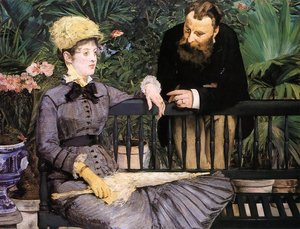
- Subject and Composition: “In the Conservatory” (1879) presents a captivating scene of modern life – a couple engaged in quiet conversation within the lush, verdant setting of a conservatory. Manet masterfully captures an intimate moment between a formally dressed man and a woman adorned in lavish attire, suggesting their status within Parisian high society. The composition is carefully balanced, with potted plants creating depth and framing the figures, while strategically placed vases and a prominent clock subtly hint at the passage of time.
- Style and Technique: This painting exemplifies Manet’s unique transition between Realism and Impressionism. While retaining a commitment to depicting contemporary life with accuracy, he employs loose brushstrokes and a focus on capturing the interplay of light and shadow – hallmarks of the emerging Impressionist movement. The use of thin glazes builds color and form, creating a luminous quality that enhances the painting’s atmospheric depth. The organic lines of the foliage contrast beautifully with the more structured forms of the figures and bench.
- Historical Context: Created during the Belle Époque, a period of optimism, prosperity, and artistic innovation in France, “In the Conservatory” reflects the leisure activities and social interactions of the upper class. Conservatories were fashionable spaces – not merely greenhouses but elegantly decorated rooms for relaxation and socializing. Manet’s choice of subject matter provides a window into this world, documenting the lifestyle of his contemporaries.
- Symbolism and Interpretation: The conservatory itself symbolizes tranquility, beauty, and perhaps even a secluded space for intimacy or reflection. However, the painting is imbued with an intriguing ambiguity. As noted by critics, the couple’s detached gazes and physical separation create a sense of emotional distance, prompting questions about their relationship. Is this a portrait of contentment, polite formality, or underlying tension? The clock serves as a memento mori, reminding viewers of time's relentless march.
- Emotional Impact & Artistic Significance: “In the Conservatory” evokes a feeling of serene contemplation and understated elegance. Manet’s ability to capture the nuances of human interaction within a beautiful setting is remarkable. The painting isn’t simply a depiction of two people; it's an exploration of modern life, social dynamics, and the complexities of relationships. It stands as a significant work in Manet’s oeuvre, demonstrating his mastery of composition, color, and psychological insight.
- Related Works: For those interested in exploring further, consider Manet's “Madame Manet in the Conservatory,” which offers another perspective on conservatory life. Also noteworthy is "The House at Rueil," showcasing Manet’s skill in capturing everyday scenes with a similar attention to light and atmosphere.
For Collectors & Interior Designers
- A Statement Piece: “In the Conservatory” is more than just a painting; it’s a conversation starter, a window into history, and a testament to Manet's genius. Its sophisticated palette and elegant composition make it an ideal focal point for any discerning collection.
- Interior Harmony: The painting’s muted tones and botanical elements lend themselves beautifully to a variety of interior design styles – from classic and traditional to modern and eclectic. It would complement spaces with natural light, neutral color schemes, or lush greenery.
- Investment Potential: As a work by one of the most influential artists of the 19th century, “In the Conservatory” represents a valuable investment opportunity. High-quality reproductions allow art enthusiasts to enjoy Manet’s masterpiece without the expense of an original.
Kysymykset ja vastaukset
Mikä Édouard Manet:n "In the Conservatory" -tulosteen koko sopii suositeltuun huoneeseen?
Suositeltu tulostuskoko teokselle Édouard Manet:n "In the Conservatory" tilaan Living Room on Large.
Kuinka voimakkaita värit ovat teoksessa Édouard Manet:n "In the Conservatory"?
Teoksen Édouard Manet:n "In the Conservatory" värit ovat Monochromatic voimakkuudeltaan.
Mitä aiheita teoksessa Édouard Manet:n "In the Conservatory" esiintyy?
Teoksen Édouard Manet:n "In the Conservatory" teemoihin kuuluvat conservatory, portraiture, leisure, social scene, impressionism, manet, elegant, garden. Yhdessä ne tiivistävät teoksen aiheen.
Pikaopas ja taidevisailu
Tietoa artistista Édouard Manet

Édouard Manet
1832 - 1883, Ranska
Taiteilijan elämäkerta
Pariisin kapinallinen: Édouard Manetin elämä ja taide
Édouard Manet, syntynyt vuonna 1832 varakkaaseen porvarisperheeseen Pariisissa, ei ollut suinkaan kohtalossa mullistavan taiteilijan uraa. Hänen isänsä, arvostettu tuomari, näki pojalleen turvallisen tulevaisuuden laissa tai ehkä merivoimissa – kunnioitettavia ammatteja heidän sosiaaliseen asemaansa sopiviksi. Jo nuorena poikana Manetin sydän kuului taiteelle. Yhdestoista-vuotiaana hän aloitti muodollisen piirustuksenopetuksen, ja vaikka hän hetkeksi oppipoikana akateemisen maalarin Thomas Couturen ateljeessa, hän löysi nopeasti Couturen jäykät menetelmät tukahduttaviksi. Tämä varhainen vastustus ennusti elämänmittaista taiteellisten konventioiden haastamista. Manet ei ollut kiinnostunut pelkästään menneisyyden toistamisesta; hän pyrki vangitsemaan modernin Pariisin eloisuuden – ja joskus sen häiritseviä todellisuuksia. Hän vieraili Louvressa, ei vain kopioidakseen vanhoja mestareita, vaan purkaakseen heidän tekniikoitaan oppiakseen Caravaggiolta ja Velázquezilta, kuinka valo ja varjo voisivat muotoilla muotoa ja herättää tunteita. Kuitenkin taiteellisten suuntausten muutos, erityisesti Gustave Courbetin johtaman realismin nousu, sytytti todella Manetin luovan polun. Courbetin vaatimus kuvata jokapäiväistä elämää ilman idealisointia resonoi syvästi Manetin kanssa ja vapautti hänet historiallisten tai mytologisten aiheiden rajoituksista.Perinteiden murtaminen: Skandaali ja innovaatio
1860-luku oli intensiivisen taiteellisen levottomuuden aikaa Pariisissa, ja Manet löysi itsensä sen keskipisteestä. Japanilaisten painokuvien – *ukiyo-e* – saapuminen vaikutti syvästi hänen esteettisiin herkkyyksiinsä. Hän oli lumoutunut niiden litistetyistä perspektiiveistä, rohkeista sommitteluistaan ja silmiinpistävästä värien käytöstään, jotka tulivat hänen oman tyylinsä tunnusmerkeiksi. Tämä vaikutus yhdistettynä hänen kasvavaan hylkäämiseensä akateemiseen viimeistelyyn johti teoksiin, jotka järkyttivät ja skandalisoivat pariisilaista taidemaailmaa. Le Déjeuner sur l'herbe (Aamiainen ruohikolla), joka esiteltiin Salon des Refusésissa vuonna 1863 – näyttelyssä hylätyille teoksille virallisessa salonissa – sytytti kiistaa. Maalaus, jossa alaston nainen pikniköi huolettomasti kahden täysin pukeutuneen miehen kanssa, ei liittynyt pelkästään alastomuuteen; kyse oli *siitä, miten* tuo alastomuus esitettiin. Manetin hahmot puuttuivat perinteisten alastonkuvien idealisoiduista muodoista ja mytologisesta kontekstista. Ne olivat kiistattomasti moderneja, kohdaten katsojan häiritsevällä suoruudellaan. Le Déjeunerin ympärillä oleva skandaali voimistui hänen mestariteoksensa Olympian myötä vuonna 1865. Tämä maalaus, joka oli tahallinen uudelleentulkinta Titianin *Venuksesta Urbinossa*, esitti nykyaikaisen prostituoidun tuijottaen rohkeasti katsojaa. Häikäilemätön realismi ja provosoiva aihe kohtasivat laajaa paheksuntaa. Kriitikot syyttivät Manetia siveettömyydestä ja taiteellisesta epäpätevyydestä, mutta järkytyksen alla piili tunnustus siitä, että hän muutti perusteellisesti maalaamisen kieltä.Silta impressionismiin: Valo, siveltämät ja moderni elämä
Vaikka Manet ei koskaan täysin omaksunut nimikettä "impressionisti", hänen vaikutuksensa liikkeeseen oli kiistaton. Hän jakoi heidän hylkäämisensä akateemisia konventioita kohtaan ja sitoutumisensa vangitsemaan valon ja tunnelman ohikiitävät tehosteet. Hän esitteli töitään Monetin, Renoirin, Degasin ja muiden kanssa impressionistien itsenäisissä näyttelyissä vahvistaen asemansa avantgardessa. Manetin tekniikka kehittyi löysemmäksi siveltämätavaksi, jossa muodon vaikutus oli tarkemman yksityiskohdan sijaan etusijalla. Hän kokeili värejä käyttäen usein jyrkkiä kontrasteja luodakseen dramaattisia tehosteita. Skandaalimaisen alastomuuden lisäksi Manet tutki laajan valikoiman aiheita: muotokuvia – mukaan lukien vaikuttavat kuvaukset vaimostaan Suzannesta ja taiteilijatoveristaan Émile Zolasta; kohtauksia pariisilaisten yöelämästä, kuten A Bar at the Folies-Bergère, joka vangitsee mestarillisesti modernin kaupunkielämän vieraantumisen ja loiston; ja intiimejä kotikohtauksia. Hän ei vain dokumentoinut näitä aiheita; hän tutki niitä kyseenalaistaen yhteiskunnallisia normeja ja haastaen perinteisiä kauneuskäsityksiä.Perintö ja pysyvä vaikutus
Édouard Manetin ennenaikainen kuolema vuonna 1883 syfiliksen vuoksi katkaisi uran, joka oli jo peruuttamattomasti muuttanut taidehistorian kulun. Vaikka hänen maineensa kasvoi merkittävästi hänen kuolemansa jälkeen, hänen vaikutuksensa tunnettiin välittömästi nuorempien taiteilijoiden keskuudessa, jotka tunsivat hänet vapauttajana. Hän rikkoi esteitä haastaen perinteisiä aiheita, tekniikoita ja taiteellisia tarkoituksia koskevia käsityksiä. Hänen painotuksensa modernin elämän vangitsemisessa tasoitti tietä impressionismille ja postimpressionismille. Hänen innovatiivinen siveltämätapansa vaikutti sukupolviin maalaritaiteilijoita. Hänen halukkuutensa kohdata epämiellyttäviä totuuksia yhteiskunnasta pakotti katsojat kyseenalaistamaan omia oletuksiaan. Manetin maalaukset resonoivat edelleen tänään, paitsi esteettisen kauneutensa vuoksi myös niiden kestävyyden vuoksi. Hän on edelleen keskeinen hahmo realismin ja impressionismin siirtymässä ja häntä juhlitaan oikeutetusti yhtenä modernin taiteen perustajaisistä – pariisilaisena kapinallisena, joka uskalsi maalata maailman sellaisena kuin hän sen näki, kaikessa monimutkaisuudessaan ja ristiriitaisuudessaan. Hänen työnsä on voimakas muistutus siitä, että todellinen taiteellinen innovaatio johtaa usein vakiintuneiden normien haastamiseen ja aikamme epämiellyttävien totuuksien omaksumiseen.Pikaaakkaukset taiteilijasta Édouard Manet
- Kansallisuus: Ranskalainen
- Koko Nimi: Édouard Manet
- Kuolinpäivä: 30. huhtikuuta 1883
- Merkittäviä Teoksia:
- Aamiainen ruohikolla
- Olympia
- Baaritiski Folies-Bergèressä
- Syntymäpaikka: Pariisi, Ranska
- Syntymäpäivä: 23. tammikuuta 1832
- Taidesuuntaus: Realismi, Impressionismi
- Taiteilijat Joihin Vaikutti:
- Claude Monet
- Pierre-Auguste Renoir
- Edgar Degas
- Vaikuttaneet Taiteilijat:
- Caravaggio
- Diego Velázquez
- Gustave Courbet
Samankaltaisia teoksia


Tutustu teoksiin, jotka on järjestetty aiheiden, tyylien ja ominaisuuksien mukaan.


Édouard Manet
In the Conservatory
() ·
Kehyksineen: · Käsinmaalattu öljyväreillä pellavalle
Yhteensä