
Esitetty: · Kehyksineen:
 Esikatselu
 Jaa teos
 Jaa
Jaa
 Tiedot
 Opas
Opas

 Lataa kuva
 Samanlaisia kohteita
 Röntgenkuvaus
 Diaesitys
 Kysymykset ja vastaukset
 Tilastot
- 187.0 x 107.0 cm


€ 241
Käsinmaalattu öljyvärinen jäljennös
Käsinmaalattu öljyväri kankaalle haluamassasi koossa ja kehyksissä, taiteilijoidemme valmistamana tilauksesta. ( Vaihda tulosteeseen Siirry digitaaliseen kuvaan)
Koko
·Vakiokoko
räätälöity
CM
INCH
Valitse valmiista mitoistamme sellaiset, jotka vastaavat teoksen alkuperäisiä mittasuhteita.
Koot ladataan...

leveys
korkeus
Kirjoita tarvitsemasi leveys ja korkeus, jotta teos sopii kehyksiisi tai seinällesi. Koska kyseessä on käsinmaalattu teos, taiteilija voi maalata hieman enemmän kuvan ympärille tai rajata sitä hieman, jos haluat eri muotoisen koon — valinta on sinun. Lähetämme sinulle digitaalisen mallikuvan hyväksyttäväksi ennen kuin maalaus alkaa. Tällä sivulla näkyvä kuva ei vastaa lopullista tulosta — vain mallikuva näyttää sen.
 Lue lisää
Viimeistely
·
Valkoinen reuna €1

pehmennetty reuna €1

Jatkuva reuna €1

P118B €10

P118H €10

P118W €10

P438Z €10

P508JH €12

P508YH €12

P805H €10

P805Z €10

P919BZ €10

P919G €10

P919XJ €10

P959ZH €10

P968JZ €12

W106C €8

W218G €10

W218JH €8

W218Y €10

W307PJ €10

W316G €10

W316PJ €8

W316Y €10

W398PJ €8

W4111J €10

W500HY €15

W500JH €15

W692G €12

W849H €8

W940BG €15

W953PJ €8

H24-GOLD €30

H24-SILVER €30

H36-GOLD €45

H36-SILVER €45
Toimitetaan suojaputkessa, valmiina kehystettäväksi omassa kehyksessäsi.
Yli 105 cm kokoiset kehykset toimitetaan osasarjana ammattilaiskehystäjälle — lue lisätiedot.
Lisäpalvelut
valinnainenMitä lisämateriaalit sisältävät?
Esimerkkejä muutettavista asioista: Vaihda kasvot asiakkaan valokuvaan; Lisää lemmikki (esim. vaihda kissa koiraksi); Lisää piilotettu viesti taustalle; Vaihda taustan maisemaa tai elementtejä.
Tilauksen jälkeen TopImpressionists.com -tiimi lähettää asiakkaalle sähköpostia ohjeita varten ja toimittaa luonnoksen esikatselun
Tilauksen jälkeen TopImpressionists.com -tiimi lähettää asiakkaalle sähköpostia ohjeita varten ja toimittaa luonnoksen esikatselun
Maailmanlaajuinen toimitus () 3–4 viikossa tavallisen 5 viikon sijaan. (10 marraskuu). Laadusta ei tingitä.
Suojalakkaus
Nimilaatta
Kaiverretun pronssilaatan tiedot
This elegant plaque features the artist's name and the title of the artwork, finely engraved for a timeless presentation.
It is made from bronze with a refined, elegant finish. The text is precisely laser-engraved for a sharp and permanent result. Measuring 9x2 cm, the plaque is compact yet easy to read. It's built to be durable and scratch-resistant, offering a professional, museum-quality look. Mounting is simple thanks to the included adhesive backing.
Läpinäkyvän akryylilaatan tiedot
The plaque includes essential engraved details such as the artist's name, the title of the artwork, the date it was created, the type of media used-like oil on canvas or watercolor-a brief description of the piece, and a QR code that links to the complete artwork information.
It is crafted from clear acrylic, offering a sleek, modern appearance. The text is UV-engraved in black to ensure strong visual contrast. With a size of 10x15 cm, it ensures optimal readability. It comes equipped with two metal hooks for secure wall mounting. The plaque is designed to be weather-resistant, making it suitable for various environments, and it includes interactive features that work seamlessly with smartphone scanning.
Mustan akryylilaatan tiedot
This elegant plaque includes engraved information such as the artist's name, the title of the artwork, the date it was created, the type of media used (like oil on canvas or watercolor), a short description of the artwork, and a QR code for quick access to more information.
The plaque itself is made from refined black acrylic with a premium finish. The text is laser-engraved in white for high contrast and readability. Its size is 10x15 cm, designed to be easy to read. It comes with two metal hooks for professional mounting. The design is sleek and fits any interior style. It is also weather-resistant and durable, with built-in digital integration for mobile compatibility.
Lasivaihtoehto on saatavilla vain alle 110 cm kokoisille teoksille
 Lasivaihtoehto on saatavilla vain alle 110 cm kokoisille teoksille
- Ilmainen pikatoimitus ympäri maailman
- Korkealaatuinen pellavakangas
- Kattava kuljetusvakuutus
- Tulliveron palautustakuu
- Takuu täydellisestä värien vastaavuudesta
- 100 päivän palautusoikeus (vain valmistusvirheet)
- 100% rahat takaisin -takuu
- Määräalennus tarjolla


Keräilykohteen kuvaus
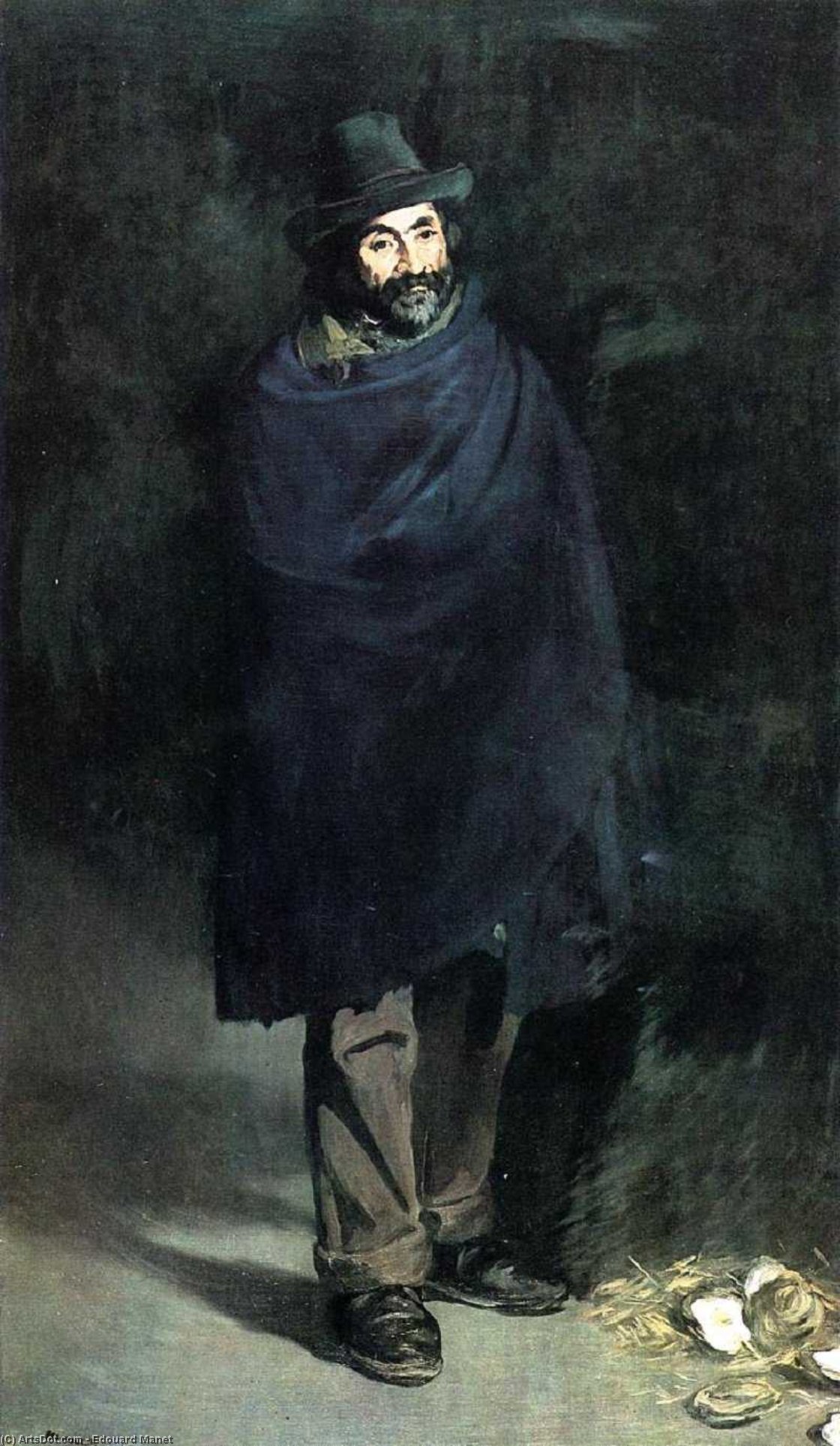
Édouard Manet's 'The Philosopher' (1867) captures a contemplative figure amidst nature, blending Realism and Impressionism. Explore the painting’s symbolism, artistic context, and legacy at The Art Institute of Chicago.
Taiteilijan elämäkerta
Manet yhdisti realismin ja impressionismin Olympia-teoksellaan. Löydä tämän pariisililaisen mestarin vallankumoukselliset teokset.
Tietoa maalauksesta
The Philosopher: A Window into Manet’s Modern Soul
Édouard Manet's *The Philosopher*, painted in 1867, isn’t merely a portrait; it’s a carefully constructed tableau that encapsulates the burgeoning spirit of modern art. This oil-on-canvas work, measuring a substantial 187 x 107 cm, invites us into a quiet contemplation, a moment suspended between observation and thought. The subject, a man draped in a long coat and hat – a figure instantly recognizable as embodying intellectualism – stands on a Parisian street, his hands tucked casually into his pockets, radiating an aura of profound introspection. Yet, it’s not the individual that commands our attention entirely, but rather the subtle orchestration of elements surrounding him: the birds perched above, the clock subtly hinting at time's passage, and the carefully chosen background details. These aren’t merely decorative flourishes; they contribute to a layered narrative, inviting us to consider the nature of existence itself. The painting emerged from a pivotal moment in art history – a period of intense transition between Realism and Impressionism. Manet, already known for his provocative works like *Le Déjeuner sur l'herbe* and *Olympia*, was pushing boundaries with each new creation. He deliberately challenged academic conventions by depicting everyday life, often featuring ordinary people in unidealized ways. *The Philosopher* exemplifies this approach, eschewing the polished surfaces and heroic narratives favored by earlier generations of artists. Instead, Manet presents a scene stripped bare of sentimentality, focusing on the raw reality of urban existence. The muted palette – dominated by browns, grays, and ochres – reinforces this sense of understated observation. Notice how he employs loose brushstrokes, characteristic of his style, creating an almost hazy effect that softens the edges and contributes to the painting’s contemplative mood. Manet's stylistic choices are deeply rooted in both Realism and Impressionism. He retains a degree of realism in his depiction of the subject and setting, meticulously rendering the details of the man’s clothing and the streetscape. However, he also embraces the Impressionist emphasis on capturing fleeting moments of light and color. The dappled sunlight filtering through the background suggests movement and atmosphere, while the subtle shifts in tone create a sense of depth and spatial ambiguity. This blending of styles – realism tempered by impressionistic sensitivity – is what makes Manet such a revolutionary figure. He wasn’t simply painting what he saw; he was actively shaping how we perceive the world around us. The inclusion of birds, for instance, adds a layer of symbolic richness. Birds are often associated with freedom and intellect, further reinforcing the subject's philosophical nature. The historical context surrounding *The Philosopher* is crucial to understanding its significance. Manet’s work coincided with a period of rapid social and economic change in Paris – the rise of industrialization, urbanization, and a growing sense of alienation. His paintings reflected this turbulent atmosphere, capturing the anxieties and uncertainties of modern life. The painting's placement within the broader context of Manet's career reveals his deliberate attempt to challenge established artistic norms and pave the way for future generations of artists. *The Philosopher* stands as a testament to Manet’s innovative spirit and his profound impact on the development of modern art, ultimately finding its home in the prestigious Art Institute of Chicago, where it continues to captivate viewers with its quiet intensity and enduring relevance.Artistic Details & Symbolism
Let's delve deeper into the specific details that contribute to *The Philosopher’s* evocative power. The man himself is presented in a state of profound contemplation, his gaze directed towards an unseen horizon. His beard and mustache lend him an air of intellectual authority, solidifying his role as a philosopher. Note the careful rendering of his clothing – the long coat, the hat, the simple pocket watch – each element contributing to a sense of timelessness and dignity. The background is equally significant. The two birds perched above suggest a connection to nature, while the clock subtly reminds us of the relentless passage of time. These seemingly minor details are carefully orchestrated to create a harmonious whole, inviting viewers to engage in their own interpretations.Manet’s Legacy & Influence
Édouard Manet's influence on subsequent generations of artists is undeniable. His willingness to challenge conventions and depict modern life with unflinching honesty paved the way for Impressionism and beyond. Artists like Claude Monet, Pierre-Auguste Renoir, and Edgar Degas were deeply influenced by Manet’s techniques and his approach to subject matter. *The Philosopher*, in particular, demonstrates Manet's ability to capture a fleeting moment of human experience with remarkable sensitivity and insight. His work continues to inspire artists today, reminding us of the power of art to challenge our perceptions and expand our understanding of the world.Reproductions & Viewing Experience
TopImpressionists offers meticulously crafted hand-painted reproductions of *The Philosopher*, capturing the essence of Manet’s original masterpiece with unparalleled fidelity. Our skilled artisans employ traditional oil painting techniques, carefully recreating every brushstroke and nuance of color. These reproductions are not merely copies; they are works of art in their own right, imbued with the same spirit and emotion as the original. Whether you choose a large-scale statement piece for your home or a smaller, more intimate reproduction to adorn your office, our hand-painted versions will bring this iconic artwork into your space, allowing you to appreciate its beauty and complexity for years to come. Explore our collection today and experience *The Philosopher* in a whole new light.Kysymykset ja vastaukset
Kuka on teoksen "The philosopher" taiteilija?
Teoksen "The philosopher" taiteilija on Édouard Manet. Teos on luetteloitu Édouard Manet nimellä.
Minkä tyyppinen teos Édouard Manet:n "The philosopher" on?
Édouard Manet:n "The philosopher" on luokiteltu tyypiksi Seinätaide. Luokitus kertoo, minkä tyyppinen alkuperäisteos on kyseessä.
Onko Édouard Manet teos "The philosopher" tekijänoikeudeltaan vapaa (public domain), ja miksi?
Teoksen "The philosopher" tekijänoikeustilanne (vapaasti käytettävissä – tekijänoikeussuoja on päättynyt) määräytyy taiteilijan kuolinvuoden 1883 perusteella.
Pikaopas ja taidevisailu
Tietoa artistista Édouard Manet

Édouard Manet
1832 - 1883, Ranska
Taiteilijan elämäkerta
Varhaisluonnos, perhe ja taiteellinen kasvu
Édouard Manet syntyi Pariisissa 23. tammikuuta 1832. Hän kasvoi varakkaassa kodissa, ranskan oikeusministeriössä vaikuttavan isän vanhimpana poikana. Hänen isänsä oli kuvitellut pojalleen aivan toisenlaisen uran – polun, joka olisi johtanut laivastoon tai oikeustieteeseen, arvostettuihin ammatteihin, jotka sopivat perheen korkeaan sosiaaliseen asemaan. Nuori poika yritti seurata tätä ennalta määrättyä suuntaa, mutta epäonnistui merioppilaitoksen pääsykokeissa kaksi kertaa. Tämä vastoinkäyminen käänsi hänen katseensa kohti ateljeet. Lopulta hän esitti isälleen kokoelman maalauksia osoittaakseen omistautumisensa taiteelle, ja sai vihdoin luvan aloittaa muodollisen opiskelun.
Vuosina 1850–1856 hän opiskeli Thomas Couturen ateljeessa. Vaikka hän omaksui siellä akateemisen maalaamisen tekniset perusteet, hänen katseensa vaelsi usein kohti Louvrea. Hän vietti suuren osan ajastaan gallerioissa, vanhojen mestareiden kangasten edessä seisten ja heidän menetelmiään kopioiden. Hän tutki, kuinka mestarit hallitsivat valon ja muodon, imien itseensä menneisyyden opetuksia samalla kun hän valmistautui löytämään oman, ainutlaatuisen polkunsa. Tämä intensiivisen opiskelun aika loi teknisen pohjan, joka mahdollisti hänen myöhemmät, perinteitä rikkovat kokeilunsa.
Tekniikka ja taiteellinen tyyli
Kankaan pinta paljastaa harkitun poikkeaman Salonin vaatimasta kiillotetusta ja huomaamattomasta viimeistelystä. Sen sijaan, että siveltimen jäljet tasoitettaisiin pois, teoksessa on nähtävissä energinen ja elävä pigmentin käyttö, jota kutsutaan factureksi. Tämä lähestymistapa asettaa etusijalle itse maalin fyysisen todellisuuden. Käyttämällä alla prima -tekniikkaa tai märkä-märälle -menetelmää, värit levitetään vielä tuoreina, mikä vangitsee välittömän laadun ja välttää perinteisten akateemisten menetelmien hitaan, kerroksittaisen rakentumisen. Tämä menetelmä mahdollistaa tietyn spontaaniuden siinä, miten valo ja tunnelma tallennetaan kankaalle.
Muotojen rakenteessa on havaittavissa huomattava litteys. Siveltimen löysä ja vapaa käsittely välttää syvää, kolmiulotteista mallinnusta, jota käytetään luomaan illuusio tilasta. Sen sijaan kuvapinta tuntuu usein puristuneelta. Tätä vaikutelmaa voimistavat voimakkaat ja vastakkaiset sävyt. Sen sijaan, että muoto määriteltäisiin asteittaisilla väriskaaloilla, teoksissa käytetään usein jyrkkiä arvoeroja viittaamaan kaupungin pirstaleiseen, moderniin valoon. Tämä matemaattisen perspektiivin ja saumattoman sulauttamisen hylkääminen luo välittömyyden tuntua, ikään kuin kuva koottaisiin suoraan katsojan silmien eteen.
Modernien aiheiden skandaali
1860-luvun puoliväli toi tullessaan sarjan konfrontaatioita julkisen mielipiteen kanssa. Vuonna 1863 Salon des Refusés -näyttely tarjosi näyttämön teoksille, jotka viralliset tuomaristot olivat hylänneet. Näiden joukossa oli Le Déjeuner sur l'herbe, maalaus, joka aiheutti välittömän kohun. Se ei nojannut perinteisiin mytologisiin tai raamatullisiin selityksiin esittääkseen alastomuutta; sen sijaan se asetti alastoman naisen piknik-ympäristöön kahden täysin pukeutuneen miehen rinnalle. Tämä kieltäytyminen tarjota historiallista tai jumalallista kontekstia jätti katsojan edessä vain nykyelämän raa'an läsnäolon.
Jännite vain kasvoi vuonna 1865, kun esitettiin Olympia. Tätä teosta pidettiin Salonin järkyttävimpänä palasena. Se lainasi sommittelunsa Titianin Venus di Urbino -teoksesta, mutta kuori sen suojakuoren – mytologian – pois, korvaten jumalattaren nykyajan prostituutiolla. Hän ei kääntänyt katsettaan pois tai kutsuutunut ihailun säteilyyn; hän tuijotti takaisin suoruudella, jota monet pitivät levottomana. Kriitikot kohdistivat vihansa tähän idealisoinnin puutteeseen ja aiheen suorasukaisuuteen.
Aihevalintojen lisäksi myös maalin levitystapa herätti voimakasta kritiikkiä. Monet tarkkailijat hyökkäsivät näkyvän, energisen siveltimenjäljen ja kiillotetun, saumattoman viimeistelyn puutteen vuoksi. He näkivät teoksissa perspektiivivirheitä ja epäonnistumista perinteisten säädyllisyyssääntöjen noudattamisessa. Siinä missä jotkut kutsuivat tätä taidottomuudeksi, toiset tunnistivat sen tietoisena valintana: tavoitteena oli näyttää maalin todellisuus kankaalla, ei avata ikkunaa uneen.
Keskeiset teokset ja merkittävät maalaukset
Vuonna 1861 Édouard Manet loi teoksen The Spanish Singer, joka toi hänelle kunniatiedon Salonissa. Maalaus esittää andalusialaiseen asuun pukeutunutta mallia, joka pitelee kitaraa tavalla, joka viittaa vasenkätisen soittajan otteisiin, vaikka instrumentti on kielitetty oikeakätiselle. Tämä pieni, harkittu virhe lepää tyypillisen espanjalaisen asetelman rinnalla, joka on sijoitettu mallin jalkojen juureen.
Hänen siveltimensä jälkensä käsitteli usein välitöntä ja poliittista. Vuonna 1867 hän maalasi teoksen The Execution of the Emperor Maximilian of Mexico. Myöhemmin, 1870-luvun lopun terveyden heikentyessä, hänen keskittymisensä siirtyi pienempiin ja intiimimpiin aiheisiin. Vuoteen 1882 mennessä hän oli saanut valmiiksi teoksen A Bar at the Folies-Bergère, joka vangitsee modernin kahvilan tunnelman psykologisen epämääräisyyden sävyssä. Lähellä elämänsä loppua, noin vuonna 1883, hän käänsi katseensa asetelmiin, kuten teokseen Two roses on a tablecloth.
- The Spanish Singer (1861)
- The Execution of the Emperor Maximilian of Mexico (1867)
- A Bar at the Folies-Bergère (1882)
- Two roses on a tablecloth (noin 1883)
Ystävät, kilpailijat ja vaikutteet
Édouard Manetin siveltimenvedot kantavat mukanaan niiden mestareiden painoa, joita hän opiskeli Louvressa. Hän katsoi Caravaggion dramaattista valoa ja Velázquezin sulavia, tummia sävyjä löytääkseen oman tiensä taiteen eteenpäin. Goya’lta hän omaksui tietynlaisen suorasukaisuuden, joka sivuutti akateemisen viimeistelyn vaatiman silotellun pinnan. Nämä eivät olleet vain harjoituksia; ne olivat työkaluja, joilla hän purki Salonin asettamia odotuksia. Hän suosi yksittäisen, voimakkaan värin läsnäoloa pikemminkin kuin sävyjen hitaata ja asteittaista sulautumista.
Pariisin kahviloissa ja älyllisissä piireissä hän liikkui juuri niiden ihmisten keskellä, jotka tulivat määrittelemään uudelleen koko aikakauden. Hän jakoi tilat ja ideat Claude Monetin ja Edgar Degasin kanssa – miehistä, jotka myös haastoivat rajoja sille, mitä maalaus voi olla. Hänen yksityiselämänsä oli yhtä lailla kietoutunut avantgarde-liikkeeseen; hänen antingonsa oli taiteilija Berthe Morisot. Vaikka hän usein pyrki virallisten instituutioiden hyväksyntään, hänen todellisia vertaisiaan olivat ne, jotka työskentelivät vakiintuneiden akatemioiden varjossa.
Hän löysi varhaisen ja äänekkään puolustajan kirjailijasta, joka näki tulevaisuuden Édouard Manetin kiistellyissä kangaspinneissa. Tämä tukija julkaisi ylistäviä tekstejä hänen työstään, mikä auttoi hahmottamaan hänen paikkaansa muuttuvassa taidemaailmassa. Vaikka yleisö reagoi vihamielisesti hänen moderniin aihepiiriinsä, tämä tuki tarjosi välttämättömän vastapainon kriitikoille, joiden mielestä hänen tyylinsä oli keskeneräinen tai teemat epäasiallisia. Hän jäi hahmoksi, joka jäi vangiksi akatemian vanhan maailman ja katujen uuden, levottoman energian väliin.
Pikaaakkaukset taiteilijasta Édouard Manet
- Artistic Movement Or Style: Realismi, impressionismi, avantgarde
- Artists Or Movements Influenced By This Artist:
- Impressionismi
- Avantgarde
- Claude Monet
- Berthe Morisot
- Edgar Degas
- Gauguin
- Artists Who Influenced This Artist:
- Caravaggio
- Diego Velázquez
- Francisco Goya
- Titian
- Raphael
- Frans Hals
- Peter Paul Rubens
- Date Of Birth: 1832
- Date Of Death: 1883
- Full Name: Édouard Manet
- Nationality: Ranskalainen
- Notable Artworks:
- Olympia
- Le Déjeuner sur l'herbe
- A Bar at the Folies-Bergère
- Place Of Birth: Pariisi, Ranska
Samankaltaisia teoksia


Tutustu teoksiin, jotka on järjestetty aiheiden, tyylien ja ominaisuuksien mukaan.


Édouard Manet
The philosopher
() ·
Kehyksineen: · Käsinmaalattu öljyväreillä pellavalle
Yhteensä