

Esitetty: · Kehyksineen:
 Esikatselu
 Jaa teos
 Jaa
Jaa
 Tiedot
 Opas
Opas

 Lataa kuva
 Samanlaisia kohteita
 Röntgenkuvaus
 Diaesitys
 Kysymykset ja vastaukset
 Tilastot

€ 240
Käsinmaalattu öljyvärinen jäljennös
Käsinmaalattu öljyväri kankaalle haluamassasi koossa ja kehyksissä, taiteilijoidemme valmistamana tilauksesta. ( Vaihda tulosteeseen Siirry digitaaliseen kuvaan)
Tämä teos on tekijänoikeuden suojaama
Tällä sivulla esitettyä taideteosta suojaa tekijänoikeuslaki, mikä tarkoittaa, ettemme voi laillisesti luoda tai myydä täsmälleen samanlaista jäljennöstä. Tämä suoja toteutetaan kansainvälisten sopimusten, kuten esimerkiksi Berne-konventio ja kansallisilla laeilla, mukaan lukien niillä määritellyt Yhdysvaltain tekijänoikeuslaki – Luku 17. Kaikki oikeudet pidätetään. Luvaton kopiointi tai jäljittely on kielletty.
Kunnioittavana ja laillisena vaihtoehtona tarjoamme alkuperäisestä inspiroituneita, yksilöllisiä ja käsinmaalattuja taideteoksia. Taitavat ja ammattimaiset taiteilijamme tutkivat huolellisesti alkuperäisen teoksen tyyliä, tunnelmaa ja taiteellista ydintä luodakseen uuden, ainutlaatuisen teoksen, joka herättää saman tunteen – säilyttäen samalla oman itsenäisen alkuperäisyytensä.
Tämä menetelmä noudattaa täysin tekijänoikeussäännöksiä, sillä se ei sisällä suojatun taideteoksen kopioimista tai jäljentämistä. Sen sijaan kyseessä on luova uudelleentulkinta – uusi maalaus, joka ammentaa vaikutteita alkuperäisestä, mutta ei ole sen identtinen kopio.
 Lue lisää
Koko
·Vakiokoko
räätälöity
CM
INCH
Valitse valmiista mitoistamme sellaiset, jotka vastaavat teoksen alkuperäisiä mittasuhteita.
Koot ladataan...

leveys
korkeus
Kirjoita tarvitsemasi leveys ja korkeus, jotta teos sopii kehyksiisi tai seinällesi. Koska kyseessä on käsinmaalattu teos, taiteilija voi maalata hieman enemmän kuvan ympärille tai rajata sitä hieman, jos haluat eri muotoisen koon — valinta on sinun. Lähetämme sinulle digitaalisen mallikuvan hyväksyttäväksi ennen kuin maalaus alkaa. Tällä sivulla näkyvä kuva ei vastaa lopullista tulosta — vain mallikuva näyttää sen.
Viimeistely
·
Valkoinen reuna €1

pehmennetty reuna €1

Jatkuva reuna €1

P118B €10

P118H €10

P118W €10

P438Z €10

P508JH €12

P508YH €12

P805H €10

P805Z €10

P919BZ €10

P919G €10

P919XJ €10

P959ZH €10

P968JZ €12

W106C €8

W218G €10

W218JH €8

W218Y €10

W307PJ €10

W316G €10

W316PJ €8

W316Y €10

W398PJ €8

W4111J €10

W500HY €15

W500JH €15

W692G €12

W849H €8

W940BG €15

W953PJ €8

H24-GOLD €30

H24-SILVER €30

H36-GOLD €45

H36-SILVER €45
Toimitetaan suojaputkessa, valmiina kehystettäväksi omassa kehyksessäsi.
Yli 105 cm kokoiset kehykset toimitetaan osasarjana ammattilaiskehystäjälle — lue lisätiedot.
Lisäpalvelut
valinnainenMitä lisämateriaalit sisältävät?
Esimerkkejä muutettavista asioista: Vaihda kasvot asiakkaan valokuvaan; Lisää lemmikki (esim. vaihda kissa koiraksi); Lisää piilotettu viesti taustalle; Vaihda taustan maisemaa tai elementtejä.
Tilauksen jälkeen TopImpressionists.com -tiimi lähettää asiakkaalle sähköpostia ohjeita varten ja toimittaa luonnoksen esikatselun
Tilauksen jälkeen TopImpressionists.com -tiimi lähettää asiakkaalle sähköpostia ohjeita varten ja toimittaa luonnoksen esikatselun
Maailmanlaajuinen toimitus () 3–4 viikossa tavallisen 5 viikon sijaan. (7 marraskuu). Laadusta ei tingitä.
Suojalakkaus
Nimilaatta
Kaiverretun pronssilaatan tiedot
This elegant plaque features the artist's name and the title of the artwork, finely engraved for a timeless presentation.
It is made from bronze with a refined, elegant finish. The text is precisely laser-engraved for a sharp and permanent result. Measuring 9x2 cm, the plaque is compact yet easy to read. It's built to be durable and scratch-resistant, offering a professional, museum-quality look. Mounting is simple thanks to the included adhesive backing.
Läpinäkyvän akryylilaatan tiedot
The plaque includes essential engraved details such as the artist's name, the title of the artwork, the date it was created, the type of media used-like oil on canvas or watercolor-a brief description of the piece, and a QR code that links to the complete artwork information.
It is crafted from clear acrylic, offering a sleek, modern appearance. The text is UV-engraved in black to ensure strong visual contrast. With a size of 10x15 cm, it ensures optimal readability. It comes equipped with two metal hooks for secure wall mounting. The plaque is designed to be weather-resistant, making it suitable for various environments, and it includes interactive features that work seamlessly with smartphone scanning.
Mustan akryylilaatan tiedot
This elegant plaque includes engraved information such as the artist's name, the title of the artwork, the date it was created, the type of media used (like oil on canvas or watercolor), a short description of the artwork, and a QR code for quick access to more information.
The plaque itself is made from refined black acrylic with a premium finish. The text is laser-engraved in white for high contrast and readability. Its size is 10x15 cm, designed to be easy to read. It comes with two metal hooks for professional mounting. The design is sleek and fits any interior style. It is also weather-resistant and durable, with built-in digital integration for mobile compatibility.
Lasivaihtoehto on saatavilla vain alle 110 cm kokoisille teoksille
 Lasivaihtoehto on saatavilla vain alle 110 cm kokoisille teoksille
- Ilmainen pikatoimitus ympäri maailman
- Korkealaatuinen pellavakangas
- Kattava kuljetusvakuutus
- Tulliveron palautustakuu
- Takuu täydellisestä värien vastaavuudesta
- 100 päivän palautusoikeus (vain valmistusvirheet)
- 100% rahat takaisin -takuu
- Määräalennus tarjolla


Keräilykohteen kuvaus
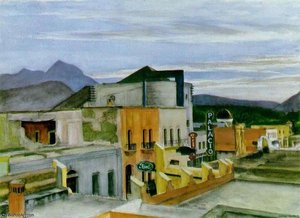
Edward Hopper's "El Palacio" captures urban solitude with striking realism—a black-and-white depiction of a city street, evoking quiet contemplation and the essence of American modern life.
Taiteilijan elämäkerta
Edward Hopper: Yksinäisyyden ja modernin elämän melankolinen taiteilija. Tunnettu ikonisten teoksien, kuten Nighthawksin, luojana. Tutustu valon ja varjon mestariteoksiin!
Tietoa maalauksesta
A Silent Cityscape: Unveiling Edward Hopper's "El Palacio"
Edward Hopper’s 1946 painting, “El Palacio,” isn’t merely a depiction of a city street; it’s a carefully constructed tableau of urban solitude and the quiet anxieties of modern life. Rendered in stark black and white, the image immediately draws the viewer into a scene brimming with understated tension. The composition is dominated by towering buildings on either side, their windows like watchful eyes observing the few figures that populate the street below. The painting’s power lies not in dramatic action or vibrant color—rather, it resides in the subtle details and the palpable sense of detachment that permeates every element.
Hopper masterfully employs light and shadow to create a mood of melancholic introspection. The strong directional lighting emphasizes the textures of the buildings and casts deep shadows, contributing to the painting’s overall feeling of confinement. The open windows invite glimpses into private lives, yet they simultaneously reinforce the sense that these individuals are isolated within their own worlds. The signs visible in the scene—including the prominent “El Palacio”—add a layer of mystery, hinting at a grand establishment and perhaps suggesting a world beyond the immediate view.
The Painter’s Palette: Technique and Style
“El Palacio” exemplifies Hopper's signature style – a blend of realism and psychological insight. He was known for his ability to capture fleeting moments of human experience, often focusing on scenes of loneliness or alienation. Hopper’s technique is characterized by precise observation and meticulous detail. The buildings are rendered with remarkable accuracy, capturing their architectural forms and the subtle variations in surface texture. His use of line is particularly noteworthy; he employs clean, confident lines to define shapes and create a sense of solidity, while simultaneously suggesting movement through the arrangement of elements within the composition.
The painting’s monochromatic palette—a deliberate choice by Hopper—heightens its emotional impact. The absence of color forces the viewer to focus on form, light, and shadow, intensifying the feeling of isolation and emphasizing the starkness of the urban environment. Hopper's approach was rooted in a desire to represent reality as he perceived it, unburdened by sentimentality or romanticism. He sought to capture the essence of American life—its beauty, its challenges, and its inherent loneliness—with unflinching honesty.
Historical Context: The Post-War Landscape
“El Palacio” was created in 1946, a period marked by significant social and cultural shifts following World War II. America was grappling with the aftermath of conflict, experiencing rapid urbanization, and confronting new anxieties about identity and purpose. Hopper’s work resonated deeply with this mood, reflecting the growing sense of alienation and disillusionment that characterized the post-war era. The painting can be seen as a commentary on the changing nature of American society—a world increasingly defined by anonymity, isolation, and the breakdown of traditional social structures.
Interestingly, Hopper himself described the scene as “suggested by a restaurant on Greenwich Avenue where two streets meet.” This anecdote reveals his meticulous approach to composition and his desire to capture not just a literal representation but also an emotional truth. The painting’s enduring appeal lies in its ability to evoke a sense of familiarity—a recognition of the quiet, often overlooked moments that shape our lives.
Symbolism and Emotional Resonance
Beyond its realistic depiction of a city street, “El Palacio” is rich in symbolic meaning. The towering buildings represent the impersonal forces of urban life, while the open windows symbolize both opportunity and isolation. The figures within the scene—their faces obscured by shadow—suggest a sense of anonymity and detachment. Hopper’s masterful use of light and shadow creates a powerful emotional atmosphere, evoking feelings of loneliness, longing, and perhaps even a touch of melancholy.
Ultimately, “El Palacio” is a poignant meditation on the human condition – a reminder that even in the midst of bustling urban environments, we can still experience profound solitude. It’s a painting that invites contemplation and encourages us to consider our own place within the larger narrative of American life.
Kysymykset ja vastaukset
Kuinka kylläinen "el palacio"-teoksen väripaletti on?
Teoksen Edward Hopper:n "el palacio" värien kylläisyys on Subtle Color. Kylläisyys kuvaa sitä, kuinka voimakkaita tai himmeitä värit ovat.
Onko olemassa teoksia, jotka muistuttavat teosta "el palacio"?
Teokset, jotka muistuttavat teosta "el palacio", löytyvät sen Samankaltaisia teoksia -sivulta.
Kuka myy teoksen Edward Hopper:n "el palacio" käsinmaalattuja kopioita?
Edward Hopper:n "el palacio"-teoksen käsinmaalattuja kopioita on saatavilla tämä sivusto-sivustolla: käsinmaalattu öljyvärireproduktio pellavakankaalle, ja voit tilata ne suoraan Käsinmaalattu jäljennös-sivulta.
Pikaopas ja taidevisailu
Tietoa artistista Edward Hopper

Edward Hopper
1931 - 1967, Yhdysvallat
Taiteilijan elämäkerta
A Solitude Observed: The Life and Art of Edward Hopper
Edward Hopper, nimi joka on ikuisesti sidoksissa 20-luvun Amerikan hiljaiseen ja hienovaraiseen melankoliaan, ei ollut pelkästään maisemamaalari; hän oli valon ja varjon runoilija, modernin eristyneisyyden kuvaaja. Syntynyt Nyackissa New Yorkissa vuonna 1882, keskitaloudellisen taustan vanhempien poikana, Hopperin lapsuus tarjosi vakaan kasvaympäristön, joka ruokki hänen taiteellisia pyrkimyksiään. Varhaisten piirustusten huolellinen päivämääritys ja allekirjoitus osoittivat jo nuoresta iästä lähtien terävän havainnoinnin ja synnynnäisen lahjakkuuden piirtämisessä. Vaikka hänen vanhempansa kannustivat häntä alun perin harjoittamaan kaupallista kuvitusta – käytännöllinen ehdotus, joka perustui heidän taloudelliseen tilanteeseensa –, Hopperin intohimot suuntautuivat hienovaraiseen taiteeseen, mikä johti New York School of Art -oppilaitokseen, jossa hän opiskeli William Merritt Chase’n ja Robert Henri’n johdossa. Nämä varhaiset vuodet antoivat hänelle ei ainoastaan teknistä taitoa vaan myös arvostuksen realismille ja sitoutumisen maailman kuvaamiseen sellaisena kuin hän sen näki – paettamattomana ja rehellisenä. Ralph Waldo Emersonin kirjoitukset resonsoivat syvällä Hopperin kanssa, vahvistaen hänen yksilöllisyyttensä tunnetta ja terävää havaintokykyään – ominaisuuksia, jotka muuttuisivat hänen taiteellisen näkemyksensä kulmakiviksi. Varhaiset matkat Pariisiin altistivat Hopperin impressionismille, mutta hän nopeasti erosi sen hetkaisista siveltimistä, luoden oman polkunsa.Finding His Voice: Realism and the American Scene
Hopperin taiteellinen matka ei ollut välitön tai helppo. Hän kamppaili löytääkseen oman ainutlaatuisen äänensä, kokeillessaan erilaisia tyylejä ennen kuin päätyi realismille, joka määrittelisi hänen uransa. Tämä ei ollut pelkästään todellisuuden kopiointia; se oli sen olemassaolon tiivistäminen, poistamalla tarpeettomat yksityiskohdat paljastaakseen perimmäiset tunteet. Maalaustensa keskittyminen alkoi muuttua arkipäiväisiksi näkymiksi – taloiksi, ravintoloiksi, toimistoihin, hotellihuoneisiin – ja niissä oli usein hiljaisuuden ja eristyneisyyden tunne. Hänellä oli poikkeuksellinen kyky vangita aiheensa psykologiset tilat, vihjaillen tarinoita ilman niiden suoraa kertomista. Tarkka valon ja varjon kuvaaminen tuli avainasempaan asemaan, ei ainoastaan kuvauksellisena elementtinä vaan myös tunteellisten vihjeiden luojana, luoden tunnelmia, jotka olivat sekä kiehtovia että häiritseviä. House by the Railroad (1925), varhainen mestariteos, on tästä hyvä esimerkki – näennäisesti yksinkertainen komposiitio säteilee syvää eristyneisyyttä ja mysteeriä. Hopperin painokirjoitukset, jotka usein jätettiin huomiotta, jaksoivat samat teemat ja tyylilliset piirteet maalauksen kanssa, osoittaen hänen hallintaansa eri medioissa. Hän ei ollut kiinnostunut suurista historiallisista tarinoista tai allegorisista symboleista; hän keskittyi tavalliseen, nostaen sen esiin huolellisella havainnoinnilla ja tunteellisella resonanssilla.Iconic Visions: Nighthawks and Beyond
Vaikka Hopperin ura kehittyi vähitellen, tietyt teokset nostivat hänet laajan tunnustuksen tasolle. Nighthawks (1942), todennäköisesti hänen kuuluisin maalaus, muuttui välittömästi Amerikan ikoniksi. Myöhään yöllä oleva ravintola näkymä, valaistu terävällä fluoresoivalla valolla, vangitsee täydellisesti modernin kaupungin eristyneisyyden ja anonyymiuden. Sisältävät hahmot ovat hukassa omissa ajatuksissaan, irrottautuneita toisistaan lähelläkin – koskettava kommentaari ihmiskunnan tilasta. Gas (1940), jossa esitetään bensapysäkki, osoittaa Hopperin intohimon amerikkalaisiin maisemiin ja kehittyvään autokulttuuriin. Muita merkittäviä teoksia, kuten *Automat*, *Office in a Small City* ja *Summertime*, tarjoavat jokainen ainutlaatuisen näkökulman 20-luvun Amerikan yhteiskuntaan. Nämä maalaukset eivät olleet pelkästään paikkojen kuvauksia; ne olivat tutkimuksia tunnelmasta, psykologiasta ja hienovaraisten draamojen kehittymisestä tavallisissa ympäristöissä. Hänen vaimonsa, Josephine Nivison Hopper, ei ainoastaan ollut hänen elinikäinen kumppaninsa vaan myös usein malli, joka edisti hahmojen esitystä maalauksissaan.Themes and Legacy: A Lasting Influence
Useat toistuvat teemat läpäisevät Hopperin teokset. Kaupunkieristyneisyys on ehkä merkittävin – yksinäisyyden tunne, jonka ihmiset kokevat jopa ihmisten keskellä. Hän tutki sekä maaseutua että kaupunkeja, korostaen usein niiden karheutta ja tyhjyyttä. Hänen työnsä käsittelee psykologista realismia, tutkien aiheensa sisäelämää hänen havaintojaan ylittämättömällä tavalla. Siinä on myös nostalgiaa yksinkertaisemmasta menneisyydestä, vastakkain asetettuna modernin elämän monimutkaisuuksiin ja huolenaiheisiin. Hopperin vaikutus myöhemmille taiteilijoille on kiistaton. Hänen ainutlaatuinen tyylinsä on inspiroinut lukemattomia maalareita, mukaan lukien Pierre Sanford Ross, ja se resonoi edelleen nykytaiteilijoiden kanssa etsittäessä ihmiskokemuksen olemusta. Maalaustensa pysyvät kysytyinä kokoelmissa ja esitetyt suurissa museoissa ympäri maailmaa, vahvistaen hänen paikkansa keskeisenä hahmona Amerikan taiteen historiassa. Hopperin teosten ydin ei ainoastaan ole kauneus, vaan myös niiden kestävä kyky herättää ajatuksia, herättää tunteita ja muistuttaa meitä hiljaisesta eristyneisyydestä, jota usein koemme elämässämme.- Hänen perintönsä ei ainoastaan piile hänen maalauksissaan vaan myös niiden kestävä kyky herättää ajatuksia, herättää tunteita ja muistuttaa meitä hiljaisesta eristyneisyydestä, jota usein koemme elämässämme.
- Hopperin työ puhuu edelleen universaaleista teemoista: yksinäisyydestä, eristyneisyydestä ja merkityksen etsimisestä muuttuvassa maailmassa.
- Maalaustensa on tullut ikonisia esityksiä Amerikan kulttuurista, usein symboloimaan 20-luvun ahdistuksia ja toiveita – ja sen jälkeenkin.
- Hopperin estetiikka on vaikuttanut syvästi myöhempii taiteilijoihin (kuten Alfred Hitchcockiin) ja kirjoittajiin, inspiroiden lukemattomia teoksia, jotka tutkivat samankaltaisia teemoja eristyneisyydestä ja psykologisen jännityksen näkökulmasta.
Pikaaakkaukset taiteilijasta Edward Hopper
- Artistic Movement Or Style: Realismi
- Artists Or Movements Influenced By This Artist: ['Pierre Ross']
- Artists Who Influenced This Artist:
- William Chase
- Robert Henri
- Date Of Birth: 22. heinäkuuta 1882
- Date Of Death: 15. toukokuuta 1967
- Full Name: Edward Hopper
- Nationality: Amerikkalainen
- Notable Artworks:
- Nighthawks
- House by the Railroad
- Gas
- Place Of Birth: Nyack, USA
Tutustu teoksiin, jotka on järjestetty aiheiden, tyylien ja ominaisuuksien mukaan.




Edward Hopper
el palacio
() ·
Kehyksineen: · Käsinmaalattu öljyväreillä pellavalle
Yhteensä