
 Esikatselu
 Jaa teos
 Jaa
Jaa
 Tiedot
 Opas
Opas

 Lataa kuva
 Samanlaisia kohteita
 Röntgenkuvaus
 Diaesitys
 Kysymykset ja vastaukset
 Tilastot
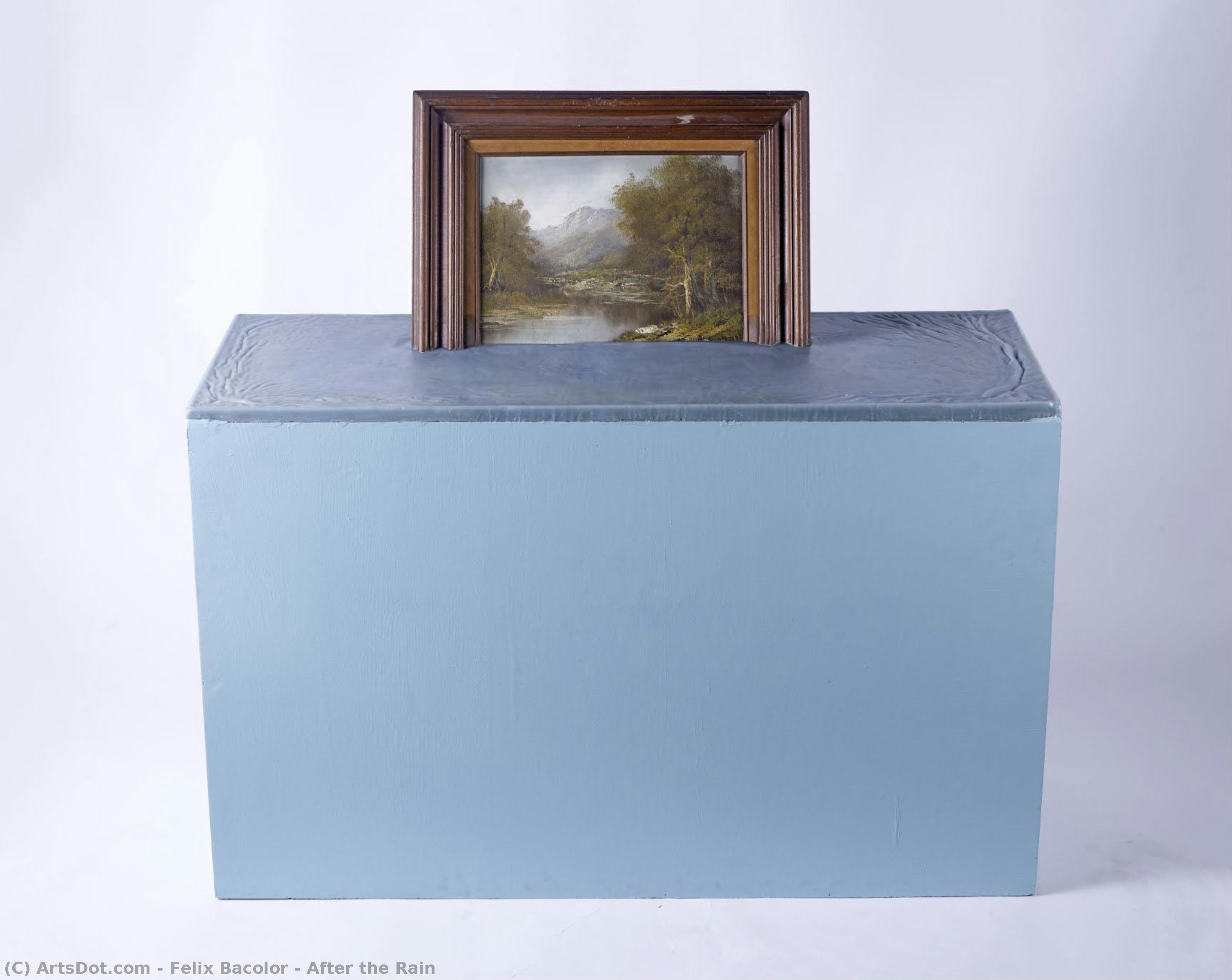
After the Rain


Explore 'After the Rain' by Felix Bcolor – a captivating 2012 installation featuring a textured blue cube and serene landscape painting. A unique blend of realism & abstraction, perfect for art collectors.
 Lue lisää
Explore the evocative installations of Felix Bacolor, a Filipino artist examining time, space & human experience through layered, immersive works.
Tällä sivulla esitettyä taideteosta suojaa tekijänoikeuslaki, mikä tarkoittaa, ettemme voi laillisesti luoda tai myydä täsmälleen samanlaista jäljennöstä. Tämä suoja toteutetaan kansainvälisten sopimusten, kuten esimerkiksi Berne-konventio ja kansallisilla laeilla, mukaan lukien niillä määritellyt Yhdysvaltain tekijänoikeuslaki – Luku 17. Kaikki oikeudet pidätetään. Luvaton kopiointi tai jäljittely on kielletty.
Tämä menetelmä noudattaa täysin tekijänoikeussäännöksiä, sillä se ei sisällä suojatun taideteoksen kopioimista tai jäljentämistä. Sen sijaan kyseessä on luova uudelleentulkinta – uusi maalaus, joka ammentaa vaikutteita alkuperäisestä, mutta ei ole sen identtinen kopio.
Giclée- ja taideprintit
Museolaatuisia giclée- tai kankaitaulun tulosteita nopealla tuotannolla ja joustavilla viimeistelyvaihtoehdoilla. ( Osta käsinmaalattu taideteos Siirry digitaaliseen kuvaan)




































Vakiokoko
räätälöity
CM
INCH
Valitse valmiista mitoistamme sellaiset, jotka vastaavat teoksen alkuperäisiä mittasuhteita.
Loading sizes...

leveys
korkeus
Syötä tarvitsemasi leveys ja korkeus, jotta tuloste sopii kehyksiisi tai seinällesi. Tulostetta voidaan vain leikata, sitä ei voida koskaan suurentaa alkuperäistä kuvaa suuremmaksi, joten eri muotoinen koko aiheuttaa osan kuvasta katoamisen. Lähetämme sinulle digitaalisen mallikuvan hyväksyttäväksi ennen kuin aloitamme tulostuksen. Tällä sivulla näkyvä kuva ei näytä lopullista rajausta — vain mallikuva näyttää sen.
Maailmanlaajuinen toimitus () 2 viikossa tavallisen 4–5 viikon sijaan. (4 marraskuu)

Ilmainen pikatoimitus ympäri maailman

Korkealaatuinen pellavakangas

Kattava kuljetusvakuutus

Tulliveron palautustakuu

Takuu täydellisestä värien vastaavuudesta

100 päivän palautusoikeus (vain valmistusvirheet)

100% rahat takaisin -takuu

Määräalennus tarjolla
 Lasivaihtoehto on saatavilla vain alle 110 cm kokoisille teoksille

After the Rain
Giclée- ja taideprintit
Replikaatin koko
-


Kokonaishinta
€ 62
b. 1967, the PhilippinesThe artist enjoys working with both installations and paintings, enjoying the inventiveness of developing an image in painting and the immediacy and
Kysymykset ja vastaukset
Missä voin nähdä alkuperäisen teoksen Felix Bacolor:n "After the Rain"?
Voit nähdä alkuperäisteoksen "After the Rain" kohteessa ILHAM Gallery, Kuala Lumpur, Malaysia.
Mistä voin ladata teoksen Felix Bacolor:n "After the Rain"?
Teos "After the Rain" on ladattavissa: teoksen Lataa digitaalinen kuva -sivulta löytyy korkearesoluutioinen digitaalinen kuvalataus.
Miten voin löytää teoksia, jotka muistuttavat teosta Felix Bacolor:n "After the Rain"?
Teoksen Felix Bacolor:n "After the Rain" Samankaltaisia teoksia -sivu esittelee samankaltaisia teoksia.
Taiteilijan elämäkerta
The Architecture of Perception: The Art of Felix Bacolor
Born in 1967 in the Philippines, Felix Bacolor has carved a singular niche in the contemporary art world by treating sculpture not merely as an object, but as an immersive experience. His artistic journey is a profound exploration of how we inhabit the world, focusing on the delicate interplay between time, space, and human perception. From his early years, Bacolor displayed a deep-seated fascination with architectural forms and textures—elements that would later become the foundational language of his practice. By merging the structural rigidity of architecture with the fluid nature of conceptual thought, he creates works that challenge the viewer to reconsider the boundaries of reality.
Bacolor’s creative evolution is deeply rooted in the principles of Minimalism and Conceptual Art. Through rigorous experimentation with tactile materials such as concrete and wood, he has mastered the ability to evoke striking visual effects that resonate with both weight and lightness. His style is defined by a deliberate layering of elements, where sharp geometric shapes are often juxtaposed against more organic, unpredictable forms. This tension creates environments that feel simultaneously monumental and subtly unsettling, pulling the observer into a space where the distinction between presence and absence begins to blur.
Themes of Void and Transformation
At the heart of Bacolor’s oeuvre lies a preoccupation with the passage of time and the concept of the void. His installations often utilize repetition and fragmentation to reflect the transient nature of existence. By manipulating scale and volume, he constructs spaces that envelop the audience, transforming mere observation into a visceral encounter. The recurring motifs of his work—the exploration of empty spaces and the transformation of solid matter—serve as metaphors for the human condition, inviting deep contemplation on how we perceive change and loss within our environment.
The artist’s ability to bridge different mediums is also a hallmark of his development. While he is widely celebrated for his sculptural installations, he frequently engages with painting to explore the inventiveness of imagery and the immediacy of color. This dual approach allows him to navigate between the three-dimensional physical presence of sculpture and the two-dimensional narrative potential of the canvas, creating a cohesive artistic vision that spans both the tangible and the imagined.
A Global Artistic Presence
Bacolor’s recognition has extended far beyond the shores of the Philippines, as his work has resonated within prominent cultural institutions across Europe and Asia. His participation in exhibitions at the Artinformal Gallery in Makati established him as a vital voice in the contemporary Filipino art scene, showcasing his ability to push creative boundaries alongside his peers. His international trajectory includes significant contributions to the cultural landscape of France, notably through his presence in institutions such as the Musée Félix Ziem in Martigues, where his artistic lens offers a unique perspective on the surrounding landscapes.
Through his acclaimed contributions to various international art forums, including notable recognitions in Florence, Bacolor has solidified his status as an artist of global significance. His work continues to provoke essential dialogues regarding our relationship with the physical world and the ephemeral nature of time, ensuring his place in the ongoing narrative of contemporary installation art.

Felix Bacolor
1967 - , Philippines
Pähkinänkuoressa
- Full Name: Felix Bacolor
- Nationality: Filipino
- Date Of Birth: 1967
- Place Of Birth: Philippines
- Notable Artworks:
- Hauled Out
- After the Rain
- Artistic Movement Or Style: Contemporary Installation
- Artists Or Movements Influenced By This Artist: ['San Felice']
Aiheeseen liittyvät artikkelit

The Soul of Color: A Journey into the Emotional Resonance of Lyrical Abstraction
Embark on a cultural journey through Lyrical Abstraction. Explore how masters like Kandinsky used color and motion to translate emotion into visual poetry. Discover the profound beauty of abstract expressionism and learn to curate emotional resonance in your own art collection.