


 Katso seinällä
 Lähetä
 Jaa
Jaa
 Tarkemmat tiedot
 Opas
Opas

 Lataa kuva
 Samanlaisia kohteita
 Röntgenkuvaus
 Diaesitys
 Tilastot
A Day in June


Experience 'A Day in June' by George Bellows! This vibrant 1913 painting captures a lively park scene with diverse figures, showcasing the artist’s dynamic style and urban realism. A must-see masterpiece!
 Lue lisää
George Bellows (1882-1925) oli amerikkalainen realistinen taiteilija, joka kuvasi New Yorkin vilkasta kaupunkielämää ja nyrkkeilyotteluita. Tunnettu rohkeista brushstrokeistaan ja elävistä kuvaustensa.
Giclée- ja taideprintit
Museolaatuisia giclée- tai kankaitaulun tulosteita nopealla tuotannolla ja joustavilla viimeistelyvaihtoehdoilla. ( Tilaa käsinmaalattu jäljennös Siirry digitaaliseen kuvaan)




P118B €10

P118H €10

P118W €10

P438Z €10

P508JH €12

P508YH €12

P805H €10

P805Z €10

P919BZ €10

P919G €10

P919XJ €10

P959ZH €10

P968JZ €12

W106C €8

W218G €10

W218JH €8

W218Y €10

W307PJ €10

W316G €10

W316PJ €8

W316Y €10

W398PJ €8

W4111J €10

W500HY €15

W500JH €15

W692G €12

W849H €8

W940BG €15

W953PJ €8




Vakiokoko
mittatilaustyö
CM
INCH
Valitse valmiista mitoistamme sellaiset, jotka vastaavat teoksen alkuperäisiä mittasuhteita.
Loading sizes...

leveys
korkeus
Kirjoita tarvitsemasi leveys ja korkeus, jotta tuloste sopii kehyskokoon tai seinällesi. Tulostetta voidaan vain leikata, sitä ei voi koskaan tehdä suuremmaksi kuin alkuperäinen kuva, joten eri muotoinen koko aiheuttaa osan kuvasta katoamisen. Lähetämme sinulle digitaalisen mallikuvan hyväksyttäväksi ennen kuin aloitamme tulostuksen. Tällä sivulla näkyvä kuva ei näytä lopullista leikkausta — vain mallikuva näyttää sen.
Maailmanlaajuinen toimitus () 2 viikossa tavallisen 4–5 viikon sijaan. (27 lokakuu)

Ilmainen pikatoimitus ympäri maailman

Korkealaatuinen pellavakangas

Kattava kuljetusvakuutus

Tulliveron palautustakuu

Takuu täydellisestä värien vastaavuudesta

100 päivän palautusoikeus valmistusvirhetapauksissa

100% rahat takaisin -takuu

Määräalennus saatavilla
 Lasivaihtoehto on saatavilla vain alle 110 cm kokoisille teoksille

A Day in June
Giclée- ja taideprintit
Replikaatin koko
-


Kokonaishinta
€ 61
A Moment Frozen in Time: "A Day in June" by George Wesley Bellows
George Wesley Bellows’ “A Day in June” isn't merely a depiction of a park scene; it’s a vibrant snapshot of American leisure and social interaction captured with the bold, unapologetic energy that defined his career. Painted in 1913, during a period of rapid industrialization and shifting social landscapes, this canvas offers a glimpse into a world where the rhythms of urban life momentarily yielded to the pleasures of a sun-drenched afternoon. The painting immediately draws the eye with its dynamic composition – a carefully orchestrated gathering of figures sprawled across an open field, bathed in the golden light of a summer day.
Bellows, a key figure in the Ashcan School movement, rejected the idealized representations prevalent in academic art, instead choosing to portray everyday life—often gritty and unvarnished—with unflinching honesty. “A Day in June” exemplifies this approach. The subjects aren’t posed for a grand narrative; they are simply *being*, engaged in conversation, reclining on blankets, or lost in their own thoughts. The artist masterfully uses loose brushstrokes and vibrant color to convey the feeling of warmth and spontaneity—a deliberate contrast to the often-stiff formality of traditional portraiture.
A Study in Light and Movement
Technically, Bellows’ technique is remarkably fluid. He employs a broken color approach, layering thin washes of paint to create an illusion of depth and luminosity. Notice how he captures the dappled sunlight filtering through the trees – not with precise detail, but with suggestive strokes that evoke the play of light and shadow across the scene. The figures themselves are rendered with a sense of movement; their postures suggest relaxation, conversation, and shared enjoyment. Bellows’ use of color is particularly striking—a rich palette of greens, blues, and yellows dominates, punctuated by the warm tones of skin and clothing. This creates a visually arresting effect, drawing the viewer into the heart of the scene.
The composition isn't symmetrical; it feels deliberately unbalanced, mirroring the casual, unscripted nature of the gathering itself. The figures are arranged in a loose cluster, with some closer to the foreground and others receding into the distance, creating a sense of depth and inviting the viewer to become part of the scene.
Echoes of an Era: Context and Symbolism
“A Day in June” was painted during a period of significant social change in America. The early 20th century witnessed rapid urbanization, immigration, and the rise of consumer culture. Bellows’ work reflects these shifts, capturing the spirit of a nation grappling with modernity while simultaneously celebrating its traditions. The painting can be interpreted as an affirmation of American leisure—a moment of respite from the pressures of industrial life.
The title itself is significant. “June” evokes images of summer, warmth, and abundance – all associated with carefree enjoyment. Furthermore, the scene’s depiction of a diverse group of people engaged in social interaction speaks to the growing sense of inclusivity that was beginning to emerge in American society during this period. The painting subtly hints at the complexities of urban life—the juxtaposition of leisure and labor, wealth and poverty—without offering easy answers or moral judgments.
A Legacy of Realism
George Wesley Bellows’ “A Day in June” remains a powerful testament to his artistic vision. It's more than just a pretty picture; it’s a window into the soul of America, capturing a fleeting moment of joy and connection amidst the challenges of a rapidly changing world. Reproductions of this iconic work offer an opportunity to bring this vibrant scene into your home or office, serving as a reminder of the enduring appeal of Bellows' distinctive style—a bold blend of realism, energy, and social commentary.
Kysymykset ja vastaukset
Mikä sijoittelu sopii teoksen George Wesley Bellows:n "A Day in June" formaattiin?
Muoto (Landscape) ja suositeltu tila (Living Room) ovat kaksi teokselle George Wesley Bellows:n "A Day in June" kirjattua sijoittelutietoa.
Mitä "A Day in June" jakaa muun George Wesley Bellows'n tuotannon kanssa?
George Wesley Bellows'n tuotannossa "A Day in June" edustaa American Realism-tyyliä ja kytkeytyy ashcan school influence, urban life depiction, social commentary themes, boxing scene portrayal, american modernism focus teemoihin.
Mitä George Wesley Bellows:n "A Day in June" esittää ja millainen on sen tunnelma?
George Wesley Bellows:n "A Day in June" yhdistää park scene, outdoor gathering, people, leisure, summer day, socializing, urban landscape-aiheet Dramatic-tunnelmaan.


Taiteilijan elämäkerta
A Bold Vision of American Life: The World of George Bellows
George Wesley Bellows, nimi joka on synonyymi varhaisen 2000-luvun Amerikan raa’alle energiasta ja modernisoitumisesta, nousi merkittäväksi hahmoon realistisessa maalaustaidassa. Syntynyt Columbusissa, Ohio, elokuussa 12 tai 19, 1882, hänen matkansa urheilullisista lupauksista taiteelliseksi maineeksi on todiste intohimosta ja väsymättömästä omistautumisesta. Jo ennen muodollista koulutusta nuori George osoitti luontaisen lahjakkuuden piirtämisessä, täyttäen muistikirjoja havainnollisia silmiä ja kehittyvää taitoa entelevistä kuvista. Hänen lapsuutensa ei keskittynyt pelkästään taiteeseen; hän erottui urheilussa, pelaamalla sekä baseballia että koripalloa Ohio State Universityssä – kaksoiskyky, joka vaikutti syvästi hänen taiteelliseen näkökulmaansa, imeyttäen työhön dynaamista liikettä ja fyysisyyttä. Tämä urheilullinen tausta ei ainoastaan sisällyttänyt hänelle kurinalaisuutta vaan myös arvostuksen ihmiskehosta toiminnassa, teema, joka muuttui hänen kuuluisimpien maalauksensa keskeiseksi. Hän jätti yliopiston ennen valmistumistaan, ohjattuna peruuttamattomalla vetovoimalla New York Cityyn ja taiteellisen koulutuksen lupaukseen.Forging a Path: The Ashcan School and Beyond
Saapuen New Yorkiin vuonna 1904, Bellows löysi nopeasti Robert Henrien, Ashcan Schoolin johtavan hahmon, ohjauksen. Tämä taiteilijoiden ryhmä – mukaan lukien John Sloan, William Glackens ja George Luks – kääntyi tarkoituksella pois akateemisista konventioista, valitsemalla sen sijaan kuvaamaan kaupungin elämää: ahtaita asuntoja, vilkasta katua ja työväenluokan amerikkalaisten jokapäiväisiä kamppailuja. Bellows omaksui tämän etiikan täysin, heijastamalla aluksi Henrien löysää sivellintyyliä ja sitoutumista sosiaaliseen realismiin. Hän ei kuitenkaan ollut tyytyväinen vain kopioimaan opettajansa tyyliä; hänellä oli kunnianhimo kehittää oma ainutlaatuinen taiteellinen äänensä. Hän perusti studioon Edward Keefen kanssa vuonna 1906, merkitsemällä näin tuotteliaan kokeilujakson alkamisen. Varhaiset maalauksensa, kuten ne esitettiin vuonna 1908, kohtasivat sekoittuneita reaktioita – jotkut kriitikot pitivät niitä raa’ina, kun taas toiset tunnustivat rohkean innovatiivisuutensa ja uudenlaisen ajattelun. Bellowsin aiheet olivat usein kiistanalaisia sen ajan kannoilla, haastaen vallitsevat käsitykset siitä, mikä muodostaa "hyväksyttävän" taiteen. Hän ei vastannut vähempää huomiota epärohkeiden kaupungin elämän näkökulmista, vangiten kuvia köyhyydestä, työtä ja vapaa-aikaa armottomalla rehellisyydellä.The Arena of Life: Boxing and Urban Spectacle
Vaikka Bellowsin tuotanto kattoi laajan valikoiman aiheita – muotokuvia, maisemia, merimaisemia – hän on parhaiten tunnettu voimakkaista maalauksistaan nyrkkeilyltaisteluista. Nämä eivät olleet vain urheilutapahtumia hänelle; ne olivat ihmisen draaman mikroskooppeja, jotka heijastivat ihmisluonnon perustavanlaatuisia elementtejä ja kilpailun perimmäistä tarvetta. Hän vieraili savuisissa nyrkkeilykerroissa, tutkien huolellisesti taistelijoiden liikkeitä, heidän katseensa intensiteettiä ja yleisön dynaamista energiaa. Maalauksia kuten *Both Members of This Club* (1909) ja *Stag at Sharkey’s* (1909) on tunnettuja dramaattisen valaistuksen ja komposiition ansiosta. Nyrkkeilykuvat eivät olleet vain urheilua itsessään; ne olivat metaforia elämän taisteluille, heijastamassa amerikkalaista yhteiskuntaa hallitsevaa Darwinin sosiaaliteoriaa tuona aikana. Nyrkkeilyn lisäksi Bellows löysi inspiraatiota myös kaupungin muihin esitystapahtumiin – paraateihin, kiertueisiin ja aaltoileviin kaduille – jotka tarjosivat mahdollisuuksia tutkia liikettä, energiaa ja yhteistä kokemusta.Evolving Style and Lasting Legacy
Kun Bellows kypsyi taiteilijana, hänen tyylinsä läpikäysi hienovaraisen mutta merkittävän kehityksen. Vaikka hän säilytti sitoutumisensa realismiin, hän alkoi poistua varhaisten vuosien löysästä siveltimestä ottamalla vastaan tyylikkäämmän estetiikan, joka oli tunnusomaista monumentalismin ja kasvotunteen kannalta. Tämä siirtymä näkyy myöhemmissä teoksissa kuten *Dempsey and Firpo* (1924), jättimäisessä maalauksessa, joka vangitsee legendaarisen nyrkkeilijäkämpän huipentum dramaattisesti. Hän kokeili myös litograafia, tuottaen vaikuttavia printtejä, jotka osoittivat hänen taitoaan linjan ja sävyn suhteen. Vaikka Bellows saavutti merkittäviä menestyksiä elinaikanaan – mukaan lukien valinta kansalliseen akatemiaan vuonna 1913 – hän pysyi sitoutuneena taiteellisten rajojen haastamiseen ja perinteiden kyseenalaistamiseen. Hänen yllättävä varhainen kuolemansa vuonna 1925 iässä 42, katkaisi lupaavan uran, mutta hänen perintönsä säilyy edelleen yhtenä Amerikan tärkeimmistä realistisista taiteilijoista. *Hän jätti jälkeensä teoksen, joka resonoituu edelleen yleisön kanssa tänään*, tarjoten voimakkaan ja armottoman kuvan Amerikan elämästä varhaisessa 2000-luvussa – maailma täynnä energiaa, konfliktia ja ihmisluonnon kestävyyttä. Hänen vaikutuksensa näkyy myöhemmän sukupolven taiteilijoissa, jotka pyrkivät vangitsemaan modernin kaupungin dynamiikkaa ja monimutkaisuutta.Major Works & Recognition
- *Both Members of This Club* (1909) – Merkittävä teos, joka vangitsee nyrkkeilykerhon tunnelman.
- *Stag at Sharkey’s* (1909) – Toinen ikoninen maalauksensa nyrkkeilijäkämpästä, tunnettu dramaattisesta valaistuksestaan ja komposiostaan.
- *Men of the Docks* (1912) – Voimakas kuva työväenluokan työntekijöistä, joka osoittaa Bellowsin taidon vangita fyysisyyttä ja tekstuuria.
- *The Germans Arrive* (1918) – Litografiasarja, joka käsittelee ensimmäisen maailmansodan kauheuksia.
- *Dempsey and Firpo* (1924) – Jättimäinen maalauksensa legendaarisen nyrkkeilijäkämpän huipentumista.

George Wesley Bellows
1882 - 1925 , Yhdysvallat
Tietoa taiteilijasta
- Artistic Movement Or Style: Ashcan School, Realismi
- Artists Or Movements Influenced By This Artist: ['Henriin vaikutus']
- Artists Who Influenced This Artist: ['Robert Henri']
- Date Of Birth: 1882
- Date Of Death: 1925
- Full Name: George Wesley Bellows
- Nationality: Amerikkalainen
- Notable Artworks:
- Central Park
- The Germans Arrive
- Men of the Docks
- Tennis Tournament
- Place Of Birth: Columbus, USA
Aiheeseen liittyvät artikkelit
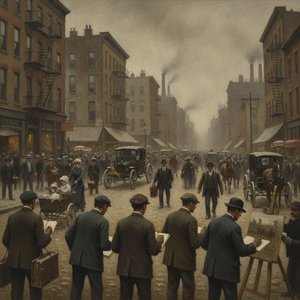
The Ashcan School: Capturing the Raw, Unfiltered Soul of Urban Life through American Realism
Discover the raw beauty of the Ashcan School. Explore how masters like Bellows and Henri captured the gritty, vibrant soul of early 20th-century New York through profound American Realism and evocative urban landscapes.

The Unvarnished Truth: A Cultural Journey Through the Soul of American Realism
Explore the profound beauty of American Realism. From the Ashcan School's urban grit to intimate portraits, discover how artists captured the authentic soul of a nation through unvarnished truth and masterful observation.
Tutustu teoksiin, jotka on järjestetty aiheiden, tyylien ja ominaisuuksien mukaan.
