


 Katso seinällä
 Lähetä
 Jaa
Jaa
 Tarkemmat tiedot
 Opas
Opas

 Lataa kuva
 Samanlaisia kohteita
 Röntgenkuvaus
 Diaesitys
 Tilastot
Self-Portrait
 Acrylic On Canvas
- WallArt
- Baroque Genre
 1700
1700 60.0 x 50.0 cm
 Ermitažin museo
Discover Giuseppe Maria Crespi’s ‘Self-Portrait’ (1700). A captivating Baroque masterpiece showcasing the artist's unique genre style and intimate portrayal of everyday life. Hand-painted reproduction available.
 Lue lisää
Tutki Giuseppe Maria Crespin (1665-1747), italialaista barokkimaalaajaa, joka tunnetaan genremaisista maalauksistaan sekä pyhimyksenä että yksittäisenä henkilönä. Lo Spagnuolo oli Bolognan koulun johtaja ja tunnettu realistisesta tyylistään.
Giclée- ja taideprintit
Museolaatuisia giclée- tai kankaitaulun tulosteita nopealla tuotannolla ja joustavilla viimeistelyvaihtoehdoilla. ( Tilaa käsinmaalattu jäljennös Siirry digitaaliseen kuvaan)




P118B €10

P118H €10

P118W €10

P438Z €10

P508JH €12

P508YH €12

P805H €10

P805Z €10

P919BZ €10

P919G €10

P919XJ €10

P959ZH €10

P968JZ €12

W106C €8

W218G €10

W218JH €8

W218Y €10

W307PJ €10

W316G €10

W316PJ €8

W316Y €10

W398PJ €8

W4111J €10

W500HY €15

W500JH €15

W692G €12

W849H €8

W940BG €15

W953PJ €8




Vakiokoko
mittatilaustyö
CM
INCH
Valitse valmiista mitoistamme sellaiset, jotka vastaavat teoksen alkuperäisiä mittasuhteita.
Loading sizes...

leveys
korkeus
Kirjoita tarvitsemasi leveys ja korkeus, jotta tuloste sopii kehyskokoon tai seinällesi. Tulostetta voidaan vain leikata, sitä ei voi koskaan tehdä suuremmaksi kuin alkuperäinen kuva, joten eri muotoinen koko aiheuttaa osan kuvasta katoamisen. Lähetämme sinulle digitaalisen mallikuvan hyväksyttäväksi ennen kuin aloitamme tulostuksen. Tällä sivulla näkyvä kuva ei näytä lopullista leikkausta — vain mallikuva näyttää sen.
Maailmanlaajuinen toimitus () 2 viikossa tavallisen 4–5 viikon sijaan. (24 lokakuu)

Ilmainen pikatoimitus ympäri maailman

Korkealaatuinen pellavakangas

Kattava kuljetusvakuutus

Tulliveron palautustakuu

Takuu täydellisestä värien vastaavuudesta

100 päivän palautusoikeus valmistusvirhetapauksissa

100% rahat takaisin -takuu

Määräalennus saatavilla
 Lasivaihtoehto on saatavilla vain alle 110 cm kokoisille teoksille

Self-Portrait
Giclée- ja taideprintit
Replikaatin koko
-


Kokonaishinta
€ 61
Giuseppe Maria Crespi’s “Self-Portrait”: A Window into Baroque Intimacy
Giuseppe Maria Crespi's "Self-Portrait," painted in 1700, is not merely a likeness; it’s a revelation. This small, intensely personal work, housed within a dark background that amplifies the figure’s presence, offers an unprecedented glimpse into the mind of a Bolognese artist at the cusp of a new era in genre painting. Often nicknamed “Lo Spagnuolo” – “The Spaniard” – due to his fondness for fashionable Spanish attire, Crespi defied the conventions of his time by choosing to depict everyday life with remarkable honesty and psychological depth, a departure from the grand narratives favored by many of his contemporaries.
Crespi’s artistic journey began with traditional training, but he quickly established himself as an independent spirit. He resisted the invitation to join Carlo Maratti in Rome, instead forging his own path, one that prioritized capturing the nuances of human experience. This decision proved pivotal, allowing him to develop a unique style characterized by a remarkable ability to portray ordinary individuals – laborers, merchants, and even self-portraits – with an almost startling level of realism and emotional resonance. The painting’s composition is deceptively simple: Crespi sits in a dimly lit room, holding a book open in his hands, his gaze lowered as if lost in thought. Yet, within this apparent stillness lies a wealth of observation and subtle detail.
A Masterclass in Baroque Technique
The painting’s execution is a testament to Crespi's skill and innovative approach. He employed a technique known as “sfumato,” borrowed from Leonardo da Vinci, creating soft, hazy outlines that blur the edges of forms and imbue the scene with an atmosphere of ambiguity. Notice how the light falls across his face, subtly highlighting his features while leaving much of the background in shadow – a deliberate choice that draws attention to the subject and reinforces the sense of intimacy. Crespi’s brushwork is loose and expressive, eschewing the smooth, polished surfaces favored by some of his contemporaries. Instead, he utilized short, broken strokes to build up layers of color and texture, lending the painting a vibrant, almost tactile quality.
Furthermore, Crespi's use of color is noteworthy. He avoids the bright, saturated hues often associated with Baroque art, opting instead for a muted palette dominated by browns, grays, and ochres. This restrained approach contributes to the painting’s somber mood and emphasizes the subject’s contemplative state. The book he holds, though not explicitly identified, likely represents his intellectual pursuits – a common motif in self-portraits of the period, signifying both knowledge and introspection.
Symbolism and the Portrait as Window
The “Self-Portrait” transcends a simple depiction of an individual; it’s a carefully constructed statement about identity and perception. Crespi's lowered gaze is particularly significant. It suggests not humility, but rather a quiet observation of himself and his place in the world. The book isn’t just an object; it represents a dialogue between the artist and his own thoughts, inviting us to contemplate the nature of self-awareness. The dark background serves as a powerful metaphor for the subconscious – a space where ideas and emotions coalesce.
Interestingly, Crespi's self-portraits were often commissioned by wealthy patrons who sought to capture their likenesses in a realistic and engaging manner. However, Crespi’s work went far beyond mere vanity; he used these portraits as opportunities to explore the complexities of human psychology and social dynamics. His “Self-Portrait” stands as a remarkable example of this approach – a poignant and insightful meditation on the nature of identity, observation, and the enduring power of art to reveal the inner lives of its subjects.
Bringing Crespi’s Vision Home
TopImpressionists is proud to offer meticulously crafted hand-painted reproductions of Giuseppe Maria Crespi's “Self-Portrait.” Each reproduction captures the artist’s unique style and atmospheric depth, allowing you to experience this seminal work of Baroque art in stunning detail. Whether displayed as a statement piece in your living room or a thoughtful addition to your study, this reproduction offers an intimate connection to one of Italy’s most innovative artists. Explore our high-resolution images and select the perfect size to bring Crespi's captivating vision into your space.
Kysymykset ja vastaukset
Miten kontrasti ja harmonia yhdistyvät teoksessa "Self-Portrait"?
Giuseppe Maria Crespi:n "Self-Portrait" teoksen väriyhdistelmä yhdistää Statement kontrastin ja Softly Mixed Palette harmonian.
Onko teokselle Giuseppe Maria Crespi:n "Self-Portrait" opasta?
Giuseppe Maria Crespi:n "Self-Portrait" -teoksen Opas -sivu tarjoaa tulostettavan kahden sivun tietolomakkeen: teoksen ja sen tunnistetiedot, aikajanan, joka sijoittaa teoksen taiteilijan elinaikaan, muita taiteilijan teoksia, mitatun väripaletin sekä neljällä eri tyylillä valmiiksi muotoillut lähdeviitteet.
Mitä "Self-Portrait" jakaa muun Giuseppe Maria Crespi'n tuotannon kanssa?
Giuseppe Maria Crespi'n tuotannossa "Self-Portrait" edustaa Baroque Genre-tyyliä ja kytkeytyy baroque realism, italian culture, self-portraiture, spiritual inquiry, genre scenes teemoihin.
Taiteilijan elämäkerta
A Bolognese Original: The Life and Art of Giuseppe Maria Crespi
Giuseppe Maria Crespi, affectionately known as “Lo Spagnuolo” – the Spaniard – was a captivating anomaly within the Italian Baroque landscape. Born in Bologna in 1665, his nickname stemmed not from ancestry but from a penchant for the tightly fitted clothing fashionable in Spain at the time, a sartorial choice that hinted at the independent spirit simmering beneath the surface of this remarkable artist. Crespi’s journey began with a traditional apprenticeship, first under Angelo Michele Toni and then Domenico Maria Canuti, absorbing the foundational techniques of Bolognese painting. However, he resisted the pull of Rome when invited by Carlo Maratti, choosing instead to forge his own path, one that would ultimately redefine genre painting and offer a strikingly intimate glimpse into everyday life.Breaking with Tradition: A New Vision Emerges
Crespi’s artistic output was remarkably diverse, encompassing religious paintings, portraits, and etchings inspired by masters like Rembrandt and Salvator Rosa. Yet, it is for his genre scenes – depictions of ordinary people engaged in commonplace activities – that he is most celebrated today. This focus represented a significant departure from the prevailing academic traditions which favored historical or mythological subjects. He wasn’t interested in grand narratives or idealized forms; instead, Crespi turned his attention to the lives unfolding around him—women washing dishes, families sharing meals, children at play. These weren't merely representations of daily life but imbued with a psychological depth and realism previously unseen. His style was characterized by a deliberate restraint in color and brushwork, employing a limited palette with judicious skill, though some critics noted a lack of robust physicality in his application. This subtlety, however, served to heighten the emotional impact of his scenes, drawing viewers into the quiet dramas of domes Crespi’s artistic breakthrough occurred during his formative years under Domenico Maria Canuti's tutelage, where he honed his skills alongside Giovanni Antonio Burrini. Recognizing Crespi’s exceptional talent, Canuti encouraged him to pursue independent study and experimentation—a decision that would prove pivotal in shaping his distinctive style. He also benefited from the influence of Carlo Cignani, whose teachings emphasized dramatic chiaroscuro and vibrant color palettes – techniques that would become hallmarks of Crespi's oeuvre. Unlike many artists of his time who adhered rigidly to established conventions, Crespi actively sought inspiration from Dutch masters like Rembrandt and Salvator Rosa, incorporating their innovative approaches to composition and tonal gradation into his own work. This willingness to challenge artistic norms cemented his reputation as a visionary artist ahead of his time.Genre Painting: A Revolution in Representation
Crespi’s most enduring legacy rests upon his pioneering contributions to genre painting—a genre that had largely fallen out of favor within the Baroque era. Rejecting the grandeur and formality of historical subjects, Crespi focused instead on capturing the essence of everyday life with unparalleled sensitivity and detail. His paintings depict scenes from domestic interiors, bustling marketplaces, and rural landscapes—subjects that offer a window into the social customs and emotional realities of his contemporaries. Unlike earlier artists who idealized human figures or embellished narratives, Crespi presented portraits of ordinary people with unflinching honesty, revealing their vulnerabilities and complexities. This stylistic choice was revolutionary for its time, signaling a shift toward psychological realism and humanist observation. Notable amongst Crespi’s genre masterpieces are *Santa Maria Maddalena penitente*, which portrays Mary Magdalene in a moment of profound introspection—a depiction that captures the artist's masterful command of tonal gradation and expressive brushwork. Similarly, *Confession* explores themes of moral struggle and spiritual contemplation with remarkable nuance. And his iconic work, *Woman Washing Dishes*, exemplifies Crespi’s ability to convey emotion through subtle gestures and facial expressions—a testament to his profound understanding of human psychology. These paintings stand apart from the opulent religious commissions that dominated the Baroque landscape, demonstrating Crespi's commitment to portraying the human condition with compassion and insight.Influence and Legacy
Giuseppe Maria Crespi’s artistic vision extended beyond genre painting; he produced striking portraits and etchings that showcased his technical prowess and stylistic innovation. His etchings after Rembrandt and Salvator Rosa exemplify his fascination with Dutch artistic traditions, incorporating their dramatic contrasts of light and shadow into his own prints. Crespi established a school in Bologna, where he mentored younger artists—Giovanni Battista Piazzetta and Pietro Longhi—who carried forward his commitment to realism and genre painting. His influence resonated throughout the Bolognese School of Painting, shaping the aesthetic sensibilities of an entire generation of artists. Crespi’s enduring fame stems from his groundbreaking exploration of human emotion and experience within seemingly mundane subjects. He demonstrated that beauty could be found not only in grand narratives but also in the quiet dramas of daily life—a perspective that continues to inspire artists and scholars today. His work remains a powerful reminder of the importance of observation, empathy, and artistic courage—qualities that cemented his place as one of the most significant figures in Bolognese Baroque art and secured his legacy as a true innovator. He died peacefully in Bologna in 1747, leaving behind an impressive body of work that continues to captivate audiences worldwide.
Giuseppe Maria Crespi
1665 - 1747 , Italia
Tietoa taiteilijasta
- Artistic Movement Or Style: Barokki
- Artists Or Movements Influenced By This Artist:
- Giovanni Battista Piazzetta
- Pietro Longhi
- Artists Who Influenced This Artist:
- Carlo Cignani
- Domenico Maria Canuti
- Date Of Birth: 14 marraskuu 1665
- Full Name: Giuseppe Maria Crespi
- Nationality: Italian
- Notable Artworks:
- Seitsemän sakramenttia
- Pyhä Joosef ja Kristuslapse
- Place Of Birth: Bologna, Italia
Aiheeseen liittyvät artikkelit
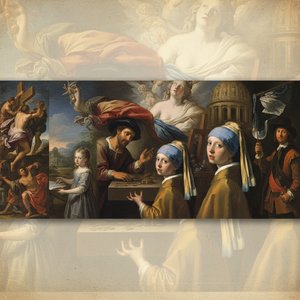
Barokin mestariteokset: Taidetta ja loistoa kotiisi – TopImpressionists.com
Uppoudu barokin loistokkuuteen! Tutustu Caravaggion, Rembrandtin ja Vermeerin kaltaisten mestareiden tunnetuimpiin teoksiin. Taidehistoriaa kotiisi – löydä upeat taidetulosteet ja canvas-taulut TopImpressionists.comista.

Barokin loisto: Kuinka tuoda ylellisyyttä ja tunnetta nykyaikaiseen sisustukseen
Tutustu barokki sisustuksen loistoon! Opi luomaan ylellistä ja tunnelmallista kotia historiallisen tyylin inspiroimana. Vinkkejä, esimerkkejä ja in apua.

The Visceral Stage: Exploring Dramatic Narratives & Emotional Intensity in Baroque Art
Explore the dramatic world of Baroque art! Discover iconic masters like Caravaggio & Rembrandt, their techniques, and the movement's lasting impact. Expert insights for collectors & enthusiasts at TopImpressionists.

Italian Baroque Unlocked: High-Drama Art That Hits Hard
Dive into the high-drama world of Italian Baroque art. Discover how chiaroscuro, intense emotion, and theatrical lighting redefined aesthetics. Explore the visceral power of the Counter-Reformation through a modern lens with expert insights from TopImpressionists.com.

Giuseppe Maria Crespi: Pioneering Genre Painting & the Bolognese Baroque
Explore the life & art of Giuseppe Maria Crespi, a pivotal Bolognese Baroque painter. Discover his groundbreaking genre scenes, religious works, and lasting influence on Italian art history. Learn more at TopImpressionists.
Tutustu teoksiin, jotka on järjestetty aiheiden, tyylien ja ominaisuuksien mukaan.

