


 Esikatselu
 Jaa teos
 Jaa
Jaa
 Tiedot
 Opas
Opas

 Lataa kuva
 Samanlaisia kohteita
 Röntgenkuvaus
 Diaesitys
 Q&A
Q&A Tilastot
Fruit Piercing Moth, Eudocima fullonia


A stunning botanical illustration of the Fruit Piercing Moth (Eudocima phalonia) by Helena Nellie Scott. Witness intricate details & vibrant colors of this fascinating insect from a 19th-century masterpiece.
 Lue lisää
Helena Nellie Scott (1832-1910): Edelläkävijänä toimiva australialainen taiteilija ja luonnontieteilijä, joka tunnetaan upeista yöperhonen- ja perhoskuvituksistaan. Hän vaikutti tieteelliseen taiteeseen ja varoitti vieraslajeista.
Käsinmaalattu öljyvärinen jäljennös
Käsinmaalattu öljyväri kankaalle haluamassasi koossa ja kehyksissä, taiteilijoidemme valmistamana tilauksesta. ( Vaihda tulosteeseen Siirry digitaaliseen kuvaan)




P118B €10

P118H €10

P118W €10

P438Z €10

P508JH €12

P508YH €12

P805H €10

P805Z €10

P919BZ €10

P919G €10

P919XJ €10

P959ZH €10

P968JZ €12

W106C €8

W218G €10

W218JH €8

W218Y €10

W307PJ €10

W316G €10

W316PJ €8

W316Y €10

W398PJ €8

W4111J €10

W500HY €15

W500JH €15

W692G €12

W849H €8

W940BG €15

W953PJ €8




Vakiokoko
räätälöity
CM
INCH
Valitse valmiista mitoistamme sellaiset, jotka vastaavat teoksen alkuperäisiä mittasuhteita.
Loading sizes...

leveys
korkeus
Kirjoita tarvitsemasi leveys ja korkeus, jotta teos sopii kehyksiisi tai seinällesi. Koska kyseessä on käsinmaalattu teos, taiteilija voi maalata hieman enemmän kuvan ympärille tai rajata sitä hieman, jos haluat eri muotoisen koon — valinta on sinun. Lähetämme sinulle digitaalisen mallikuvan hyväksyttäväksi ennen kuin maalaus alkaa. Tällä sivulla näkyvä kuva ei vastaa lopullista tulosta — vain mallikuva näyttää sen.
Esimerkkejä muokattavista asioista: Vaihda kasvot asiakkaan omaan valokuvaan; Lisää lemmikki (esim. korvaa kissa koiralla); Lisää taustalle piilotettu viesti; Muuta taustan maisemaa tai elementtejä.
Tilauksen jälkeen TopImpressionists.com -tiimi lähettää asiakkaalle sähköpostitse ohjeet ja esikatselukuvan
Tilauksen jälkeen TopImpressionists.com -tiimi lähettää asiakkaalle sähköpostitse ohjeet ja esikatselukuvan
Maailmanlaajuinen toimitus () 3–4 viikossa tavallisen 5 viikon sijaan. (28 lokakuu). Laadusta ei tingitä.

Ilmainen pikatoimitus ympäri maailman

Korkealaatuinen pellavakangas

Kattava kuljetusvakuutus

Tulliveron palautustakuu

Takuu täydellisestä värien vastaavuudesta

100 päivän palautusoikeus (vain valmistusvirheet)

100% rahat takaisin -takuu

Määräalennus tarjolla
 Lasivaihtoehto on saatavilla vain alle 110 cm kokoisille teoksille

Fruit Piercing Moth, Eudocima fullonia
Reproduktiotekniikka
Replikaatin koko
-


Kokonaishinta
€ 237
A Study in Transformation: Helena Scott’s “Fruit Piercing Moth”
Helena Nellie Scott's "Fruit Piercing Moth, Eudocima fullonia," a meticulously rendered botanical illustration from the late 19th century, is more than just a scientific record; it’s a captivating meditation on metamorphosis and the delicate beauty of the natural world. Created during a period when women were largely excluded from formal artistic training, Scott's work stands as a testament to her keen observational skills and unwavering dedication to documenting the intricate details of Australian entomology. The piece captures not just an insect, but a fleeting moment in its life cycle – a larval stage brimming with potential, poised on the cusp of transformation.
The illustration’s foundation lies within the burgeoning field of scientific art, driven by the Victorian fascination with classification and the desire to understand the natural world through empirical observation. Scott's work aligns perfectly with this trend, employing a precise, almost clinical approach to rendering her subject. However, beneath this apparent objectivity resides a remarkable sensitivity to detail – from the delicate veins of the leaf to the intricate patterns on the moth’s wings, every element is rendered with painstaking accuracy. The muted color palette—dominated by earthy greens and browns—creates a sense of quiet contemplation, drawing the viewer into the scene's serene stillness.
The Art of Observation: Technique and Style
Scott’s technique is characterized by a masterful command of watercolor on paper, a medium perfectly suited to capturing the subtle nuances of texture and light. She skillfully utilizes layering washes to build up depth and form, while precise hatching and cross-hatching create a sense of volume and shadow. The use of fine lines defines the intricate details of the insect’s anatomy – the segmented body, the delicate antennae, and the complex patterns on its wings. Notably, the illustration reflects the conventions of 19th-century botanical art: a flattened perspective, prioritizing clarity and scientific accuracy over dramatic composition or artistic interpretation. The symmetrical arrangement of the caterpillars clinging to leaves contributes to a sense of balance and order, mirroring the systematic approach inherent in scientific documentation.
The choice of hatching and cross-hatching is particularly noteworthy. These techniques not only define the shapes of the insects and leaves but also create a tactile quality, inviting the viewer to almost feel the texture of the natural world depicted. The muted colors further enhance this effect, lending the illustration a sense of realism that transcends mere representation.
Symbolism and the Cycle of Life
Beyond its scientific value, “Fruit Piercing Moth” is rich in symbolic meaning. The image encapsulates the profound beauty of transformation—the caterpillar’s seemingly chaotic form gradually giving way to the elegant grace of a butterfly. This metamorphosis serves as a potent metaphor for personal growth, resilience, and the cyclical nature of life itself. The scattered butterfly wings across the scene reinforce this theme, suggesting the potential for renewal and rebirth. The title itself – “Fruit Piercing Moth” – hints at both vulnerability and adaptation; the moth’s feeding habits represent its role within the ecosystem, while also highlighting its delicate existence.
Furthermore, Scott's meticulous documentation of the larval stage speaks to a deeper appreciation for the often-overlooked aspects of nature. By focusing on this seemingly insignificant phase of the moth’s life cycle, she elevates it to an object of artistic contemplation, reminding us that beauty and wonder can be found in even the smallest details.
A Legacy of Detail: Helena Scott's Contribution
Helena Nellie Scott’s legacy extends far beyond this single illustration. As a pioneering female artist and naturalist in Australia, she challenged conventional gender roles and made significant contributions to the field of entomology. Her work is now recognized as a cornerstone of Australian scientific art, offering invaluable insights into the biodiversity of the region. Reproductions of “Fruit Piercing Moth” provide a window into a bygone era—a time when meticulous observation, artistic skill, and a deep respect for the natural world converged to create works of enduring beauty and significance. The piece remains a poignant reminder of Scott’s dedication and her remarkable ability to capture the essence of life's intricate transformations.
Kysymykset ja vastaukset
Mikä on teoksen "Fruit Piercing Moth, Eudocima fullonia" formaatti?
Teoksella Helena Nellie Scott:n "Fruit Piercing Moth, Eudocima fullonia" on Portrait -muoto. Muoto kuvaa sommittelun mittasuhteita.
Miten "Fruit Piercing Moth, Eudocima fullonia" asettuu osaksi Helena Nellie Scott'n muuta tuotantoa?
Helena Nellie Scott'n tuotannossa "Fruit Piercing Moth, Eudocima fullonia" edustaa 19th-century Botanical Illustration-tyyliä ja kytkeytyy scott’s meticulous detail, australian natural history, scientific observation, family legacy, early entomology teemoihin.
Mihin huoneeseen "Fruit Piercing Moth, Eudocima fullonia" sopisi parhaiten sen väripaletin perusteella?
Pastels väripalettinsa ansiosta Helena Nellie Scott:n "Fruit Piercing Moth, Eudocima fullonia" on suositeltava Living Room-tilaan. Värit ovat yksi tämän suosituksen perusteista.
Taiteilijan elämäkerta
Elämä luonnon yksityiskohtien syleilyssä
Helena Nellie Scott, nimi joka kantaa mukanaan varhaisen australialaisen luonnontieteellisen kuvituksen hiljaista omistautumista, syntyi Sydneyn kaupunkiin vuonna 1832. Vaikka hänet mainitaan usein yhdessä sisarensa Harriet Morganin kanssa, ja joskus hänen avioliittonsa kautta nimellä Helena Forde, Scott raivasi itselleen ainutlaatuisen polun edelläkävijänä taiteilijana ja luonnontieteilijänä aikana, jolloin tällaiset pyrkimykset olivat pitkälti naisilta suljettuja. Hänen kasvatuksensa oli kaukana tavanomaisesta; se oli upotettu hänen isänsä, kuuluisan entomologin Alexander Walker Scottin, tieteelliseen uteliaisuuteen, jonka intohimo läpäisi jokaisen perheen elämän osa-alueen. Tämä ei ollut pelkkää akateemista kiinnostusta, vaan eletty kokemus, erityisesti sen jälkeen, kun perhe muutti Ash Islandille Hunter Riverin suistoon vuonna 1846. Siellä, Australian koskemattoman kauneuden keskellä, kodista tuli havainnoinnin ja taiteellisen dokumentoinnin turvasatama – laboratorio, jossa luonnon monimutkaisuudet tallennettiin huolellisesti sekä tieteellisen tutkimuksen että herkän taiteellisuuden keinoin. Isän aiemmista suhteista syntyneiden tyttärien liittyminen tähän perhedynamiikkaan ruokki entisään yhteistyöhenkeä, joka määritti suurimman osan Scottin työelämästä.Taiteellinen yhteistyö ja tieteellinen panos
Scottin taiteellinen tyyli ei syntynyt eristyksissä; se kukoisti yhteistyön kautta, erityisesti sisarensa Harrietin kanssa. Yhdessä he eivät ainoastaan kuvittaneet tieteellisiä löytöjä, vaan he osallistuivat aktiivisesti entomologian ja luonnontieteen kasvavaan kenttään. Heidän yhteiset projektinsa nousivat merkkiteoksiksi: The Snakes of Australia* (1869), The Mammals of Australia* (1871) ja Catalogue of the Minerals and Rocks in the Australian Museum* (1873) seisovat todistuksina heidän yhdistetystä taidostaan ja omistautumisestaan. Scottin asiantuntemus keskittyi litografiaan ja muotoiluun, tuoden hänen kuvauksilleen huomattavan tason yksityiskohtia ja tarkkuutta. Nämä eivät olleet pelkkiä kauniita kuvia; ne olivat elintärkeitä työkaluja tieteelliselle ymmärrystä varten, vangiten vivahteita, joita sanat yksinään eivät kyenneet välittämään. Teknisen taituruuden takana kuitenkin sykki aito intohimo luonnonmaailmaa kohtaan – kunnioitus, joka näkyy jokaisessa herkässä viivassa ja huolellisesti toteutetussa värissä. Hänen työnsä ulottui pelkkää esittämistä pidemmälle; hänellä oli varhainen tietoisuus ekologisista huolista, ja hänestä tuli yksi ensimmäisistä, jotka varoittivat vieraslajien tuhoisista vaikutuksista Australian alkuperäiseen eläimistöön – huomio, joka oli häneen nähden poikkeuksellisen ennaltaäikäävä.Mestaruus pienoiskoossa: Merkittäviä teoksia
Vaikka Scott osallistui lukemattomiin julkaisuihin, juuri hänen yksittäiset kuvituksensa vangitsevat todella hänen taiteellisen visionsa olemuksen. Hänen perhosensa ja yöperhosensa ovat erityisen arvostettuja – ne ovat hienostuneita tutkimuksia muodosta, väristä ja tekstuurista. Litografia Diamond Snake, Morelia spilocles esittelee hänen tekniikkansa hallintaa, kun taas Bent-wing Swift Moth, Zelotypia stacyi osoittaa hänen kykynsä vangita monimutkaiset yksityiskohdat henkeäsalpaavalla tarkkuudella. Black Jezebel Butterfly, Delias nigrina eloisat sävyt ja herkät kuviot osoittavat paitsi teknistä taitoa, myös syvää arvostusta luonnossa vallitsevaa kauneutta kohtaan. Nämä teokset eivät ole vain hyönteisten esityksiä; ne ovat ylistyksiä elämälle, toteutettu taiteilijan silmin ja tiedemiehen ymmärryksellä. Melbournen Museums Victoriassa on säilytetty useita hänen teoksiaan, mikä vahvistaa hänen paikkansa Australian taideperinnössä. Isänsä kanssa toteutettu Australian Lepidoptera and Their Transformations -julkaisu pysyy historiallisena saavutuksena – todiste sisarusten yhteistyöhengestä ja heidän merkittävästä panoksestaan hyönteistieteelliseen tietoon.Kestävä perintö: Edelläkävijän henki ja pysyvä vaikutus
Helena Nellie Scott on keskeinen hahmo Australian taiteessa ja tieteessä. Yhtenä Australian ensimmäisistä ammattimaisista naiskuvittajista hän rikkoi esteitä ja raivasi tietä tuleville sukupolville naisille hakeutua näille aloille. Hänen panoksensa ei rajoittunut vain taiteelliseen lahjakkuuteen; hänen varhaiset varoituksensa vieraslajeista korostavat hänen ennakointikykyään ja sitoutumistaan ympäristön suojeluun – huoli, joka resonoi voimakkaasti vielä tänäkin päivänä. Hän ei ainoastaan dokumentoinut luontoa; hän puolusti sen säilyttämistä tunnistaen ekosysteemien herkän tasapainon kauan ennen kuin siitä tuli valtavirran huolenaihe. Scottin perintö ulottuu museoiden ja julkaisujen ulkopuolelle; se elää hänen upeiden teostensa jatkuvassa arvostuksessa ja siinä inspiraatiossa, jota hän tarjoaa niin taiteilijoille kuin tiedemiehillekin. Hänen elämänsä toimii muistutuksena siitä, etteivät taide ja tiede ole toisensa poissulkevia aloja, vaan pikemminkin toisiaan täydentäviä tapoja ymmärtää ja juhlistaa ympäröivää maailmaa, varmistaen, että hänen merkittävä tarinansa luonnontieteilijänä ja taiteilijana säilyy sukupolvelta toiselle.
Helena Nellie Scott
1832 - 1910 , Australia
Pähkinänkuoressa
- Artistic Movement Or Style: Luonnonhistoriallinen taide
- Artists Or Movements Influenced By This Artist:
- Australialaiset luonnontieteilijät
- Tieteelliset kuvittajat
- Artists Who Influenced This Artist:
- Alexander Walker Scott
- Conrad Martens
- Samuel Thomas Gill
- Date Of Birth: 1832
- Date Of Death: 1910
- Full Name: Helena Nellie Scott
- Nationality: Australialainen
- Notable Artworks:
- Timanttikäärme
- Mutkaviuhkaperhonen
- Mustajezebel-perhonen
- Place Of Birth: Sydney, Australia
Aiheeseen liittyvät artikkelit

The Soul of the Specimen: A Journey Through the Artistry of Naturalistic Illustration
Explore the profound beauty of naturalistic illustration. From ancient herbals to scientific masterpieces, discover how art captures the soul of nature through meticulous detail and historical grace.

The Delicate Beauty of Botanical Realism: Capturing Nature's True Essence through the Lens of Art History
Explore the exquisite world of botanical realism. From scientific precision to Impressionist light, discover how master artists capture nature's true essence through timeless, hand-painted oil reproductions and historical insights for the discerning art lover.
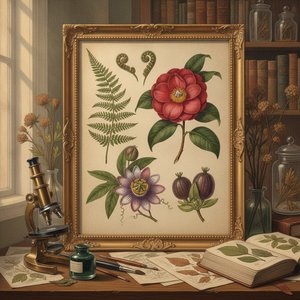
The Timeless Elegance of Victorian Botanical Painting: A Journey Through Nature's Intricate Detail and Scientific Artistry
Discover the exquisite world of Victorian botanical painting, where scientific precision meets profound aesthetic grace. Explore a journey through nature's intricate details, from legendary illustrators to the untamed beauty of Marianne North’s vibrant floral masterpieces.
Tutustu teoksiin, jotka on järjestetty aiheiden, tyylien ja ominaisuuksien mukaan.

