

Shown: · With its frame:
 Esikatselu
 Jaa teos
 Jaa
Jaa
 Tiedot
 Opas
Opas

 Lataa kuva
 Samanlaisia kohteita
 Röntgenkuvaus
 Diaesitys
 Q&A
Q&A Tilastot
 Acrylic On Canvas
- WallArt
- Impressionistic Realism
 1998
1998- 19th Century
 23.0 x 17.0 cm
 Tel Aviv Museum of Art
€ 239
Käsinmaalattu öljyvärinen jäljennös
Käsinmaalattu öljyväri kankaalle haluamassasi koossa ja kehyksissä, taiteilijoidemme valmistamana tilauksesta. ( Vaihda tulosteeseen Siirry digitaaliseen kuvaan)
Size
·Vakiokoko
räätälöity
CM
INCH
Valitse valmiista mitoistamme sellaiset, jotka vastaavat teoksen alkuperäisiä mittasuhteita.
Loading sizes...

leveys
korkeus
Kirjoita tarvitsemasi leveys ja korkeus, jotta teos sopii kehyksiisi tai seinällesi. Koska kyseessä on käsinmaalattu teos, taiteilija voi maalata hieman enemmän kuvan ympärille tai rajata sitä hieman, jos haluat eri muotoisen koon — valinta on sinun. Lähetämme sinulle digitaalisen mallikuvan hyväksyttäväksi ennen kuin maalaus alkaa. Tällä sivulla näkyvä kuva ei vastaa lopullista tulosta — vain mallikuva näyttää sen.
 Lue lisää
Finish
·
White €1

Blurside €1

Extended €1

P118B €10

P118H €10

P118W €10

P438Z €10

P508JH €12

P508YH €12

P805H €10

P805Z €10

P919BZ €10

P919G €10

P919XJ €10

P959ZH €10

P968JZ €12

W106C €8

W218G €10

W218JH €8

W218Y €10

W307PJ €10

W316G €10

W316PJ €8

W316Y €10

W398PJ €8

W4111J €10

W500HY €15

W500JH €15

W692G €12

W849H €8

W940BG €15

W953PJ €8

H24-GOLD €30

H24-SILVER €30

H36-GOLD €45

H36-SILVER €45
Shipped in a protective tube, ready for your own framer.
Above 105 cm the frame is shipped as a kit for a professional framer — read the details.
Extras
optionalWhat do the extras include?
Examples of what can be changed: Replace face with customer photo; Add pet (e.g., replace cat with dog); Include hidden message in background; Change background landscape or elements.
After order, TopImpressionists.com team will email client for instructions and provide a mockup preview
After order, TopImpressionists.com team will email client for instructions and provide a mockup preview
Maailmanlaajuinen toimitus () 3–4 viikossa tavallisen 5 viikon sijaan. (30 lokakuu). Laadusta ei tingitä.
Suojalakkaus
Nimilaatta
Kaiverretun pronssilaatan tiedot
This elegant plaque features the artist's name and the title of the artwork, finely engraved for a timeless presentation.
It is made from bronze with a refined, elegant finish. The text is precisely laser-engraved for a sharp and permanent result. Measuring 9x2 cm, the plaque is compact yet easy to read. It's built to be durable and scratch-resistant, offering a professional, museum-quality look. Mounting is simple thanks to the included adhesive backing.
Läpinäkyvän akryylilaatan tiedot
The plaque includes essential engraved details such as the artist's name, the title of the artwork, the date it was created, the type of media used-like oil on canvas or watercolor-a brief description of the piece, and a QR code that links to the complete artwork information.
It is crafted from clear acrylic, offering a sleek, modern appearance. The text is UV-engraved in black to ensure strong visual contrast. With a size of 10x15 cm, it ensures optimal readability. It comes equipped with two metal hooks for secure wall mounting. The plaque is designed to be weather-resistant, making it suitable for various environments, and it includes interactive features that work seamlessly with smartphone scanning.
Mustan akryylilaatan tiedot
This elegant plaque includes engraved information such as the artist's name, the title of the artwork, the date it was created, the type of media used (like oil on canvas or watercolor), a short description of the artwork, and a QR code for quick access to more information.
The plaque itself is made from refined black acrylic with a premium finish. The text is laser-engraved in white for high contrast and readability. Its size is 10x15 cm, designed to be easy to read. It comes with two metal hooks for professional mounting. The design is sleek and fits any interior style. It is also weather-resistant and durable, with built-in digital integration for mobile compatibility.
Lasivaihtoehto on saatavilla vain alle 110 cm kokoisille teoksille
 Lasivaihtoehto on saatavilla vain alle 110 cm kokoisille teoksille
- Ilmainen pikatoimitus ympäri maailman
- Korkealaatuinen pellavakangas
- Kattava kuljetusvakuutus
- Tulliveron palautustakuu
- Takuu täydellisestä värien vastaavuudesta
- 100 päivän palautusoikeus (vain valmistusvirheet)
- 100% rahat takaisin -takuu
- Määräalennus tarjolla


Keräilykohteen kuvaus
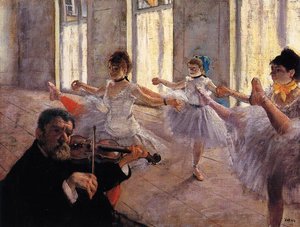
This pastel depicts a ballerina taking a bow, showcasing Degas's masterful observation of movement and form. Inspired by ballet classes and featuring subtle background figures, it exemplifies his distinctive blend of realism and Impressionism.
Taiteilijan elämäkerta
Edgar Degas: Upea ranskalainen taiteilija, tunnettu balettitanssijoiden maalauksistaan ja modernin Pariisin elämästä. Innovatiivinen ja vaikutusvaltainen taiteilija!
About the painting
A Study in Graceful Motion: Exploring Degas’s Dancer Bowing
The bronze sculpture “Dancer Bowing,” created by Hilaire Germain Edgar Degas around 1878, stands as a testament to the artist's unwavering fascination with capturing fleeting moments of movement and emotion. More than just a depiction of dance—though undeniably masterful in its portrayal—the piece embodies a broader philosophical inquiry into the human condition, reflecting Degas’s dual commitment to realism and Impressionism. This juxtaposition is precisely what elevates “Dancer Bowing” beyond mere visual representation; it invites contemplation on themes of vulnerability, grace, and the ephemeral beauty inherent in everyday life.The Artist's Vision: Realism Informed by Observation
Degas rejected the label of Impressionist, preferring to describe his approach as rooted in meticulous observation—a cornerstone of his artistic practice. Unlike Impressionists who sought to capture atmospheric effects primarily through color, Degas focused on anatomical accuracy and precise rendering of form. He spent countless hours studying dancers at the Paris Opera Ballet, painstakingly sketching them from life, capturing not just their posture but also subtle shifts in muscle tension and expression. This dedication to realism wasn’t driven by a desire for photographic likeness; rather, it stemmed from Degas's conviction that true artistic insight could only emerge from an honest engagement with reality. As he famously stated, “I don’t paint what I see; I paint what I feel.”Technique and Material: Bronze as Medium of Expression
The sculpture itself is crafted from bronze—a material chosen deliberately by Degas for its ability to convey both solidity and fluidity. The artist employed a technique known as *lost wax casting*, a process that involves creating a mold from wax, pouring molten metal into the mold, allowing the wax to burn away, and then reheating the remaining metal to solidify it into the final form. This method allowed Degas to achieve remarkable detail while maintaining structural integrity—a crucial consideration given the sculpture’s dynamic pose. The surface finish is subtly textured, enhancing the visual richness of the piece and contributing to its overall expressive quality. Careful polishing reveals the bronze's inherent luster, highlighting its sculptural contours and emphasizing the dancer’s graceful curve.Historical Context: Ballet Reform and Artistic Innovation
“Dancer Bowing” emerged during a period of significant reform within the ballet world—a movement spearheaded by Sergei Diaghilev to revitalize Russian ballet and introduce avant-garde artistic concepts into classical performance. Degas's involvement with Diaghilev’s Ballets Russes marked a pivotal moment in his career, exposing him to new influences and propelling him toward bolder stylistic explorations. The sculpture reflects this broader cultural shift—a willingness to challenge conventions and embrace experimentation as pathways to artistic advancement. It stands alongside other works produced during the Ballets Russes era, demonstrating Degas’s contribution to a movement that sought to redefine ballet's aesthetic boundaries.Symbolism and Emotional Resonance: Capturing the Essence of Performance
Beyond its technical prowess and historical significance, “Dancer Bowing” resonates deeply with viewers on an emotional level. The dancer’s bowed posture—a gesture signifying respect and acknowledgment—suggests a vulnerability that contrasts sharply with the sculpture's muscular form. This duality encapsulates Degas’s artistic preoccupation with portraying human emotion amidst physical constraints. The pose itself embodies grace, poise, and unwavering concentration—qualities associated with the ballet performer’s dedication to craft and artistry. Ultimately, “Dancer Bowing” invites us to contemplate not just the beauty of movement but also the profound capacity for human expression—a timeless theme that continues to captivate audiences today.Kysymykset ja vastaukset
Miten voin hankkia teoksen Hilaire-Germain-Edgar Degas:n "Dancer Bowing" digitaalisen tiedoston?
Teoksen Hilaire-Germain-Edgar Degas:n "Dancer Bowing" digitaalisen kuvan voi ostaa sen Digitaalinen teos -sivulta: korkearesoluutioinen digitaalinen kuvalataus.
Mihin kohtaan taidehistoriaa Hilaire-Germain-Edgar Degas:n "Dancer Bowing" sijoittuu?
Hilaire-Germain-Edgar Degas:n "Dancer Bowing" kuuluu Impressionistic Realism-suuntaukseen 19th Century-aikakaudella. Yhdessä ne antavat teokselle sen paikan taidehistoriassa.
Onko teoksesta "Dancer Bowing" saatavilla latausversiota?
Teoksen Hilaire-Germain-Edgar Degas:n "Dancer Bowing" kuvan voi ladata teoksen Lataa digitaalinen kuva -sivulta: korkearesoluutioinen digitaalinen kuvalataus.
Quick facts and art quiz
About Hilaire-Germain-Edgar Degas

Hilaire-Germain-Edgar Degas
1834 - 1917, Ranska
Taiteilijan elämäkerta
A Life Immersed in Movement
Edgar Degas, syntynyt Hilaire-Germain-Edgar De Gas vuonna 1834 Pariisissa, oli taiteilijaelämä, joka täynnä vastakohtia. Vaikka hänet usein luokitellaan Impressionistien pariin – Monet’n, Renoir’n ja muiden, jotka mullistivat maalaustekniikkaa 1800-luvun lopulla – hän itse vastusti tätä nimitystä, identifioiden itsensä realistiksi. Tämä sitoutuminen perustui hänen tarkkaan havaintoonsa maailmasta ja omistautumiseensa sen kuvaamiseen rehellisesti. Degasin varhainen elämä oli mukava bourgeois-elämä; isänsä oli pankki, ja äitinsä perhe oli kreikkiläinen New Orleansista. Tämä tausta tarjosi hänelle pääsyn koulutukseen ja taidekoulutukseen, vaikka hän usein vastusti akateemisia rajoitteita. Hän ilmoittautui alun perin Lycée Louis-le-Grandiin, mutta hänen todellinen koulutuksensa alkoi, kun hän alkoi kopioida teoksia Louvressa, hioen taitojaan ja sytyttäen elinikäisen intohimon klassiseen taiteeseen. Kuitenkin Degasin tie ei ollut pelkkää perinteiden noudattamista; se oli merkitty jatkuvalla kyseenalaistamisella ja taiteellisten normien uudelleenarvioinnilla. Hänellä oli itsenäinen henki, joka määrittelisi koko uransa.Impressionismista Poikkeava Taiteellinen Visio
Vaikka hänen ikäisensä, kuten Monet, tavoittelivat valon hetkellisiä vaikutuksia ulkona, Degas työskenteli pääasiassa studioissaan, rakentaen tarkasti kohtauksia havaintojen ja muistojen pohjalta. Hänen aiheensa olivat selvästi moderneja – poikkeus historiallisten tai mytologisten teemojen suhteen, joita suosivat monet akateemiset maalarit. Hän löysi inspiraatiota Pariisin tavallisten ihmisten elämään: pesimiehet, kabaree-laulajat, hattujen tekijät ja, mikä tärkeintä, tanssijat. Tämä tanssiin liittyvä intohimo määrittelee hänen teoksiaan suurelta osin. Degas ei maalannut vain kauniita balettitanssijoita; hän vangitsi heidän työn raskaan todellisuuden – loputtomat harjoitukset, fyysinen rasitus, ohikiitävät hetket eleganssin keskellä vaikeaa työtä. Hänen kompositiot ovat usein epätavallisia, esittäen hahmoja odottamattomilla tavoilla ja käyttämällä epäsymmetrisiä järjestelyjä luomaan dynaamisuuden ja välittömyyden tunnetta. Hän oli mestari vangitsemaan liikettä, ei sumeiden linjojen tai hämärän efektien kautta, vaan tarkkaan havaintojen ja muotojen huolellisen esittämisen avulla. *Tanssija tamburiinin kanssa*, *Baletttiluokka* ja *Degas vihreässä kaulahuivissa* ovat hyviä esimerkkejä tästä omistautumisesta ihmisfiguuren kuvaamiseen liikkeessä ja modernin elämän monimutkaisuuksien paljastamisessa. Hän ei ollut kiinnostunut pinnallisesta kauneudesta; hän etsi totuutta pinnan alla.Vaikutukset ja Taiteellinen Kehitys
Degasin taiteellinen matka muotoutui monipuolisten vaikutteiden pohjalta. Varhaiset koulutuksensa korosti klassisia periaatteita, erityisesti Jean-Auguste-Dominique Ingresin työtä, jonka linjakkuuden ja tarkkaan esitettyjen periaatteiden painotus jätti pysyvän jälkivaikutuksen. Kuitenkin Degas ihaillut myös Realisteja, kuten Gustave Courbetia, jotka haastoivat akateemisia normeja ja edustivat nykyelämän kuvaamista. Merkittävä hetki hänen kehityksessään oli hänen yhteytensä Camille Pissarro’hun, johtavaan Impressionistiin, joka esitteli hänet muiden taiteilijoiden pariin ja rohkaisi häntä kokeilemaan uusia tekniikoita. Hän oli lumoutunut japanilaisten painokuvien vaikutuksesta – Ukiyo-e – jotka vaikuttivat hänen epäsymmetristen komposiittien käyttöön, tasoitetuihin näkökulmiin ja rohkeisiin kuvioihin. Hän omaksui myös valokuvausta, tunnistaen sen potentiaalin liikkeen tutkimisessa ja ohikiitävien hetkien vangitsemisessa. Tämä halukkuus sisällyttää erilaisia vaikutteita teoksiinsa on se, mikä erottaa Degasin ja edistää hänen taiteensa ainutlaatuista luonnetta. Hän ei pelännyt lainata eri lähteitä, yhdistäen ne johonkin täysin uuteen.Saavutukset ja Perinnön Jättö
Edgar Degas kuoli Pariisissa vuonna 1917, jättäen jälkeensä teosten kokoelman, joka vangitsee edelleen yleisön huomion. Hänen innovatiivinen lähestymistapansa komposiittien luomiseen, hänen mestarillinen draftsaamisen taitonsa ja ihmisten elämän rehellinen kuvaus ovat vaikuttaneet taiteen historian kulkuun syvästi. Hän avasi tietä tuleville sukupolville taiteilijoille, jotka halusivat irtautua perinteisistä normeista ja tutkia uusia tapoja maailman esittämiseen. Hänen vaikutuksensa voidaan nähdä Pablo Picasson ja Henri Matissen teoksissa sekä monissa muissa. Teokset säilytetään laajalti museoissa ympäri maailmaa – Musée d’Orsayssa ja Musée de l’Orangeriessa Pariisissa – varmistaen, että hänen perintönsä kestää sukupolvien ajan. Degas ei ollut pelkästään tanssijoiden tai ratsastajien maalari; hän oli tarkkanäköinen havaintoeläjä, muotojen ja liikkeen mestari ja todellinen innovaattori, joka uudensi taiteen mahdollisuuksia.Quick facts about Hilaire-Germain-Edgar Degas
- Artistic Movement Or Style: Impressionismi, Realismi
- Artists Or Movements Influenced By This Artist:
- Picasso
- Matisse
- Artists Who Influenced This Artist:
- Ingres
- Courbet
- Pissarro
- Date Of Birth: 1834
- Date Of Death: 1917
- Full Name: Hilaire-Germain-Edgar De Gas
- Nationality: Ranskalainen
- Notable Artworks:
- Tanssijoita siivissä 1
- Kilpahevosten Pariisilainen Lähtö
- Balettin harjoitus
- Place Of Birth: Pariisi, Ranska
Samankaltaisia teoksia



Tutustu teoksiin, jotka on järjestetty aiheiden, tyylien ja ominaisuuksien mukaan.


Hilaire-Germain-Edgar Degas
Dancer Bowing
() ·
With its frame: · Hand-painted in oil on linen
Total