


 Katso seinällä
 Lähetä
 Jaa
Jaa
 Tarkemmat tiedot
 Opas
Opas

 Lataa kuva
 Samanlaisia kohteita
 Röntgenkuvaus
 Diaesitys
 Tilastot
Deesis
 Oil On Panel
- WallArt
- Renaissance
 1527
1527- Renaissance
 133.0 x 122.0 cm
 Museo del Prado
Discover Jan Gossaert’s ‘Deesis,’ a stunning 1527 Renaissance masterpiece! Admire its rich detail, dramatic lighting & profound religious symbolism in this exquisite oil painting.
 Lue lisää
Tutustu Jan Gossaertiin (Mabuse), 1400–1500-luvun flaamilaismaalariin! Tutki hänen romanistista tyyliään, uskonnollisia kohtauksiaan ja muotokuviaan – hän oli keskeinen hahmo renessanssitaiteessa.
Käsinmaalattu öljyvärinen jäljennös
Käsinmaalattu öljyväri kankaalle haluamassasi koossa ja kehyksissä, taiteilijoidemme valmistamana tilauksesta. ( Vaihda tulosteeseen Siirry digitaaliseen kuvaan)




P118B €10

P118H €10

P118W €10

P438Z €10

P508JH €12

P508YH €12

P805H €10

P805Z €10

P919BZ €10

P919G €10

P919XJ €10

P959ZH €10

P968JZ €12

W106C €8

W218G €10

W218JH €8

W218Y €10

W307PJ €10

W316G €10

W316PJ €8

W316Y €10

W398PJ €8

W4111J €10

W500HY €15

W500JH €15

W692G €12

W849H €8

W940BG €15

W953PJ €8




Vakiokoko
mittatilaustyö
CM
INCH
Valitse valmiista mitoistamme sellaiset, jotka vastaavat teoksen alkuperäisiä mittasuhteita.
Loading sizes...

leveys
korkeus
Kirjoita tarvitsemasi leveys ja korkeus, jotta teos sopii kehyskehyksiisi tai seinällesi. Koska kyseessä on käsinmaalattu teos, taiteilija voi maalata hieman enemmän kuvan ympärille tai rajata sitä hieman, jos haluat eri muotoisen koon — valinta on sinun. Lähetämme sinulle digitaalisen mallikuvan hyväksyttäväksi ennen kuin maalaus alkaa. Tällä sivulla näkyvä kuva ei vastaa lopullista tulosta — vain mallikuva näyttää sen.
Esimerkkejä muokattavista asioista: Vaihda kasvot asiakkaan omaan valokuvaan; Lisää lemmikki (esim. korvaa kissa koiralla); Lisää taustalle piilotettu viesti; Muuta taustan maisemaa tai elementtejä.
Tilauksen jälkeen TopImpressionists.com -tiimi lähettää asiakkaalle sähköpostitse ohjeet ja esikatselukuvan.
Tilauksen jälkeen TopImpressionists.com -tiimi lähettää asiakkaalle sähköpostitse ohjeet ja esikatselukuvan.
Maailmanlaajuinen toimitus () 3–4 viikossa tavallisen 5 viikon sijaan. (21 lokakuu). Laadusta ei tingitä.

Ilmainen pikatoimitus ympäri maailman

Korkealaatuinen pellavakangas

Kattava kuljetusvakuutus

Tulliveron palautustakuu

Takuu täydellisestä värien vastaavuudesta

100 päivän palautusoikeus valmistusvirhetapauksissa

100% rahat takaisin -takuu

Määräalennus saatavilla
 Lasivaihtoehto on saatavilla vain alle 110 cm kokoisille teoksille

Deesis
Reproduktiotapa
Replikaatin koko
-


Kokonaishinta
€ 279
A Divine Encounter: The Sacred Majesty of Jan Gossaert’s Deesis
In the quiet, hallowed atmosphere of the early sixteenth century, few works captured the intersection of earthly realism and celestial glory as profoundly as Jan Gossaert’s Deesis. Created in 1527, this masterpiece serves as a breathtaking window into the soul of the Northern Renaissance. The painting presents a sacred triad: Christ at the apex, flanked by the Virgin Mary and St. John the Baptist. This traditional iconographic arrangement, known as the Deësis—or "supplication"—depicts the holy figures in a moment of eternal intercession for humanity. As one gazes upon the composition, there is an immediate sense of being drawn into a divine court, where the boundaries between the viewer and the heavens begin to dissolve.
The emotional resonance of the piece lies in its delicate balance of power and tenderness. Gossaert, often referred to by his evocative moniker Mabuse, masterfully utilizes a triangular composition to guide the eye upward toward the central figure of Christ. The lighting is nothing short of dramatic; a soft yet piercing radiance emanicates from the center, illuminating the faces of the saints with a glow that feels both physical and spiritual. This chiaroscuro effect creates deep, velvety shadows within the dark wooden arch that frames the scene, lending the work a sculptural weight and an air of profound mystery. For the collector or designer, this painting offers more than mere decoration; it provides a focal point of intense contemplation and quiet strength.
The Alchemy of Technique and Texture
To appreciate the Deesis is to marvel at the technical virtuosity of the Netherlandish tradition blended with the burgeoning influences of Italian Romanism. Gossaert was a pioneer, an artist who breathed the air of Rome and brought its classical elegance back to the Low Countries. In this work, we see the meticulous attention to detail characteristic of his Flemish roots—the heavy, tactile folds of the drapery, the subtle translucency of skin, and the rich, opulent textures of gold and deep crimson pigments. The use of oil on wood panel allows for a layering of glazes that gives the colors an inner luminosity, making the gold leaf appear to shimmer as if caught in a flickering candlelight.
Every brushstroke serves a purpose in building a sense of tangible reality. The organic shapes of the flowing robes and rounded, compassionate faces contrast beautifully with the rigid, geometric architecture of the arched frame. This interplay between the soft and the structured creates a rhythmic harmony that is deeply pleasing to the eye. For those seeking to incorporate such a piece into a curated interior, the painting’s rich palette of earth tones, golds, and deep reds offers a sophisticated foundation for any classical or transitional design scheme, bringing an aura of historical prestige and timeless elegance to a room.
A Legacy of Faith and Humanism
Beyond its aesthetic brilliance, the Deesis is a profound theological statement. It captures the precise moment in art history when the medieval preoccupation with symbolic representation began to embrace the humanistic focus on anatomical accuracy and spatial depth. The gestures within the painting—Mary’s prayerful tilt and John the Baptist’s outstretched hand—are not merely poses; they are silent prayers captured in oil. They represent the bridge between the mortal struggle and divine mercy.
Owning a high-quality reproduction of this work allows one to invite this spirit of reverence into the modern home. It is an invitation to slow down, to observe the intricate details of Gossaert’s genius, and to find beauty in the intersection of the human and the divine. Whether placed in a private study, a grand library, or a sophisticated living space, the Deesis stands as a testament to the enduring power of Renaissance mastery, offering an unparalleled sense of peace, history, and artistic splendor.
Kysymykset ja vastaukset
Millä muilla nimillä Jan Gossaert (Mabuse) tunnetaan?
Muita Jan Gossaert (Mabuse)-nimelle, teoksen "Deesis" tekijälle, rekisteröityjä nimiä ovat Jan Gossaert, Mabuse.
Mitä aihetta ja tunnelmaa Jan Gossaert (Mabuse):n "Deesis" yhdistää?
Jan Gossaert (Mabuse):n "Deesis" esittää aiheita holy trinity, religious art, renaissance, mary, christ, john baptist, byzantine, devotion Dramatic tunnelmassa. Aihe ja ilmapiiri kuvaavat teosta yhdessä.
Mistä maasta Renaissance-tyylinen teos "Deesis" on peräisin?
Renaissance-tyylinen teos "Deesis" on Ranska:ssa syntyneen taiteilijan käsialaa.
Taiteilijan elämäkerta
Renessanssin uranuurtaja: Jan Gossaertin elämä ja perintö
XVI vuosisadan alun muuttuvassa maailmankuvassa harva taiteilija kuroi kuilua pohjoisen huolellisten perinteiden ja etelän kukoistavan humanismin välillä yhtä mestarillisesti kuin Jan Gossaert. Historiankirjoissa tunnettu kutsuvan nimellä Mabuse, tämä visionäärinen maalaaja nousi Ranskan Maubeugesta romanistisen liikkeen kulmakiveksi. Hänen elämäntyönsä edustaa syvää metamorfoosia alankomaalaisessa taiteessa, jossa flaamilaismestareiden terävä ja käsinkosketeltava realismi kohtasi italialaisen renessanssin suuren, veistoksellisen eleganssin. Gossaertin tutkiminen on todistus siitä hetkestä, jolloin keskiaikainen sielu alkoi syleillä antiikin klassista valoa.
Vaikka tarkat tiedot hänen varhaisesta koulutuksestaan ovat kääntyneet ajan usvaan, Gossaertin taiteellinen DNA oli syvällä Alankomaiden perinteissä. On laajasti uskottu, että hän vietti muovaavat vuotensa omaksien teknistä tarkkuutta mestareilta, kuten Rogier van der Weydenilta ja Hugo van der Goesilta. Näiltä edeltäjiltään hän peri vertaansa vailla olevan yksityiskohtien intohimon – tavan kuvata tekstuureja, kankaita ja valoa niin, että ne tuntuivat katsojasta lähes käsinkosketeltavilta. Gossaert kuitenkin ei ollut pelkkä menneisyyden jäljittelijä; hänellä oli nälkäinen uteliaisuus uutta kohtaan, ja hän katsoi etelään integroidakseen italialaisen renamessanssin anatomisen tarkkuuden ja arkkitehtonisen loiston omaan kotimaiseen tyyliinsä.
Pohjoisen ja etelän synteesi
Mabuse neron todellinen ydin piilee hänen kykyssään sovittaa yhteen kaksi näennäisesti erilaista maailmaa. Hänen kehityksensä romanistisena maalarina merkitsi irtautumista puhtaasti goottilaisista vaikutteista, jotka olivat pitkään hallinneet Pohjois-Eurooppaa. Siinä missä aiemmat taiteilijat keskittyivät symboliseen syvyyteen ja hengelliseen ikonografiaan, Gossaert toi teoksiinsa fyysistä painoa ja klassisia mittasuhteita. Hän tutki ihmismuotoa uudella, tieteellisellä voimalla, antaen hahmoilleen veistoksellisen läsnäolon, joka tuntui aikakaudelleen vallankumoukselliselta.
Tämä tyylillinen evoluutio näkyy selkeimmin hänen valon ja ilmakehän käsittelyssään. Hänen käsissään valo ei ainoastaan valaise kohtausta, vaan se veistää sitä. Hän hyödynsi ilmaperspektiiviä luodakseen valtavia, upottavia maisemia, jotka tuntuvat vetäytyvän loputtomiin kaukaisuuteen, tarjoten dramaattisen näyttämön aiheilleen. Hänen kompositiotensa sisältävät usein monimutkaisen vuoropuhelun varjojen ja loiston välillä, tekniikan, joka antaa hänen uskonnollisille ja mytologisille kohtauksilleen lähes teatraalisen intensiteetin. Tämä mestaruus mahdollisti hänelle tasapainoilun uskonnollisten tilausten vaatiman syvän hengellisen mietiskelyn ja aikansa humanististen oppineiden edellyttämän älyllisen suuruuden välillä.
Mestariteokset ja historiallinen merkitys
Gossaertin hedelmällinen uraa ylläpitivät arvostettu tilaajien verkosto, joka ulottui varakkaisiin kauppiaisiin aina korkea-arvoiseen kirkolliseen ja aatelistoon asti. Hänen tuotantonsa oli hämmästyttävän monipuolista, kattaen monumentaalisista alttaritauluista, jotka ankkuroivat katedraalien sisätiloja, intiimeihin muotokuviin, jotka tavoittivat malliens psykologisen olemuksen. Hänen pysyvimpiä panoksiaan ovat:
- Uskonnollinen ikonografia: Teokset, kuten Deesis, osoittavat hänen kykynsä käyttää valoa ja väriä herättämään syvää hengellistä kunnioitusta, esittäen Kristuksen majesteettisuudella, joka on yhtä aikaa inhimillinen ja jumalallinen.
- Mytologiset kertomukset: Teoksissa kuten Hercules ja Deianeira Gossaert osoitti hallintansa klassisissa teemoissa käyttäen muinaisen myytin lihaksikkuutta työntääkseen pohjoisen anatomisen maalaustaiteen rajoja.
- Muotokuvataide: Hänen muotokuvansa seisovat elävinä historiallisina dokumentteina, joille on ominaista vaatetuksen tarkka kuvaus ja arvokas, vakaa katse, joka heijastaa yksilön nousevaa asemaa renessanssin yhteiskunnassa.
Jan Gossaertin historiallista merkitystä ei voi liikaa korostaa. Hän toimi elintärkeänä välittäjänä, kuljettaen Italian klassisia ihanteita Alppien yli ja istuttaen ne varmasti Alankomaiden hedelmälliseen maaperään. Yhdistämällä flaamilaisen perinteen huolellisen käsityötaidon romaanisen renessanssin rakenteellisiin innovaatioihin, hän raivasi tietä tuleville pohjoisille taiteilijasukupolville. Hänen perintönsä on kaiverrettu taidehistorian kudokseen edustaen voitokasta kulttuurista synteesiä ja taiteellista uudestisyntymistä.

Jan Gossaert (Mabuse)
1478 - 1532 , Ranska
Tietoa taiteilijasta
- Artistic Movement Or Style: Romanistinen maalaustaide
- Artists Who Influenced This Artist:
- Andrea Mantegna
- Leonardo da Vinci
- Date Of Birth: Maubeuge, Ranska
- Date Of Death: 1532
- Full Name: Jan Gossaert (Mabuse)
- Nationality: Flemish
- Notable Artworks:
- Deesis
- Hercules ja Deianeira
- Pyhä perhe
- Place Of Birth: Ranska
Aiheeseen liittyvät artikkelit
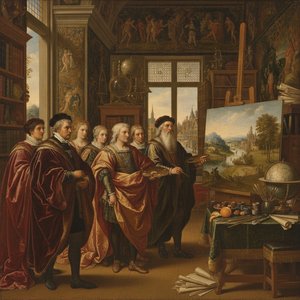
The Timeless Allure of Flemish Painting: A Journey Through Light and Detail
Embark on a luminous journey through the Flemish masters. Discover the alchemical secrets of oil glazing, intricate symbolism, and the breathtaking realism of the Northern Renaissance. An expert exploration of light and detail for the discerning art enthusiast.