

 Esikatselu
 Jaa teos
 Jaa
Jaa
 Tiedot
 Opas
Opas

 Lataa kuva
 Samanlaisia kohteita
 Röntgenkuvaus
 Diaesitys
 Q&A
Q&A Tilastot
Interior


Jean-Édouard Vuillard’s “Interior” exemplifies the Nabi movement’s innovative use of color and form, depicting a serene domestic scene with muted tones and subtle textures. Created around 1900, this painting showcases Vuillard's mastery in capturing intimate moments within a home setting and is prominently displayed at the Detroit Institute of Arts.
 Lue lisää
Jean-Édouard Vuillard (1868–1940) oli ranskalainen taiteilija, joka tunnetaan intiimeistä sisätiloista, koristeellisesta tyylistä ja vaikutuksestaan modernismiin, kuten kubismiin. Tutustu hänen taiteeseensa!
Giclée- ja taideprintit
Museolaatuisia giclée- tai kankaitaulun tulosteita nopealla tuotannolla ja joustavilla viimeistelyvaihtoehdoilla. ( Osta käsinmaalattu taideteos Siirry digitaaliseen kuvaan)




P118B €10

P118H €10

P118W €10

P438Z €10

P508JH €12

P508YH €12

P805H €10

P805Z €10

P919BZ €10

P919G €10

P919XJ €10

P959ZH €10

P968JZ €12

W106C €8

W218G €10

W218JH €8

W218Y €10

W307PJ €10

W316G €10

W316PJ €8

W316Y €10

W398PJ €8

W4111J €10

W500HY €15

W500JH €15

W692G €12

W849H €8

W940BG €15

W953PJ €8




Vakiokoko
räätälöity
CM
INCH
Valitse valmiista mitoistamme sellaiset, jotka vastaavat teoksen alkuperäisiä mittasuhteita.
Loading sizes...

leveys
korkeus
Syötä tarvitsemasi leveys ja korkeus, jotta tuloste sopii kehyksiisi tai seinällesi. Tulostetta voidaan vain leikata, sitä ei voida koskaan suurentaa alkuperäistä kuvaa suuremmaksi, joten eri muotoinen koko aiheuttaa osan kuvasta katoamisen. Lähetämme sinulle digitaalisen mallikuvan hyväksyttäväksi ennen kuin aloitamme tulostuksen. Tällä sivulla näkyvä kuva ei näytä lopullista rajausta — vain mallikuva näyttää sen.
Maailmanlaajuinen toimitus () 2 viikossa tavallisen 4–5 viikon sijaan. (2 marraskuu)

Ilmainen pikatoimitus ympäri maailman

Korkealaatuinen pellavakangas

Kattava kuljetusvakuutus

Tulliveron palautustakuu

Takuu täydellisestä värien vastaavuudesta

100 päivän palautusoikeus (vain valmistusvirheet)

100% rahat takaisin -takuu

Määräalennus tarjolla
 Lasivaihtoehto on saatavilla vain alle 110 cm kokoisille teoksille

Interior
Giclée- ja taideprintit
Replikaatin koko
-


Kokonaishinta
€ 61
Jean-Édouard Vuillard: Capturing Quietude in “Interior”
The painting "Interior," executed by Jean-Édouard Vuillard around 1900-1905, stands as a quintessential example of Nabis art—a movement that sought to revolutionize artistic expression through radical simplification and the exploration of color’s emotive power. More than just a depiction of domestic space, it embodies Vuillard's profound fascination with capturing fleeting moments of stillness and intimacy within the everyday world. Located at the Detroit Institute of Arts, this artwork invites viewers into a carefully constructed tableau that speaks volumes about artistic innovation and perceptual experience.A Synthesis of Impressionism and Japanese Influence
Vuillard’s approach to painting was deeply rooted in Impressionist principles—particularly the emphasis on capturing light and atmosphere—yet he decisively moved beyond its limitations. Influenced by the pioneering work of Paul Gauguin, Vuillard embraced a bold departure from academic conventions. However, his artistic vision gained significant impetus from Japanese prints (ukiyo-e), which had begun to circulate in Europe during this period. Like Serusier’s “The Talisman,” Vuillard utilized flattened planes of color—a technique borrowed directly from Japanese aesthetics—to create an illusion of depth and spatial ambiguity. This deliberate simplification wasn't merely stylistic; it represented a fundamental rethinking of how artists could represent reality, prioritizing feeling over precise observation.Composition and Color Palette: Orchestrating Emotion
The composition itself is deceptively simple. Two chairs dominate the scene, one occupied by a figure whose presence is subtly suggested rather than overtly portrayed—a characteristic Vuillard technique that encourages contemplation and invites viewers to fill in the gaps of perception. A window frames a glimpse of foliage outside, bathed in soft light, contributing to the overall sense of tranquility. Yet, it’s the color palette that truly distinguishes “Interior.” Vuillard employed hues of pink, peach, and pale yellow—colors chosen not for their literal representation but for their ability to evoke emotion. These shades coalesce into a harmonious blend that conveys warmth, comfort, and perhaps even melancholy—a testament to Vuillard's masterful control over chromatic orchestration.Symbolism Within Everyday Reality
Beyond its formal qualities, “Interior” resonates with symbolic significance. The empty chair serves as a poignant reminder of absence and solitude, while the window represents connection to nature—a recurring motif in Vuillard’s oeuvre. The bird perched on the windowsill symbolizes freedom and aspiration, subtly elevating the scene beyond mere visual description. These elements intertwine to create a narrative that transcends the surface appearance of the room, prompting viewers to consider themes of contemplation, memory, and the beauty inherent in ordinary life.Legacy and Influence
Vuillard’s innovative approach to color and form profoundly impacted subsequent artistic movements—most notably Cubism and Fauvism—establishing him as a pivotal figure in the transition from Impressionism to abstraction. His unwavering commitment to capturing subjective experience continues to inspire artists today, demonstrating the enduring power of art to convey emotion and illuminate the complexities of human perception. “Interior” remains an unforgettable masterpiece, embodying Vuillard’s artistic genius and securing his place among the most celebrated painters of the Belle Époque.Kysymykset ja vastaukset
Kuinka voimakas kontrasti teoksessa Jean-Édouard Vuillard:n "Interior" on?
Teoksen Jean-Édouard Vuillard:n "Interior" kontrastitaso on Serene.
Mikä on "Interior" hallitseva sävy?
"Interior" vivahtaa Ochre to Sepia sävyyn.
Voinko käyttää lisättyä todellisuutta nähdäkseni teoksen Jean-Édouard Vuillard:n "Interior" omassa huoneessani?
Teoksen Jean-Édouard Vuillard:n "Interior" Tarkastele teosta AR-tilassa sivu käyttää lisättyä todellisuutta näyttääkseen teoksen omassa tilassasi yhteensopivalla laitteella.
Samankaltaisia teoksia
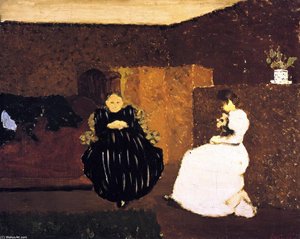
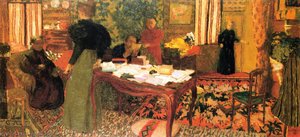
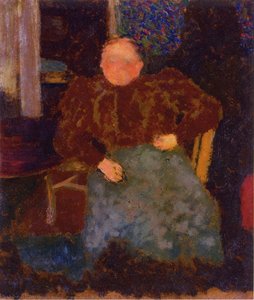


Taiteilijan elämäkerta
Jean-Édouard Vuillard: Värikäs Hiljaisuus ja Intimiteetin Taide
Jean-Édouard Vuillard (1868–1940) oli ranskalainen taiteilija, koristeellinen taiteilija ja printtitekijä, joka tunnetaan erityisesti intiimeistä sisätiloistaan, koristeellisesta tyylistään ja vaikutuksestaan varhaiseen modernismiin, kuten kubismiin. Vuillard ei pyrkinyt kuvaamaan maailmaa suoraan, vaan pikemminkin vangitsemaan sen tunteita ja tunnelmia. Hänen maalauksensa ovat kuin hetkiä elämästä, vangittu värien ja muotojen avulla. Vuillardin taiteen ytimessä on hänen kyky luoda syviä, intiimejä tiloja, joissa valo leikkii seinien ja huonekalujen kanssa, ja ihmiset sulautuvat ympäristöönsä.Nabis-liike ja Sen Vaikutus
Vuillard oli keskeinen osa Nabis-taiteilijaryhmää, joka toimi Pariisissa 1880-luvulla ja 1900-luvun alussa. Nabis-taiteilijat pyrkivät irtautumaan impressionismin perinteisistä tavoista ja etsivät uusia tapoja ilmaista itseään. He ottivat vaikutteita japanilaisista puukuvista, jotka olivat silloin suosittuja Euroopassa, ja käyttivät niitä inspiraationa värien, muotojen ja tilan käsittelyssä. Nabis-taiteilijat uskoivat taiteen olevan symbolinen ilmaisumuoto, joka heijastaa syvempiä merkityksiä elämässä. Vuillardin maalaukset ovat täynnä tätä symboliikkaa, ja ne kutsuvat katsojaa pohtimaan niiden takana piileviä tunteita ja ajatuksia. Hänen työnsä on usein hienovaraista ja monitulkintaista, mikä tekee siitä erityisen kiehtovan.Sisätilojen Maalaaminen: Värien ja Muotojen Tanssi
Vuillard oli mestari sisätiloiden maalaamisessa. Hän ei pyrkinyt realistisesti jäljittelemään tiloja, vaan pikemminkin vangitsemaan niiden tunnelmaa ja ilmapiiriä. Hänen maalauksensa ovat täynnä värejä, jotka leijuvat seinillä ja huonekaluissa, luoden syviä ja intiimejä tiloja. Vuillard käytti usein pehmeitä, lämpimiä sävyjä, jotka luovat tunnelman rauhaa ja kodikkuutta. Hän oli myös taitava käyttämään kuvioita ja tekstuureja, jotka lisäsivät maalauksen syvyyttä ja eloisuutta. Vuillardin sisätilojen maalaukset ovat kuin ikkunoita toisiin maailmoihin, joissa aika pysähtyy hetkeksi.Myöhempi Tyyli ja Perintö
Vuillardin taide muuttui hieman vuosien 1900 jälkeisinä aikoina. Hän alkoi maalata maisemia ja sisätiloja tarkemmin, käyttäen enemmän yksityiskohtia ja värejä. Vuonna 1920-luvulla ja 1930-luvulla hän maalasi muotokuvia tunnettuja ranskalaisia teollisuusjohtajia ja taiteilijoita heidän tuttavallisissa ympäristöissään. Nämä kuvasivat ihmisiä, jotka olivat osa hänen elämäänsä ja työskentelyympäristöään. Vuillardin perintö on merkittävä modernin taiteen historiassa. Hänen innovatiivinen lähestymistapansa värien, muotojen ja tilan käsittelyyn vaikutti suuresti myöhempiin taiteilijoihin, kuten kubisteihin ja fauveihin. Vuillardin maalaukset ovat edelleen suosittuja ja inspiroivia, ja ne kertovat tarinan intiimistä elämästä, värien tanssista ja syvän tunteiden ilmaisusta.Tärkeimmät Teokset ja Näyttelyt
Vuillardin maalauksia on esillä monissa museoissa ympäri maailmaa, mukaan lukien Musée de la Révolution Française (Ranska). Hänen merkittävimpiä teoksiaan ovat muun muassa "La Patrie en Danger" (Guillaume Lethière), "Jean de la Barre" (Jean Clouet) ja hänen myöhemmät maisemat ja muotokuvalta. Vuillardin taidetta on esitetty useissa näyttelyissä, jotka ovat tuoneet hänen teoksiaan yleisölle.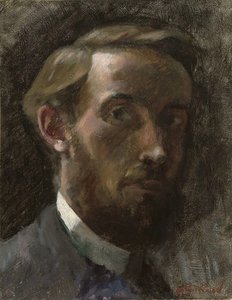
Jean-Édouard Vuillard
1868 - 1940 , Ranska
Pähkinänkuoressa
- Artistic Movement Or Style: Nabis
- Artists Or Movements Influenced By This Artist: ['Impressionistit']
- Artists Who Influenced This Artist: ['Paul Gauguin']
- Date Of Birth: 11 marraskuuta 1868
- Date Of Death: 21 kesäkuuta 1940
- Full Name: Jean-Édouard Vuillard
- Nationality: Ranskalainen
- Notable Artworks:
- Naapurin puutarha
- Naisten hahmot
- Place Of Birth: Cuiseaux, Ranska
Aiheeseen liittyvät artikkelit

The Art of Atmosphere: Elevating Luxury Hotel Interiors with Timeless Impressionist Masterpieces
Elevate luxury hospitality with timeless Impressionist reproductions. Discover how professional designers use light, color, and Post-Impressionist depth to create unforgettable hotel atmospheres through bespoke, hand-painted oil masterpieces.
Tutustu teoksiin, jotka on järjestetty aiheiden, tyylien ja ominaisuuksien mukaan.


