

Esitetty: · Kehyksineen:
 Esikatselu
 Jaa teos
 Jaa
Jaa
 Tiedot
 Opas
Opas

 Lataa kuva
 Samanlaisia kohteita
 Röntgenkuvaus
 Diaesitys
 Kysymykset ja vastaukset
 Tilastot
- 75.0 x 63.0 cm


€ 239
Käsinmaalattu öljyvärinen jäljennös
Käsinmaalattu öljyväri kankaalle haluamassasi koossa ja kehyksissä, taiteilijoidemme valmistamana tilauksesta. ( Vaihda tulosteeseen Siirry digitaaliseen kuvaan)
Koko
·Vakiokoko
räätälöity
CM
INCH
Valitse valmiista mitoistamme sellaiset, jotka vastaavat teoksen alkuperäisiä mittasuhteita.
Koot ladataan...

leveys
korkeus
Kirjoita tarvitsemasi leveys ja korkeus, jotta teos sopii kehyksiisi tai seinällesi. Koska kyseessä on käsinmaalattu teos, taiteilija voi maalata hieman enemmän kuvan ympärille tai rajata sitä hieman, jos haluat eri muotoisen koon — valinta on sinun. Lähetämme sinulle digitaalisen mallikuvan hyväksyttäväksi ennen kuin maalaus alkaa. Tällä sivulla näkyvä kuva ei vastaa lopullista tulosta — vain mallikuva näyttää sen.
 Lue lisää
Viimeistely
·
Valkoinen reuna €1

pehmennetty reuna €1

Jatkuva reuna €1

P118B €10

P118H €10

P118W €10

P438Z €10

P508JH €12

P508YH €12

P805H €10

P805Z €10

P919BZ €10

P919G €10

P919XJ €10

P959ZH €10

P968JZ €12

W106C €8

W218G €10

W218JH €8

W218Y €10

W307PJ €10

W316G €10

W316PJ €8

W316Y €10

W398PJ €8

W4111J €10

W500HY €15

W500JH €15

W692G €12

W849H €8

W940BG €15

W953PJ €8

H24-GOLD €30

H24-SILVER €30

H36-GOLD €45

H36-SILVER €45
Toimitetaan suojaputkessa, valmiina kehystettäväksi omassa kehyksessäsi.
Yli 105 cm kokoiset kehykset toimitetaan osasarjana ammattilaiskehystäjälle — lue lisätiedot.
Lisäpalvelut
valinnainenMitä lisämateriaalit sisältävät?
Esimerkkejä muutettavista asioista: Vaihda kasvot asiakkaan valokuvaan; Lisää lemmikki (esim. vaihda kissa koiraksi); Lisää piilotettu viesti taustalle; Vaihda taustan maisemaa tai elementtejä.
Tilauksen jälkeen TopImpressionists.com -tiimi lähettää asiakkaalle sähköpostia ohjeita varten ja toimittaa luonnoksen esikatselun
Tilauksen jälkeen TopImpressionists.com -tiimi lähettää asiakkaalle sähköpostia ohjeita varten ja toimittaa luonnoksen esikatselun
Maailmanlaajuinen toimitus () 3–4 viikossa tavallisen 5 viikon sijaan. (5 marraskuu). Laadusta ei tingitä.
Suojalakkaus
Nimilaatta
Kaiverretun pronssilaatan tiedot
This elegant plaque features the artist's name and the title of the artwork, finely engraved for a timeless presentation.
It is made from bronze with a refined, elegant finish. The text is precisely laser-engraved for a sharp and permanent result. Measuring 9x2 cm, the plaque is compact yet easy to read. It's built to be durable and scratch-resistant, offering a professional, museum-quality look. Mounting is simple thanks to the included adhesive backing.
Läpinäkyvän akryylilaatan tiedot
The plaque includes essential engraved details such as the artist's name, the title of the artwork, the date it was created, the type of media used-like oil on canvas or watercolor-a brief description of the piece, and a QR code that links to the complete artwork information.
It is crafted from clear acrylic, offering a sleek, modern appearance. The text is UV-engraved in black to ensure strong visual contrast. With a size of 10x15 cm, it ensures optimal readability. It comes equipped with two metal hooks for secure wall mounting. The plaque is designed to be weather-resistant, making it suitable for various environments, and it includes interactive features that work seamlessly with smartphone scanning.
Mustan akryylilaatan tiedot
This elegant plaque includes engraved information such as the artist's name, the title of the artwork, the date it was created, the type of media used (like oil on canvas or watercolor), a short description of the artwork, and a QR code for quick access to more information.
The plaque itself is made from refined black acrylic with a premium finish. The text is laser-engraved in white for high contrast and readability. Its size is 10x15 cm, designed to be easy to read. It comes with two metal hooks for professional mounting. The design is sleek and fits any interior style. It is also weather-resistant and durable, with built-in digital integration for mobile compatibility.
Lasivaihtoehto on saatavilla vain alle 110 cm kokoisille teoksille
 Lasivaihtoehto on saatavilla vain alle 110 cm kokoisille teoksille
- Ilmainen pikatoimitus ympäri maailman
- Korkealaatuinen pellavakangas
- Kattava kuljetusvakuutus
- Tulliveron palautustakuu
- Takuu täydellisestä värien vastaavuudesta
- 100 päivän palautusoikeus (vain valmistusvirheet)
- 100% rahat takaisin -takuu
- Määräalennus tarjolla


Keräilykohteen kuvaus
Admire Johann Zoffany's iconic portrait of David Garrick alongside Eva Maria Veigel, capturing the theatrical spirit of Georgian England at The Ashmolean Museum.
Taiteilijan elämäkerta
"finnish_meta_description": "Johann Zoffany (1733-1810) oli saksalaissyntyinen brittiläinen maalaaja, tunnettu 'keskusteluosuuksien' maalauksistaan. Hänen teoksensa, kuten Uffizin tribuna, kuvaavat hovielämää ja kulttuuria 1700-luvulla."
Tietoa maalauksesta
A Theatrical Soul Captured in Oil
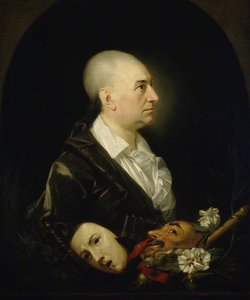
In the quiet halls of The Ashmolean Museum of Art and Archaeology, there exists a portrait that does more than merely record a likeness; it breathes with the very essence of the eighteenth-century stage. Johann Zoffany’s 1763 masterpiece, David Garrick, is an evocative window into the heart of Enlightenment England. At first glance, we encounter the commanding presence of Garrick, the most celebrated actor of his era, rendered with a profound sense of dignity and intellectual depth. Zoffny does not present us with a mere performer in costume, but with a man whose very existence was intertwined with the dramatic arts. The composition is intimate yet grand, focusing on Garrick from the chest up against a somber, dark background that pushes his luminous features toward the viewer, demanding an immediate and visceral connection.
The technique employed by Zoffany is nothing short of masterful, showcasing the meticulous precision characteristic of the finest oil-on-canvas works of the period. Through subtle tonal gradations and a sophisticated command of light, the artist breathes life into the textures of the subject's attire—the crisp white collar contrasting sharply against the deep black of his formal coat. This interplay of light and shadow, or chiaroscuro, serves to sculpt Garrick’s face, highlighting a contemplative gaze that seems to look beyond the frame, perhaps lost in thought regarding a recent performance or a future script. For the discerning collector or interior designer, this painting offers a profound sense of classical elegance, making it an ideal centerpiece for spaces that value historical gravity and sophisticated drama.
The Dual Faces of Drama
Beyond the physical representation of a legendary actor, Zoffany weaves a complex tapestry of symbolism into the very fabric of the portrait. Floating near Garrick’s face are two iconic theatrical masks: the smiling visage of Comedy and the furrowed, mournful brow of Tragedy. These are not mere decorative elements; they are the dual pillars of the human experience that Garrick mastered on stage. The presence of these masks transforms the portrait from a standard biographical study into a profound meditation on the nature of performance and emotion. It suggests that behind the dignified gentleman lies the capacity for both joyous exuberance and profound sorrow, mirroring the duality of the human condition itself.
This symbolic layer adds an intellectual richness that elevates the artwork, making it much more than a decorative piece. It invites the viewer to contemplate the boundaries between reality and artifice, between the man and the persona. For those looking to adorn a home or gallery with a reproduction of this caliber, the painting provides a continuous source of conversation and inspiration. It embodies a period where art, intellect, and social status converged in a beautiful, theatrical display. To possess such a work is to hold a fragment of history—a moment frozen in 1763, where the spirit of the theatre remains eternally vibrant and hauntingly beautiful.
Kysymykset ja vastaukset
Sallitaanko Johann Zoffany:n "David Garrick" -teoksen tekijänoikeuksien perusteella sen jäljentäminen?
Johann Zoffany:n "David Garrick", joka on Ashmolean-museo kokoelmissa, on vapaasti käytettävissä – tekijänoikeussuoja on päättynyt. Tämä tila määrittää, voidaanko kuvasta tehdä jäljennöksiä.
Mitkä ovat alkuperäisen "David Garrick" mitat?
Alkuperäisen teoksen Johann Zoffany:n "David Garrick" mitat ovat 75 x 63 cm.
Voinko katsoa teosta "David Garrick" koko näytön diashow'na?
Teoksen "David Garrick" diaporama on katsottavissa teoksen Diaesitys -sivulla.
Pikaopas ja taidevisailu
Tietoa artistista Johann Zoffany

Johann Zoffany
1733 - 1810, Saksa
Taiteilijan elämäkerta
Johan Zoffany: 1800-luvun valokuvaajan taide
Johann Zoffany, syntynyt Johannes Josephus Zauffaly vuonna 1733 Freibaurissa Saksassa, oli maalari, jonka maine nousi erityisesti Englannissa ja Italiassa. Varhaisesta elämästään on vähän tietoa, mutta tiedetään, että hän sai taiteellista koulutusta jo nuorena. Hän aloitti uransa kuvanveistäjän oppilaana, mahdollisesti Melchior Paulusilla Ellwangenissa, ennen kuin opiskeli Martin Speerin johdolla Regensburgissa. Tämä varhainen peruskoulutus loi pohjan hänen tulevalle uralleen.
Vuonna 1750 Zoffany matkusti Roomaan, jossa hän liittyi Agostino Masuccin studioon ja hio mukauttaen italialaista taiteellista perinnettä. Hän muutti myöhemmin Englantiin vuonna 1760, tukien aluksi elantoaan valmistamalla kelloihin koristeita Stephen Rimbaultin työntekoon liittyen. Tämä ajanjakso merkitsi käännekohtaa, kun hän alkoi luoda yhteyksiä ja saada tunnustusta Lontoon taidesuunnassa.
Kuninkaallinen suosio ja taiteellinen kehitys
Zoffany houkutteli nopeasti kuningas George III:n ja kuningatar Charlotten huomion, ja hänestä tuli heidän kuninkaallisten perheen suosittu muotokuvaaja. Hänen kykynsä vangita arkisia hetkiä – kuten Kuningatar Charlotte ja hänen kaksi suurinta lastaan (1765) – erotti hänet muodollisemmista hovimaalareista. Hän oli myös suosittu Austrian keisarillisessa perheessä ja sai baronin arvon Holy Roman keisarikunnan kautta vuonna 1776 keisarinna Mariassa Theressassa.
”Keskusteluosuuksien” mestari
Zoffany tuli tunnetuksi ”keskusteluosuuksistaan”, eli *conversazioneista* – epävirallisista ryhmämuotokuvista, jotka kuvasivat sosiaalisia kokoontumisia. Hän erillään erinomaisesti vangitsi ihmisten persoonallisuudet ja vuorovaikutukset näissä kuvissa, usein esittäen tunnettuja henkilöitä yhteiskunnan, teatterin ja kirjallisuuden piireistä. Hänen teoksensa, kuten Cope Family (1775), ovat esimerkkejä tästä tyylistä, tarjoten näkymiä hänen asiakkaidensa elämään.
Merkittävät saavutukset ja merkittäviä teoksia
- Tribuna of the Uffizi (1772-1778): Ehkä tunnetuin teos, huolellisesti yksityiskohtainen kuvaus Uffizin gallerian sisäpuolesta Firenzessä.
- Dr William Hunter Teaching Anatomy at the Royal Academy (1779): Kiinnostava esitys lääketieteellisestä koulutuksesta ja tieteellisestä tutkimuksesta.
- Kuningas George III (1771): Kuninkaan valta ja eleganssi kuvattuna kuninkaallisessa muotokuvassa.
- Colonel Mordaunt's Cock Match (1784-1786): Värikäs kuvaus siirtomaaelämästä Intiassa, joka vangitsee ainutlaatuisen kulttuuritapahtuman.
Vuodet Intiassa ja myöhempi elämä
Vuosina 1783–1789 Zoffany asui Intiassa, jossa hän maalasi muotokuvia merkittävistä henkilöistä, kuten Warren Hastingsista ja Asaf-ud-Daulasta. Kokemukset Intiassa vaikuttivat hänen taiteelliseen tyyliinsä ja aihealueisiinsa. Hänen elämänsa aikana tapahtui erittäin mielenkiintoinen tarina, jossa merirosvojen hylkyyn ajautunut laiva pakotti selviytymään äärimmäisillä keinoilla.
Vaikutukset ja perintö
Zoffany’n teokset heijastavat vaikutteita sekä saksalaisesta tarkkuudesta että italialaisesta taiteellisuudesta. Hän oli vaikuttanut Agostino Masuccin kaltaisiin taiteilijoihin ja ottanut inspiraatiota barokkityylistä. Hänen tyylinsä puolestaan vaikutti myöhempiin taiteilijoihin, jotka olivat kiinnostuneita muotokuvista ja sosiaalisesta kommentaarisesta näkökulmasta. Hän oli merkittävä hahmo taiteen historiassa, tunnettu teknisestä taidoistaan, havainnoistaan ja ainutlaatuisesta taiteellisesta visiostaan.
Historiallinen merkitys
Johann Zoffany’n maalaukset tarjoavat arvokkaita näkemyksiä hänen aikansa sosiaalisista tavoista, älyllisestä elämästä ja kulttuurivääristymistä. Hänen ”keskusteluosuuksiaan” voidaan pitää intiiminä kuvauksena tunnetuista henkilöistä ja heidän maailmastaan, kun taas Intiassa tehtyjen kuvausten avulla saamme paremman käsityksen siirtomaahistoriasta. Hän on merkittävä hahmo taiteen historiassa, jota juhlistetaan hänen teknisestä taidoistaan, havainnoistaan ja ainutlaatuisesta taiteellisesta visiostaan.
Pikaaakkaukset taiteilijasta Johann Zoffany
- Artistic Movement Or Style: Neoklassismi, Realismi
- Artists Or Movements Influenced By This Artist: ['Myöhemmät taiteilijat']
- Artists Who Influenced This Artist:
- Agostino Masucci
- Martin Speer
- Date Of Birth: 1733
- Date Of Death: 1810
- Full Name: Johann Zoffany
- Nationality: Saksalainen
- Notable Artworks:
- Uffizin Tribuna
- William Hunterin anatomianopetus
- Kuningas Yrjö III
- Mordauntin höyhentapahtuma
- Place Of Birth: Frankfurt, Saksa
Tutustu teoksiin, jotka on järjestetty aiheiden, tyylien ja ominaisuuksien mukaan.
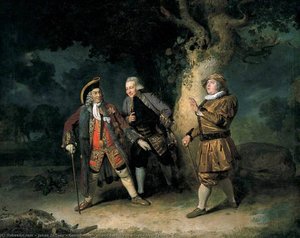


Johann Zoffany
David Garrick
() ·
Kehyksineen: · Käsinmaalattu öljyväreillä pellavalle
Yhteensä