

Esitetty: · Kehyksineen:
 Esikatselu

 Jaa teos
 Jaa
 Tiedot
 Teostiedot


 Lataa kuva
 Samanlaisia kohteita
 Röntgenkuvaus
 Diaesitys
 Kysymykset ja vastaukset

 Tilastot
Flatford Mill (John Constable, 1817)

- 50.0 x 60.0 cm


Canvas- ja taidevedokset alkaen €45 (koko 28 x 36 cm)
Käsinmaalattu öljyreprosentio alkaen €178
- Ilmainen maailmanlaajuinen toimitus 3–4 viikossa
- Putkessa toimitettavat julisteet 3–4 viikossa
- 100 päivän palautusoikeus ja rahat takaisin
- ArtShopReviews.com-sivuston 241 asiakkaan arvio: 4.9/5
€ 69
Giclée- ja taideprintit
Museolaatuisia giclée- tai kankaitaulun tulosteita nopealla tuotannolla ja joustavilla viimeistelyvaihtoehdoilla. ( Impressionistinen öljymaalaus Osta digitaalinen kopio
)
Materiaali ja tekniikka
 Lue lisää
Budjettiversio: sama kuva painettuna 260 g/m² polyesterikankaalle puuvillan sijaan. Toimitetaan rullalla putkessa tavallisella postilla 3–4 viikossa. Toimitetaan vain rullalla (ilman pingotusta tai kehystä) ja ilman kiireellistä tuotantoa, koossa, jonka vähintään yksi sivu on enintään 80 cm. Noin 30% edullisempi kuin puuvillakangasvedos.
Ei saatavilla tässä koossa: vähintään yhden sivun on oltava enintään 80 cm.
Vain rullattuina: valitse rullattu kangas valitaksesi tämän tulosteen.
Saatavilla kokoille, joiden molemmat sivut ovat enintään 110 cm. Suurempia kokoja varten tuloste valmistetaan mattapintaiselle puuvillakangaspinnalle.
Matta arkistokangas ei ole saatavilla tässä koossa: molempien sivujen on oltava enintään 110 cm. Tulosteesi on tehty mattapuuvillakangas-materiaalille.
Lasivaihtoehto on saatavilla vain alle 110 cm kokoisille teoksille
Koko
·Valitse valmiista mitoistamme sellaiset, jotka vastaavat teoksen alkuperäisiä mittasuhteita.
Koot ladataan...

leveys
korkeus
Syötä tarvitsemasi leveys ja korkeus, jotta tuloste sopii kehyksiisi tai seinällesi. Tulostetta voidaan vain leikata, sitä ei voida koskaan suurentaa alkuperäistä kuvaa suuremmaksi, joten eri muotoinen koko aiheuttaa osan kuvasta katoamisen. Lähetämme sinulle digitaalisen mallikuvan hyväksyttäväksi ennen kuin aloitamme tulostuksen. Tällä sivulla näkyvä kuva ei näytä lopullista rajausta — vain mallikuva näyttää sen.
Vakiokoko
räätälöity
CM
INCHIT
Viimeistely
·
Valkoinen reuna €1

pehmennetty reuna €1

Jatkuva reuna €1

P118B €10

P118H €10

P118W €10

P438Z €10

P508JH €12

P508YH €12

P805H €10

P805Z €10

P919BZ €10

P919G €10

P919XJ €10

P959ZH €10

P968JZ €12

W106C €8

W218G €10

W218JH €8

W218Y €10

W307PJ €10

W316G €10

W316PJ €8

W316Y €10

W398PJ €8

W4111J €10

W500HY €15

W500JH €15

W692G €12

W849H €8

W940BG €15

W953PJ €8
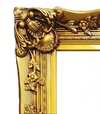
H24-GOLD €30
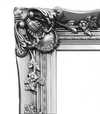
H24-SILVER €30
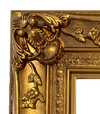
H36-GOLD €70
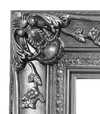
H36-SILVER €70
Toimitetaan suojaputkessa, valmiina kehystettäväksi omassa kehyksessäsi.
Yli 105 cm kokoiset kehykset toimitetaan osasarjana ammattilaiskehystäjälle — lue lisätiedot.
Lisäpalvelut
valinnainenMitä lisämateriaalit sisältävät?
Maailmanlaajuinen toimitus () 2 viikossa tavallisen 4–5 viikon sijaan. (27 joulukuu)
Economy poly-canvas -tulosteesta ei ole saatavilla kiireellistä tuotantoa tai pikatoimitusta, sillä se toimitetaan tavallisella postilla.
Suojalakkaus
Nimilaatta
Kaiverretun pronssilaatan tiedot
Tämä tyylikäs laatta sisältää taiteilijan nimen ja teoksen nimen, hienostuneesti kaiverrettuna ajattoman esillepanon varmistavaksi.
Valmistettu pronssista hienostuneella ja tyylikkäällä viimeistelyllä. Teksti on kaiverrettu tarkasti laserilla terävän ja pysyvän lopputuloksen varmistamiseksi. Mittakooltaan 9x2 cm oleva laatta on kompakti, mutta helposti luettavissa. Se on valmistettu kestämään ja hylkimään naarmuja, tarjoten ammattimaisen, museotason ulkonäön. Kiinnitys on helppo mukana tulevan tarrakiinnikkeen ansiosta.
Läpinäkyvän akryylilaatan tiedot
Laatta sisältää olennaiset kaiverretut tiedot, kuten taiteilijan nimen, teoksen otsikon, valmistusvuoden, käytetyn materiaalin (esim. öljy kankaalla tai vesiväri), lyhyen kuvauksen teoksesta sekä QR-koodin, joka linkittää teoksen kattaviin tietoihin.
Se on valmistettu kirkkaasta akryylistä, mikä antaa sille tyylikkään ja modernin ilmeen. Teksti on kaiverrettu mustalla UV-kaiverruksella voimakkaan visuaalisen kontrastin varmistamiseksi. 10x15 cm koko takaa optimaalisen luettavuuden. Levyssä on kaksi metallista koukkua turvallista seinään kiinnittämistä varten. Plaketti on suunniteltu säänkestäväksi, joten se soveltuu erilaisiin ympäristöihin, ja siinä on interaktiivisia ominaisuuksia, jotka toimivat saumattomasti älypuhelimen skannauksen avulla.
Mustan akryylilaatan tiedot
Tämä tyylikäs laatta sisältää kaiverretut tiedot, kuten taiteilijan nimen, teoksen nimen, valmistusvuoden, käytetyn tekniikan (kuten öljy kankaalla tai vesiväri), lyhyen kuvauksen teoksesta sekä QR-koodin, jolla pääsee nopeasti lukemaan lisätietoja.
Itse laatta on valmistettu laadukkaasta, viimeistellystä mustasta akryylistä. Teksti on kaiverrettu valkoisella laserilla korkean kontrastin ja luettavuuden varmistamiseksi. Laatan koko on 10x15 cm, ja se on suunniteltu helposti luettavaksi. Pakkaus sisältää kaksi metallista kiinnikettä ammattimaista asennusta varten. Muotoilu on tyylikäs ja sopii mihin tahansa sisustustyyliin. Laatta on säänkestävä ja kestävä, ja siinä on sisäänrakennettu digitaalinen integraatio mobiiliyhteensopivuutta varten.
Lasivaihtoehto on saatavilla vain alle 110 cm kokoisille teoksille
 Lasivaihtoehto on saatavilla vain alle 110 cm kokoisille teoksille
- Ilmainen maailmanlaajuinen toimitus 3–4 viikossa
- Korkealaatuinen pellavakangas
- Kattava kuljetusvakuutus
- Tulliveron palautustakuu
- Takuu täydellisestä värien vastaavuudesta
- 100 päivän palautusoikeus ja rahat takaisin
- 100% rahat takaisin -takuu
- Määräalennus tarjolla


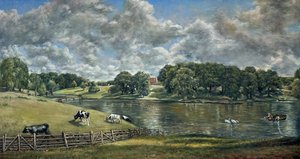
Flatford Mill: John Constable ja Romanticism-kausi
A tranquil river scene with boats and a horse by the water's edge, rendered with thick impasto to capture the shifting light of the Stour Valley.
John Constable: elämäkerta
Marian tuberkuloosikuolema sai hänet pukeutumaan mustaan ja maalaamaan myöhäiskausiansa ilmeikkäitä maisemia.
Tietoa teoksesta
Identification of Flatford Mill by John Constable
Flatford Mill is an 1817 landscape painting by the British artist John Constable. This work offers a view of the mill located in East Bergholt on the River Stour. It is also known by the subtitle Scene on a Navigable River. The scene captures a specific moment in the rural landscape of the Stour Valley, focusing on the quiet activity surrounding the water's edge.
The painting was first presented to the public when it was displayed at the Royal Academy's Summer Exhibition at Somerset House in 1817. At that time, it established the artist's interest in the specific topography of his home region. The composition centers on the mill and the river, providing a detailed look at the relationship between the water and the surrounding land.
The Composition and Visual Elements
The composition pulls you into a world of lush greens and reflective waters. At the heart of the scene, the calm, reflective waters of the river act as a mirror to the lush, verdant banks. This interplay of light and liquid creates a sense of depth that draws the eye toward the center of the work. A moored boat and distant figures provide a gentle human connection to the vastness of the Suffolk countryside, grounding the landscape in a quiet, lived-in reality.
Several individuals stand near the water's edge, their presence adding a subtle layer of activity to the peaceful scene. On the left side of the image, a horse is positioned near the bank, its form integrated into the pastoral setting. Two boats are visible in the water; one is situated towards the center, while another rests slightly to the right. These elements, combined with the rhythmic presence of the river, establish a sense of harmony within the rural environment.
Technique and Artistic Materials
In this oil on canvas, one can sense the methodical preparation that preceded the final application of paint. Before committing to the large-scale composition, the artist relied on a foundation of oil sketches, graphite drawings, and watercolour studies. This disciplined approach allowed for a careful arrangement of the landscape's complexities. The resulting work possesses a physical weight, achieved through the use of thick impasto to build up texture across the surface. This tactile quality gives the river and the earth a sense of movement and life.
There is a particular luminosity in the way the light interacts with the water and the sky. This effect is achieved through the painstaking layering of thin glazes of paint. Such a technique allows light to penetrate the surface, creating an illusion of shimmering luminescence that mimics the shifting atmosphere of the Stour Valley. It is a quiet, deliberate mastery of light and shadow.
Historical Ownership and Collections
The provenance of this work is deeply connected to the artist's own legacy. It was eventually included as part of the Constable Bequest in 1888, ensuring its place within the public consciousness. This transition from private hands to a permanent collection secured its survival for future generations to study.
Today, the painting is held within the collection of Tate Britain. It is also part of the holdings at the Tate Gallery in London. These institutions maintain the work as a significant part of their English landscape holdings. Additionally, the National Trust holds a connection to the work through its stewardship of the surrounding landscapes and properties.
Related Works by John Constable
To understand the evolution of this artist, one might look toward his earlier explorations of the Stour Valley. In 1815, he produced Boat-building near Flatford Mill, a work that captures the rhythmic sounds of craftsmanship against a quiet river setting. This piece reflects his deep connection to the local landscape and the dignity of rural labor. It is a quiet study of the textures found in the Suffolk countryside.
His later compositions often expanded in scale and ambition. He moved toward larger canvases, such as The Hay Wain from 1821, which remains one of his most recognized depictions of the river. Other significant works include The Cornfield (1826) and The Lock (1824), both of which continue his investigation into the interplay of light and water. He also turned his attention to more architectural subjects, such as Salisbury Cathedral from the Meadows in 1831.
- Boat-building near Flatford Mill (1815)
- The Hay Wain (1821)
- The Lock (1824)
- The Cornfield (1826)
- Salisbury Cathedral from the Meadows (1831)
Where to See This Masterpiece Today
If you wish to experience the subtle shifts of light and the texture of the River Stour in person, you will find this work held within the collections of the Tate Gallery in London. It is part of the permanent collection at Tate Britain, where the painting is kept for public viewing. The work remains a significant part of the Tate Britain collection, allowing visitors to observe the specific impasto and the atmospheric perspective that Constable achieved in 1817.
The painting is situated in London, United Kingdom. It is housed within the Tate Gallery, London, providing a quiet space to study the relationship between the water and the sky. Being part of the Tate Britain collection, it is accessible to those who appreciate the nuances of the Romantic tradition in a museum setting.
Kysymykset ja vastaukset
Onko tämä teoksen Flatford Mill reproduktio käsinmaalattu vai painettu?
Painatukset: Flatford Mill on painettu giclée-tekniikalla joko puuvillakangvasseille tai Epsonin arkistoluokan kanvassipaperille.
Mikä koko Flatford Mill -teokselle kannattaa valita?
Alkuperäisen teoksen mitat ovat 50 x 60 cm. Koot vaihtelevat välillä 28.2 x 35.5 cm (€45) – 192.6 x 242.9 cm (€406); tämän sivun taulukossa on lueteltu eri vaihtoehdot ja niiden hinnat.
Kuinka kauan toimitus kestää?
Putkessa toimitettava juliste toimitetaan maksutta tavallisella postilla 3–4 viikossa; kangaspuut tai kehyksissä oleva teos vie 4–5 viikkoa. Pikatoimitus on saatavilla vain tällä sivulla tarjottavalla maksullisella Express Delivery -vaihtoehdolla. Voit palauttaa tuotteen 100 päivän kuluessa täyden hyvityksen saamiseksi ilman erityisiä ehtoja.
Mitä tekniikkaa John Constable käytti teoksessa Flatford Mill?
Oil On Canvas
Pikaopas ja taidevisailu
Tietoa artistista John Constable

John Constable
1776 - 1837, Yhdistynyt kuningaskunta
Tietoa taiteilijasta John Constable: elämä, teokset ja elämäkerta
Pikaaakkaukset taiteilijasta John Constable
- Artistic Movement Or Style: Romantiikka
- Artists Or Movements Influenced By This Artist: ['Barbizonin koulukunta']
- Artists Who Influenced This Artist: ['Claude Lorrain']
- Date Of Birth: 1776
- Date Of Death: 1837
- Full Name: John Constable
- Nationality: Brittiläinen
- Notable Artworks:
- The Hay Wain
- Hadleigh Castle
- Salisbury Cathedral from the Meadows
- Netley Abbey
- Place Of Birth: East Bergholt, Yhdistynyt kuningaskunta
Samankaltaisia teoksia
Samanhenkisiä teoksia, jotka toistavat tämän maalauksen valoa, väripalettia ja tunnelmaa.


Tutustu teoksiin, jotka on järjestetty aiheiden, tyylien ja ominaisuuksien mukaan.




John Constable
Flatford Mill
() ·
Kehyksineen: ·
Yhteensä