


 Katso seinällä
 Lähetä
 Jaa
Jaa
 Tarkemmat tiedot
 Opas
Opas

 Lataa kuva
 Samanlaisia kohteita
 Röntgenkuvaus
 Diaesitys
 Tilastot
Chamouni, Rocks and Vegetation


John Ruskin's 'Chamouni, Rocks and Vegetation' (1854) is a breathtaking watercolor depicting a mountainous alpine scene dominated by rocky cliffs and lush plant life. Executed in the style of Millais’ portrait of Ruskin, it exemplifies Ruskin’s championing of naturalism and represents a pivotal piece within his artistic legacy.
 Lue lisää
Tutustu John Ruskinin vaikuttavaan taiteeseen ja ajatuksiin – viktoriaaniseen polymaattiin, joka kehitti sekä estetiset näkemykset että yhteiskunnallisen muutoksen ideat. Näihin kuuluvat hänen maisemaöljyvärimaalauksensa, arkkitehtoninen analyysi ja vaikutukselliset esseet luonnosta, kauneudesta ja yhteiskunnasta.
Osta korkearesoluutioinen, parannettu digitaalikuva, joka on laadultaan huomattavasti parempi kuin verkkosivuston esikatselu.
Jokainen tiedosto valmistellaan huolellisesti omien asiantuntijoidemme toimesta käyttäen edistyneitä työkaluja ja ammattitaitoista manuaalista retusointia. Varmistamme, että jokaisessa kuvassa on poikkeuksellinen selkeys, tarkka värintoisto ja hienovaraiset yksityiskohdat.
Lopputiedosto toimitetaan sähköpostitse 72 tunnin kuluessa, ja se on optimoitu välittömään käyttöön ammattimaisissa, toimituksellisissa ja painoympäristöissä. Laatu on sama, johon huipputason suunnittelustudiot, kustantajat ja galleriat luottavat.
Digitaalinen kuva
Lataa korkearesoluutioinen tiedosto henkilökohtaiseen näyttelyyn, tulostamiseen ja luoviin projekteihin. ( Vaihda tulosteeseen Tilaa käsinmaalattu jäljennös)
Sisältyy jokaiseen digitaalisen kuvan tilaukseen
Asiantunteva digitaalinen toimitus, laatu taattu
Kun valitset TopImpressionists.com-palvelun, et saa vain kuvaa – saat ammattimaisesti viimeistellyn digitaalisen taideteoksen, joka on luotu tarkkuudella ja jonka takaa tulee tyytyväisyystakuu. Tässä on kaikki, mitä tilauksesi sisältää, automaattisesti:

Nopea sähköpostitoimitus
Saat korkearesoluutioisen digitaalisen kuvatiedostosi sähköpostiisi 72 tunnin kuluessa tilauksesta – valmiina käytettäväksi välittömästi.

Tekoälyllä optimoitu digitaalinen tiedosto
Teoksesi on optimoitu ammattimaisesti edistyneiden tekoälytyökalujen ja manuaalisen jälkikäsittelyn avulla, mikä takaa maksimaalisen yksityiskohtaisuuden, selkeyden ja väritarkkuuden.

Ilmainen elinikäinen uudelleenlähetys
Oletko vahingossa poistanut tai kadottanut tiedostosi? Ei hätää – lähetämme sen sinulle uudelleen milloin tahansa täysin maksutta.

Ei tuontimaksuja – koskaan
Nauti taiteestasi välittömästi ilman tullimaksuja, veroja tai toimituskuluja – digitaaliset lataukset ovat aina verovapaita.

Värintoiston tarkkuustakuu
Varmistamme, että digitaalinen kuvasi vastaa alkuperäisiä värejä mahdollisimman tarkasti käyttämällä ammattilaistason työkaluja ja värinhallintaa.

100 päivän tyytyväisyystakuu
Jos et ole tyytyväinen digitaaliseen kuvaasi, muokkaamme sitä tai palautamme 100% hinnan 100 päivän kuluessa – kysymystä ei esitetä.

100% Rahat takaisin -takuu
Et ole tyytyväinen? Saat täyden hyvityksen 100 päivän kuluessa digitaalisen tiedostosi vastaanottamisesta – kysymystä ei esitetä.

Suurtilaaja-alennukset
Osta 3 kuvaa, säästä 10% - Osta 5, säästä 15% - Osta 10+, säästä 20%. Erinomainen valinta luoviin projekteihin, gallerioille ja toimistoille.
Ruskin’s Alpine Reverie: A Study in Texture and Moral Vision
John Ruskin's "Chamouni, Rocks and Vegetation," painted in 1854, stands as a testament to the Pre-Raphaelite movement’s fascination with capturing the sublime beauty of the natural world—a pursuit inextricably linked to ethical contemplation. More than just a landscape depiction, it embodies Ruskin’s profound belief that art should serve as a conduit for moral enlightenment, mirroring his broader philosophical stance on humanity's relationship with God and creation.- Subject Matter: The painting portrays the towering granite peaks of Mont Blanc (Chamouni), bathed in diffused sunlight—a quintessential Alpine vista meticulously rendered by Ruskin’s hand.
- Style & Technique: Ruskin championed a style characterized by painstaking detail and luminous color, prioritizing observation over idealized representation. He employed watercolor on paper, layering thin washes to build up texture and capturing the subtle nuances of light and shadow. The artist's deliberate brushstrokes convey a sense of immediacy and reverence for the grandeur of the mountain landscape.
- Historical Context: Created during Ruskin’s formative years as an art critic and intellectual, “Chamouni” reflects his burgeoning interest in geology and his conviction that understanding the physical world illuminates spiritual truths. It aligns perfectly with Millais's ambitious portrait of Ruskin at Glenfinlas, commissioned shortly after—a visual embodiment of Ruskin’s commitment to portraying nature with uncompromising honesty.
- Symbolism: The jagged rocks symbolize resilience and permanence against the relentless forces of time and decay – mirroring Ruskin’s broader moral concerns about confronting mortality and embracing virtue. The sparse vegetation represents the delicate balance between beauty and fragility, prompting viewers to consider humanity's responsibility for safeguarding the natural environment.
- Emotional Impact: Viewing “Chamouni” evokes a feeling of awe and contemplation—a desire to reconnect with the sublime grandeur of God’s creation. Ruskin aimed not merely to depict a mountain scene but to inspire a deeper appreciation for beauty, truth, and moral integrity—goals that continue to resonate powerfully with audiences today.
Detailed Examination: Texture and Color Palette
Ruskin's masterful watercolor technique is evident in the meticulous layering of washes that create an astonishingly realistic depiction of rock formations. The artist painstakingly captures the variations in tone and texture—from the rough granite surfaces to the smoother patches where lichen clings to the stone—demonstrating a dedication to observation unparalleled for his time. Furthermore, the color palette—dominated by muted blues, greens, and yellows—reflects the atmospheric conditions prevalent during Mont Blanc’s summers—a subtle yet crucial element in conveying Ruskin's vision of natural beauty.Connections to Millais’ Glenfinlas Portrait
The painting shares a striking stylistic kinship with Millais’ celebrated portrait of Ruskin at Glenfinlas, completed the following year. Both artists prioritized capturing the essence of their subject—Ruskin himself—within a landscape setting that served as a backdrop for intellectual and spiritual reflection. This deliberate juxtaposition underscores Ruskin's conviction that art should illuminate moral truths alongside aesthetic splendor—a principle that continues to inform artistic endeavors across disciplines.Legacy & Enduring Relevance
“Chamouni, Rocks and Vegetation” remains an influential work of art, anticipating the burgeoning interest in environmentalism and sustainability that would characterize the latter half of the 19th century. Ruskin’s insistence on portraying nature with uncompromising honesty—a stance rooted in his profound moral sensibility—continues to inspire artists and thinkers today—serving as a timeless reminder of the transformative power of beauty and contemplation.Kysymykset ja vastaukset
Mitä tunnelmaa ja tunnetta John Ruskin:n "Chamouni, Rocks and Vegetation" välittää?
Teoksen John Ruskin:n "Chamouni, Rocks and Vegetation" tunnelma on Serene, ja sen emotionaalinen sävy on Tranquil.
Mistä voin ostaa digitaalisen kuvan teoksesta John Ruskin:n "Chamouni, Rocks and Vegetation"?
Saadaksesi teoksen John Ruskin:n "Chamouni, Rocks and Vegetation" digitaalisen tiedoston, tilaa korkearesoluutioinen digitaalinen kuvalataus sen Digitaalinen kuva -sivulta.
Mikä on suositeltu tulostuskoko teokselle John Ruskin:n "Chamouni, Rocks and Vegetation"?
Suositeltu tulostuskoko teokselle John Ruskin:n "Chamouni, Rocks and Vegetation" on Large.
Taiteilijan elämäkerta
A Polymath of Vision: The Life and Legacy of John Ruskin
John Ruskin, born in London on February 8, 1819, was far more than simply an art critic; he was a Victorian polymath whose influence permeated the realms of aesthetics, social reform, political economy, and environmentalism. His life was shaped by a fascinating duality – the pragmatic commercial world of his father, John James Ruskin, a successful sherry merchant, and the fervent evangelical piety of his mother, Margaret Cock. This contrasting upbringing instilled in him both a keen observational eye for detail and a deeply moral sensibility that would define his entire oeuvre. From an early age, Ruskin’s education was meticulously curated at home, steeped in biblical study and exposure to Romantic literature, particularly the works of Byron and Walter Scott. These formative influences laid the groundwork for a mind that would relentlessly seek connections between beauty, truth, and ethical living. His academic journey continued at Christ Church, Oxford, where he began to articulate his burgeoning ideas about art and its relationship to society.The Dawn of an Art Historian: Early Writings and Influences
Ruskin’s emergence as a significant voice in the art world began with *Modern Painters* (1843-1860), a monumental five-volume work initially conceived as a defense of J.M.W. Turner against what Ruskin perceived as unjust criticism. However, *Modern Painters* quickly evolved into something far more profound – a comprehensive treatise on the nature of art itself. He argued passionately for “truth to nature,” emphasizing that great art wasn’t merely about skillful representation but about an artist's sincere and empathetic engagement with the natural world. This concept was revolutionary at the time, challenging prevailing academic standards and paving the way for new artistic sensibilities. Ruskin didn’t just analyze technique; he delved into the spiritual and moral qualities of art, believing that true beauty reflected a virtuous soul. His meticulous descriptions of landscapes, rocks, and botanical details reveal not only his keen observational skills but also his profound reverence for nature as a manifestation of divine creation. This early work established Ruskin as a formidable critic and set the stage for his later explorations into architecture and social issues. He was deeply influenced by the Pre-Raphaelite Brotherhood, championing their commitment to detailed observation and rejection of academic conventions. They shared a belief that art should aspire to moral elevation and capture the essence of genuine experience—a conviction that would permeate Ruskin’s subsequent endeavors.Beyond Aesthetics: Social Commentary and The Guild of St. George
As Ruskin matured, his interests expanded beyond the purely aesthetic realm. Deeply troubled by the social injustices he witnessed during the Industrial Revolution, he began to apply his critical lens to the economic and political structures of Victorian England. *Unto This Last* (1860), a series of essays originally published in *The Cornhill Magazine*, marked a turning point in his career. In this work, Ruskin vehemently critiqued utilitarian economics and advocated for a more humane and equitable social order based on principles of fellowship and craftsmanship. He argued that the dignity of labor was essential to a flourishing society and that true wealth lay not in material possessions but in the quality of human relationships. This conviction led him to establish *Fors Clavigera* (1871-1884), a monthly series of letters addressed “To the Workmen and Labourers of Great Britain,” where he expounded his social and political ideas with characteristic fervor. He saw the Industrial Revolution as a moral catastrophe, corrupting human spirit and undermining traditional values—a perspective that fueled his tireless efforts to promote ethical living and defend the rights of artisans and rural communities. The Guild of St. George, founded in 1871, was born from this conviction; it represented Ruskin’s unwavering belief in the transformative power of art and craftsmanship to elevate human life and foster a harmonious connection with the natural world.Notable Works & Further Exploration
- Modern Painters (1843-1860): Ruskin’s foundational work, defending Turner and establishing his theories of art.
- The Stones of Venice (1851-1853): A detailed analysis of Venetian architecture, exploring its historical, social, and artistic significance.
- Unto This Last (1860): A powerful critique of Victorian economics and a call for social reform.
- Fors Clavigera (1871-1884): A series of letters addressing the working class, outlining Ruskin’s vision for a more equitable society.
- Dawn, Coniston: This watercolor masterpiece exemplifies Ruskin's unparalleled ability to capture the sublime beauty of Lakeland scenery—a testament to his unwavering devotion to nature and its spiritual inspiration.
- Britannica: https://www.britannica.com/biography/John-Ruskin
- Wikipedia: https://en.wikipedia.org/wiki/John_Ruskin
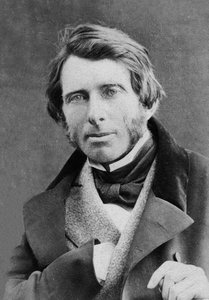
John Ruskin
1819 - 1900 , Iso-Britannia
Pähkinänkuoressa
- Artistic Movement Or Style: Victorian Art
- Artists Or Movements Influenced By This Artist: ['Pre-Raphaelites']
- Artists Who Influenced This Artist: ['J.M.W. Turner']
- Date Of Birth: Feb 8, 1819
- Date Of Death: Jan 20, 1900
- Full Name: John Ruskin
- Nationality: British
- Notable Artworks:
- Dawn, Coniston
- Fors Clavigera
- Place Of Birth: London, UK