

Shown: · With its frame:
 Esikatselu
 Jaa teos
 Jaa
Jaa
 Tiedot
 Opas
Opas

 Lataa kuva
 Samanlaisia kohteita
 Röntgenkuvaus
 Diaesitys
 Q&A
Q&A Tilastot
Abraham
 Acrylic On Canvas
- WallArt
 1408
1408 66.0 x 43.0 cm
 Metropolitanin museo
€ 237
Käsinmaalattu öljyvärinen jäljennös
Käsinmaalattu öljyväri kankaalle haluamassasi koossa ja kehyksissä, taiteilijoidemme valmistamana tilauksesta. ( Vaihda tulosteeseen Siirry digitaaliseen kuvaan)
Size
·Vakiokoko
räätälöity
CM
INCH
Valitse valmiista mitoistamme sellaiset, jotka vastaavat teoksen alkuperäisiä mittasuhteita.
Loading sizes...

leveys
korkeus
Kirjoita tarvitsemasi leveys ja korkeus, jotta teos sopii kehyksiisi tai seinällesi. Koska kyseessä on käsinmaalattu teos, taiteilija voi maalata hieman enemmän kuvan ympärille tai rajata sitä hieman, jos haluat eri muotoisen koon — valinta on sinun. Lähetämme sinulle digitaalisen mallikuvan hyväksyttäväksi ennen kuin maalaus alkaa. Tällä sivulla näkyvä kuva ei vastaa lopullista tulosta — vain mallikuva näyttää sen.
 Lue lisää
Finish
·
White €1

Blurside €1

Extended €1

P118B €10

P118H €10

P118W €10

P438Z €10

P508JH €12

P508YH €12

P805H €10

P805Z €10

P919BZ €10

P919G €10

P919XJ €10

P959ZH €10

P968JZ €12

W106C €8

W218G €10

W218JH €8

W218Y €10

W307PJ €10

W316G €10

W316PJ €8

W316Y €10

W398PJ €8

W4111J €10

W500HY €15

W500JH €15

W692G €12

W849H €8

W940BG €15

W953PJ €8

H24-GOLD €30

H24-SILVER €30

H36-GOLD €45

H36-SILVER €45
Shipped in a protective tube, ready for your own framer.
Above 105 cm the frame is shipped as a kit for a professional framer — read the details.
Extras
optionalWhat do the extras include?
Examples of what can be changed: Replace face with customer photo; Add pet (e.g., replace cat with dog); Include hidden message in background; Change background landscape or elements.
After order, TopImpressionists.com team will email client for instructions and provide a mockup preview
After order, TopImpressionists.com team will email client for instructions and provide a mockup preview
Maailmanlaajuinen toimitus () 3–4 viikossa tavallisen 5 viikon sijaan. (29 lokakuu). Laadusta ei tingitä.
Suojalakkaus
Nimilaatta
Kaiverretun pronssilaatan tiedot
This elegant plaque features the artist's name and the title of the artwork, finely engraved for a timeless presentation.
It is made from bronze with a refined, elegant finish. The text is precisely laser-engraved for a sharp and permanent result. Measuring 9x2 cm, the plaque is compact yet easy to read. It's built to be durable and scratch-resistant, offering a professional, museum-quality look. Mounting is simple thanks to the included adhesive backing.
Läpinäkyvän akryylilaatan tiedot
The plaque includes essential engraved details such as the artist's name, the title of the artwork, the date it was created, the type of media used-like oil on canvas or watercolor-a brief description of the piece, and a QR code that links to the complete artwork information.
It is crafted from clear acrylic, offering a sleek, modern appearance. The text is UV-engraved in black to ensure strong visual contrast. With a size of 10x15 cm, it ensures optimal readability. It comes equipped with two metal hooks for secure wall mounting. The plaque is designed to be weather-resistant, making it suitable for various environments, and it includes interactive features that work seamlessly with smartphone scanning.
Mustan akryylilaatan tiedot
This elegant plaque includes engraved information such as the artist's name, the title of the artwork, the date it was created, the type of media used (like oil on canvas or watercolor), a short description of the artwork, and a QR code for quick access to more information.
The plaque itself is made from refined black acrylic with a premium finish. The text is laser-engraved in white for high contrast and readability. Its size is 10x15 cm, designed to be easy to read. It comes with two metal hooks for professional mounting. The design is sleek and fits any interior style. It is also weather-resistant and durable, with built-in digital integration for mobile compatibility.
Lasivaihtoehto on saatavilla vain alle 110 cm kokoisille teoksille
 Lasivaihtoehto on saatavilla vain alle 110 cm kokoisille teoksille
- Ilmainen pikatoimitus ympäri maailman
- Korkealaatuinen pellavakangas
- Kattava kuljetusvakuutus
- Tulliveron palautustakuu
- Takuu täydellisestä värien vastaavuudesta
- 100 päivän palautusoikeus (vain valmistusvirheet)
- 100% rahat takaisin -takuu
- Määräalennus tarjolla


Keräilykohteen kuvaus
Explore Lorenzo Monaco's 'Abraham,' a masterpiece of late Gothic Florentine art. This iconic painting depicts the Old Testament patriarch with intricate detail and spiritual depth, showcasing his unique style.
Taiteilijan elämäkerta
Tutustu Lorenzo Monacoon (1370–1425), italialaisen maalarin keskushenkilöön, joka yhdistää myöhäisen gothikin ja varhaisen renessanssin. Näe hänen hengellinen taiteensa, käsikirjoitusvalokuvat sekä ainutlaatuinen tyylinsä.
About the painting
A Glimpse into Faith: Abraham by Lorenzo Monaco
Lorenzo Monaco’s “Abraham,” painted around 1408-10 in Florence, isn't merely a depiction of a biblical scene; it’s a profound meditation on faith, sacrifice, and the enduring promise of divine grace. This remarkable panel painting, now residing within the walls of The Metropolitan Museum of Art, offers a rare window into the artistic sensibilities of a pivotal figure bridging the late Gothic and burgeoning Renaissance periods. Monaco, known as “Lawrence the Monk” for his dedication to the Camaldolese order, imbued his work with an introspective quality rarely seen in contemporary Florentine painting, marking him as a distinct voice amidst the stylistic shifts of the time.
The composition is strikingly intimate, centering on Abraham seated upon a simple stone bench – a deliberate choice that elevates the scene beyond mere narrative illustration. He’s not presented as a heroic patriarch, but rather as a man wrestling with an agonizing decision. His posture, slightly hunched and contemplative, conveys a deep sense of sorrow mingled with resolute acceptance. Beside him kneels Isaac, his son, embodying innocence and vulnerability – a poignant counterpoint to the weighty burden borne by his father. The figures are rendered in a style characteristic of Monaco’s mature work: elongated forms, subtly defined features, and a restrained palette dominated by earthy tones—ochre, umber, and muted blues—all contributing to an atmosphere of solemn dignity.
The Symbolism of Sacrifice
At the heart of “Abraham” lies the powerful symbolism of sacrifice. The scene depicts Abraham preparing to offer Isaac as a burnt offering – a prefiguration of Christ’s crucifixion, a motif that would become increasingly prominent in Renaissance art. However, Monaco doesn't portray this act with overt drama or violence. Instead, he focuses on the emotional weight of the moment, capturing the quiet desperation and profound love between father and son. The knife resting at Abraham’s feet isn’t emphasized; it serves as a stark reminder of the impending tragedy without dominating the composition. The inclusion of the ram caught in the thicket – a last-minute substitution offered by God – subtly underscores the theme of divine intervention and the possibility of redemption.
Beyond the immediate narrative, the painting’s symbolism extends to the architectural setting. The simple stone bench suggests humility and earthly grounding, while the distant landscape hints at a connection to the divine realm. The careful arrangement of attributes – David holding his psaltery (a symbol of kingship and prophecy), Moses clutching the tablets of the Ten Commandments, Noah with his ark—further enriches the painting’s layered meaning, positioning Abraham within a lineage of faith and obedience.
Monaco's Artistic Legacy
Lorenzo Monaco’s artistic journey is particularly fascinating because he represents a transitional figure. Trained in the traditions of Giotto and his followers, he skillfully adapted these influences to develop a distinctly personal style. His work reflects the growing emphasis on psychological realism and emotional depth that would characterize the Renaissance, yet retains a lingering connection to the spiritual intensity of the late Gothic period. His dedication to monastic life profoundly shaped his artistic vision, imbuing his paintings with an introspective quality and a focus on themes of faith, piety, and human suffering.
The “Abraham” panel exemplifies Monaco’s mastery of tempera paint—a medium known for its luminous colors and rich textures. The gold ground, typical of devotional works of the time, adds to the painting's spiritual aura, while the meticulous detail in rendering fabrics and facial expressions reveals his exceptional technical skill. It is a testament to Monaco’s ability to synthesize artistic innovation with profound spiritual conviction, solidifying his place as one of Florence’s most important artists of the 15th century.
A Reproduction for Reflection
Today, reproductions of “Abraham” continue to resonate with viewers, offering an opportunity to contemplate timeless themes of faith, sacrifice, and the enduring power of love. Whether displayed in a private residence or a public gallery, this painting serves as a reminder of humanity’s capacity for both profound suffering and unwavering devotion. Consider commissioning a high-quality reproduction from 1st Art Gallery – a faithful recreation that captures the essence of Monaco's masterpiece, allowing you to bring its contemplative beauty into your own space.
Kysymykset ja vastaukset
Mikä koko ja suuntaus ovat suositeltavia teoksen Lorenzo Monaco:n "Abraham" tulosteelle?
Teokselle "Abraham" suositeltu tulostusasetus on koko Medium ja Portrait-suuntainen asettelu.
Miten "Abraham" sijoittuu Lorenzo Monaco'n toistuvien aiheiden joukkoon?
"Abraham" esittää aiheita abraham, prophets, sacrifice, faith, family, old testament, religion, medieval, kun taas Lorenzo Monaco tunnetaan teemoistaan gothic to renaissance transition, monastic spirituality, contemplation, biblical narrative, morality, florence’s artistic leadership, monaco's stylistic evolution. Näiden kahden vertaaminen osoittaa, miten teos liittyy taiteilijan tavallisiin aiheisiin.
Mikä on teoksen "Abraham" formaatti ja koko?
Lorenzo Monaco:n "Abraham" on muodoltaan Portrait-tyyppinen teos, jonka koko on 66 x 43 cm.
Quick facts and art quiz
About Lorenzo Monaco

Lorenzo Monaco
1370 - 1425, Italia
Taiteilijan elämäkerta
Lorenzo Monaco (1370–1425), A Florentine Monk’s Vision
Lorenzo Monaco, born Piero di Giovanni around 1370 in Siena, occupies a fascinating and pivotal position in the transition from the Gothic grace of the Trecento to the burgeoning Renaissance ideals of the Quattrocento. Though biographical details remain scarce, his artistic journey reveals a compelling story of adaptation, innovation, and deeply felt spirituality. Apprenticed in Florence, he absorbed the lessons of masters like Giotto, Spinello Aretino, and Agnolo Gaddi – artists who established a foundation of narrative clarity and emotional resonance. However, it was his embrace of monastic life in 1390, joining the Camaldolese order at Santa Maria degli Angeli, that truly shaped both his artistic identity and earned him the name by which he is best known: Lorenzo Monaco, or “Lawrence the Monk.” This commitment to a contemplative existence profoundly influenced the character of his work, imbuing it with an introspective quality and a focus on devotional themes.Early Influences and Gothic Elegance
Lorenzo Monaco’s formative years were steeped in the artistic traditions of Siena and Florence during the Trecento period. He received his initial training under Giotto di Bondone, whose frescoes in Padua Cathedral instilled in him a profound understanding of narrative storytelling and emotional expression—principles that would permeate his entire oeuvre. Furthermore, he studied alongside Spinello Aretino and Agnolo Gaddi, masters who championed refined linearism and meticulous detail within the International Gothic style. This stylistic inheritance is evident throughout Monaco’s early paintings, characterized by their delicate ornamentation, luminous colors, and graceful drapery—elements that hark back to the opulent aesthetic of the preceding era. The influence of Lorenzo Ghiberti's bronze doors for Florence Cathedral is palpable in Monaco’s meticulous attention to sculptural form and surface texture, demonstrating a shared appreciation for craftsmanship and artistic virtuosity.The Camaldolese Order and Artistic Transformation
Joining the Camaldolese order at Santa Maria degli Angeli in 1390 marked a decisive turning point in Monaco’s life and artistic development. This monastic vocation instilled within him a deep reverence for faith and contemplation, shaping his worldview and informing his creative endeavors. The contemplative atmosphere of the monastery fostered an inner dialogue that translated into subtle nuances of emotion and psychological depth within his paintings—a departure from the more overtly dramatic conventions of Gothic art. Monaco’s artistic style gradually evolved away from the stylized elegance of the Trecento, embracing elements foreshadowing the Renaissance aesthetic. He experimented with elongated figures draped in flowing garments, favoring sharp edges and brilliant colors – particularly the luxurious hues of gold and lapis lazuli – reflecting a burgeoning interest in classical ideals of beauty and proportion.Major Achievements: Pietà, Coronation of the Virgin, Polyptych of Monteoliveto
Lorenzo Monaco achieved considerable renown during his lifetime as a painter and illuminator, producing works that stand as masterpieces of both Gothic and Early Renaissance art. His Pietà (circa 1405), housed in Florence’s Galleria dell'Accademia, exemplifies his mastery of sculptural form and emotional expression—a testament to his ability to convey profound spiritual pathos with understated grace. The monumental Coronation of the Virgin (circa 1420), now gracing the Uffizi Gallery, showcases Monaco’s innovative use of color and drapery, demonstrating a sophisticated understanding of artistic technique. His contribution to the Polyptych of Monteoliveto—a collaborative project undertaken with Andrea Mantegna—represents one of his few surviving mural works, offering invaluable insight into his skill as a large-scale decorator and reflecting the stylistic influences of Mantegna’s humanist vision. The Adoration of the Magi (1420–1422), commissioned for the Cappella Maggiore in Monte Oliveto Nuovo, stands as a landmark achievement—a complex composition imbued with symbolic resonance and demonstrating Monaco's pioneering exploration of spatial perspective.Legacy and Enduring Influence
Despite his untimely death from an unidentified infection around 1425, Lorenzo Monaco left an indelible mark on Florentine art history. He was not a revolutionary in the same vein as Masaccio or Filippo Brunelleschi—artists who fundamentally reshaped artistic conventions—but he nonetheless served as the last significant exponent of Giotto’s style, preserving its legacy while simultaneously incorporating elements that foreshadowed the stylistic transformations to come. Giorgio Vasari recognized Monaco's talent and acknowledged his contribution to the artistic heritage of Florence. His emphasis on spirituality, stylized forms, and refined elegance represents a distinctive aesthetic within Florentine painting—a testament to his enduring influence on subsequent generations of artists who appreciated his masterful technique and profound devotion. He remains an artist whose work continues to inspire admiration for its beauty and contemplation.Pähkinänkuoressa
- Artistic Movement Or Style: Late Gothic / Early Renaissance
- Artists Or Movements Influenced By This Artist: ['Fra Angelico']
- Artists Who Influenced This Artist:
- Giotto
- Spinello Aretino
- Agnolo Gaddi
- Date Of Birth: c. 1370
- Date Of Death: c. 1425
- Full Name: Lorenzo Monaco
- Nationality: Italian
- Notable Artworks:
- Madonna and Child
- Praying Prophet
- Christ Giving the Keys to Saint Peter
- Place Of Birth: Siena, Italia
Tutustu teoksiin, jotka on järjestetty aiheiden, tyylien ja ominaisuuksien mukaan.


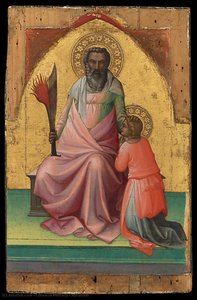
Abraham
·