

Esitetty: · Kehyksineen:
 Esikatselu
 Jaa teos
 Jaa
Jaa
 Tiedot
 Opas
Opas

 Lataa kuva
 Samanlaisia kohteita
 Röntgenkuvaus
 Diaesitys
 Kysymykset ja vastaukset
 Tilastot
- 47.0 x 142.0 cm


€ 239
Käsinmaalattu öljyvärinen jäljennös
Käsinmaalattu öljyväri kankaalle haluamassasi koossa ja kehyksissä, taiteilijoidemme valmistamana tilauksesta. ( Vaihda tulosteeseen Siirry digitaaliseen kuvaan)
Koko
·Vakiokoko
räätälöity
CM
INCH
Valitse valmiista mitoistamme sellaiset, jotka vastaavat teoksen alkuperäisiä mittasuhteita.
Koot ladataan...

leveys
korkeus
Kirjoita tarvitsemasi leveys ja korkeus, jotta teos sopii kehyksiisi tai seinällesi. Koska kyseessä on käsinmaalattu teos, taiteilija voi maalata hieman enemmän kuvan ympärille tai rajata sitä hieman, jos haluat eri muotoisen koon — valinta on sinun. Lähetämme sinulle digitaalisen mallikuvan hyväksyttäväksi ennen kuin maalaus alkaa. Tällä sivulla näkyvä kuva ei vastaa lopullista tulosta — vain mallikuva näyttää sen.
 Lue lisää
Viimeistely
·
Valkoinen reuna €1

pehmennetty reuna €1

Jatkuva reuna €1

P118B €10

P118H €10

P118W €10

P438Z €10

P508JH €12

P508YH €12

P805H €10

P805Z €10

P919BZ €10

P919G €10

P919XJ €10

P959ZH €10

P968JZ €12

W106C €8

W218G €10

W218JH €8

W218Y €10

W307PJ €10

W316G €10

W316PJ €8

W316Y €10

W398PJ €8

W4111J €10

W500HY €15

W500JH €15

W692G €12

W849H €8

W940BG €15

W953PJ €8

H24-GOLD €30

H24-SILVER €30

H36-GOLD €45

H36-SILVER €45
Toimitetaan suojaputkessa, valmiina kehystettäväksi omassa kehyksessäsi.
Yli 105 cm kokoiset kehykset toimitetaan osasarjana ammattilaiskehystäjälle — lue lisätiedot.
Lisäpalvelut
valinnainenMitä lisämateriaalit sisältävät?
Esimerkkejä muutettavista asioista: Vaihda kasvot asiakkaan valokuvaan; Lisää lemmikki (esim. vaihda kissa koiraksi); Lisää piilotettu viesti taustalle; Vaihda taustan maisemaa tai elementtejä.
Tilauksen jälkeen TopImpressionists.com -tiimi lähettää asiakkaalle sähköpostia ohjeita varten ja toimittaa luonnoksen esikatselun
Tilauksen jälkeen TopImpressionists.com -tiimi lähettää asiakkaalle sähköpostia ohjeita varten ja toimittaa luonnoksen esikatselun
Maailmanlaajuinen toimitus () 3–4 viikossa tavallisen 5 viikon sijaan. (4 marraskuu). Laadusta ei tingitä.
Suojalakkaus
Nimilaatta
Kaiverretun pronssilaatan tiedot
This elegant plaque features the artist's name and the title of the artwork, finely engraved for a timeless presentation.
It is made from bronze with a refined, elegant finish. The text is precisely laser-engraved for a sharp and permanent result. Measuring 9x2 cm, the plaque is compact yet easy to read. It's built to be durable and scratch-resistant, offering a professional, museum-quality look. Mounting is simple thanks to the included adhesive backing.
Läpinäkyvän akryylilaatan tiedot
The plaque includes essential engraved details such as the artist's name, the title of the artwork, the date it was created, the type of media used-like oil on canvas or watercolor-a brief description of the piece, and a QR code that links to the complete artwork information.
It is crafted from clear acrylic, offering a sleek, modern appearance. The text is UV-engraved in black to ensure strong visual contrast. With a size of 10x15 cm, it ensures optimal readability. It comes equipped with two metal hooks for secure wall mounting. The plaque is designed to be weather-resistant, making it suitable for various environments, and it includes interactive features that work seamlessly with smartphone scanning.
Mustan akryylilaatan tiedot
This elegant plaque includes engraved information such as the artist's name, the title of the artwork, the date it was created, the type of media used (like oil on canvas or watercolor), a short description of the artwork, and a QR code for quick access to more information.
The plaque itself is made from refined black acrylic with a premium finish. The text is laser-engraved in white for high contrast and readability. Its size is 10x15 cm, designed to be easy to read. It comes with two metal hooks for professional mounting. The design is sleek and fits any interior style. It is also weather-resistant and durable, with built-in digital integration for mobile compatibility.
Lasivaihtoehto on saatavilla vain alle 110 cm kokoisille teoksille
 Lasivaihtoehto on saatavilla vain alle 110 cm kokoisille teoksille
- Ilmainen pikatoimitus ympäri maailman
- Korkealaatuinen pellavakangas
- Kattava kuljetusvakuutus
- Tulliveron palautustakuu
- Takuu täydellisestä värien vastaavuudesta
- 100 päivän palautusoikeus (vain valmistusvirheet)
- 100% rahat takaisin -takuu
- Määräalennus tarjolla


Keräilykohteen kuvaus
Witness the iconic 'Last Supper' by Leonardo da Vinci! This masterpiece captures Jesus’s final meal with his apostles, showcasing revolutionary art & emotion. Explore its history and significance.
Taiteilijan elämäkerta
Tutustu Lorenzo Monacoon (1370–1425), italialaisen maalarin keskushenkilöön, joka yhdistää myöhäisen gothikin ja varhaisen renessanssin. Näe hänen hengellinen taiteensa, käsikirjoitusvalokuvat sekä ainutlaatuinen tyylinsä.
Tietoa maalauksesta
A Moment Frozen in Time: The Story of the Last Supper
Leonardo da Vinci’s The Last Supper, housed within the refectory of Santa Maria delle Grazie in Milan, isn't merely a painting; it’s an immersive experience. Completed between 1495 and 1498, this monumental mural captures a pivotal moment from Christian scripture – the announcement by Jesus of his impending betrayal by one of his apostles. More than just a depiction of an event, it’s a profound exploration of human emotion, faith, and the complexities of relationships. Leonardo masterfully distilled the narrative into a single, dramatic tableau, freezing a conversation in perpetual motion. The scene unfolds with an almost palpable tension, radiating from Jesus's face as he reveals the devastating truth to his disciples. The composition is carefully constructed; each apostle reacts uniquely – shock, denial, anger, confusion – creating a dynamic and deeply affecting visual dialogue.

Technique and Innovation: A Revolutionary Approach
Leonardo’s choice of medium – tempera on gesso, pitch, and mastic – was a radical departure from the traditional fresco method employed for such large-scale works. Fresco relies on pigments mixed with water applied to wet plaster; this technique is notoriously difficult to alter once dry. Leonardo's approach allowed him unprecedented flexibility, enabling him to rework details and experiment with shading and color until he achieved his desired effect. This innovative technique, however, proved tragically unstable over time, contributing significantly to the painting’s deterioration. The layering of materials and the inherent fragility of tempera on gesso have resulted in extensive fading, cracking, and flaking, demanding constant conservation efforts. Despite these challenges, Leonardo's mastery of *sfumato* – a subtle blurring technique that creates soft transitions between light and shadow – remains breathtakingly evident, lending an ethereal quality to the figures and imbuing them with a remarkable sense of realism.
Symbolism and Spiritual Depth
Beyond its dramatic depiction of betrayal, The Last Supper is rich in symbolic meaning. Judas Iscariot, traditionally depicted as sitting alone at the table, is positioned furthest from Jesus, emphasizing his isolation and treachery. The arrangement of the apostles reflects their individual personalities and relationships within the group. Leonardo’s use of color also carries significant weight; the vibrant reds and blues contrast sharply with the muted browns and grays, drawing attention to key figures and emotions. The inclusion of details like the table, benches, and even the architectural elements of the room contribute to a sense of realism and immediacy, grounding the spiritual narrative in a tangible setting. The painting’s overall effect is one of profound introspection, inviting viewers to contemplate themes of faith, betrayal, forgiveness, and the nature of humanity.
A Legacy Enduring Through Time
The Last Supper stands as a testament to Leonardo da Vinci's genius – a masterpiece that continues to captivate audiences centuries after its creation. Its revolutionary techniques, profound symbolism, and emotional resonance have cemented its place among the most iconic works of art in Western history. Reproductions, while never fully capturing the original’s luminosity and depth, offer a valuable opportunity to experience this extraordinary painting firsthand. Whether admired for its technical brilliance or its enduring spiritual message, The Last Supper remains a powerful reminder of the complexities of human nature and the transformative power of art.
Kysymykset ja vastaukset
Onko Lorenzo Monaco:n "The Last Supper" maalaus, piirros vai grafiikan lehti?
Luettelossa teos Lorenzo Monaco:n "The Last Supper" on luokiteltu tyypiksi WallArt. Kategoria auttaa löytämään samankaltaisia teoksia.
Missä Panoramic-muotoisen teoksen "The Last Supper" suositellaan olevan esillä?
Muoto (Panoramic) ja suositeltu tila (Dining Room) ovat teokselle Lorenzo Monaco:n "The Last Supper" ilmoitetut sijoittelutiedot.
Mistä löydän oppaan teokseen "The Last Supper"?
Teoksesta Lorenzo Monaco:n "The Last Supper" on saatavilla Opas -sivu: tulostettava tietolomake teoksesta, joka on suunniteltu opiskelijoita ja luokkahuonekäyttöä varten.
Pikaopas ja taidevisailu
Tietoa artistista Lorenzo Monaco

Lorenzo Monaco
1370 - 1425, Italia
Taiteilijan elämäkerta
Lorenzo Monaco (1370–1425), A Florentine Monk’s Vision
Lorenzo Monaco, born Piero di Giovanni around 1370 in Siena, occupies a fascinating and pivotal position in the transition from the Gothic grace of the Trecento to the burgeoning Renaissance ideals of the Quattrocento. Though biographical details remain scarce, his artistic journey reveals a compelling story of adaptation, innovation, and deeply felt spirituality. Apprenticed in Florence, he absorbed the lessons of masters like Giotto, Spinello Aretino, and Agnolo Gaddi – artists who established a foundation of narrative clarity and emotional resonance. However, it was his embrace of monastic life in 1390, joining the Camaldolese order at Santa Maria degli Angeli, that truly shaped both his artistic identity and earned him the name by which he is best known: Lorenzo Monaco, or “Lawrence the Monk.” This commitment to a contemplative existence profoundly influenced the character of his work, imbuing it with an introspective quality and a focus on devotional themes.Early Influences and Gothic Elegance
Lorenzo Monaco’s formative years were steeped in the artistic traditions of Siena and Florence during the Trecento period. He received his initial training under Giotto di Bondone, whose frescoes in Padua Cathedral instilled in him a profound understanding of narrative storytelling and emotional expression—principles that would permeate his entire oeuvre. Furthermore, he studied alongside Spinello Aretino and Agnolo Gaddi, masters who championed refined linearism and meticulous detail within the International Gothic style. This stylistic inheritance is evident throughout Monaco’s early paintings, characterized by their delicate ornamentation, luminous colors, and graceful drapery—elements that hark back to the opulent aesthetic of the preceding era. The influence of Lorenzo Ghiberti's bronze doors for Florence Cathedral is palpable in Monaco’s meticulous attention to sculptural form and surface texture, demonstrating a shared appreciation for craftsmanship and artistic virtuosity.The Camaldolese Order and Artistic Transformation
Joining the Camaldolese order at Santa Maria degli Angeli in 1390 marked a decisive turning point in Monaco’s life and artistic development. This monastic vocation instilled within him a deep reverence for faith and contemplation, shaping his worldview and informing his creative endeavors. The contemplative atmosphere of the monastery fostered an inner dialogue that translated into subtle nuances of emotion and psychological depth within his paintings—a departure from the more overtly dramatic conventions of Gothic art. Monaco’s artistic style gradually evolved away from the stylized elegance of the Trecento, embracing elements foreshadowing the Renaissance aesthetic. He experimented with elongated figures draped in flowing garments, favoring sharp edges and brilliant colors – particularly the luxurious hues of gold and lapis lazuli – reflecting a burgeoning interest in classical ideals of beauty and proportion.Major Achievements: Pietà, Coronation of the Virgin, Polyptych of Monteoliveto
Lorenzo Monaco achieved considerable renown during his lifetime as a painter and illuminator, producing works that stand as masterpieces of both Gothic and Early Renaissance art. His Pietà (circa 1405), housed in Florence’s Galleria dell'Accademia, exemplifies his mastery of sculptural form and emotional expression—a testament to his ability to convey profound spiritual pathos with understated grace. The monumental Coronation of the Virgin (circa 1420), now gracing the Uffizi Gallery, showcases Monaco’s innovative use of color and drapery, demonstrating a sophisticated understanding of artistic technique. His contribution to the Polyptych of Monteoliveto—a collaborative project undertaken with Andrea Mantegna—represents one of his few surviving mural works, offering invaluable insight into his skill as a large-scale decorator and reflecting the stylistic influences of Mantegna’s humanist vision. The Adoration of the Magi (1420–1422), commissioned for the Cappella Maggiore in Monte Oliveto Nuovo, stands as a landmark achievement—a complex composition imbued with symbolic resonance and demonstrating Monaco's pioneering exploration of spatial perspective.Legacy and Enduring Influence
Despite his untimely death from an unidentified infection around 1425, Lorenzo Monaco left an indelible mark on Florentine art history. He was not a revolutionary in the same vein as Masaccio or Filippo Brunelleschi—artists who fundamentally reshaped artistic conventions—but he nonetheless served as the last significant exponent of Giotto’s style, preserving its legacy while simultaneously incorporating elements that foreshadowed the stylistic transformations to come. Giorgio Vasari recognized Monaco's talent and acknowledged his contribution to the artistic heritage of Florence. His emphasis on spirituality, stylized forms, and refined elegance represents a distinctive aesthetic within Florentine painting—a testament to his enduring influence on subsequent generations of artists who appreciated his masterful technique and profound devotion. He remains an artist whose work continues to inspire admiration for its beauty and contemplation.Pikaaakkaukset taiteilijasta Lorenzo Monaco
- Artistic Movement Or Style: Late Gothic / Early Renaissance
- Artists Or Movements Influenced By This Artist: ['Fra Angelico']
- Artists Who Influenced This Artist:
- Giotto
- Spinello Aretino
- Agnolo Gaddi
- Date Of Birth: c. 1370
- Date Of Death: c. 1425
- Full Name: Lorenzo Monaco
- Nationality: Italian
- Notable Artworks:
- Madonna and Child
- Praying Prophet
- Christ Giving the Keys to Saint Peter
- Place Of Birth: Siena, Italia
Tutustu teoksiin, jotka on järjestetty aiheiden, tyylien ja ominaisuuksien mukaan.


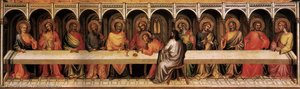
Lorenzo Monaco
The Last Supper
() ·
Kehyksineen: · Käsinmaalattu öljyväreillä pellavalle
Yhteensä