

 Esikatselu
 Jaa teos
 Jaa
Jaa
 Tiedot
 Opas
Opas

 Lataa kuva
 Samanlaisia kohteita
 Röntgenkuvaus
 Diaesitys
 Kysymykset ja vastaukset
 Tilastot
Solitude

- 102.0 x 169.0 cm


Marc Chagall's 'Solitude' (1933) captures Jewish resilience amidst rising anti-Semitism. This poignant painting, rich with symbolism and featuring a contemplative figure, embodies cultural identity and enduring spirit.
 Lue lisää
Uppea Marc Chagall (1887-1985): Venäläis-ranskalainen taidemaalari, jonka unenomaiset maalaukset ja juutalaisen perinteen teemat lumoavat! Tutustu hänen perintöönsä!
Tällä sivulla esitettyä taideteosta suojaa tekijänoikeuslaki, mikä tarkoittaa, ettemme voi laillisesti luoda tai myydä täsmälleen samanlaista jäljennöstä. Tämä suoja toteutetaan kansainvälisten sopimusten, kuten esimerkiksi Berne-konventio ja kansallisilla laeilla, mukaan lukien niillä määritellyt Yhdysvaltain tekijänoikeuslaki – Luku 17. Kaikki oikeudet pidätetään. Luvaton kopiointi tai jäljittely on kielletty.
Tämä menetelmä noudattaa täysin tekijänoikeussäännöksiä, sillä se ei sisällä suojatun taideteoksen kopioimista tai jäljentämistä. Sen sijaan kyseessä on luova uudelleentulkinta – uusi maalaus, joka ammentaa vaikutteita alkuperäisestä, mutta ei ole sen identtinen kopio.
Giclée- ja taideprintit
Museolaatuisia giclée- tai kankaitaulun tulosteita nopealla tuotannolla ja joustavilla viimeistelyvaihtoehdoilla. ( Osta käsinmaalattu taideteos Siirry digitaaliseen kuvaan)




P118B €10

P118H €10

P118W €10

P438Z €10

P508JH €12

P508YH €12

P805H €10

P805Z €10

P919BZ €10

P919G €10

P919XJ €10

P959ZH €10

P968JZ €12

W106C €8

W218G €10

W218JH €8

W218Y €10

W307PJ €10

W316G €10

W316PJ €8

W316Y €10

W398PJ €8

W4111J €10

W500HY €15

W500JH €15

W692G €12

W849H €8

W940BG €15

W953PJ €8




Vakiokoko
räätälöity
CM
INCH
Valitse valmiista mitoistamme sellaiset, jotka vastaavat teoksen alkuperäisiä mittasuhteita.
Loading sizes...

leveys
korkeus
Syötä tarvitsemasi leveys ja korkeus, jotta tuloste sopii kehyksiisi tai seinällesi. Tulostetta voidaan vain leikata, sitä ei voida koskaan suurentaa alkuperäistä kuvaa suuremmaksi, joten eri muotoinen koko aiheuttaa osan kuvasta katoamisen. Lähetämme sinulle digitaalisen mallikuvan hyväksyttäväksi ennen kuin aloitamme tulostuksen. Tällä sivulla näkyvä kuva ei näytä lopullista rajausta — vain mallikuva näyttää sen.
Maailmanlaajuinen toimitus () 2 viikossa tavallisen 4–5 viikon sijaan. (9 marraskuu)

Ilmainen pikatoimitus ympäri maailman

Korkealaatuinen pellavakangas

Kattava kuljetusvakuutus

Tulliveron palautustakuu

Takuu täydellisestä värien vastaavuudesta

100 päivän palautusoikeus (vain valmistusvirheet)

100% rahat takaisin -takuu

Määräalennus tarjolla
 Lasivaihtoehto on saatavilla vain alle 110 cm kokoisille teoksille

Solitude
Giclée- ja taideprintit
Replikaatin koko
-


Kokonaishinta
€ 62
The Poignant Echo of Isolation
Marc Chagall’s “Solitude,” painted in 1933, isn't merely a depiction of a man seated on the ground; it’s a profound meditation on Jewish identity, cultural displacement, and the weight of history. Housed within the Tel-Aviv Museum of Art, this work transcends its physical dimensions to become a powerful symbol of resilience in the face of rising anti-Semitism across Europe. The painting immediately draws the eye with its muted palette – a deliberate departure from Chagall’s often vibrant Fauvist style – creating an atmosphere of contemplative stillness that mirrors the man's internal state. The composition is strikingly simple, yet deeply resonant: a solitary figure enveloped in a long robe or cloak, his head bowed in what appears to be profound introspection. This posture speaks volumes about the burden he carries, a weight amplified by the surrounding elements.
- The Central Figure: The man’s slumped form and downward gaze immediately evoke feelings of sadness and isolation. His attire – a traditional Jewish prayer shawl – subtly anchors him within his cultural heritage while simultaneously highlighting his separation from the world around him.
- The Goat: A calm, resting goat positioned before the figure is a particularly intriguing element. It’s not simply an animal; it represents a connection to the land and tradition, a grounding force amidst the man's internal turmoil. The juxtaposition of the human figure and the animal creates a visual dialogue about the relationship between humanity and nature, faith and instinct.
- The Violin: A violin resting nearby hints at a past filled with music and joy – a memory now overshadowed by present sorrow. It’s a poignant reminder of what has been lost, adding another layer to the painting's emotional complexity.
Symbolism Woven into the Canvas
“Solitude” is rich in symbolic detail, each element carefully chosen to convey a deeper meaning within the context of 1930s Europe. The Torah scroll, prominently displayed, represents Jewish law and tradition – a source of both strength and potential conflict during this turbulent period. God’s messenger, depicted subtly in the background, suggests divine guidance amidst uncertainty. The historical rabbi or elder figure embodies the continuity of Jewish faith and wisdom, offering a sense of stability against the encroaching darkness. The setting itself—a blurred landscape with buildings receding into the distance—represents a world increasingly distant from the man’s personal experience.
Notably, Chagall satirically uses animalistic cultural objects to highlight the absurdity of those who believed Jews could not produce remarkable art – a pointed commentary on prejudice and misunderstanding.A Reflection of Troubled Times
Painted in 1933, “Solitude” is inextricably linked to the rising tide of anti-Semitism sweeping across Europe. The political climate was fraught with danger, as the Nazi party’s ideology gained traction, fueled by hatred and a desire for exclusion. Chagall, himself a Jewish artist living in a time of increasing persecution, channeled his anxieties and observations into this powerful work. His experiences witnessing discrimination firsthand – including the assault on a friend in Warsaw – undoubtedly informed the painting's somber tone. The backdrop of dark clouds suggests an impending storm, mirroring the turbulent times facing the Jewish community.
Legacy and Enduring Resonance
Despite facing criticism from conservative authorities who sought to control artistic expression, Chagall’s work continued to resonate with audiences. “Solitude” stands as a testament to the enduring spirit of Jewish culture—a poignant reminder of its resilience in the face of adversity. It's not simply a portrait of loneliness; it’s an exploration of identity, faith, and the human condition. Reproductions of this masterpiece offer a unique opportunity to engage with this emotionally charged artwork and contemplate its timeless themes. The painting invites viewers to consider their own experiences of isolation, reflection, and the importance of preserving cultural heritage in times of uncertainty.
Kysymykset ja vastaukset
Mitä "Solitude" esittää ja millainen tunnelma siinä on?
Marc Chagall:n "Solitude" esittää aiheita jewish culture, anti-semitism, solitude, biblical symbolism, rabbi, goat, violin, contemplation Calm tunnelmassa. Aihe ja ilmapiiri kuvaavat teosta yhdessä.
Mikä on teoksen Marc Chagall:n "Solitude" tekniikka ja valmistumisvuosi?
"Solitude" on valmistettu vuonna 1933 tekniikalla Acrylic On Canvas.
Mistä kansallisuudesta "Solitude"-teoksen Fauvism kumpuaa?
Fauvism-tyylinen teos "Solitude" on Belarus:ssa syntyneen taiteilijan käsialaa.
Taiteilijan elämäkerta
A Life Painted in Dreams: The World of Marc Chagall
Marc Chagall, oikealta nimeltään Moiše Segal (jiddišiksi מאַרק שאַגאַל, ven. Марк Захарович Шага́л, Mark Zaharovitš Šagal, valkoven. Мойша Захаравіч Шагалаў, Mojša Zacharavič Šahałaŭ; 7. heinäkuuta (J: 24. kesäkuuta) 1887 Vitebsk, Venäjä – 28. maaliskuuta 1985 Saint-Paul de Vence, Alpes-Maritimes) oli venäjänjuutalais-ranskalainen taidemaalari. Surrealismiin usein yhdistetty Chagall on eräs 1900-luvun tunnetuimmista taiteilijoista. Hänen maalauksilleen ominainen värikkyys ja lämminhenkisyys on tehnyt niistä varsin pidettyjä.Early Life and Artistic Beginnings
Marc Chagall syntyi Vitebskissä nykyisen Valko-Venäjän alueella, silloisessa Venäjän keisarikunnassa hasidijuutalaiseen perheen. Hän oli vanhin kahdeksasta lapsesta. Hänen nimensä Moiše Segal venäläistettiin Mark Zaharovitš Šagaloviksi ja edelleen muotoon Šagal, josta ranskalaisittain syntyi nimi Marc Chagall. Perheen isä oli sillikauppias. Lapsuuttaan Chagall piti onnellisena vaikkakin köyhänä, ja kotikylän muistot esiintyvätkin usein hänen taiteessaan. Hän ei koskaan nähnyt sovitettuun tapaan piirustusta ennen kuin hän katsoi koululaisen kopioivan aikakauskirjan kuvituksen. Hänet naurettiin, mutta hän alkoi kopioida ja improvisoida aikakausikirjoista. Molempien Chagallin vanhempien epäröintiä pidettiin hyväksyttävänä hänen opintonsa sallimiseksi Yehuda Penin oppilaana Vitebskissa. Myöhemmin he antoivat lapselleen luvan tutkia Pietarissa Léon Bakstin oppilaana, ja hän tutustui taiteen erilaisiin suuntauksiin ja muotivirtauksiin. Tausta aiheutti taiteilijalle ongelmia: juutalaiset saivat oleskella Pietarissa vain luvanvaraisesti, ja Chagall vietti lyhyen aikaa vankilassa. Pietariin hän jäi kuitenkin vuoteen 1910 saakka vieraillen säännöllisesti kotikylässään, jossa hän tapasi tulevan vaimonsa Bella Rosenfeldin. Hän oli erityisen vaikuttunut Vitebskin ainutlaatuisesta kulttuurista – Venäjän ortodoksiset kirkot vierivät käsi kädessä juutalaisen kauppojen vilkkauden kanssa – mikä loi taiteilijalle oman estetisetensä, joka pysyi kategorioiden ulkona hänen koko uransa aikana.Formal Training and Early Artistic Style
Chagall sai ensimmäisen koulutuksensa paikalliselta signeeripöytäliikkeestä ja jatkoi sitä myöhemmin Pietarissa Léon Bakstin oppilaana. Hän tutustui myös impressionismiin Paul Durand-Ruelin galleriassa ja näki Gauguinin ja van Goghin alkuperäisiä töitä Bernheimin galleriassa. Näiden kokemusten jälkeen hän siirtyi Pariisiin Académie de la Grande Chaumièreen, jossa hän kehitti realistisen tyylin. Hän oli erityisen vaikuttunut Djagilevin Venäläisestä baletista ja sen ympärille kerääntyneistä tanssijoista, muusikoiden ja kirjailijoiden kanssa. Näiden kokemusten jälkeen hän tutustui myös surrealismiin ja Fauvismiin. Hänen varhaiset maalauksensa ovat jo nyt osoitus siitä, että hän kehitti oman erityisen kielen – jonka hän jatkoi käyttämistä koko uransa ajan. Hän ei ollut täysin omaksunut yhtä tiettyä taiteellista liikettä, mutta hän otti käyttöön elementtejä kubismista, symbolismista ja fauvismista, mutta hän filtteröi ne aina oman henkilökohtaisen näkökulman läpi, mikä loi tyylin, joka oli ainutlaatuinen ja täysin Chagall. Hän maalasi usein yksinkertaisia aiheita – kuten I and the Village (1911) – mutta hän käytti niissä värejä ja kuvioita suurella tarkkuudella ja huolellisuudella. Maalauksissa näkyvät henkilöhahmot liikkuvat ja tanssivat katsojan silmän korkeudella, mikä luo unenomaisen tunnelman ja kutsuu katsojat hänen sisäiseen maailmaansa. Tämä tyylinen lähestymistapa ei ollut sattumanvaraista; se juurtui haluun mennä yli yksinkertaisen todellisuuden jäljittelyn ja vangita tunnetta, painoa muistoa sekä folklorin voimaa.Symbolism and Recurring Themes
Chagallin taiteessa korostuu symbolismi ja toistuvat teemat – erityisesti hänen lapsuudenkodiksensaan liittyvät henkilöhahmot ja tapahtumat. Hän maalasi usein yksinkertaisia aiheita – kuten I and the Village (1911) – mutta hän käytti niissä värejä ja kuvioita suurella tarkkuudella ja huolellisuudella. Maalauksissa näkyvät henkilöhahmot liikkuvat ja tanssivat katsojan silmän korkeudella, mikä luo unenomaisen tunnelman ja kutsuu katsojat hänen sisäiseen maailmaansa. Tämä tyylinen lähestymistapa ei ollut sattumanvaraista; se juurtui haluun mennä yli yksinkertaisen todellisuuden jäljittelyn ja vangita tunnetta, painoa muistoa sekä folklorin voimaa. Hän maalasi usein yksinkertaisia aiheita – kuten I and the Village (1911) – mutta hän käytti niissä värejä ja kuvioita suurella tarkkuudella ja huolellisuudella. Maalauksissa näkyvät henkilöhahmot liikkuvat ja tanssivat katsojan silmän korkeudella, mikä luo unenomaisen tunnelman ja kutsuu katsojat hänen sisäiseen maailmaansa. Tämä tyylinen lähestymistapa ei ollut sattumanvaraista; se juurtui haluun mennä yli yksinkertaisen todellisuuden jäljittelyn ja vangita tunnetta, painoa muistoa sekä folklorin voimaa. Hän maalasi usein yksinkertaisia aiheita – kuten I and the Village (1911) – mutta hän käytti niissä värejä ja kuvioita suurella tarkkuudella ja huolellisuudella. Maalauksissa näkyvät henkilöhahmot liikkuvat ja tanssivat katsojan silmän korkeudella, mikä luo unenomaisen tunnelman ja kutsuu katsojat hänen sisäiseen maailmaansa. Tämä tyylinen lähestymistapa ei ollut sattumanvaraista; se juurtui haluun mennä yli yksinkertaisen todellisuuden jäljittelyn ja vangita tunnetta, painoa muistoa sekä folklorin voimaa. Hän maalasi usein yksinkertaisia aiheita – kuten I and the Village (1911) – mutta hän käytti niissä värejä ja kuvioita suurella tarkkuudella ja huolellisuudella. Maalauksissa näkyvät henkilöhahmot liikkuvat ja tanssivat katsojan silmän korkeudella, mikä luo unenomaisen tunnelman ja kutsuu katsojat hänen sisäiseen maailmaansa. Tämä tyylinen lähestymistapa ei ollut sattumanvaraista; se juurtui haluun mennä yli yksinkertaisen todellisuuden jäljittelyn ja vangita tunnetta, painoa muistoa sekä folklorin voimaa. Hän maalasi usein yksinkertaisia aiheita – kuten I and the Village (1911) – mutta hän käytti niissä värejä ja kuvioita suurella tarkkuudella ja huolellisuudella. Maalauksissa näkyvät henkilöhahmot liikkuvat ja tanssivat katsojan silmän korkeudella, mikä luo unenomaisen tunnelman ja kutsuu katsojat hänen sisäiseen maailmaansa. Tämä tyylinen lähestymistapa ei ollut sattumanvaraista; se juurtui haluun mennä yli yksinkertaisen
Marc Chagall
1887 - 1985 , Belarus
Pähkinänkuoressa
- Artistic Movement Or Style: Modernismi, Kubismi
- Artists Or Movements Influenced By This Artist: ['Surrealismi']
- Artists Who Influenced This Artist:
- Bakst
- Delaunay
- Borovikovsky
- Date Of Birth: 7. heinäkuuta 1887
- Date Of Death: 28. maaliskuuta 1985
- Full Name: Marc Chagall
- Nationality: Venäjä-ranskalainen
- Notable Artworks:
- I and the Village
- Over Vitebsk
- White Crucifixion
- Place Of Birth: Liozna, Belarus
Aiheeseen liittyvät artikkelit
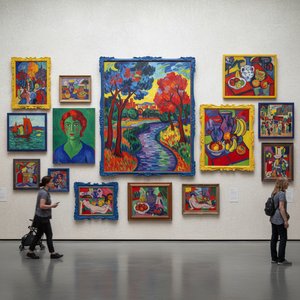
Fauvismin 10 mestariteosta: Taidetta ja inspiraatiota kotiin – TopImpressionists.com
Tutustu fauvismin 10 ikonista mestariteosta! Uppoudu Henri Matissen, André Derainin ja muiden taiteilijoiden värikylläiseen maailmaan. Löydä inspiraatiota kotiisi TopImpressionists.com:sta – laadukkaat taidekopiokset ja sisustusideat odottavat!

Fauvismin 10 mestariteosta: Värien vallankumous taiteessa – TopImpressionists.com
Tutustu fauvismin 10 mestariteokseen! Uppoudu Henri Matissen, André Derainin ja muiden taiteilijoiden värien vallankumoukseen. Löydä inspiraatiota kotiisi – korkealaatuiset taideprintit TopImpressionists.comista. Tutustu kokoelmaan verkossa!

The Raw Emotion of Color: Exploring Fauvism's Revolutionary Expression
Explore the revolutionary world of Fauvism! Discover the bold colors & expressive power of Matisse, Derain & Vlaminck. Learn about this pivotal art movement's history and lasting impact on modern painting.

The Wild Beast Within: Exploring Fauvism's Revolutionary Use of Color and Form
Explore the revolutionary Fauvism movement & Henri Matisse's bold use of color! Discover key characteristics, iconic artworks, and its lasting impact on modern art history with TopImpressionists.

Echoes of Isolation: Solitude in Western Art from Renaissance to Modernism
Explore the profound representation of solitude in Western art from the Renaissance to Modernism. Discover iconic paintings & artists like Goya, Friedrich, and Rossetti. Handmade oil reproductions available at TopImpressionists.
Tutustu teoksiin, jotka on järjestetty aiheiden, tyylien ja ominaisuuksien mukaan.


