
 Esikatselu
 Jaa teos
 Jaa
Jaa
 Tiedot
 Opas
Opas

 Lataa kuva
 Samanlaisia kohteita
 Röntgenkuvaus
 Diaesitys
 Q&A
Q&A Tilastot
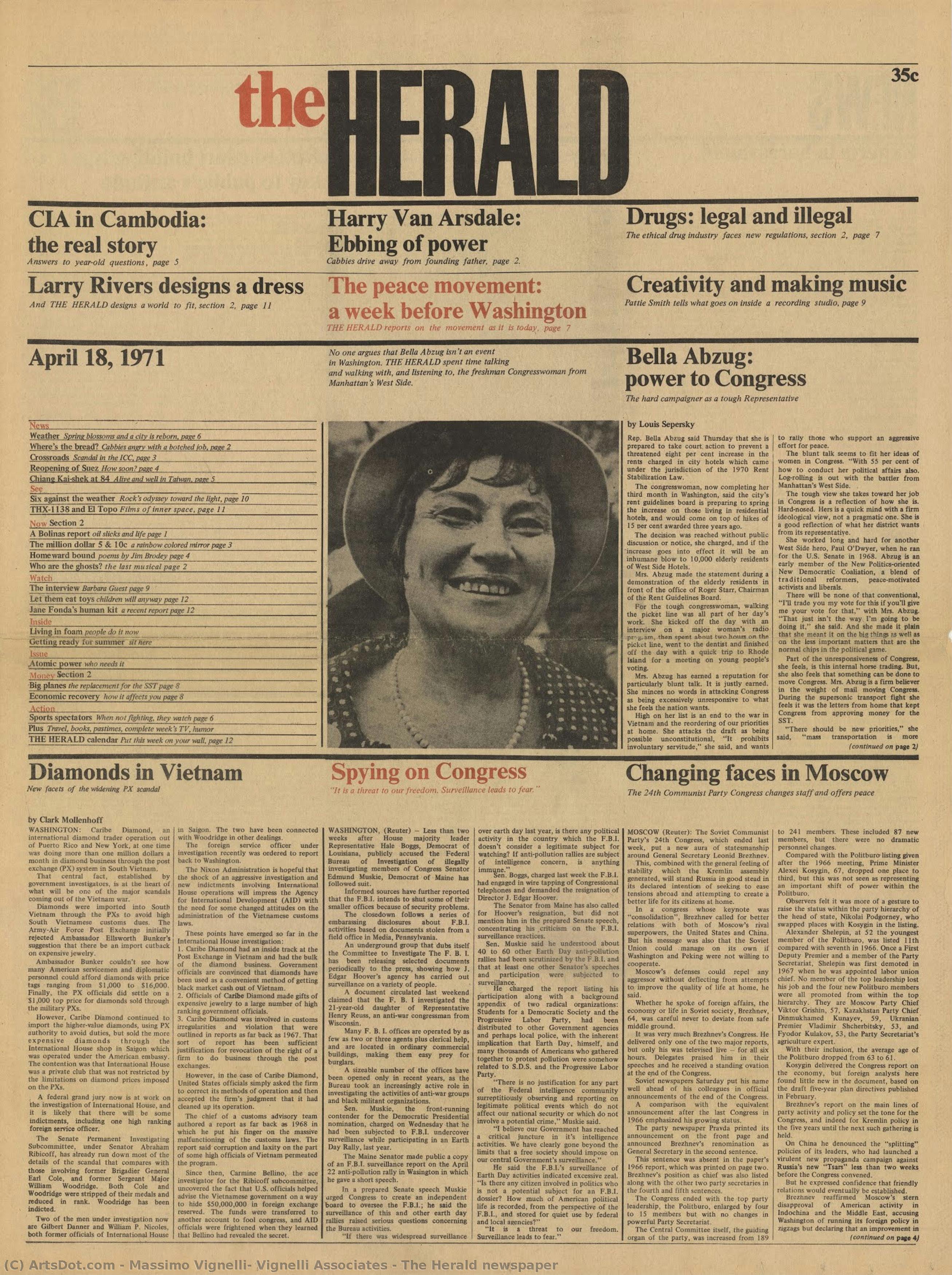
The Herald newspaper

- 43.0 x 57.0 cm


Experience the modernist grid design of The Herald newspaper by Massimo Vignelli (1971), showcasing vintage graphic communication art; discover this iconic piece today.
 Lue lisää
Massimo Vignelli (1931-2014): Italialainen designikoniksi tunnettu graafikko, joka suunnitteli mm. NYC Subway -kartan ja yrityslogoja. Tutustu hänen perintöönsä!
Tällä sivulla esitettyä taideteosta suojaa tekijänoikeuslaki, mikä tarkoittaa, ettemme voi laillisesti luoda tai myydä täsmälleen samanlaista jäljennöstä. Tämä suoja toteutetaan kansainvälisten sopimusten, kuten esimerkiksi Berne-konventio ja kansallisilla laeilla, mukaan lukien niillä määritellyt Yhdysvaltain tekijänoikeuslaki – Luku 17. Kaikki oikeudet pidätetään. Luvaton kopiointi tai jäljittely on kielletty.
Tämä menetelmä noudattaa täysin tekijänoikeussäännöksiä, sillä se ei sisällä suojatun taideteoksen kopioimista tai jäljentämistä. Sen sijaan kyseessä on luova uudelleentulkinta – uusi maalaus, joka ammentaa vaikutteita alkuperäisestä, mutta ei ole sen identtinen kopio.
Giclée- ja taideprintit
Museolaatuisia giclée- tai kankaitaulun tulosteita nopealla tuotannolla ja joustavilla viimeistelyvaihtoehdoilla. ( Osta käsinmaalattu taideteos Siirry digitaaliseen kuvaan)




P118B €10

P118H €10

P118W €10

P438Z €10

P508JH €12

P508YH €12

P805H €10

P805Z €10

P919BZ €10

P919G €10

P919XJ €10

P959ZH €10

P968JZ €12

W106C €8

W218G €10

W218JH €8

W218Y €10

W307PJ €10

W316G €10

W316PJ €8

W316Y €10

W398PJ €8

W4111J €10

W500HY €15

W500JH €15

W692G €12

W849H €8

W940BG €15

W953PJ €8




Vakiokoko
räätälöity
CM
INCH
Valitse valmiista mitoistamme sellaiset, jotka vastaavat teoksen alkuperäisiä mittasuhteita.
Loading sizes...

leveys
korkeus
Syötä tarvitsemasi leveys ja korkeus, jotta tuloste sopii kehyksiisi tai seinällesi. Tulostetta voidaan vain leikata, sitä ei voida koskaan suurentaa alkuperäistä kuvaa suuremmaksi, joten eri muotoinen koko aiheuttaa osan kuvasta katoamisen. Lähetämme sinulle digitaalisen mallikuvan hyväksyttäväksi ennen kuin aloitamme tulostuksen. Tällä sivulla näkyvä kuva ei näytä lopullista rajausta — vain mallikuva näyttää sen.
Maailmanlaajuinen toimitus () 2 viikossa tavallisen 4–5 viikon sijaan. (1 marraskuu)

Ilmainen pikatoimitus ympäri maailman

Korkealaatuinen pellavakangas

Kattava kuljetusvakuutus

Tulliveron palautustakuu

Takuu täydellisestä värien vastaavuudesta

100 päivän palautusoikeus (vain valmistusvirheet)

100% rahat takaisin -takuu

Määräalennus tarjolla
 Lasivaihtoehto on saatavilla vain alle 110 cm kokoisille teoksille

The Herald newspaper
Giclée- ja taideprintit
Replikaatin koko
-


Kokonaishinta
€ 61
The Grid of Modern Communication: Vignelli's The Herald
To encounter this piece is to step directly into the vibrant, structured chaos of mid-century New York journalism. This reproduction of The Herald newspaper from April 1971, conceived by Massimo Vignelli and his associates, is far more than mere ephemera; it is a meticulously designed artifact of visual communication history. It captures a moment when design principles—simplicity, functionality, and rigorous structure—were being aggressively applied to the seemingly unruly medium of print journalism. The very act of presenting this newspaper front page transforms what might be considered disposable media into a profound study in modernist graphic discipline.
A Masterclass in Structured Design
Vignelli’s genius, always rooted in an almost architectural understanding of space, is on full display here. The description notes the structure: a rigid grid of six columns and sixteen modules per column. This underlying skeleton dictates every element—the placement of headlines like "Diamonds in Vietnam," the accompanying portrait of the smiling woman, and the smaller articles detailing everything from spying congress to changing leaves in Moscow. Vignelli’s commitment to using a single typeface, Times Roman, across various weights and sizes, speaks volumes about his belief in universal legibility. It is a powerful testament to the idea that restraint—the disciplined use of negative space and consistent typography—can generate an overwhelming sense of order and sophistication.
Historical Resonance and Materiality
The year 1971 places this work within a fascinating cultural nexus, post-war modernism grappling with the burgeoning media landscape. While the paper itself ultimately folded due to distribution issues, its surviving design remains potent. For the collector or designer, understanding this context is key. This piece speaks to an era obsessed with efficiency and clarity in information transfer. When considering a reproduction for your space, you are not just acquiring art; you are curating a dialogue about how we consume knowledge—a conversation between the fleeting headline and the enduring power of good design.
Symbolism of the Grid
The grid itself functions as the primary symbolic element. In an age where digital information often feels overwhelming, this physical manifestation of order offers a visual anchor. It symbolizes control, but not oppressive control; rather, it suggests that even complex narratives—the confluence of international events and local interest—can be organized into digestible, beautiful patterns. The interplay between the large, arresting photograph and the tightly packed textual modules creates a dynamic tension, mirroring the very energy of a bustling city like New York in that era.
Bringing Modernist Precision Home
For interior design or gallery display, this piece offers an unparalleled opportunity to inject intellectual rigor into a space. It pairs beautifully with minimalist furniture, mid-century modern accents, or any setting that appreciates the clean lines of 20th-century industrial aesthetics. Owning this reproduction is an homage to Massimo Vignelli’s lifelong dedication to elevating the mundane—the daily newspaper—into something enduringly beautiful and intellectually stimulating.
Kysymykset ja vastaukset
Mihin tyylisuuntaan "The Herald newspaper" kuuluu?
Teoksen Massimo Vignelli, Vignelli Associates:n "The Herald newspaper" tyylisuunta on Modernism. Tämä luokittelu sijoittaa teoksen muiden samankaltaisten taiteilijoiden ja teosten joukkoon.
Mihin käyttöön "The Herald newspaper"-teoksen painos on suositeltava?
Teoksen "The Herald newspaper" painosteelle suositeltu käyttötapa on Statement.
Mikä on Massimo Vignelli, Vignelli Associates:n "The Herald newspaper"-teoksen muoto ja mitkä ovat sen mitat?
Teoksen "The Herald newspaper" formaatti on Portrait ja alkuperäinen koko on 43 x 57 cm. Molemmat tiedot ovat hyödyllisiä jäljennöstä suunnitellessa.
Taiteilijan elämäkerta
Muotoon omistettu elämä: Massimo Vignellin maailma
Milanossa vuonna 1931 syntynyt Massimo Vignellin matka oli modernistisen suunnittelun periaatteiden horjumaton omistautuminen. Jo nuorena hän osoitti synnynnäistä ymmärrystä visuaalisesta viestinnästä, aloittaen muodollisen koulutuksensa arkkitehtuurin parissa Politecnico di Milanossa ja jatkaen myöhemmin Università Iuav di Veneciassa. Kuitenkin juuri oppipoikana toimiminen arvostettujen Castiglioni-veljesten – italialaisen teollisen muotoilun uranuurtajien – alaisuudessa sytytti hänen intohimonsa maailman muovaamiseen harkitun luomistyön kautta. Tämä varhainen kokemus istutti häneen uskon toimivuuteen, yksinkertaisuuteen ja tyylikkäiden ratkaisujen voimaan arkipäivän ongelmissa. Hän ei ainoastaan suunnitellut esineitä; hän loi kokemuksia, suoristi vuorovaikutusta ja nosti arkisen muistettavaksi. Tämä muovaava ajanjakso loi perustan uralle, joka uudelleenmääritteli visuaalisen kulttuurin mantereiden yli.Italiasta New Yorkiin: Transatlanttinen visio
Vignellin polku johdatti hänet Amerikkaan vuonna 1966, missä hänestä tuli keskeinen hahmo Unimark Internationalin New Yorkin toimiston perustamisessa. Tämä merkitsi käännekohtaa paitsi hänen urallaan, myös amerikkalaisen muotoilun maisemassa. Unimark nousi nopeasti maineeseen, ja Vignellin panos – kaikkein tunnetuin pysyvä logo American Airlinesille – vahvisti hänen asemansa yritysidentiteetin mestarina. Kasvava eroavaisuus luovassa filosofiassa kuitenkin rohkaisi häntä lähtemään omille teilleen. Vuonna 1971, vaimonsa ja elinikäisen yhteistyökumppaninsa Lella Vignellin rinnalla, hän perusti Vignelli Associates -toimiston. Tästä kumppanuudesta tuli poikkeuksellisen hedelmällinen, ja siitä tuli synonyymi hienostuneille suunnitteluratkaisuille, jotka ulottuivat graafisesta suunnittelusta sisustussuunnitteluun, tuotesuunnitteluun ja arkkitehtuuriin. Toimiston etiikka juurestaan uskoon, jonka mukaan hyvän muotoilun tulisi olla saavutettavaa, ajatonta ja syvästi hyödyllistä – periaatteita, joita he puolustivat johdonmukaisesti koko uransa ajan.Ikoniset luomukset: Selkeyden perintö
Massimo Vignellin vaikutus on kudottu osaksi modernin elämän rakennetta. Ehkä tunnistettavin saavutus on New Yorkin metron kartan uudelleissuunnittelu vuonna 1972. Vaikka se oli aluksi kiistanalainen poikkeamastaan tiukasta maantieteellisestä tarkkuudesta, se oli rohkea kannanotto selkeyden ja käytettävyyden puolesta. Vignelli priorisoi luettavuutta ja intuitiivista navigointia kirjaimellisen esityksen sijaan, luoden diagrammimaisen kartan, joka ohjaa miljoonia matkustajia päivittäin. Tämä projekti ilmentää hänen ydinfilosofiaansa: viestinnän asettamista kaiken muun edelle. Metrokartan ulkopuolella Vignelli Associates jätti peruuttamattoman jäljen lukemattomiin brändeihin ja instituutioihin. Heidän työnsä Bloomingdale’sille – mukaan lukien ikoninen ruskea paperikassi yksinkertaisine valkoisine logoineen – muutti ostokokemuksen tyylivalinnaksi. He suunnittelivat huonekaluja Knollille, pakkauksia Hellerille ja yritysidentiteettejä, jotka tulivat välittömästi tunnistettaviksi laadun ja innovaation symboleiksi. Hänen Heller Rainbow Dinnerware -astiasisustuksensa seisoo minimalistisen estetiikan todistuksena, esitellen eloisia värejä puhtaissa geometrisissa muodoissa. Tredicesima Triennale di Milano -juliste puolestaan ilmentää hänen rohkeaa värien ja muotojen käyttöään, kun taas Knoll Design -kansi osoittaa hänen kykynsä luoda näyttäviä visuaaleja tunnetuille brändeille.Kestävä vaikutus: Estetiikan tuolla puolen
Massimo Vignellin vaikutus ulottuu paljon pidemmälle kuin yksittäiset projektit; hän muokkasi perustavanlaatuisesti tapaamme hahmottaa itse muotoilua. Hän oli vankkumaton typografisen kurinalaisuuden puolustaja ja tunnetusti kannatti rajattua kirjasinvalikoimaa – uskoen, että todellinen luovuus ei löydy loputtomista vaihtoehdoista, vaan mestarillisesta toteutuksesta huolella valituilla työkaluilla. Hänen kirjansa, The Vignelli Canon, tuli suunnittelijoiden manifestiksi, joka esitteli hänen periaatteensa selkeydestä, yksinkertaisuudesta ja kestävästä eleganssista. Hän ei ainoastaan luonut visuaalisesti miellyttäviä esineitä; hän pyrki luomaan järjestystä kaaokseen, viestimään tehokkaasti ja kohottamaan inhimillistä kokemusta harkitun suunnittelun avulla. Hänen työnsä jatkaa inspiroimista sukupolvien ajan, muistuttaen suunnittelijoita siitä, että todellinen innovaatio piilee tarpeettoman karsimisessa ja olennaiseen keskittymisessä. Rochester Institute of Technologyn Vignelli Center for Design Studies toimii pysyvänä kunnianosoituksena hänen perinnölleen säilyttäen laajan arkiston hänen työstään ja edistäen hänen mullistavien ideoidensa jatkuvaa tutkimista. Hän kuoli vuonna 2014, mutta hänen muotoilunsa pysyy voimakkaasti läsnä, muovaten maailmaamme ajattomalla eleganssillaan ja horjumattomalla sitoutumisellaan selkeyteen.
Massimo Vignelli, Vignelli Associates
1931 - 2014 , Italia
Pähkinänkuoressa
- Artistic Movement Or Style: Modernismi
- Artists Who Influenced This Artist:
- Achille Castiglioni
- Giulio Minoletti
- Date Of Birth: 10. tammikuuta 1931 Milano
- Date Of Death: 27. toukokuuta 2014 New York City
- Full Name: Massimo Vignelli
- Nationality: Italian
- Notable Artworks:
- American Airlines logo
- New York Subway mapa
- Place Of Birth: Milan, Italia
Aiheeseen liittyvät artikkelit

TopImpressionists.com F.A.Q.: Discover the Vibrant Beauty of Our Premium Art Poster Prints
Explore the technical excellence of TopImpressionists.com's premium art poster prints. Discover how our 12-color pigment system and archival inks capture the luminous beauty of Impressionist masterpieces with unmatched color fidelity and museum-grade durability for the discerning collector.
Tutustu teoksiin, jotka on järjestetty aiheiden, tyylien ja ominaisuuksien mukaan.


