


 Katso seinällä
 Lähetä
 Jaa
Jaa
 Tarkemmat tiedot
 Opas
Opas

 Lataa kuva
 Samanlaisia kohteita
 Röntgenkuvaus
 Diaesitys
 Tilastot
St Catherine
 Chalk
Chalk- Northern Renaissance
 1520
1520 316.0 x 215.0 cm
 Staatliche Museen zu Berlin
Admire Matthias Grünewald's 'St Catherine,' a captivating chalk drawing from 1520. Explore the Northern Renaissance master’s unique style, featuring a serene saint and symbolic details – available as a hand-painted replica.
 Lue lisää
Matthias Grünewald oli merkittävä saksalainen renessanssimaalari, tunnetuin Isenheim Altarpiece -teoksestaan. Hänen tyylinsä on dramaattinen ja tunteiden voimakas ilmaisu, joka yhdistää myöhäisgoottilaisen perinteen ja renessanssin.
Giclée- ja taideprintit
Museolaatuisia giclée- tai kankaitaulun tulosteita nopealla tuotannolla ja joustavilla viimeistelyvaihtoehdoilla. ( Tilaa käsinmaalattu jäljennös Siirry digitaaliseen kuvaan)




P118B €10

P118H €10

P118W €10

P438Z €10

P508JH €12

P508YH €12

P805H €10

P805Z €10

P919BZ €10

P919G €10

P919XJ €10

P959ZH €10

P968JZ €12

W106C €8

W218G €10

W218JH €8

W218Y €10

W307PJ €10

W316G €10

W316PJ €8

W316Y €10

W398PJ €8

W4111J €10

W500HY €15

W500JH €15

W692G €12

W849H €8

W940BG €15

W953PJ €8




Vakiokoko
mittatilaustyö
CM
INCH
Valitse valmiista mitoistamme sellaiset, jotka vastaavat teoksen alkuperäisiä mittasuhteita.
Loading sizes...

leveys
korkeus
Kirjoita tarvitsemasi leveys ja korkeus, jotta tuloste sopii kehyskokoon tai seinällesi. Tulostetta voidaan vain leikata, sitä ei voi koskaan tehdä suuremmaksi kuin alkuperäinen kuva, joten eri muotoinen koko aiheuttaa osan kuvasta katoamisen. Lähetämme sinulle digitaalisen mallikuvan hyväksyttäväksi ennen kuin aloitamme tulostuksen. Tällä sivulla näkyvä kuva ei näytä lopullista leikkausta — vain mallikuva näyttää sen.
Maailmanlaajuinen toimitus () 2 viikossa tavallisen 4–5 viikon sijaan. (23 lokakuu)

Ilmainen pikatoimitus ympäri maailman

Korkealaatuinen pellavakangas

Kattava kuljetusvakuutus

Tulliveron palautustakuu

Takuu täydellisestä värien vastaavuudesta

100 päivän palautusoikeus valmistusvirhetapauksissa

100% rahat takaisin -takuu

Määräalennus saatavilla
 Lasivaihtoehto on saatavilla vain alle 110 cm kokoisille teoksille

St Catherine
Giclée- ja taideprintit
Replikaatin koko
-


Kokonaishinta
€ 61
The Enigmatic Saint: Matthias Grünewald’s St Catherine
Matthias Grünewald's 1520 chalk drawing, “St Catherine,” is more than just a portrait; it’s a profound meditation on faith, scholarship, and the enduring power of medieval symbolism. This remarkable work, currently residing in the Staatliche Museen zu Berlin, offers a captivating glimpse into the artist’s unique vision – a synthesis of late Gothic sensibilities with nascent Renaissance influences. Grünewald, a pivotal figure in German art, deliberately eschewed the prevailing Italian humanist trends, instead drawing deeply from the rich traditions of Central European religious painting, resulting in an intensely personal and emotionally resonant style.
The image depicts St Catherine from the waist up, her head tilted slightly downwards as if lost in contemplation. Her posture exudes a quiet dignity, while the subtle turn of her neck invites us into her inner world. She’s dressed in a gown with voluminous sleeves – a detail that speaks to both the formality of her status and the luxurious fabrics favored by wealthy patrons during the period. Crucially, she holds two objects: an open book or manuscript, symbolizing her role as a learned scholar, and a sword raised upright, representing her martyrdom and unwavering faith. These symbols aren’t merely decorative; they are potent visual statements about Catherine's life and devotion.
A Study in Northern Renaissance Technique
Grünewald’s masterful technique is immediately apparent. The drawing is executed with exquisite detail using chalk on paper, a medium that allowed for the delicate shading and fine lines characteristic of his work. Notice the subtle gradations of tone – the way light catches on her dress, the modeling of her face, and the atmospheric haze in the background. This meticulous attention to texture and form creates a remarkable sense of depth and realism, despite the relatively small scale of the piece. The artist’s use of chalk also lends a slightly ethereal quality to the image, contributing to its contemplative mood.
Furthermore, Grünewald's style deviates significantly from the prevailing Renaissance aesthetic. Unlike the idealized figures favored by artists like Albrecht Dürer, Catherine is rendered with a certain distortion – her proportions aren’t perfectly symmetrical, and her features possess an expressive intensity. This deliberate departure from classical ideals reflects Grünewald’s commitment to conveying emotional truth rather than purely visual accuracy. The background, deliberately minimalistic, consists of only a few suggestive lines—perhaps hinting at a cloudy sky or an abstract representation of the heavens – further emphasizing the saint's presence and drawing our focus entirely onto her.
Historical Context and Symbolic Resonance
Created in 1520, “St Catherine” exists within a fascinating transitional period in art history. Grünewald was working at a time when the influence of Italian Renaissance humanism was beginning to spread across Europe, yet he remained firmly rooted in the traditions of late medieval Central European painting. The saint herself holds significant religious importance – she is venerated as a martyr and patron saint of scholars, librarians, and translators. Her story, recounted in early Christian hagiographies, details her conversion after being saved from execution by St Peter, who recognized her divine calling.
Interestingly, the figure of Catherine has been associated with intellectual pursuits for centuries. Her association with learning stems from her devotion to scripture and her role as a translator of the Bible. The book she holds in the drawing symbolizes this scholarly dedication, while the sword represents her willingness to defend her faith against persecution. The combination of these symbols creates a powerful image of a woman who embodies both spiritual strength and intellectual prowess.
A Legacy of Emotion and Innovation
“St Catherine” is a testament to Matthias Grünewald’s artistic genius – a work that seamlessly blends technical skill with profound emotional depth. It's a poignant reminder of the artist’s ability to capture not just the likeness of his subject, but also her inner world. The drawing’s enduring appeal lies in its ability to evoke a sense of quiet contemplation and spiritual yearning. As a significant example of Northern Renaissance art, it continues to inspire artists and scholars alike, offering a valuable window into the artistic and intellectual landscape of 16th-century Germany.
Kysymykset ja vastaukset
Mikä on teoksen "St Catherine" formaatti ja koko?
Teos Matthias Grünewald:n "St Catherine" on mittasuhteiltaan Portrait-tyyppinen ja kooltaan 316 x 215 cm.
Mihin käyttöön Matthias Grünewald:n "St Catherine" -teoksen reproduktio on suositeltava?
Matthias Grünewald:n "St Catherine"-teoksen reproduktio on suositeltava Statement. Tämä suositus perustuu teoksen aiheeseen, tunnelmaan ja väreihin.
Minkä tyyppinen teos Matthias Grünewald:n "St Catherine" on?
"St Catherine" on wall art-teos.
Taiteilijan elämäkerta
Matthias Grünewald – Elämä ja Taide
Matthias Grünewald oli yksi merkittävimmistä saksalaisista renessanssimaalarista, joka tunnetaan erityisesti Issenheimin luostarikirkkoon maalattuun Kristuksen ristiinnaulittuun alttaritauluun. Hän oli kuitenkin myös monien muiden vaikuttavien työnsä ansiosta keskeinen henkilö keskiajan ja renessanssin väliin siirtyvän taiteen kehityksessä Saksassa. Grünewaldin elämästä tiedetään verrattain vähän, mutta hänen koulutuksensa tapahtui paikallisissa työskennellessä, mikä kertoo hänestä nuorena mestarinaan. Hän oli erityisen tarkka yksityiskohtiin ja henkilökohtaiseen ilmaisuun keskittyvä taiteilija, joka pyrki vangitsemaan sekä fyysisen että hengellisen maailman monimutkaisuuden maalauksissaan.- Synty ja Nuoruus: Grünewald syntyi noin vuonna 1475 Würzburgissa Saksassa. Hän oli koulutettu mestarinaan paikallisessa työskennellä, mikä kertoo hänestä nuorena mestarinaan. Tietoja hänen henkilökohtaisesta elämästään on kuitenkin vähän.
- Taiteellinen Kehitys ja Vaikuttajat: Grünewaldin taiteellinen kehitys oli vahvasti vaikutettu keskiajan pohjoismaalausten perinteisiin, jotka korostivat realismia, tunteiden voimakkuutta ja tarkkaa havaintoa. Hän sai koulutusta Albrecht Dürerin ja Martin Schongauerin työskennellä, mutta hän loi oman polkunsa henkilökohtaisen hengellisen ilmaisun kautta.
Issenheimin Luostarikirkon Alttaritaulu – Grünewaldin Mestariteos
Issenheimin luostarikirkkoon maalattu Kristuksen ristiinnaulittu alttaritaulu on Grünewaldin tunnetuin ja merkittävin työ. Tämä monumentaalinen teos kuvastaa Kristuksen kärsimystä äärimmäisen realistisesti, keskittyen erityisesti kärsintään ja pelastukseen. Alttaritaulu ei ole vain teknisesti huomattava saavutus; se on myös syvästi tunteellinen kokemus, joka ilmaisee Grünewaldin henkilökohtaisen hengellisen näkemyksen. Hän käytti tässä maalauksessa rohkeaa väripalettia ja liikkeen dynamiikkaa korostaakseen Kristuksen kärsimystä ja pelastusta. Alttaritaulun yksityiskohtainen anatomian tarkkuus sekä henkilökohtaisen tunteen voimakkuuden ilmaisu ovat erityisen vaikuttavia. Grünewaldin työ on yksi keskiajan ja renessanssin väliin siirtyvän taiteen keskeisistä monumenteista.Grünewaldin Tyyli ja Teknikka
Grünewaldin tyylille ovat ominaisia seuraavat piirteet:- Dramaattinen Kompositio: Hän käytti liikkeen dynamiikkaa korostaakseen tunteellista vaikutusta.
- Vivid Väripaletti: Hän loi vahvan visuaalisen kokemuksen käyttämällä voimakkaan kontrastin värejä.
- Realistinen Kuvaus Kärsimyksestä: Grünewald ei pelästellä kärsimystä fyysisesti ja emotionaalisesti sekä Kristuksen kärsimystä kuvattaessa.
- Ilmaisevat Figuurit: Hänen henkilönsä ovat täynnä tunteita ja psykologista syvyyttä.
Historiallinen Merkitys ja Perintö
Grünewaldin työ todistaa keskiajan taideperinteiden pysyvyyden vaikutuksen Saksassa renessanssin aikana. Hän oli yksi henkilöistä, joka yhdisti keskiajan ja renessanssin yksilöllisenä taiteilijana, luoden oman visuaalisen kielen, joka resonoi hänen aikansa ihmisten kanssa. Hänen vaikutuksensa näkyy myöhemmissä saksalaisissa taiteilijoissa, jotka jatkoivat henkilökohtaisen hengellisen ilmaisun tutkimista ja tunteiden voimakkuuden ilmaisu keskiajan jälkeen. Grünewaldin työ on yksi renessanssin keskeisistä monumenteista ja hänestä tuli yksi merkittävimmistä saksalaisista taiteilijoista 1800-luvulla. Hänen maalauksensa jatkaa tunteellisen syvyyden ja teknisen huomion keskittyvää ilmaisu keskiajan jälkeen."
Matthias Grünewald
1480 - 1528 , Saksa
Tietoa taiteilijasta
- Artistic Movement Or Style: Late Medieval German Art / Northern Renaissance
- Artists Or Movements Influenced By This Artist: ['Albrecht Dürer']
- Artists Who Influenced This Artist:
- Albrecht Dürer
- Martin Schongauer
- Date Of Birth: c. 1475/1480
- Date Of Death: 31 August 1528
- Full Name: Matthias Grünewald
- Nationality: German
- Notable Artworks:
- The Isenheim Altarpiece
- The Crucifixion
- Place Of Birth: Würzburg, Germany
Aiheeseen liittyvät artikkelit
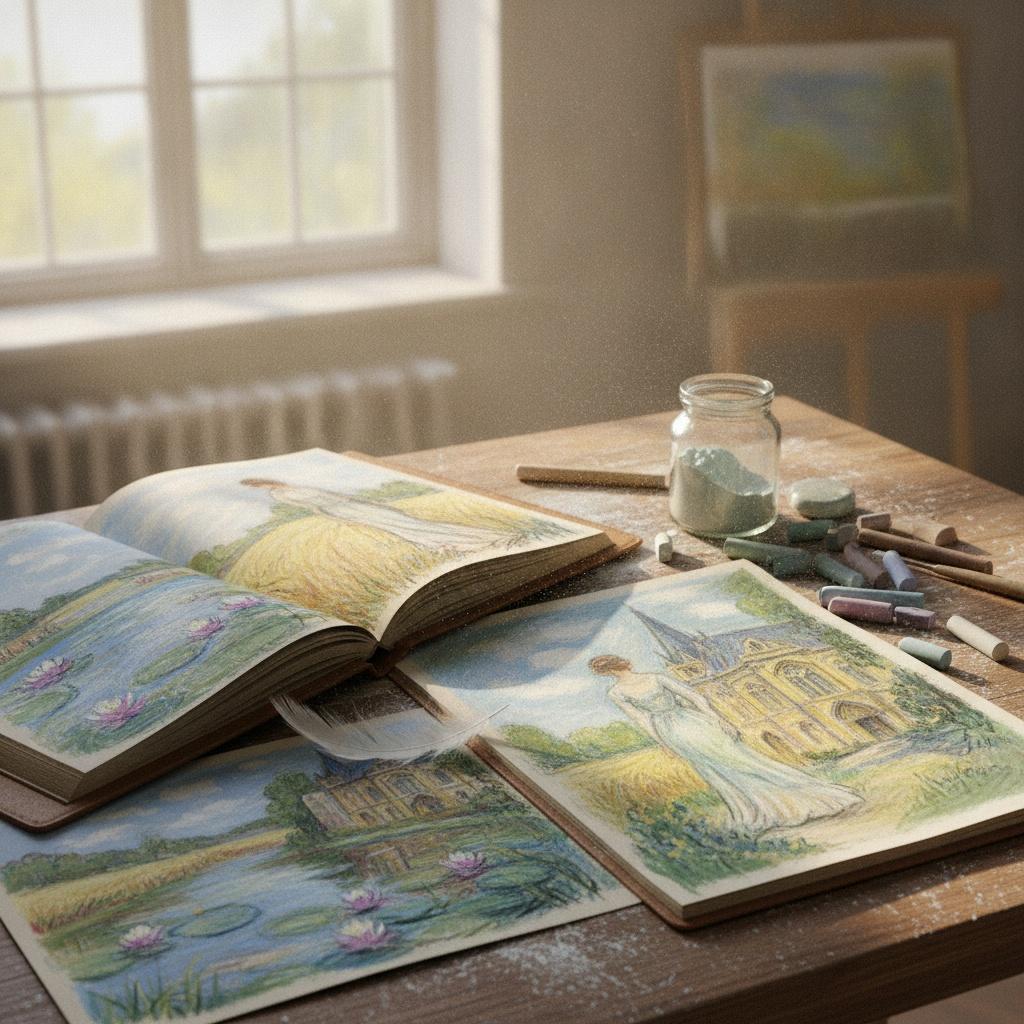
The Soft Magic of Chalk: Capturing Light, Texture, and the Ethereal Soul of Impressionist Masterpieces
Discover the ethereal beauty of pastel and chalk art. Explore how Impressionist masters like Van Gogh and Degas captured light and texture to create timeless, soulful masterpieces for the discerning collector.

Divine Light & Golden Splendor: A Journey Through the Sacred Grandeur of High Medieval Art
Embark on a soulful journey through High Medieval art. Explore the divine light of Gothic cathedrals, Byzantine splendor, and sacred masterpieces that shaped Western history with our expert-led cultural reflections.
Tutustu teoksiin, jotka on järjestetty aiheiden, tyylien ja ominaisuuksien mukaan.


