

Shown: · With its frame:
 Esikatselu
 Jaa teos
 Jaa
Jaa
 Tiedot
 Opas
Opas

 Lataa kuva
 Samanlaisia kohteita
 Röntgenkuvaus
 Diaesitys
 Q&A
Q&A Tilastot


€ 239
Käsinmaalattu öljyvärinen jäljennös
Käsinmaalattu öljyväri kankaalle haluamassasi koossa ja kehyksissä, taiteilijoidemme valmistamana tilauksesta. ( Vaihda tulosteeseen Siirry digitaaliseen kuvaan)
Size
·Vakiokoko
räätälöity
CM
INCH
Valitse valmiista mitoistamme sellaiset, jotka vastaavat teoksen alkuperäisiä mittasuhteita.
Loading sizes...

leveys
korkeus
Kirjoita tarvitsemasi leveys ja korkeus, jotta teos sopii kehyksiisi tai seinällesi. Koska kyseessä on käsinmaalattu teos, taiteilija voi maalata hieman enemmän kuvan ympärille tai rajata sitä hieman, jos haluat eri muotoisen koon — valinta on sinun. Lähetämme sinulle digitaalisen mallikuvan hyväksyttäväksi ennen kuin maalaus alkaa. Tällä sivulla näkyvä kuva ei vastaa lopullista tulosta — vain mallikuva näyttää sen.
 Lue lisää
Finish
·
White €1

Blurside €1

Extended €1

P118B €10

P118H €10

P118W €10

P438Z €10

P508JH €12

P508YH €12

P805H €10

P805Z €10

P919BZ €10

P919G €10

P919XJ €10

P959ZH €10

P968JZ €12

W106C €8

W218G €10

W218JH €8

W218Y €10

W307PJ €10

W316G €10

W316PJ €8

W316Y €10

W398PJ €8

W4111J €10

W500HY €15

W500JH €15

W692G €12

W849H €8

W940BG €15

W953PJ €8

H24-GOLD €30

H24-SILVER €30

H36-GOLD €45

H36-SILVER €45
Shipped in a protective tube, ready for your own framer.
Above 105 cm the frame is shipped as a kit for a professional framer — read the details.
Extras
optionalWhat do the extras include?
Examples of what can be changed: Replace face with customer photo; Add pet (e.g., replace cat with dog); Include hidden message in background; Change background landscape or elements.
After order, TopImpressionists.com team will email client for instructions and provide a mockup preview
After order, TopImpressionists.com team will email client for instructions and provide a mockup preview
Maailmanlaajuinen toimitus () 3–4 viikossa tavallisen 5 viikon sijaan. (30 lokakuu). Laadusta ei tingitä.
Suojalakkaus
Nimilaatta
Kaiverretun pronssilaatan tiedot
This elegant plaque features the artist's name and the title of the artwork, finely engraved for a timeless presentation.
It is made from bronze with a refined, elegant finish. The text is precisely laser-engraved for a sharp and permanent result. Measuring 9x2 cm, the plaque is compact yet easy to read. It's built to be durable and scratch-resistant, offering a professional, museum-quality look. Mounting is simple thanks to the included adhesive backing.
Läpinäkyvän akryylilaatan tiedot
The plaque includes essential engraved details such as the artist's name, the title of the artwork, the date it was created, the type of media used-like oil on canvas or watercolor-a brief description of the piece, and a QR code that links to the complete artwork information.
It is crafted from clear acrylic, offering a sleek, modern appearance. The text is UV-engraved in black to ensure strong visual contrast. With a size of 10x15 cm, it ensures optimal readability. It comes equipped with two metal hooks for secure wall mounting. The plaque is designed to be weather-resistant, making it suitable for various environments, and it includes interactive features that work seamlessly with smartphone scanning.
Mustan akryylilaatan tiedot
This elegant plaque includes engraved information such as the artist's name, the title of the artwork, the date it was created, the type of media used (like oil on canvas or watercolor), a short description of the artwork, and a QR code for quick access to more information.
The plaque itself is made from refined black acrylic with a premium finish. The text is laser-engraved in white for high contrast and readability. Its size is 10x15 cm, designed to be easy to read. It comes with two metal hooks for professional mounting. The design is sleek and fits any interior style. It is also weather-resistant and durable, with built-in digital integration for mobile compatibility.
Lasivaihtoehto on saatavilla vain alle 110 cm kokoisille teoksille
 Lasivaihtoehto on saatavilla vain alle 110 cm kokoisille teoksille
- Ilmainen pikatoimitus ympäri maailman
- Korkealaatuinen pellavakangas
- Kattava kuljetusvakuutus
- Tulliveron palautustakuu
- Takuu täydellisestä värien vastaavuudesta
- 100 päivän palautusoikeus (vain valmistusvirheet)
- 100% rahat takaisin -takuu
- Määräalennus tarjolla


Keräilykohteen kuvaus
Paul Sérusier's 'The Grammar' (1892) is an iconic Cloisonnism painting, pioneering abstract art & inspiring the Nabis movement. Explore its symbolism and artistic innovation.
Taiteilijan elämäkerta
Paul Sérusier (1864-1927) oli ranskalainen taiteilija, joka loi abstraktia taidetta ja inspiroi Nabis-liikettä. Tunnettu cloisonnismista ja innovatiivisesta tyylistään, kuten "The Talisman" -maalauksesta.
About the painting
The Grammar: A Pioneering Exploration of Abstraction
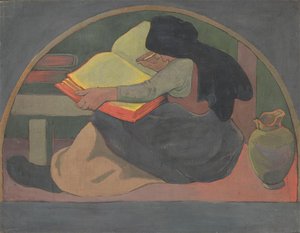
Paul Sérusier’s “Grammar,” painted in 1892, stands as a pivotal work not just within the artist's oeuvre but also as a foundational piece in the development of modern art. More than simply a portrait, it’s an intensely personal and experimental exploration of color, form, and the very nature of representation – a bold step towards abstraction that profoundly influenced generations of artists to come. The painting depicts a woman seated on the ground, absorbed in reading a book, a scene rendered with remarkable intimacy and a deliberate departure from traditional academic styles.
Sérusier’s artistic journey was deeply intertwined with the burgeoning Nabis movement, a group of Symbolist painters who sought to move beyond mere imitation of nature towards expressing inner emotions and spiritual truths. He initially studied at the Académie Julian, but it was his summer sojourn in Pont-Aven, Brittany, that proved transformative. There, under the tutelage of Paul Gauguin – a figure whose influence extended far beyond technique – Sérusier encountered the revolutionary approach of Cloisonnism, championed by Gauguin himself. This style, characterized by sharply defined outlines and areas of flat color applied in small, separate strokes, aimed to mimic the appearance of stained glass, creating a sense of luminous clarity and symbolic resonance.
Cloisonnism and the Language of Color
“Grammar” exemplifies this Cloisonnism technique with striking precision. The woman’s figure is not rendered through subtle gradations of tone but rather defined by bold, distinct outlines – a deliberate simplification that prioritizes color and form over meticulous detail. Sérusier employs a vibrant palette, dominated by deep blues, greens, and ochres, creating an atmosphere both serene and slightly melancholic. The colors aren’t blended; instead, they are applied in small, separate strokes, building up layers of hue and texture. This technique, combined with the flattened perspective, creates a sense of immediacy and directness, as if the painting is capturing a fleeting moment of contemplation.
Crucially, Sérusier’s use of color isn't merely descriptive; it carries symbolic weight. The blues evoke a sense of introspection and mystery, while the greens suggest connection to nature – a key theme in Symbolist art. The muted ochres contribute to the painting’s overall feeling of quietude and contemplation. The deliberate choice of colors, rather than realistic representation, is central to the work's expressive power.
A Study in Form and Abstraction
Beyond its technical mastery, “Grammar” represents a significant shift towards abstraction. While not entirely devoid of recognizable forms – the woman’s figure, the book, the surrounding objects – the painting prioritizes the exploration of color and form over strict representation. The simplified shapes, flattened perspective, and emphasis on pure color anticipate later developments in abstract art, foreshadowing the work of artists like Kandinsky and Mondrian. It's a deliberate move away from photographic realism towards a more subjective and expressive approach to visual language.
The painting’s title, “Grammar,” is particularly intriguing. It suggests that Sérusier was not simply depicting a scene but rather exploring the fundamental building blocks of artistic expression – the elements of color, line, and form – in a way that transcends traditional representation. The book itself becomes a symbol of knowledge and contemplation, inviting the viewer to engage with the painting on a deeper level.
Legacy and Inspiration
“Grammar” remains a vital work in the history of modern art, demonstrating Sérusier’s pioneering spirit and his profound influence on subsequent generations. It's a testament to the power of abstraction to convey emotion, ideas, and spiritual truths. Reproductions of this evocative painting continue to inspire artists and collectors alike, offering a glimpse into the heart of artistic innovation and the enduring quest for new forms of visual expression.
Kysymykset ja vastaukset
Voinko käyttää lisättyä todellisuutta nähdäkseni teoksen Paul Sérusier:n "The Grammar" omassa huoneessani?
Voit esikatsella teosta Paul Sérusier:n "The Grammar" omalla seinälläsi käyttämällä lisättyä todellisuutta yhteensopivalla laitteella Tarkastele teosta AR-tilassa -sivun kautta.
Miten teoksen "The Grammar" tyyli suhteutuu sen tekijän aikakauteen?
Paul Sérusier:n "The Grammar" kuuluu Cloisonnism / Nabis-suuntaukseen ja sijoittuu tekijänsä luku aikakaudelle.
Onko Paul Sérusier:n "The Grammar" väreiltään kylläisiä vai hillittyjä?
Teoksen "The Grammar" värikylläisyys on Muted ja värin voimakkuus on Monochromatic.
Quick facts and art quiz
About Paul Sérusier

Paul Sérusier
1864 - 1927, Ranska
Taiteilijan elämäkerta
Early Life and Artistic Beginnings
Paul Sérusier, syntynyt Pariisissa vuonna 1864, oli ranskalainen maalaaja, jonka ura muutti taiteen maisemaa merkittävästi. Hänen varhaiset vuotensa olivat täynnä klassista koulutusta; hän opiskeli Lycée Condorcetissa, joka oli tunnettu akateemisesta perinteestään ja vahvasta filosofisen ajattelun painoarvoista. Tämä taustansa loi pohjan hänen myöhemmälle luovalle ilmaisulleen. Sérusierin isä, mies juurien Alankomaista, toimi hajusteiden valmistajan liiketoiminnassa, ja hän tarjosi pojallensa hyvän koulutuksen ja mahdollisuuden seurata intohimoaan taiteeseen. Sérusierin elämä muuttui merkittävästi, kun hän osallistui nuorena miehenä Académie Julianiin, joka oli tuohon aikaan Pariisin tunnetuin vaihtoehtoinen taideskoulu. Siellä hän kohtasi Maurice Dénisin, jonka vaikutus olisi myöhemmin ratkaiseva hänen kehitykselleen. Sérusierin ja Dénisin ystävyys synnytti uudenlaisen näkökulman taiteeseen, joka poikkesi perinteisistä malleista. Kesällä 1888 Sérusier matkusti Pont-Aveniin, pieneltä Bretagneen kuuluvalle kylälle, joka oli jo tuolloin tunnettu taiteilijoiden kokoontumispaikkana. Pont-Avenissa hän liittyi Paul Gauguin’n johdattamaan ryhmään, jossa hän sai oppia ja inspiraatiota. Gauguin kannusti Sérusieria irtautumaan perinteisistä maalaustekniikoista ja keskittymään värien ja tunteiden välittämiseen. Tämä oli merkittävä käänne Sérusierin uralla, joka avasi uusia mahdollisuuksia luovalle ilmaisulle.The Rise of Cloisonnism and the Nabis Movement
Pont-Avenissa Sérusier osallistui intensiivisiin keskusteluihin taiteen tulevaisuudesta ja sen suhteesta perinteiseen impressionismiin. Hän alkoi kehittää omaa, ainutlaatuista tyyliään, joka pohjautui uuteen lähestymistapaan värien käyttöön ja muotojen yksinkertaistamiseen. Sérusierin innovatiivisin saavutus oli cloisonnismia edustava maalauksensa *Bois d’Amour* (1888), joka on yksi taiteen historian varhaisimmista esimerkeistä abstraktista taiteesta. Cloisonnismissa muotoja ja värejä käsitellään kuin lasimaalauksessa, jossa ne ovat erillisiä ja selkeästi rajattuja. Sérusierin maalauksessa hän pyrki vangitsemaan luonnon kauneuden ja tunnelman käyttämällä yksinkertaisia, teräviä muotoja ja voimakkaita värejä. Tämä lähestymistapa oli radikaali poikkeama impressionismin tarkasta kuvaamisesta ja loi pohjan Sérusierin myöhemmälle abstraktille kehitykselle. Sérusierin työ liittyi läheisesti Nabis-ryhmään, joka syntyi Pont-Avenissa. Nabis oli ryhmä taiteilijoita, jotka pyrkivät yhdistämään koristeellisuuden ja hienon taiteen. Ryhmän nimi viittaa heprealaiseen sanaan "nabis", joka tarkoittaa "profettaa" tai "ennustajaa". Nabis-taiteilijat halusivat luoda taidetta, joka olisi sekä kauniita että syvällisiä, ja he käyttivät usein symboliikkaa ja mystiikkaa.Key Works and Artistic Influences
Sérusierin tuotannossa on useita merkittäviä teoksia, jotka heijastavat hänen kehitystään ja vaikutteitaan. *L’aversé* (1893), jonka hän esitti Musée d'Orsayssa Pariisissa, on yksi hänen varhaisimmista ja tunnetuimmista maalauksistaan. Teoksen värit ovat voimakkaita ja kontrastisia, ja se vangitsee sateen ja sumun tunnelman. *Portrait of Paul Ranson* (1890), joka sijaitsee myös Musée d'Orsayssa, on esimerkki Sérusierin kyvystä vangita ihmisen persoonallisuus ja tunteet. *Melancholy* (1890) puolestaan ilmaisee syviä tunteita ja pohjattomia ajatuksia. Sérusierin taiteen keskeisiä vaikutteita olivat Paul Gauguin, jonka painotus tunteiden välittämiseen ja yksinkertaisten muotojen käyttöön sekä Maurice Denis, joka kannusti Sérusieria irtautumaan perinteisistä maalaustekniikoista. Myös symbolismi ja teosofia vaikuttivat hänen ajatteluunsa ja taiteeseensa.Legacy and Lasting Impact
Paul Sérusier kuoli morlaixissa vuonna 1927, mutta hänen vaikutuksensa taiteen historiaan on edelleen merkittävä. Hän oli yksi ensimmäisistä taiteilijoista, joka kokeili abstraktia taidetta ja inspiroi myöhempiä taiteilijoita, kuten Paul Kleea. Sérusierin työ oli keskeinen osa Nabis-ryhmän kehitystä ja vaikutti merkittävästi taiteen suuntaan 1900-luvun alussa. Hänen innovatiiviset lähestymistapansa värien käyttöön, muotojen yksinkertaistamiseen ja symboliikan hyödyntämiseen ovat edelleen relevantteja nykytaiteessa. Paul Sérusierin perintö elää hänen maalauksissaan, jotka tarjoavat ainutlaatuisen näkökulman luontoon, tunteisiin ja ihmisen kokemukseen.Quick facts about Paul Sérusier
- Artistic Movement Or Style: Post-impressionismi
- Artists Or Movements Influenced By This Artist: ['Les Nabis']
- Artists Who Influenced This Artist:
- Paul Gauguin
- Maurice Denis
- Date Of Birth: 9. marraskuuta 1864
- Date Of Death: 7. lokakuuta 1927
- Full Name: Louis-Paul-Henri Sérusier
- Nationality: Ranskalainen
- Notable Artworks:
- L'averse (1893)
- Paul ransonin kuvaus (1890)
- Melankolia (1890)
- Kikot (1894)
- Place Of Birth: Pariisi, Ranska
Samankaltaisia teoksia




Tutustu teoksiin, jotka on järjestetty aiheiden, tyylien ja ominaisuuksien mukaan.


Paul Sérusier
The Grammar
() ·
With its frame: · Hand-painted in oil on linen
Total