

Shown: · With its frame:
 Esikatselu
 Jaa teos
 Jaa
Jaa
 Tiedot
 Opas
Opas

 Lataa kuva
 Samanlaisia kohteita
 Röntgenkuvaus
 Diaesitys
 Q&A
Q&A Tilastot
 Acrylic On Canvas
- WallArt
- German Romanticism
 1809
1809- 19th Century
 225.0 x 189.0 cm
 Hamburger Kunsthalle
€ 239
Käsinmaalattu öljyvärinen jäljennös
Käsinmaalattu öljyväri kankaalle haluamassasi koossa ja kehyksissä, taiteilijoidemme valmistamana tilauksesta. ( Vaihda tulosteeseen Siirry digitaaliseen kuvaan)
Size
·Vakiokoko
räätälöity
CM
INCH
Valitse valmiista mitoistamme sellaiset, jotka vastaavat teoksen alkuperäisiä mittasuhteita.
Loading sizes...

leveys
korkeus
Kirjoita tarvitsemasi leveys ja korkeus, jotta teos sopii kehyksiisi tai seinällesi. Koska kyseessä on käsinmaalattu teos, taiteilija voi maalata hieman enemmän kuvan ympärille tai rajata sitä hieman, jos haluat eri muotoisen koon — valinta on sinun. Lähetämme sinulle digitaalisen mallikuvan hyväksyttäväksi ennen kuin maalaus alkaa. Tällä sivulla näkyvä kuva ei vastaa lopullista tulosta — vain mallikuva näyttää sen.
 Lue lisää
Finish
·
White €1

Blurside €1

Extended €1

P118B €10

P118H €10

P118W €10

P438Z €10

P508JH €12

P508YH €12

P805H €10

P805Z €10

P919BZ €10

P919G €10

P919XJ €10

P959ZH €10

P968JZ €12

W106C €8

W218G €10

W218JH €8

W218Y €10

W307PJ €10

W316G €10

W316PJ €8

W316Y €10

W398PJ €8

W4111J €10

W500HY €15

W500JH €15

W692G €12

W849H €8

W940BG €15

W953PJ €8

H24-GOLD €30

H24-SILVER €30

H36-GOLD €45

H36-SILVER €45
Shipped in a protective tube, ready for your own framer.
Above 105 cm the frame is shipped as a kit for a professional framer — read the details.
Extras
optionalWhat do the extras include?
Examples of what can be changed: Replace face with customer photo; Add pet (e.g., replace cat with dog); Include hidden message in background; Change background landscape or elements.
After order, TopImpressionists.com team will email client for instructions and provide a mockup preview
After order, TopImpressionists.com team will email client for instructions and provide a mockup preview
Maailmanlaajuinen toimitus () 3–4 viikossa tavallisen 5 viikon sijaan. (31 lokakuu). Laadusta ei tingitä.
Suojalakkaus
Nimilaatta
Kaiverretun pronssilaatan tiedot
This elegant plaque features the artist's name and the title of the artwork, finely engraved for a timeless presentation.
It is made from bronze with a refined, elegant finish. The text is precisely laser-engraved for a sharp and permanent result. Measuring 9x2 cm, the plaque is compact yet easy to read. It's built to be durable and scratch-resistant, offering a professional, museum-quality look. Mounting is simple thanks to the included adhesive backing.
Läpinäkyvän akryylilaatan tiedot
The plaque includes essential engraved details such as the artist's name, the title of the artwork, the date it was created, the type of media used-like oil on canvas or watercolor-a brief description of the piece, and a QR code that links to the complete artwork information.
It is crafted from clear acrylic, offering a sleek, modern appearance. The text is UV-engraved in black to ensure strong visual contrast. With a size of 10x15 cm, it ensures optimal readability. It comes equipped with two metal hooks for secure wall mounting. The plaque is designed to be weather-resistant, making it suitable for various environments, and it includes interactive features that work seamlessly with smartphone scanning.
Mustan akryylilaatan tiedot
This elegant plaque includes engraved information such as the artist's name, the title of the artwork, the date it was created, the type of media used (like oil on canvas or watercolor), a short description of the artwork, and a QR code for quick access to more information.
The plaque itself is made from refined black acrylic with a premium finish. The text is laser-engraved in white for high contrast and readability. Its size is 10x15 cm, designed to be easy to read. It comes with two metal hooks for professional mounting. The design is sleek and fits any interior style. It is also weather-resistant and durable, with built-in digital integration for mobile compatibility.
Lasivaihtoehto on saatavilla vain alle 110 cm kokoisille teoksille
 Lasivaihtoehto on saatavilla vain alle 110 cm kokoisille teoksille
- Ilmainen pikatoimitus ympäri maailman
- Korkealaatuinen pellavakangas
- Kattava kuljetusvakuutus
- Tulliveron palautustakuu
- Takuu täydellisestä värien vastaavuudesta
- 100 päivän palautusoikeus (vain valmistusvirheet)
- 100% rahat takaisin -takuu
- Määräalennus tarjolla


Keräilykohteen kuvaus
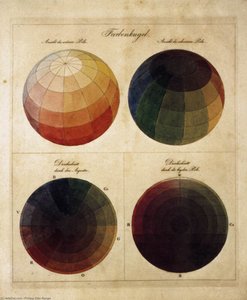
Experience 'Colour Spheres' by Philipp Otto Runge – a mesmerizing 1809 engraving depicting vibrant color spheres arranged in a harmonious circular design. A captivating piece of Romantic art.
Taiteilijan elämäkerta
Philipp Otto Runge (1777-1810) oli saksalainen romanttinen taidemaalari, joka tunnetaan symbolisista maisemistaan, muotokuvistaan ja uraauurtavasta väriteoriastaan ('Väripallo'). Tutustu hänen mystiseen taiteeseensa ja pysyvään vaikutukseensa.
About the painting
A Symphony of Color: Philipp Otto Runge’s “Colour Spheres”
Philipp Otto Runge's "Colour Spheres," painted in 1809, isn’t merely a depiction of spheres; it’s an intensely personal and profoundly symbolic exploration of color theory, spirituality, and the very essence of perception. Created during a pivotal moment in German Romanticism – a period grappling with tradition versus innovation, reason versus emotion – Runge sought to move beyond the constraints of academic painting and forge a new visual language rooted in his own deeply felt inner world. The work, now housed within the Kunsthalle in Hamburg, Germany, is a testament to this ambition, radiating an almost palpable sense of contemplative energy.
The composition itself is deceptively simple: four distinct spheres dominate the canvas, each imbued with a unique chromatic harmony. These aren’t static objects; they appear to pulse with light and movement, their surfaces shimmering with subtle gradations of color. Runge masterfully employs a technique reminiscent of both pastel drawing and early Impressionism – delicate layering of translucent washes creates an ethereal quality, while careful attention to value and hue establishes a remarkable sense of depth and luminosity. The spheres aren’t rendered with photographic realism; instead, they are idealized forms, suggesting a connection to the divine or the abstract realms of consciousness. The choice of materials—engraving media—contributes to this luminous effect, allowing for a richness of tone rarely achieved with oil paint alone.
The Roots of Color Theory and Spiritual Symbolism
Runge’s fascination with color stemmed from his deep engagement with the philosophy of Jakob Böhme, a 17th-century German mystic who believed that colors possessed inherent spiritual significance. Böhme posited that each hue corresponded to a specific stage of human development or a particular aspect of the divine. Runge sought to translate these esoteric ideas into visual form, believing that color could be used to unlock deeper levels of understanding and experience. His work reflects this intellectual pursuit, moving beyond mere representation to become a vehicle for conveying complex philosophical concepts.
The arrangement of the spheres themselves is laden with symbolic meaning. The central sphere, predominantly red, often represents passion, energy, and earthly existence – the realm of the senses. The green sphere embodies growth, harmony, and connection to nature. Blue signifies intellect, contemplation, and the spiritual realm. Yellow, positioned furthest from the viewer, evokes joy, enlightenment, and divine grace. The circular arrangement suggests a cyclical process—a journey through different states of consciousness or stages of life. It’s important to note that Runge's color theory was radically different from prevailing scientific understanding at the time; he prioritized subjective experience over objective measurement.
A Dialogue with Goethe and the Romantic Spirit
Runge’s work resonated deeply with his contemporary, Johann Wolfgang von Goethe, who shared a profound interest in color theory. The two artists engaged in extensive correspondence, exchanging ideas about the nature of perception and the expressive potential of color. Indeed, Runge's exploration of color was heavily influenced by Goethe’s theories on optics and aesthetics. This intellectual exchange highlights the vibrant artistic and philosophical ferment of the early 19th century – a period marked by a renewed interest in spirituality, emotion, and the power of individual experience.
Furthermore, “Colour Spheres” embodies the core tenets of German Romanticism: an emphasis on intuition, imagination, and the sublime. It rejects the rationalism of the Enlightenment in favor of a more subjective and emotionally charged approach to art. The painting’s evocative atmosphere—its sense of mystery, wonder, and spiritual yearning—captures the essence of this artistic movement perfectly. It invites the viewer not simply to *see* the colors but to *feel* them, to connect with their own inner world.
Collecting a Timeless Masterpiece
Reproductions of “Colour Spheres” offer a remarkable opportunity to bring Runge’s visionary aesthetic into any interior space. The delicate layering and luminous quality of the original are faithfully reproduced in high-quality prints, allowing the painting's subtle nuances to shine through. Whether displayed as a statement piece or incorporated into a more restrained color scheme, this artwork will undoubtedly serve as a focal point, sparking conversation and inspiring contemplation. Consider commissioning a hand-painted reproduction – a truly unique and authentic representation of this seminal work of German Romantic art.
Kysymykset ja vastaukset
Mihin käyttöön "Colour Spheres"-teoksen painos on suositeltava?
Teoksen "Colour Spheres" painosteelle suositeltu käyttötapa on Statement.
Kuinka voimakas kontrasti teoksessa Philipp Otto Runge:n "Colour Spheres" on?
Teoksen "Colour Spheres" valoisuus- ja varjokontrasti on Statement. Kontrasti kuvaa, kuinka voimakkaasti vaaleat ja tummat alueet eroavat toisistaan.
Voiko teoksen "Colour Spheres" nähdä lisätyn todellisuuden (AR) esikatseluna?
Teoksen Philipp Otto Runge:n "Colour Spheres" Tarkastele teosta AR-tilassa sivu käyttää lisättyä todellisuutta näyttääkseen teoksen omassa tilassasi yhteensopivalla laitteella.
Quick facts and art quiz
About Philipp Otto Runge

Philipp Otto Runge
1777 - 1810, Saksa
Taiteilijan elämäkerta
Elämän valossa: Philipp Otto Rungen taiteellinen matka
Philipp Otto Runge, nimi joka resonoi nousevan saksalaisen romanttismin hengessä, oli taiteilija jonka traagisesti lyhyt elämä ei kätkenyt alleen hänen näkemyksensä syvyyttä ja omaperäisyyttä. Vuonna 1777 Wolgastissa, tuolloin Ruotsin Pommerissa syntynyt Runge kasvoi perheessä, joka oli juurtunut laivanrakennukseen ja yhteydessä Preussin aatelistoon. Varhaiset vuodet leimattiin sairauksilla, mikä edisti mietiskelevää luonnetta, joka syvästi muokkaisi hänen taiteellisia pyrkimyksiään. Tämä fyysisen haurauden aika ruokki myös varhaista lahjakkuutta *saksinleikkauksen siluetteissa*, joita hän jatkoi koko elämänsä ajan – todiste hänen synnynnäisestä kyvystään tiivistää muoto ja tunne huomattavalla tarkkuudella. Virallinen koulutus alkoi myöhemmin kuin useimmilla, ensin kaupallisella oppisopimuksella Hampurissa veljensä Danielin yrityksessä. Taiteellisen ilmaisun vetovoima osoittautui kuitenkin liian vahvaksi, mikä johti hänet Kööpenhaminaan vuonna 1799 opiskelemaan maalausta Jens Juelin johdolla. Tämä merkitsi todellista alkua Rungen matkalle yhdeksi Saksan innovatiivisimmista ja hengellisestä näkemyksestään voimakkaasti inspiroituneista taiteilijoista.Romanttisen symbolismin aamunkoitto
Rungen taiteelliseen kehitykseen vaikutti syvästi muutto Dresdeniin vuonna 1801, jossa hän tapasi keskeisiä hahmoja kuten Caspar David Friedrich ja Ludwig Tieck. Juuri täällä hän myös tapasi Pauline Bassengen, jonka kanssa hän avioitui vuonna 1804. Tänä aikana hänen kiinnostuksensa Jakob Böhmen mystisiin kirjoituksiin kasvoi, ja filosofiset pohdinnat universumin piilotetuista harmonioista resonoi syvästi Rungen omien hengellisten taipumusten kanssa. Ratkaiseva hetki koitti vuonna 1803, kun hän odottamatta tapasi Johann Wolfgang von Goethen Weimarissa, mikä johti ystävyyteen, joka perustui yhteisiin kiinnostuksen kohteisiin väriteoriassa ja taiteellisessa ilmaisussa. Tämä kohtaaminen osoittautui mullistavaksi, kannustaen Rungea sukeltamaan syvemmälle taiteen symboliseen kieleen ja tutkimaan kaiken keskinäistä yhteyttä. Hänen varhaiset teoksensa alkoivat heijastaa tätä nousevaa romanttista herkkyyttä, siirtyen pois uusklassistisesta pidättyväisyydestä tunteellisesti latautuneisiin maisemiin ja muotokuviin, jotka oli täytetty henkilökohtaisella merkityksellä. Esimerkiksi *Hülsenbeckin lapset* (1805) ei ole pelkästään muotokuva vaan koskettava kuvaus perheen intiimiydestä ja lapsuuden viattomuudesta, joka on toteutettu lähes eteerisellä laadulla.Väri kosmisen kielenä
Rungen pysyvin perintö piilee uraauurtavassa työssään väriteorian parissa. Hän uskoi, että väri ei ollut pelkästään visuaalinen ilmiö vaan perustava voima, joka muokkaa havaintoamme todellisuudesta ja heijastaa jumalallista järjestystä. Tämä vakaumus johti hänen *Farben-Kugel* (Väripallo) -teoksensa kehittämiseen, joka julkaistiin vuonna 1810, pian hänen ennenaikaisen kuolemansa jälkeen tuberkuloosiin kolmekymmentätriivuotiaana. Väripallo ei ollut pelkästään tieteellinen tutkielma; se oli yritys kartoittaa koko värispektri kolmiulotteiseen muotoon, valkoisen ja mustan edustaen vastakkaisia napoja ja päävärien – sinisen, keltaisen ja punaisen – symboloiden kristillistä kolminaisuutta. Sininen edusti Jumalaa ja yötä, punainen aamua, iltaa ja Jeesusta, kun taas keltainen ruumiillisti Pyhän Hengen. Rungen huolelliset värilevysekoituskokeilut olivat yritys tarjota empiiristä tukea hänen teoreettiselle kehykselleen, osoittaen kuinka värit voidaan yhdistää harmonisesti luomaan laaja valikoima sävyjä. Tämä tutkimus ei ollut eristyksissä; se oli kietoutunut hänen taiteelliseen käytäntöönsä, mikä vaikutti värin symboliseen käyttöön maalauksissaan ja piirustuksissaan.‘Vuorokauden aikojen’ keskeneräinen sinfonia
Runge visioi *Gesamtkunstwerk* -teoksen – kokonaistaideteoksen – joka yhdistäisi maalausta, runoutta, musiikkia ja arkkitehtuuria yhtenäiseksi aistikokemukseksi. Tämä kunnianhimo löysi kunnianhimokkaisimman ilmaisunsa *Tageszeiten* (Vuorokauden ajat) -sarjassaan, joka aloitettiin vuonna 1803. Projekti koostui neljästä monumentaalisesta maalauksesta, jotka edustavat aamua, keskipäivää, iltaa ja yötä, joista jokainen oli suunniteltu tarkasteltavaksi erityisesti rakennetussa rakennuksessa musiikin ja runouden säestämänä. Vaikka vain kaksi versiota “Aamusta” saatiin päätökseen, koko syklin luonnokset paljastavat Rungen syvällisen symboliikan ymmärryksen ja hänen halunsa vangita ajan hengellinen olemus. Nämä teokset merkitsivät poikkeamaa perinteisestä maisemamaalauksesta, täyttäen luonnon uskonnollisella ja emotionaalisella merkityksellä. Hän ei pyrkinyt pelkästään kuvaamaan ulkomaailmaa vaan välittämään sen sisäistä harmoniaa ja jumalallista läsnäoloa. Konsepti oli vallankumouksellinen aikaansa nähden, ennakoiden myöhempiä kehityskulkuja abstraktissa taiteessa ja multimediainstallaatioissa.Pysyvä vaikutus
Vaikka hänen uransa katkesi sairauteen, Philipp Otto Rungen vaikutus saksalaiseen romanttismiin ja modernin taiteen kehitykseen on kiistaton. Hänen väriteoriaansa tutkinut työ vaikutti sukupolviin taiteilijoita, mukaan lukien Bauhaus-liikkeeseen liittyvät taiteilijat. Hänen painotuksensa symboliikassa ja emotionaalisessa ilmaisussa tasoitti tietä myöhemmille ekspressionistisille maalarille. Rungen ainutlaatuinen yhdistelmä tieteellistä tutkimusta, hengellistä vakaumusta ja taiteellista innovaatiota jatkaa kiehtomista ja inspiroimista. Hän pysyy keskeisenä hahmona taidehistoriassa – visionäärisenä taiteilijana, joka uskalsi tutkia ihmisen havainnon piilotettuja syvyyksiä ja universumin mysteerejä värin, muodon ja symboliikan kielellä. Hänen teoksensa eivät ole pelkästään maalauksia; ne ovat ikkunoita sisäisellä näkemällä valaistuun maailmaan, jotka kutsuvat meitä pohtimaan kaiken keskinäistä yhteyttä.Quick facts about Philipp Otto Runge
- Kansallisuus: Saksa
- Koko Nimi: Philipp Otto Runge
- Kuolinpäivä: 1810
- Merkittäviä Teoksia:
- Hülsenbeckin lapset
- Suuri aamu
- Värikehä
- Syntymäpaikka: Wolgast, Saksa
- Syntymäpäivä: 1777
- Taidesuuntaus: Romantiikka
- Taiteilijat Jotka Vaikuttivat:
- Jakob Böhme
- Goethe
- Tähän Taiteilijaan Vaikuttaneet: ['Caspar David Friedrich']
Tutustu teoksiin, jotka on järjestetty aiheiden, tyylien ja ominaisuuksien mukaan.

Philipp Otto Runge
Colour Spheres
() ·
With its frame: · Hand-painted in oil on linen
Total