Venus Bathing: A Symphony of Light and Grace
Pierre-Paul Prud’hon's “Venus Bathing” stands as a cornerstone of Neoclassical art, embodying the era’s pursuit of idealized beauty and rational order. Painted in 1810 during a period marked by significant artistic upheaval—the waning influence of Rococo giving way to Romantic fervor—this monumental oil on canvas (134 x 103 cm) resides within the hallowed halls of the Musée du Louvre, Paris, ensuring its enduring legacy.
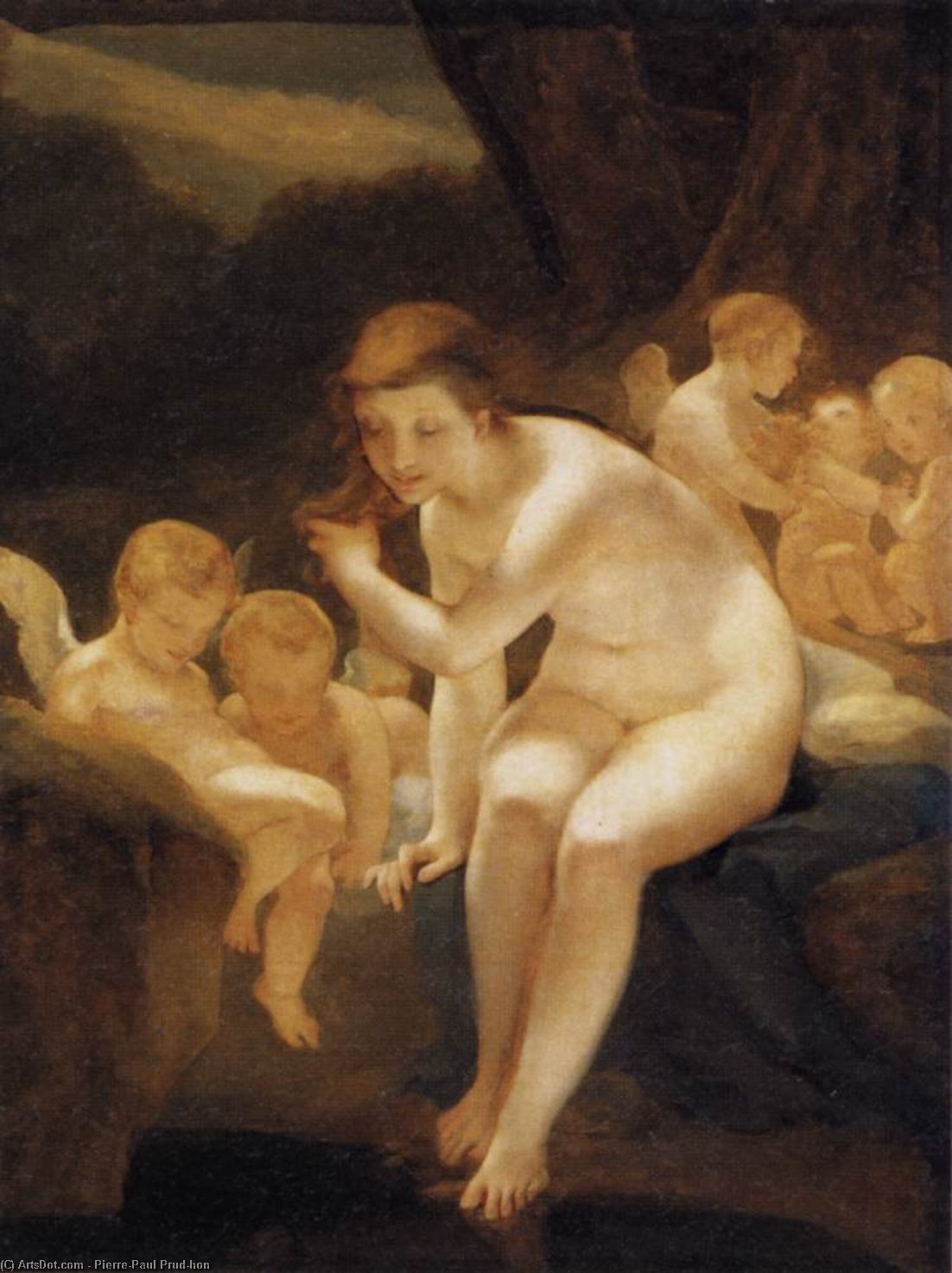
- Composition and Narrative: The painting’s central focus is Venus, Roman goddess of love and fertility, depicted in a serene posture as she indulges in bathing rituals. Prud’hon skillfully arranges figures—Venus herself, accompanied by three cherubs—against a dark landscape backdrop to maximize dramatic impact and highlight the luminous quality of the scene.
- Neoclassical Style: Prud’hon meticulously adhered to Neoclassical principles, prioritizing clarity, proportion, and restraint. The artist's masterful use of chiaroscuro – the interplay between light and shadow – sculpts Venus’ form with remarkable precision, conveying a palpable sense of volume and texture.
- Symbolism & Emotion: Beyond its aesthetic beauty, “Venus Bathing” resonates with profound symbolic meaning. Venus represents not merely sensual desire but also purity, innocence, and divine grace—themes central to Neoclassical thought. The cherubs’ playful gestures subtly infuse the composition with vitality and optimism.
- Technique & Detail: Prud’hon's meticulous brushwork demonstrates an unparalleled dedication to realism. Every contour of Venus’ skin is rendered with painstaking accuracy, capturing the softness and luminescence characteristic of classical sculpture. The artist’s attention to detail extends to the subtle nuances of color and texture within the landscape, creating a harmonious visual experience.
Historical Context: Bridging Eras
The painting emerged from a pivotal moment in European art history—the transition from Rococo extravagance to Romantic idealism. While Rococo celebrated opulent ornamentation and fleeting emotion, Neoclassicism championed reason, order, and moral virtue, drawing inspiration from the artistic achievements of ancient Greece and Rome. Prud’hon skillfully navigated this evolving aesthetic landscape, synthesizing elements of both styles into a singular masterpiece.
Light as Sculptural Element
Prud'hon’s masterful manipulation of light is arguably the painting’s most striking feature. He employs chiaroscuro to sculpt Venus’ body and imbue the scene with an ethereal glow, mirroring the techniques employed by sculptors like Antonio Canova. This deliberate use of illumination elevates “Venus Bathing” beyond mere depiction—it transforms it into a luminous embodiment of classical beauty.
Influence & Legacy
"Venus Bathing" continues to inspire artists and captivate audiences today, cementing Prud’hon's place as one of the foremost painters of his time. Its enduring appeal lies in its timeless portrayal of feminine grace and its masterful execution—a testament to the artist’s unwavering commitment to Neoclassical ideals.


 Esikatselu
 Osta käsintehty maalaus
 Jaa
Jaa Jaa
Jaa
 Tarkemmat tiedot

 Lataa
Lataa
 Samanlaisia
 Röntgenkuva
 Diaesitys


 Näytä lisää






































 Lasivaihtoehto on saatavilla vain alle 110 cm kokoisina teoksina



