


 Katso seinällä
 Lähetä
 Jaa
Jaa
 Tarkemmat tiedot
 Opas
Opas

 Lataa kuva
 Samanlaisia kohteita
 Röntgenkuvaus
 Diaesitys
 Tilastot
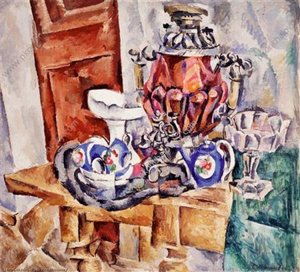
Still Life with a Coffeepot
 Oil On Canvas
- WallArt
- Fauvism
 1919
1919- Modern
 105.0 x 108.0 cm
Experience Konchalovsky's 'Still Life with a Coffeepot,' a vibrant 1919 Fauvist masterpiece! Bold colors & Cubist influences create a harmonious, balanced scene.
 Lue lisää
Pyotr Konchalovsky (1876-1956) oli venäläinen taiteilija, tunnettu innovatiivisesta tyylistään impressionismin, fauvismin ja sosialistisen realismin yhdistelmässä. Tutustu hänen maisemamaalaisiinsa, muotokuviaan ja ikonisiin teoksiinsa!
Giclée- ja taideprintit
Museolaatuisia giclée- tai kankaitaulun tulosteita nopealla tuotannolla ja joustavilla viimeistelyvaihtoehdoilla. ( Tilaa käsinmaalattu jäljennös Siirry digitaaliseen kuvaan)




P118B €10

P118H €10

P118W €10

P438Z €10

P508JH €12

P508YH €12

P805H €10

P805Z €10

P919BZ €10

P919G €10

P919XJ €10

P959ZH €10

P968JZ €12

W106C €8

W218G €10

W218JH €8

W218Y €10

W307PJ €10

W316G €10

W316PJ €8

W316Y €10

W398PJ €8

W4111J €10

W500HY €15

W500JH €15

W692G €12

W849H €8

W940BG €15

W953PJ €8




Vakiokoko
mittatilaustyö
CM
INCH
Valitse valmiista mitoistamme sellaiset, jotka vastaavat teoksen alkuperäisiä mittasuhteita.
Loading sizes...

leveys
korkeus
Kirjoita tarvitsemasi leveys ja korkeus, jotta tuloste sopii kehyskokoon tai seinällesi. Tulostetta voidaan vain leikata, sitä ei voi koskaan tehdä suuremmaksi kuin alkuperäinen kuva, joten eri muotoinen koko aiheuttaa osan kuvasta katoamisen. Lähetämme sinulle digitaalisen mallikuvan hyväksyttäväksi ennen kuin aloitamme tulostuksen. Tällä sivulla näkyvä kuva ei näytä lopullista leikkausta — vain mallikuva näyttää sen.
Maailmanlaajuinen toimitus () 2 viikossa tavallisen 4–5 viikon sijaan. (27 lokakuu)

Ilmainen pikatoimitus ympäri maailman

Korkealaatuinen pellavakangas

Kattava kuljetusvakuutus

Tulliveron palautustakuu

Takuu täydellisestä värien vastaavuudesta

100 päivän palautusoikeus valmistusvirhetapauksissa

100% rahat takaisin -takuu

Määräalennus saatavilla
 Lasivaihtoehto on saatavilla vain alle 110 cm kokoisille teoksille

Still Life with a Coffeepot
Giclée- ja taideprintit
Replikaatin koko
-


Kokonaishinta
€ 61
Still Life with a Coffeepot: A Fauvist Celebration of Everyday Objects
Pyotr Konchalovsky’s Still Life with a Coffeepot, painted in 1919, is a vibrant and captivating example of the Fauvist movement. Measuring 105 x 108 cm, this artwork transcends a simple depiction of domestic items; it's an exploration of color, form, and the expressive potential of paint itself.
Composition and Subject Matter
The painting presents a carefully arranged still life set upon a table draped with a warm yellow cloth. The scene is populated with familiar objects: a blue vase brimming with flowers, a small white bowl holding green fruits (likely limes), and the titular yellow teapot. These elements are not rendered with photographic realism but rather simplified and stylized to emphasize their inherent shapes and colors. The background, painted in varying shades of blue, provides a cool counterpoint to the warmer tones dominating the foreground, creating visual balance and depth. The arrangement isn't haphazard; it demonstrates Konchalovsky’s skill in orchestrating a harmonious composition that guides the viewer's eye across the canvas.
Fauvist Style and Influences
Konchalovsky was deeply influenced by French Impressionism and, most notably, Fauvism. The term "Fauve" (meaning “wild beast”) was applied to artists who utilized bold, non-naturalistic colors and expressive brushstrokes. Still Life with a Coffeepot exemplifies these characteristics. The colors are not used to accurately represent the objects but rather to evoke emotion and create visual impact. The visible brushwork adds texture and dynamism to the painting, further distancing it from traditional realism. One can also detect echoes of Paul Cézanne’s influence in Konchalovsky's approach to form and structure, particularly in the way he simplifies shapes and explores spatial relationships.
Historical Context and Artistic Significance
Created in 1919, shortly after the Russian Revolution, this painting reflects a period of significant social and artistic upheaval. Konchalovsky was a member of the Jack of Diamonds group, a collective of artists who actively challenged traditional representational art forms. This group sought to introduce modern European trends – particularly Fauvism and Cubism – into the Russian art scene. Still Life with a Coffeepot stands as a testament to this artistic rebellion, showcasing Konchalovsky’s contribution to the development of Fauvism within the context of Russian art. It represents a move away from academic conventions towards a more expressive and subjective approach to painting.
Emotional Impact and Lasting Appeal
Beyond its historical significance, Still Life with a Coffeepot possesses an undeniable emotional appeal. The vibrant colors and dynamic brushstrokes create a sense of energy and vitality. While the subject matter is commonplace – everyday objects found in a home – Konchalovsky elevates it to something extraordinary through his artistic vision. The painting evokes feelings of warmth, comfort, and perhaps even a touch of nostalgia. It’s a celebration of the beauty that can be found in the ordinary, rendered with an exuberance that continues to captivate viewers today.
Kysymykset ja vastaukset
Mitä tunnetta Pyotr Konchalovsky:n "Still Life with a Coffeepot" välittää?
"Still Life with a Coffeepot" välittää Reflective tunnelman. Emotionaalinen sävy kuvaa teoksen antamaa vaikutelmaa.
Mikä on teoksen Pyotr Konchalovsky:n "Still Life with a Coffeepot" valmistumisvuosi ja tyylisuunta?
Pyotr Konchalovsky:n "Still Life with a Coffeepot" on peräisin vuodelta 1919 ja edustaa tyylisuuntaa Fauvism.
Minkälaista tunnetta Fauvism-tyylinen "Still Life with a Coffeepot" välittää?
"Still Life with a Coffeepot" teoksen Reflective tunne kulkee käsi kädessä sen Fauvism tyylin kanssa.
Samankaltaisia teoksia




Taiteilijan elämäkerta
Pyotr Konchalovsky: A Visual Chronicle of a Transforming Russia
Pyotr Petrovich Konchalovsky, syntynyt 21. helmikuuta 1876 Slaviankassa lähellä Jekaterinburgia (nyk. Novokuznetsk), oli paljon enemmän kuin pelkkä maalaaja – hän oli visuaalinen historioija Venäjän muutoksessa. Hänen taiteellinen matkansa heijasti maan omaa myllerrystä vallankumouksen ja ideologisten muutosten läpi, merkittynä jatkuvalla etsinnällä uusista ilmaisumuodoista. Konchalovskin lapsuus upotti hänet tunnelmaan, joka oli rikas älylliseltä ja luovalta näkökulmalta. Hänen isänsä, Petr Petrovich Konchalovsky, oli kunnioitettu kääntäjä ja taidekustantaja, jonka Moskovan talo muuttui eläväksi keskuksiksi – Valentin Serov, Mikhail Vrubel, Vasily Surikov asuivat siellä perheen muuton jälkeen pääkaupunkiin vuonna 1889. Tämä varhainen altistuminen ei ollut pelkästään tarkkailua; se sisällytti nuoreen Pyttöriin syvän arvostuksen taiteelle ja loi pohjan hänen tulevalle polulle. Viikonloput mestariteosten ihailussa Trešjakovin galleriassa muovasivat hänen esteettisiä aistejaan Venäjän suurten mestarien voiman kautta.Parisilaiset vaikutteet ja avantgardin innovaatiot
Konchalovskin virallinen koulutus alkoi Moskovan maalaus-, veistossahakoulussa, mutta sen jälkeen seurasi merkittävä jakso Pariisissa vuosina 1896–1898 Académie Julianissa. Tämä kokemus Ranskan taideympäristössä oli mullistava. Hän kohtasi Paul Cézanen ja Vincent van Goghin uraauurtavan työn, taiteilijat, jotka haastoivat perinteisen esityksen ja tutkivat uusia tapoja nähdä muotoa ja väriä. Seuraava matka Arlesiin antoi hänelle syvemmän ymmärryksen Van Goghin taiteellisesta visiosta – pyhiinvaelluksen sydämeen ilmaisuvoiman keskelle. Palattuaan Venäjälle hän jatkoi opiskelua Imperial Academy of Artsissa Pietarissa, valmistuen vuonna 1907. Kuitenkin palattuanaan Konchalovsky todella alkoi muovailla omaa ainutlaatuista tyyliään. Hänestä tuli keskeinen hahmoTyylin kehitys ja ideologiset muutokset
Konchalovskin taiteellinen tyyli kehittyi uransa aikana, heijastaen sekä henkilökohtaista tutkimusta että Venäjän muuttuvaa poliittista ilmapiiriä. Alkuvaiheessa vaikutteita saivat Fauvismi ja Cézanne, hänen varhaiset teoksensa olivat tunnettuja rohkeista väreistään, yksinkertaistetusta muodostaan ja rakenteen korostamisesta. Teokset kuten "Kahvinkeittoastian still life" esittävät tätä ajanjaksoa, jossa hän onnistui luomaan eloisan värimaailman ja dynaamisen komposition. Poliittisen vallankumouksen myötä Konchalovskin tyyli alkoi muuttua. Sosialistisen realismin nousu Neuvostoliitossa vaati taidetta, joka palvelee ideologisia tarkoituksia – juhlii sosialistisia arvoja ja esittää merkittäviä henkilöitä. Vaikka tämä edustaisi poikkeamaa hänen varhaisemmista avantgardistiilistänsä, Konchalovsky sopeutui, tunnettiin nyt seremoniaisten muotokuvien mestarina. Koko uransa aikana – yli 5 000 teosta – hän jatkoi tutkimuksia still life -teoksissa, maisemissa ja muotokuviin osoittaen uskomatonta monipuolisuuttaan ja omistautumistaan taiteelleen. Hän ei ollut vain mukautunut; hän löysi tapoja ilmaista taiteellista sensaatioitaan uusien aikakauden rajoitusten puitteissa.”Jack of Diamonds” -ryhmän synty
Konchalovskin nousu merkittäväksi taiteilijaksi tapahtui 1910-luvulla, kun hänestä tuli keskeinen jäsen ryhmässä ”Jack of Diamonds” (Knave of Diamonds), joka perustettiin vuonna 1910. Tämä ryhmä, johon kuuluivat myös Aristarkh Lentulov ja Ilya Mashkov, hylkäsi akateemiset perinteet ja kannatti kokeilua, etsien inspiraatiota ei vain länsimaisesta modernismista vaan myös Venäjän omasta kansantaiteesta – ikoneista, kyltteistä ja värikkäistä suosikkikuvista, joita kutsuttiin *lubokiksi*. Konchalovsky toimi ryhmän ensimmäisenä puheenjohtajana ja edisti sen radikaaleja ideoita. Hän oli myös yksi ryhmän perustajista, joka yhdessä Lentulovin ja Mashkovin kanssa pyrki luomaan uudenlaista taidetta, joka haastaisi perinteisiä käsityksiä.Sotavuodet ja jälkimaine
Ensimmäisen maailmansodan aikana Konchalovsky kutsuttiin armeijaan upseerina-tykistöupseerina. Hän osallistui sotaan ja matkusti eri puolilla Venäjää, mikä vaikutti hänen taiteeseensa. Sodan jälkeen hän keskittyi pääasiassa still life -teoksiin ja muotokuviin, säilyttäen samalla oman tyylinsä. Konchalovskin viimeiset vuodet olivat vaikeita Neuvostoliiton ideologisen paineen alla. Hänen taiteensa oli pakko mukautua sosialistisen realismin vaatimuksiin, mikä johti siihen, että hän jätti monia innovatiivisia pyrkimyksiään taakseen. Vaikka hänen työnsä muuttui, Konchalovsky säilytti oman äänen ja ilmaisi sitä rajoitusten puitteissa.Perintö ja merkitys
Pyotr Konchalovskin panos venäläiseen taiteeseen on kiistaton. Hän yhdisti varhaisen modernismin ja sosialistisen realismin, navigoiden monimutkaisia poliittisia nyansseja säilyttäen samalla merkittävän taiteellisen voiman. Hänen ensimmäinen yksinäinen näyttely Trešjakovin galleriassa vuonna 1922 vahvisti hänen asemaansa yhdeksi Venäjän johtavista taiteilijoista. Taiteensa ulkopuolella Konchalovsky edistää perhettä, joka oli syvästi sitoutunut taiteeseen; hänen poikansa, Mikhail Petrovich Konchalovsky, tuli tunnetuksi elokuvaohjaajana ja hänen tyttärensä, Natalia Konchalovskaya, menestyksekkäänä taiteilijana. Hänen maalauksensa eivät ole pelkästään esteettisesti miellyttäviä esineitä vaan historiallisia dokumentteja, jotka heijastavat aikaa, jolloin ne on luotu. Ne tarjoavat arvokkaita näkemyksiä venäläisen taiteen kehityksestä ja taiteilijoiden haasteista toimittaessa muuttuvassa yhteiskunnassa. Konchalovskin kyky sopeutua säilyttäen oman tyylinsä vakiinnutti hänen paikkansa Venäjän taiteen historiassa, jättäen jälkeensä perinnön, joka inspiroi ja kiehtoo yleisöjä edelleen. Hänen työnsä on todiste taiteellisen ilmaisun kestävyydestä poliittisten levottomuuksien keskellä, ja hänen vaikutuksensa näkyy edelleen nykypäivän venäläisessä taiteessa.
Pyotr Konchalovsky
1876 - 1956 , Venäläinen federaatio
Tietoa taiteilijasta
- Artistic Movement Or Style: Postimpressionismi, Sosrealismi
- Artists Or Movements Influenced By This Artist: ['Jakovin koulukunta']
- Artists Who Influenced This Artist:
- Paul Cézanne
- Van Gogh
- Date Of Birth: 21.2.1876
- Date Of Death: 2.2.1956
- Full Name: Pyotr Petrovich Konchalovsky
- Nationality: Venäläinen
- Notable Artworks:
- Kahvinkeitto
- Timantit
- Place Of Birth: Jarkkola, Venäjä
Aiheeseen liittyvät artikkelit

Victor Vasnetsov: Myth, Nationalism & the Revival of Russian Fairy Tale Painting
Explore the captivating world of Victor Vasnetsov, a co-founder of Russian folklorist painting. Discover his iconic works, influence on national identity, and lasting legacy in this expert guide.

Georges Braquen 25 mestariteosta: Taidetta kotiin TopImpressionistsilta
Tutustu Georges Braquen 25 mestariteokseen ja kubismin lumoihin! Taidehistoriaa, värejä ja inspiraatiota kotiisi. Laadukkaat taulut TopImpressionistsilta – löydä täydellinen seinätaulu nyt!

Silent Narratives: Exploring the Enduring Appeal of Still Life Painting Across Centuries
Explore the rich history of still life painting with TopImpressionists. Discover Dutch Masters, decode vanitas symbolism & learn about collecting timeless art. Expert insights and museum-quality reproductions.

Ivan Bilibin: A Synthesis of Folklore, Modernism & National Identity in Russian Illustration
Explore the enchanting world of Ivan Bilibin, a master Russian illustrator who synthesized folklore, Art Nouveau & national identity. Discover his iconic fairy tale illustrations and legacy with TopImpressionists.

Deconstructing Reality: A Comprehensive Exploration of Cubist Still Life
Explore the revolutionary world of Cubist Still Life with TopImpressionists. Discover Picasso & Braque's groundbreaking techniques, its philosophical roots, and lasting impact on modern art. Expert insights for collectors.
Tutustu teoksiin, jotka on järjestetty aiheiden, tyylien ja ominaisuuksien mukaan.
