

Esitetty: · Kehyksineen:
 Esikatselu
 Jaa teos
 Jaa
Jaa
 Tiedot
 Opas
Opas

 Lataa kuva
 Samanlaisia kohteita
 Röntgenkuvaus
 Diaesitys
 Kysymykset ja vastaukset
 Tilastot
- 28.0 x 28.0 cm


€ 240
Käsinmaalattu öljyvärinen jäljennös
Käsinmaalattu öljyväri kankaalle haluamassasi koossa ja kehyksissä, taiteilijoidemme valmistamana tilauksesta. ( Vaihda tulosteeseen Siirry digitaaliseen kuvaan)
Koko
·Vakiokoko
räätälöity
CM
INCH
Valitse valmiista mitoistamme sellaiset, jotka vastaavat teoksen alkuperäisiä mittasuhteita.
Koot ladataan...

leveys
korkeus
Kirjoita tarvitsemasi leveys ja korkeus, jotta teos sopii kehyksiisi tai seinällesi. Koska kyseessä on käsinmaalattu teos, taiteilija voi maalata hieman enemmän kuvan ympärille tai rajata sitä hieman, jos haluat eri muotoisen koon — valinta on sinun. Lähetämme sinulle digitaalisen mallikuvan hyväksyttäväksi ennen kuin maalaus alkaa. Tällä sivulla näkyvä kuva ei vastaa lopullista tulosta — vain mallikuva näyttää sen.
 Lue lisää
Viimeistely
·
Valkoinen reuna €1

pehmennetty reuna €1

Jatkuva reuna €1

P118B €10

P118H €10

P118W €10

P438Z €10

P508JH €12

P508YH €12

P805H €10

P805Z €10

P919BZ €10

P919G €10

P919XJ €10

P959ZH €10

P968JZ €12

W106C €8

W218G €10

W218JH €8

W218Y €10

W307PJ €10

W316G €10

W316PJ €8

W316Y €10

W398PJ €8

W4111J €10

W500HY €15

W500JH €15

W692G €12

W849H €8

W940BG €15

W953PJ €8

H24-GOLD €30

H24-SILVER €30

H36-GOLD €45

H36-SILVER €45
Toimitetaan suojaputkessa, valmiina kehystettäväksi omassa kehyksessäsi.
Yli 105 cm kokoiset kehykset toimitetaan osasarjana ammattilaiskehystäjälle — lue lisätiedot.
Lisäpalvelut
valinnainenMitä lisämateriaalit sisältävät?
Esimerkkejä muutettavista asioista: Vaihda kasvot asiakkaan valokuvaan; Lisää lemmikki (esim. vaihda kissa koiraksi); Lisää piilotettu viesti taustalle; Vaihda taustan maisemaa tai elementtejä.
Tilauksen jälkeen TopImpressionists.com -tiimi lähettää asiakkaalle sähköpostia ohjeita varten ja toimittaa luonnoksen esikatselun
Tilauksen jälkeen TopImpressionists.com -tiimi lähettää asiakkaalle sähköpostia ohjeita varten ja toimittaa luonnoksen esikatselun
Maailmanlaajuinen toimitus () 3–4 viikossa tavallisen 5 viikon sijaan. (9 marraskuu). Laadusta ei tingitä.
Suojalakkaus
Nimilaatta
Kaiverretun pronssilaatan tiedot
This elegant plaque features the artist's name and the title of the artwork, finely engraved for a timeless presentation.
It is made from bronze with a refined, elegant finish. The text is precisely laser-engraved for a sharp and permanent result. Measuring 9x2 cm, the plaque is compact yet easy to read. It's built to be durable and scratch-resistant, offering a professional, museum-quality look. Mounting is simple thanks to the included adhesive backing.
Läpinäkyvän akryylilaatan tiedot
The plaque includes essential engraved details such as the artist's name, the title of the artwork, the date it was created, the type of media used-like oil on canvas or watercolor-a brief description of the piece, and a QR code that links to the complete artwork information.
It is crafted from clear acrylic, offering a sleek, modern appearance. The text is UV-engraved in black to ensure strong visual contrast. With a size of 10x15 cm, it ensures optimal readability. It comes equipped with two metal hooks for secure wall mounting. The plaque is designed to be weather-resistant, making it suitable for various environments, and it includes interactive features that work seamlessly with smartphone scanning.
Mustan akryylilaatan tiedot
This elegant plaque includes engraved information such as the artist's name, the title of the artwork, the date it was created, the type of media used (like oil on canvas or watercolor), a short description of the artwork, and a QR code for quick access to more information.
The plaque itself is made from refined black acrylic with a premium finish. The text is laser-engraved in white for high contrast and readability. Its size is 10x15 cm, designed to be easy to read. It comes with two metal hooks for professional mounting. The design is sleek and fits any interior style. It is also weather-resistant and durable, with built-in digital integration for mobile compatibility.
Lasivaihtoehto on saatavilla vain alle 110 cm kokoisille teoksille
 Lasivaihtoehto on saatavilla vain alle 110 cm kokoisille teoksille
- Ilmainen pikatoimitus ympäri maailman
- Korkealaatuinen pellavakangas
- Kattava kuljetusvakuutus
- Tulliveron palautustakuu
- Takuu täydellisestä värien vastaavuudesta
- 100 päivän palautusoikeus (vain valmistusvirheet)
- 100% rahat takaisin -takuu
- Määräalennus tarjolla


Keräilykohteen kuvaus
Explore Raphael's preparatory sketch for 'The Disputation,' showcasing his mastery of composition & the Neoplatonic ideal. A glimpse into Renaissance genius!
Taiteilijan elämäkerta
lta tulla Roomaan. Tämä merkitsi hänen tuotteliaisimman ja juhlistetun kautensa alkua. Ikuinen kaupunki tarjosi hänelle vertaansa vailla olevan mahdollisuuden esitellä kykyjään laajassa mittakaavassa koristamalla paavin asunnot Vatikaanissa henkeäsalpaavilla freskoilla. <b>Koulun athenalaisesta</b>
Tietoa maalauksesta
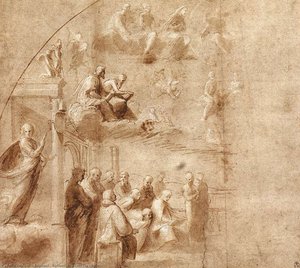
Study for the Disputa: A Glimpse into Raphael's Creative Process
The Study for the Disputa by Raphael (Raffaello Sanzio Da Urbino) offers a fascinating window into the mind of one of history's greatest artists. Created in 1509, this oil painting, measuring 28 x 28 cm, is not merely a preliminary sketch but a work of art in its own right, showcasing Raphael’s meticulous planning and artistic brilliance during the High Renaissance.
Subject Matter and Composition
This study depicts a group of figures engaged in what appears to be a lively discussion or meeting. The scene unfolds within an architectural setting, with individuals standing, sitting on chairs, and holding books or other objects. Notably, an angel is positioned in the top right corner, adding a layer of spiritual significance to the gathering. Raphael’s composition demonstrates his mastery of balance and harmony, even in this preparatory stage. The arrangement of figures suggests a carefully considered choreography, hinting at the grandeur and complexity of the final fresco, *The Disputation of the Holy Sacrament*, which adorned the Stanza della Segnatura in the Vatican.
Artistic Technique and Style
Raphael’s technique in this study is characterized by its clarity of form and ease of composition. He employs oil paint with a delicate touch, allowing for subtle gradations of tone and meticulous detail. This piece exemplifies Raphael's signature style – a synthesis of classical ideals and Renaissance humanism. The work reflects the Neoplatonic ideal of human grandeur, emphasizing harmony, proportion, and intellectual pursuit. Unlike some of his contemporaries who favored dramatic intensity, Raphael sought to create compositions that were both visually pleasing and intellectually stimulating. The study reveals how he experimented with poses and expressions before committing them to the larger fresco.
Historical Context and Influence
Created during the High Renaissance (roughly 1490-1527), a period of intense artistic innovation in Italy, this study reflects the era's emphasis on classical learning and human potential. Raphael worked alongside other titans like Leonardo da Vinci and Michelangelo, absorbing influences from both while forging his own distinct style. Giorgio Vasari, a prominent art historian, documented Raphael’s career in three phases, noting his evolution as an artist. This particular study falls within his early Roman period, where he was influenced by the artistic traditions of Florence but began to develop his unique approach. *The Disputa* itself is considered one of Raphael's most significant achievements, representing a theological debate between theologians and saints regarding the Eucharist.
Symbolism and Emotional Impact
While a study, this piece resonates with profound symbolism. The angel represents divine intervention and guidance in intellectual pursuits. The figures themselves embody different aspects of human knowledge – theology, philosophy, and reason. The overall atmosphere evokes a sense of reverence, contemplation, and the pursuit of truth. Even in its unfinished state, *Study for the Disputa* conveys Raphael’s ability to imbue his works with both intellectual depth and emotional resonance. It serves as a testament to his genius and provides valuable insight into the creative process of a master artist.
Kysymykset ja vastaukset
Minkä tyyppinen teos Rafael:n "Study for the Disputa" on?
"Study for the Disputa" on WallArt-teos.
Miten Rafael:n "Study for the Disputa" yhdistää High Renaissance-suuntauksen taiteilijan kotimaahan?
"Study for the Disputa" yhdistää High Renaissance-suuntauksen Italia-maahan teoksen luojan syntymämaan kautta.
Kenelle Rafael:n "Study for the Disputa" suositellaan lahjaksi?
Lahjaksi Rafael:n "Study for the Disputa" on suositeltava Anniversary. Se sopii hyvin myös muihin tilaisuuksiin.
Pikaopas ja taidevisailu
Tietoa artistista Rafael

Rafael
1483 - 1520, Italia
Taiteilijan elämäkerta
Renessanssin valon tuoja: Rafaelin elämä ja taiteellinen nousu
Raffaello Sanzio da Urbino, paremmin tunnettu nimellä Rafael, syntyi vuonna 1483 pienen mutta henkisesti vilkkaan Urbinon kaupunkivaltion muureissa Keski-Italiassa. Hänen varhaisvuotensa olivat syvästi juurtuneet ilmapiiriin, jossa arvostettiin sekä taidokkuutta että humanistista oppimista. Hänen isänsä, Giovanni Santi, ei ollut pelkästään herttua Federico da Montefeltron palveluksessa oleva maalari – hän oli syvällisesti renessanssiajan ajatusten virtojen kanssa tekemisissä oleva mies, runoilija joka kuvasi herttuan elämää ja etsi aktiivisesti innovatiivisia taiteellisia ideoita koko Italiasta ja sen ulkopuolelta. Tämä uppoutuminen hovielämään, jossa arvostettiin hienostuneisuutta ja älyllistä keskustelua, muokkasi syvästi nuoren Rafaelin herkkyyttä. Isän menettäminen yksitoista vuotiaana toi vastuuta, mutta myös mahdollisuuden kehittää taitojaan perheen työpajassa oppien tekniikoita ja perinteitä paikallisten taiteilijoiden ohjauksessa. Jo näissä varhaisissa töissä alkoi ilmetä lempeä sulavuus ja tarkka yksityiskohtien huomiointi – hänen kypsän tyylinsä tunnusmerkit.
Umbriasta Firenzeen: Uusia vaikutteita omaksumassa
Rafaelin taiteellinen matka oli jatkuvan kehityksen prosessi, jota leimasi intensiivisten opintojen ja assimilaation aika. Hänen varhainen koulutuksensa Pietro Peruginon alaisuudessa Perugiassa loi vankan pohjan umbrilaiselle tyylille – sille oli ominaista pehmeä muotoilu, harmoniset sommittelut ja rauhalliset uskonnolliset kohtaukset. Rafaelilla oli kuitenkin hillitön uteliaisuus, joka ajoi hänet etsimään uusia haasteita ja laajentamaan taiteellisia horisonttejaan. Vuonna 1504 hän matkusti Firenzeen, kaupunkiin jossa pulsoi taiteellisen innovaation energiaa. Täällä hän kohtasi Leonardo da Vincin ja Michelangelon mestariteoksia, taiteilijoita jotka työnsivät maalaamisen rajoja ennennäkemättömällä tavalla. Hän tutki huolellisesti heidän tekniikoitaan – Leonardon sfumatoa, hänen hienovaraisia valon ja varjon sävyjä sekä Michelangelon voimakasta anatomista tarkkuutta ja dramaattisia sommitteluja. Tämä firenzeläinen jakso oli Rafaelille koetinkivi, joka pakotti hänet kohtaamaan uusia taiteellisia mahdollisuuksia ja synteesoimaan ne omaan ainutlaatuiseen visioonsa. Vaikutus näkyy hänen aikaisempien töidensä lisääntyneessä dynaamisuudessa ja psykologisessa syvyydessä, erityisesti madonnojen sarjassaan.
Roomalainen menestys: Tilaukset ja mestariteoksia
Vuonna 1508 Rafael sai kutsun, joka muuttaisi hänen uransa suunnan – paavin Julius II:n kutsun tulla Roomaan. Tämä merkitsi hänen tuotteliaisimman ja juhlistetun kautensa alkua. Ikuinen kaupunki tarjosi hänelle vertaansa vailla olevan mahdollisuuden esitellä kykyjään suuressa mittakaavassa koristamalla paavin huoneistoja Vatikaanissa henkeäsalpaavilla freskoilla. Koulun athenalainen koulu, ehkä hänen tunnetuin työnsä, on todiste hänen mestaruudestaan sommittelussa, perspektiivissä ja filosofisessa allegoriassa. Majesteettisessa tilassaan Rafael kokosi antiikin klassisten hahmojen – Platonin, Aristoteleen, Pythagoraan, Eukleideen – luoden eloisan tableau’n joka juhlisti ihmisen järkeä ja tiedon tavoittelua. Hän jatkoi työskentelyä myöhempien paavien, Leo X:n mukaan lukien, ryhtyen monumentaalisiin projekteihin kuten Stanze della Segnaturan koristeluun ja Stanza d'Eliodoroon. Hänen freskonsa näissä huoneissa eivät ole pelkästään koristeellisia; ne ovat syvällisiä lausuntoja paavillisen vallan, uskonnollisesta vakaumuksesta ja renessanssin ihanteista.
Armon ja loiston synteesi: Rafaelin taiteellinen tyyli
Rafaelin taiteellista tyyliä kuvataan usein harmoniseksi sekoitukseksi sulavuutta, selkeyttä ja idealisoitua kauneutta. Hänellä oli poikkeuksellinen kyky syntetisoida monimuotoisia vaikutteita – umbrilainen perinne, firenzeläiset innovaatiot, antiikin klassisuus – ainutlaatuisesti tasapainoiseen estetiikkaan. Hänen sommittelunsa on huolellisesti suunniteltuja ja niissä on järjestystaju ja suhteellisuussuhde joka heijastaa hänen syvällistä ymmärrystään renessanssin periaatteista. Hänen hahmonsa säteilevät rauhallista arvokkuutta ja tunteiden ilmaisua, ruumiillistaen humanistisen ihanteen ihmisen täydellisyydestä. Hän oli myös mestarivärittäjä käyttäen rikkaita, kirkkaita sävyjä luodakseen teoksia jotka ovat sekä visuaalisesti kiehtovia että älyllisesti stimuloivia. Toisin kuin Michelangelon usein dramaattinen ja myrskyisä tyyli, Rafaelin työ huokuu rauhallisuutta ja harmoniaa – laatua joka on ihastuttanut yleisöjä vuosisatojen ajan.
Perintö ja kestävä vaikutus
Rafaelin ennenaikainen kuolema vuonna 1520 kolmekymmentäseitsemän vuoden iässä katkaisi uran, joka oli täynnä potentiaalia. Hänen perintönsä kuitenkin kestää yhtenä läntisen taidehistorian merkittävimmistä hahmoista. Hänen työnsä tuli korkean renessanssin estetiikan kulmakiveksi ja toimi mallina sukupolville taiteilijoita. Vaikka Michelangelon vaikutus hallitsisi myöhemmin taiteellista keskustelua, Rafaelin painotus selkeyteen, harmoniaan ja idealisoituun kauneuteen koki uuden nousukauden uusklassisella aikakaudella, jonka kriitikot kuten Johann Joachim Winckelmann puolustivat. Tänään hänen maalauksensa jatkavat ihmetyksen ja ihailun herättämistä lumoamalla katsojia teknisellä loistollaan, tunteellisella syvyydellään ja kestävillä vetovoimillaan. Hänen vaikutuksensa näkyy lukemattomissa myöhemmissä taideteoksissa vahvistaen hänen paikkansa renessanssin todellisena mestarina – maalari joka vangitsi paitsi aiheensa fyysisen ulkonäön myös ihmisen armon ja arvokkuuden olemuksen.
Pikaaakkaukset taiteilijasta Rafael
- Artistic Movement Or Style: Korkea renessanssi
- Artists Or Movements Influenced By This Artist: ['Neoklassismi']
- Artists Who Influenced This Artist:
- Leonardo da Vinci
- Michelangelo
- Date Of Birth: 1483
- Date Of Death: 1520
- Full Name: Raffaello Sanzio
- Nationality: Italialainen
- Notable Artworks:
- Koulun Ateenassa
- Sistuksen Madonna
- Place Of Birth (City And Country): Urbino, Italia
Tutustu teoksiin, jotka on järjestetty aiheiden, tyylien ja ominaisuuksien mukaan.


Rafael
Study for the Disputa
() ·
Kehyksineen: · Käsinmaalattu öljyväreillä pellavalle
Yhteensä