Katso seinällä
 Lähetä
 Jaa
Jaa
 Tarkemmat tiedot
 Opas
Opas

 Lataa kuva
 Samanlaisia kohteita
 Röntgenkuvaus
 Diaesitys
 Tilastot
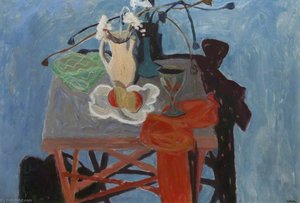
Florence
 Acrylic On Canvas
- WallArt
- Cubist Modernism
 1924
1924 66.0 x 91.0 cm
 Royal Scottish Academy of Art - Architecture
Sir William George Gillies’ "Florence" captures the vibrant Italian city with its iconic bridge and bustling scene. A stunning example of his artistic style, this painting showcases a beautiful representation of Florence's charm.
 Lue lisää
W.G. Gillies oli merkittävä skotlantilainen maisema- ja elämöiden maalari, jonka tyyli yhdistää modernismin ja perinteisen skotlantilaisen taiteen. Tunnettu 1922 Groupin jäsenenä ja Edinburghin taidekoulun johtajana.
Tällä sivulla esitettyä taideteosta suojaa tekijänoikeuslaki, mikä tarkoittaa, ettemme voi laillisesti luoda tai myydä täsmälleen samanlaista jäljennöstä. Tämä suoja toteutetaan kansainvälisten sopimusten, kuten esimerkiksi Berne-konventio ja kansallisilla laeilla, mukaan lukien niillä määritellyt Yhdysvaltain tekijänoikeuslaki – Luku 17. Kaikki oikeudet pidätetään. Luvaton kopiointi tai jäljittely on kielletty.
Tämä menetelmä noudattaa täysin tekijänoikeussäännöksiä, sillä se ei sisällä suojatun taideteoksen kopioimista tai jäljentämistä. Sen sijaan kyseessä on luova uudelleentulkinta – uusi maalaus, joka ammentaa vaikutteita alkuperäisestä, mutta ei ole sen identtinen kopio.
Giclée- ja taideprintit
Museolaatuisia giclée- tai kankaitaulun tulosteita nopealla tuotannolla ja joustavilla viimeistelyvaihtoehdoilla. ( Tilaa käsinmaalattu jäljennös Siirry digitaaliseen kuvaan)




P118B €10

P118H €10

P118W €10

P438Z €10

P508JH €12

P508YH €12

P805H €10

P805Z €10

P919BZ €10

P919G €10

P919XJ €10

P959ZH €10

P968JZ €12

W106C €8

W218G €10

W218JH €8

W218Y €10

W307PJ €10

W316G €10

W316PJ €8

W316Y €10

W398PJ €8

W4111J €10

W500HY €15

W500JH €15

W692G €12

W849H €8

W940BG €15

W953PJ €8




Vakiokoko
mittatilaustyö
CM
INCH
Valitse valmiista mitoistamme sellaiset, jotka vastaavat teoksen alkuperäisiä mittasuhteita.
Loading sizes...

leveys
korkeus
Kirjoita tarvitsemasi leveys ja korkeus, jotta tuloste sopii kehyskokoon tai seinällesi. Tulostetta voidaan vain leikata, sitä ei voi koskaan tehdä suuremmaksi kuin alkuperäinen kuva, joten eri muotoinen koko aiheuttaa osan kuvasta katoamisen. Lähetämme sinulle digitaalisen mallikuvan hyväksyttäväksi ennen kuin aloitamme tulostuksen. Tällä sivulla näkyvä kuva ei näytä lopullista leikkausta — vain mallikuva näyttää sen.
Maailmanlaajuinen toimitus () 2 viikossa tavallisen 4–5 viikon sijaan. (25 lokakuu)

Ilmainen pikatoimitus ympäri maailman

Korkealaatuinen pellavakangas

Kattava kuljetusvakuutus

Tulliveron palautustakuu

Takuu täydellisestä värien vastaavuudesta

100 päivän palautusoikeus valmistusvirhetapauksissa

100% rahat takaisin -takuu

Määräalennus saatavilla
 Lasivaihtoehto on saatavilla vain alle 110 cm kokoisille teoksille

Florence
Giclée- ja taideprintit
Replikaatin koko
-


Kokonaishinta
€ 61
The Heart of Tuscany Captured: An Exploration of Gillies’ “Florence”
William George Gillies' "Florence," painted in 1924, isn’t merely a depiction of an Italian city; it’s a vibrant distillation of its spirit – a testament to the enduring beauty and bustling life of one of Europe’s most historically significant urban centers. This captivating canvas transports us directly to the heart of Tuscany, offering a glimpse into a world brimming with energy, commerce, and artistic resonance. The painting immediately draws the eye towards the graceful bridge that dominates the composition, its arched form acting as a visual anchor amidst the dynamic scene below. This isn’t a photographic representation; rather, Gillies employs a masterful blend of observation and imagination to create an atmosphere thick with movement and light.
Gillies, a key figure in the 1922 Group – a collective dedicated to promoting modern art in Scotland – was deeply influenced by both the Impressionists and the burgeoning Cubist movement. His early travels to Paris and Italy exposed him to these revolutionary styles, which he skillfully integrated into his own distinctive approach. “Florence” showcases this evolution; while retaining elements of traditional landscape painting, it’s imbued with a sense of fractured perspective and flattened planes reminiscent of Cubism, particularly in the treatment of the buildings lining the riverbank. The careful layering of color and brushstrokes creates an illusion of depth, inviting the viewer to lose themselves within the bustling cityscape.
A Symphony of Color and Light
The painting’s palette is remarkably rich and evocative. Gillies masterfully utilizes a range of warm ochres, deep blues, and vibrant reds to capture the essence of Florentine light. The sun, though not explicitly depicted, casts a golden glow across the scene, illuminating the reflections shimmering on the river's surface. Notice how he employs broken color – small dabs and strokes of contrasting hues – to suggest texture and form, particularly in the details of the buildings and boats. This technique adds a dynamic quality to the composition, preventing it from feeling static or overly formal.
- Dominant Colors: Warm ochres, deep blues, vibrant reds, and touches of green.
- Light & Shadow: Gillies expertly utilizes light and shadow to create a sense of depth and atmosphere.
- Brushwork: Loose, expressive brushstrokes contribute to the painting’s dynamic feel.
Symbolism and Historical Context
Beyond its aesthetic qualities, “Florence” is steeped in historical significance. The city itself represents a pivotal moment in Western civilization – the birthplace of the Renaissance, a period marked by an unprecedented flourishing of art, science, and culture. The bridge, a recurring motif in Gillies’ work, symbolizes connection and transition, linking the past with the present. The numerous boats navigating the river evoke the importance of trade and commerce to Florence's prosperity during this era. Furthermore, the painting subtly references the city’s architectural grandeur – the imposing buildings lining the riverbank are reminiscent of the palaces and churches that define Florence’s iconic skyline.
Painted in 1924, “Florence” reflects a period of renewed interest in classical art and culture following World War I. Gillies' work embodies a spirit of optimism and renewal, capturing the vibrant energy of a city poised to embrace the future while honoring its rich heritage. The painting’s enduring appeal lies not only in its technical brilliance but also in its ability to transport us back in time and evoke the timeless beauty of Florence.
Bringing “Florence” Home: A Reproduction for Your Space
TopImpressionists offers meticulously crafted, hand-painted reproductions of William George Gillies’ "Florence," ensuring that you can experience the full impact of this remarkable artwork within your own home. Our skilled artisans use traditional techniques and high-quality materials to faithfully recreate Gillies' unique style and color palette. Whether you are an art collector, a design enthusiast, or simply someone seeking to add a touch of timeless elegance to your space, our reproduction of “Florence” is the perfect choice. It’s more than just a print; it’s a window into the heart of Tuscany, capturing the spirit and beauty of one of the world's most beloved cities.
Kysymykset ja vastaukset
Kuinka vanha William George Gillies oli tehdessään "Florence"?
Kun "Florence" luotiin vuonna 1924, William George Gillies (syntynyt 1898) oli 26 vuotias.
Mikä väri erottuu eniten teoksessa "Florence"?
Espresso (#513e27) on William George Gillies:n "Florence" -teoksen hallitseva väri.
Mistä voin löytää tilastoja teoksesta William George Gillies:n "Florence"?
Teokselle "Florence" on olemassa Tilastot -sivu. Se esittää teoksen ja taiteilijan muiden teosten kuukausittaiset vierailumäärät maakohtaisesti ja kielittäin eriteltynä.
Taiteilijan elämäkerta
Early Life and Artistic Beginnings
Sir William George Gillies, a name synonymous with the evocative beauty of Scottish landscapes and still lifes, was born in Haddington, East Lothian, in 1898. His early life unfolded amidst the rolling hills and historic charm of his native region – a landscape that would profoundly shape his artistic vision. Initially enrolled at the Edinburgh College of Art, Gillies’ academic pursuits were abruptly interrupted by the exigencies of World War I, where he served with distinction as an engineer in the Royal Engineers. This experience, marked by both hardship and camaraderie, undoubtedly instilled within him a resilience and perspective that would later inform his artistic approach. Following the war's conclusion, he returned to complete his education at the Edinburgh College of Art, ultimately securing a position as a dedicated teacher there for over four decades – a role that not only sustained his livelihood but also allowed him to nurture the talents of countless aspiring artists.A Journey Through Modernism: Influences and Early Style
Gillies’ artistic journey began with an exploration of Cubism after studying under André Lhote in Paris during 1923, and a subsequent visit to Italy in 1924. This exposure to European avant-garde movements ignited within him a desire to break from traditional representation, leading to early works that demonstrated a clear influence from Cézanne – particularly in their carefully arranged compositions and use of perspective – alongside the understated color palettes characteristic of artists like Braque and Picasso. However, a pivotal moment arrived in 1934 when he encountered the work of Paul Klee. Klee’s imaginative use of colour, his playful distortions of form, and his embrace of childlike qualities profoundly impacted Gillies' style, encouraging him to move beyond strict Cubist principles and infuse his paintings with a greater sense of spontaneity and emotional resonance. This shift marked a significant departure from the rigid structures of earlier works, paving the way for his distinctive, uniquely Scottish aesthetic.The 1922 Group: A Hub of Innovation
In 1922, Gillies played a crucial role in establishing the “1922 Group,” alongside fellow artists such as William Crozier, William Geissler, and William MacTaggart. This collective, operating out of the New Gallery in Edinburgh, served as a vital platform for emerging Scottish artists to showcase their work to a wider audience. The 1922 Group fostered a remarkable sense of community and collaboration within the Scottish art scene – a period of intense creative energy and experimentation. It provided a space where artists could challenge conventions, explore new ideas, and support one another’s endeavors, contributing significantly to the flourishing of modern art in Scotland during the interwar years.Themes and Artistic Focus: Landscapes and Still Lifes
Gillies' artistic focus primarily revolved around two distinct yet interconnected themes: landscapes and still lifes. He is particularly renowned for his evocative depictions of the Lothian, Fife, and Border regions of Scotland – capturing not just their physical beauty but also the spirit and character of these diverse environments. His paintings are imbued with a deep sense of place, reflecting his intimate knowledge of the region’s topography, light, and atmosphere. Simultaneously, Gillies developed a remarkable skill in creating still life compositions, often featuring ceramics crafted by his younger sister, Emma Smith Gillies – whose untimely death in 1936 profoundly affected him and became a recurring motif in his work. These poignant still lifes served as both personal memorials and explorations of themes such as loss, memory, and the passage of time.Recognition and Legacy
Throughout his distinguished career, Sir William George Gillies received numerous accolades recognizing his artistic merit and contributions to Scottish art. He was elected a Royal Academician (RA) in 1964, signifying the highest level of recognition within the British art world. In 1970, he was knighted for his services to the arts. His influence extended beyond his own paintings, shaping the direction of Scottish art through his teaching and mentorship at the Edinburgh College of Art, where he served as Principal from 1959 until his retirement in 1966. Gillies’ legacy endures not only through his captivating artworks – which are now held in prestigious collections across Scotland and internationally – but also through the countless artists he inspired to pursue their own creative visions. He died peacefully in 1973, leaving behind a body of work that continues to resonate with viewers today, embodying both the beauty of Scottish landscapes and the profound depths of human emotion.
William George Gillies
1898 - 1973 , Iso-Britannia
Tietoa taiteilijasta
- Artistic Movement Or Style: Skotlantilainen modernismi
- Artists Or Movements Influenced By This Artist: ['Skotlantilainen värimaalaus']
- Artists Who Influenced This Artist:
- André Lhote
- Cézanne
- Braque
- Picasso
- Paul Klee
- Date Of Birth: 1898
- Date Of Death: 1973
- Full Name: Sir William George Gillies
- Nationality: Skotlantilainen
- Notable Artworks:
- Young Boy with a Teapot
- Mediterranean Landscape
- Still Life – Yellow Jug
- Place Of Birth: Haddington, Iso-Britannia
Aiheeseen liittyvät artikkelit

Hudson River School - 10 mestariteosta, jotka määrittelivät amerikkalaisen maisemamaalauksen
Tutustu Hudson River School -liikkeen 10 mestariteokseen! Thomas Cole, Frederic Church ja Albert Bierstadt loivat upeita maisemamaalauksia. Löydä amerikkalaisen taiteen historiaa ja inspiroi sisustusta museolaatuisilla reproduktioilla TopImpressionists.comista.

Romanttisen maisemamaalauksen mestariteokset: Taidetta ja inspiraatiota kotiin
Uppoudu romanttisen maisemamaalauksen maailmaan! Tutustu Caspar David Friedrichin, Turnerin ja muiden mestareiden ikonisiin teoksiin. Löydä inspiraatiota kotiisi taiteen avulla TopImpressionists.comista – laadukkaat taideprintit ja sisustusideoita.

John Constablein 25 mestariteosta: Taidetta ja tunnelmaa kotiisi – TopImpressionists.com
Tutustu John Constable'n 25 mestariteokseen – romanttisia maisemamaalauksia, jotka vangitsevat englantilaisen luonnon tunnelman. Taidehistoriaa ja inspiraatiota kotiisi TopImpressionists.com:ssa. Löydä kaikki taideteokset verkossa!

Evocations of Place: A Historical Journey Through Landscape Art
Explore the rich history of landscape art with TopImpressionists. Discover renowned artists, movements like Impressionism & tonalism, and expert guidance for collecting timeless pieces. Find your perfect serene escape today!

Evocations of Place: A Historical Journey Through Landscape Art
Explore the rich history of landscape art with TopImpressionists. Discover renowned artists, movements like Impressionism & Romanticism, and expert guidance for collecting timeless pieces. Find your perfect serene escape today!
Tutustu teoksiin, jotka on järjestetty aiheiden, tyylien ja ominaisuuksien mukaan.