Katso seinällä
 Lähetä
 Jaa
Jaa
 Tarkemmat tiedot
 Opas
Opas

 Lataa kuva
 Samanlaisia kohteita
 Röntgenkuvaus
 Diaesitys
 Tilastot
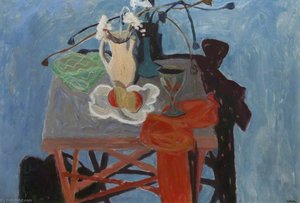
Path through Trees
 Acrylic
- WallArt
- Post-Impressionistic Landscape
 112.0 x 114.0 cm
 Royal Scottish Academy of Art - Architecture
Explore the serene landscapes and evocative still lifes of Sir William George Gillies RA RSA PRSW, a Scottish Colourist celebrated for capturing the beauty of Lothian and Fife with masterful Impressionistic brushstrokes.
 Lue lisää
W.G. Gillies oli merkittävä skotlantilainen maisema- ja elämöiden maalari, jonka tyyli yhdistää modernismin ja perinteisen skotlantilaisen taiteen. Tunnettu 1922 Groupin jäsenenä ja Edinburghin taidekoulun johtajana.
Tällä sivulla esitettyä taideteosta suojaa tekijänoikeuslaki, mikä tarkoittaa, ettemme voi laillisesti luoda tai myydä täsmälleen samanlaista jäljennöstä. Tämä suoja toteutetaan kansainvälisten sopimusten, kuten esimerkiksi Berne-konventio ja kansallisilla laeilla, mukaan lukien niillä määritellyt Yhdysvaltain tekijänoikeuslaki – Luku 17. Kaikki oikeudet pidätetään. Luvaton kopiointi tai jäljittely on kielletty.
Tämä menetelmä noudattaa täysin tekijänoikeussäännöksiä, sillä se ei sisällä suojatun taideteoksen kopioimista tai jäljentämistä. Sen sijaan kyseessä on luova uudelleentulkinta – uusi maalaus, joka ammentaa vaikutteita alkuperäisestä, mutta ei ole sen identtinen kopio.
Giclée- ja taideprintit
Museolaatuisia giclée- tai kankaitaulun tulosteita nopealla tuotannolla ja joustavilla viimeistelyvaihtoehdoilla. ( Tilaa käsinmaalattu jäljennös Siirry digitaaliseen kuvaan)




P118B €10

P118H €10

P118W €10

P438Z €10

P508JH €12

P508YH €12

P805H €10

P805Z €10

P919BZ €10

P919G €10

P919XJ €10

P959ZH €10

P968JZ €12

W106C €8

W218G €10

W218JH €8

W218Y €10

W307PJ €10

W316G €10

W316PJ €8

W316Y €10

W398PJ €8

W4111J €10

W500HY €15

W500JH €15

W692G €12

W849H €8

W940BG €15

W953PJ €8




Vakiokoko
mittatilaustyö
CM
INCH
Valitse valmiista mitoistamme sellaiset, jotka vastaavat teoksen alkuperäisiä mittasuhteita.
Loading sizes...

leveys
korkeus
Kirjoita tarvitsemasi leveys ja korkeus, jotta tuloste sopii kehyskokoon tai seinällesi. Tulostetta voidaan vain leikata, sitä ei voi koskaan tehdä suuremmaksi kuin alkuperäinen kuva, joten eri muotoinen koko aiheuttaa osan kuvasta katoamisen. Lähetämme sinulle digitaalisen mallikuvan hyväksyttäväksi ennen kuin aloitamme tulostuksen. Tällä sivulla näkyvä kuva ei näytä lopullista leikkausta — vain mallikuva näyttää sen.
Maailmanlaajuinen toimitus () 2 viikossa tavallisen 4–5 viikon sijaan. (25 lokakuu)

Ilmainen pikatoimitus ympäri maailman

Korkealaatuinen pellavakangas

Kattava kuljetusvakuutus

Tulliveron palautustakuu

Takuu täydellisestä värien vastaavuudesta

100 päivän palautusoikeus valmistusvirhetapauksissa

100% rahat takaisin -takuu

Määräalennus saatavilla
 Lasivaihtoehto on saatavilla vain alle 110 cm kokoisille teoksille

Path through Trees
Giclée- ja taideprintit
Replikaatin koko
-


Kokonaishinta
€ 61
A Journey Through Light and Texture: Exploring Gillies’ “Path through Trees”
The painting "Path through Trees" by Sir William George Gillies stands as a testament to the enduring allure of Impressionism blended with a distinctly Scottish sensibility. Executed sometime before 1973, this piece captures not merely a visual representation of woodland scenery but delves into a deeper exploration of mood and atmosphere—a hallmark of Gillies’ artistic vision. Measuring 112 x 114 cm, the canvas invites contemplation as much as it pleases the eye with its harmonious blend of color and texture.The Impressionistic Embrace: Style and Technique
Gillies' stylistic choices firmly situate “Path through Trees” within the broader context of early 20th-century art movements. While undeniably influenced by Cubism’s geometric fragmentation – evident in his formative studies under André Lhote – Gillies swiftly moved beyond rigid formalism, prioritizing instead the expressive qualities of color and light. Characteristic Impressionistic brushstrokes dominate the composition, layering pigment onto the canvas with loose, visible marks that convey a palpable sense of spontaneity. Unlike meticulously rendered landscapes of earlier eras, Gillies eschewed detailed botanical accuracy; rather, he sought to distill the essence of the forest into its dominant hues—warm yellows and browns punctuated by subtle blues in the sky and foliage. This technique prioritizes capturing fleeting moments of illumination and shadow, mirroring the artist’s fascination with observing nature directly.Scottish Roots: Historical Context and Inspiration
Gillies' artistic development was profoundly shaped by his upbringing in Haddington, Scotland, where he absorbed the rugged beauty of the Lothian countryside. The painting reflects this connection to place, conveying a feeling of quiet contemplation and reverence for the natural world—a sentiment echoed throughout Gillies’ oeuvre. His encounter with Paul Klee proved particularly influential, prompting him to embrace a more imaginative approach to color palettes and compositional arrangements. Klee's playful use of childlike spontaneity resonated deeply with Gillies, encouraging him to infuse his paintings with an element of wonder and emotional resonance.Symbolism Within the Frame: Layers of Meaning
Beyond its aesthetic appeal, “Path through Trees” possesses symbolic depth. The dominant tree trunk serves as a focal point, representing resilience and strength—qualities associated with Scottish folklore and tradition. The dappled sunlight filtering through the branches symbolizes hope and renewal, mirroring the cyclical rhythms of nature. Furthermore, the fallen leaves at the base of the trunks subtly evoke themes of mortality and transformation, reminding viewers that beauty exists alongside impermanence. Gillies’ masterful manipulation of color and texture contributes to this layered interpretation, inviting contemplation on broader philosophical concepts.Emotional Resonance: A Tranquil Vista
Ultimately, “Path through Trees” succeeds in transporting the viewer into a serene woodland setting. The painting's subdued palette and expressive brushstrokes evoke feelings of peace and tranquility—a deliberate aim reflecting Gillies’ desire to capture not just what he saw but how he felt when observing the natural world. It is precisely this emotive quality, combined with Gillies’ skillful technique and stylistic innovation, that ensures “Path through Trees” continues to captivate audiences today, serving as an enduring emblem of Impressionistic beauty and Scottish artistic heritage.Kysymykset ja vastaukset
Mistä voin ostaa käsin maalatun jäljennöksen teoksesta William George Gillies:n "Path through Trees"?
Voit tilata käsin maalatun jäljennöksen teoksesta William George Gillies:n "Path through Trees" suoraan sen Käsinmaalattu jäljennös -sivulta: käsinmaalattu öljyvärireproduktio pellavakankaalle, valmistetaan tilauksesta.
Miten teoksen "Path through Trees" värit sointuvat yhteen?
Teoksen "Path through Trees" väriharmonia on merkitty muodossa Balanced Harmony.
Mihin suuntaukseen ja mihin aikakauteen William George Gillies:n "Path through Trees" sijoittuu?
William George Gillies:n "Path through Trees" kuuluu Post-Impressionistic Landscape-suuntaukseen ja sijoittuu tekijänsä Modernismi aikakaudelle.
Samankaltaisia teoksia


Taiteilijan elämäkerta
Early Life and Artistic Beginnings
Sir William George Gillies, a name synonymous with the evocative beauty of Scottish landscapes and still lifes, was born in Haddington, East Lothian, in 1898. His early life unfolded amidst the rolling hills and historic charm of his native region – a landscape that would profoundly shape his artistic vision. Initially enrolled at the Edinburgh College of Art, Gillies’ academic pursuits were abruptly interrupted by the exigencies of World War I, where he served with distinction as an engineer in the Royal Engineers. This experience, marked by both hardship and camaraderie, undoubtedly instilled within him a resilience and perspective that would later inform his artistic approach. Following the war's conclusion, he returned to complete his education at the Edinburgh College of Art, ultimately securing a position as a dedicated teacher there for over four decades – a role that not only sustained his livelihood but also allowed him to nurture the talents of countless aspiring artists.A Journey Through Modernism: Influences and Early Style
Gillies’ artistic journey began with an exploration of Cubism after studying under André Lhote in Paris during 1923, and a subsequent visit to Italy in 1924. This exposure to European avant-garde movements ignited within him a desire to break from traditional representation, leading to early works that demonstrated a clear influence from Cézanne – particularly in their carefully arranged compositions and use of perspective – alongside the understated color palettes characteristic of artists like Braque and Picasso. However, a pivotal moment arrived in 1934 when he encountered the work of Paul Klee. Klee’s imaginative use of colour, his playful distortions of form, and his embrace of childlike qualities profoundly impacted Gillies' style, encouraging him to move beyond strict Cubist principles and infuse his paintings with a greater sense of spontaneity and emotional resonance. This shift marked a significant departure from the rigid structures of earlier works, paving the way for his distinctive, uniquely Scottish aesthetic.The 1922 Group: A Hub of Innovation
In 1922, Gillies played a crucial role in establishing the “1922 Group,” alongside fellow artists such as William Crozier, William Geissler, and William MacTaggart. This collective, operating out of the New Gallery in Edinburgh, served as a vital platform for emerging Scottish artists to showcase their work to a wider audience. The 1922 Group fostered a remarkable sense of community and collaboration within the Scottish art scene – a period of intense creative energy and experimentation. It provided a space where artists could challenge conventions, explore new ideas, and support one another’s endeavors, contributing significantly to the flourishing of modern art in Scotland during the interwar years.Themes and Artistic Focus: Landscapes and Still Lifes
Gillies' artistic focus primarily revolved around two distinct yet interconnected themes: landscapes and still lifes. He is particularly renowned for his evocative depictions of the Lothian, Fife, and Border regions of Scotland – capturing not just their physical beauty but also the spirit and character of these diverse environments. His paintings are imbued with a deep sense of place, reflecting his intimate knowledge of the region’s topography, light, and atmosphere. Simultaneously, Gillies developed a remarkable skill in creating still life compositions, often featuring ceramics crafted by his younger sister, Emma Smith Gillies – whose untimely death in 1936 profoundly affected him and became a recurring motif in his work. These poignant still lifes served as both personal memorials and explorations of themes such as loss, memory, and the passage of time.Recognition and Legacy
Throughout his distinguished career, Sir William George Gillies received numerous accolades recognizing his artistic merit and contributions to Scottish art. He was elected a Royal Academician (RA) in 1964, signifying the highest level of recognition within the British art world. In 1970, he was knighted for his services to the arts. His influence extended beyond his own paintings, shaping the direction of Scottish art through his teaching and mentorship at the Edinburgh College of Art, where he served as Principal from 1959 until his retirement in 1966. Gillies’ legacy endures not only through his captivating artworks – which are now held in prestigious collections across Scotland and internationally – but also through the countless artists he inspired to pursue their own creative visions. He died peacefully in 1973, leaving behind a body of work that continues to resonate with viewers today, embodying both the beauty of Scottish landscapes and the profound depths of human emotion.
William George Gillies
1898 - 1973 , Iso-Britannia
Tietoa taiteilijasta
- Artistic Movement Or Style: Skotlantilainen modernismi
- Artists Or Movements Influenced By This Artist: ['Skotlantilainen värimaalaus']
- Artists Who Influenced This Artist:
- André Lhote
- Cézanne
- Braque
- Picasso
- Paul Klee
- Date Of Birth: 1898
- Date Of Death: 1973
- Full Name: Sir William George Gillies
- Nationality: Skotlantilainen
- Notable Artworks:
- Young Boy with a Teapot
- Mediterranean Landscape
- Still Life – Yellow Jug
- Place Of Birth: Haddington, Iso-Britannia
Aiheeseen liittyvät artikkelit

Beyond the Light: Discovering the Soul and Emotional Depth of Post-Impressionism
Embark on a cultural journey through Post-Impressionism. Discover the profound emotional depth of masters like Van Gogh and Cézanne, exploring how they moved beyond light to capture the very soul of human experience through vibrant color and symbolic form.

Beyond the Light: Capturing Raw Emotion and Subjective Vision in Post-Impressionist Landscapes
Explore the profound emotional depth of Post-Impressionist landscapes. Discover how masters like Van Gogh moved beyond light to capture raw human feeling through vibrant color and expressive texture in this expert art history retrospective.
Tutustu teoksiin, jotka on järjestetty aiheiden, tyylien ja ominaisuuksien mukaan.