


 Katso seinällä
 Lähetä
 Jaa
Jaa
 Tarkemmat tiedot
 Opas
Opas

 Lataa kuva
 Samanlaisia kohteita
 Röntgenkuvaus
 Diaesitys
 Tilastot
Children Roller Skating


William Glackens' "Children Roller Skating" (1918) captures a lively street scene of kids enjoying their pastime, showcasing the artist’s signature realism and vibrant style.
 Lue lisää
Tutustu William Glackensin vaikuttavaan realistiseen tyyliin ja löydä hänen mestariteoksensa – erityisesti 'The Shoppers' sekä Haarlemin maisema! Tämä ashcan schoolin pioneeri kuvasi amerikkalaista kaupunkielämää tarkasti.
Giclée- ja taideprintit
Museolaatuisia giclée- tai kankaitaulun tulosteita nopealla tuotannolla ja joustavilla viimeistelyvaihtoehdoilla. ( Tilaa käsinmaalattu jäljennös Siirry digitaaliseen kuvaan)




P118B €10

P118H €10

P118W €10

P438Z €10

P508JH €12

P508YH €12

P805H €10

P805Z €10

P919BZ €10

P919G €10

P919XJ €10

P959ZH €10

P968JZ €12

W106C €8

W218G €10

W218JH €8

W218Y €10

W307PJ €10

W316G €10

W316PJ €8

W316Y €10

W398PJ €8

W4111J €10

W500HY €15

W500JH €15

W692G €12

W849H €8

W940BG €15

W953PJ €8




Vakiokoko
mittatilaustyö
CM
INCH
Valitse valmiista mitoistamme sellaiset, jotka vastaavat teoksen alkuperäisiä mittasuhteita.
Loading sizes...

leveys
korkeus
Kirjoita tarvitsemasi leveys ja korkeus, jotta tuloste sopii kehyskokoon tai seinällesi. Tulostetta voidaan vain leikata, sitä ei voi koskaan tehdä suuremmaksi kuin alkuperäinen kuva, joten eri muotoinen koko aiheuttaa osan kuvasta katoamisen. Lähetämme sinulle digitaalisen mallikuvan hyväksyttäväksi ennen kuin aloitamme tulostuksen. Tällä sivulla näkyvä kuva ei näytä lopullista leikkausta — vain mallikuva näyttää sen.
Maailmanlaajuinen toimitus () 2 viikossa tavallisen 4–5 viikon sijaan. (26 lokakuu)

Ilmainen pikatoimitus ympäri maailman

Korkealaatuinen pellavakangas

Kattava kuljetusvakuutus

Tulliveron palautustakuu

Takuu täydellisestä värien vastaavuudesta

100 päivän palautusoikeus valmistusvirhetapauksissa

100% rahat takaisin -takuu

Määräalennus saatavilla
 Lasivaihtoehto on saatavilla vain alle 110 cm kokoisille teoksille

Children Roller Skating
Giclée- ja taideprintit
Replikaatin koko
-


Kokonaishinta
€ 61
William James Glackens’ “Children Roller Skating” – A Snapshot of Urban Joy
“Children Roller Skating,” painted in 1918 by William James Glackens, isn't merely a depiction of children enjoying an afternoon pastime; it’s a vibrant distillation of early 20th-century American life—a fleeting moment of unadulterated joy captured amidst the grit and bustle of New York City. Glackens, a key figure in the Ashcan School movement, rejected the idealized portrayals favored by the National Academy of Design, instead choosing to focus on the realities of everyday existence, often portraying it with a distinctive, almost frenetic energy. This painting exemplifies his talent for imbuing ordinary scenes with an extraordinary sense of life and movement.
The scene unfolds on a busy city street, likely in Greenwich Village, a neighborhood known for its bohemian spirit during this period. A group of children, rendered in Glackens’ characteristic bold brushstrokes and rich, dark palette, are engaged in spirited roller skating. Their faces are alight with laughter and excitement, their limbs moving with an infectious energy that spills out onto the canvas. The composition is dynamic—a swirling mass of movement and color—reflecting the lively atmosphere of the street. Glackens masterfully uses loose brushwork to convey a sense of spontaneity and immediacy, as if he’s capturing the scene in real-time.
A Window into the Ashcan School
Glackens' work is deeply rooted in the principles of the Ashcan School, an artistic movement that emerged in New York City around 1908. Rejecting the polished surfaces and mythological subjects favored by academic art, the Ashcan artists sought to portray the realities of urban life—the crowded streets, the working-class neighborhoods, and the everyday struggles of ordinary people. Glackens’ “Children Roller Skating” perfectly embodies this ethos. It's a far cry from the carefully staged portraits that dominated the art world at the time; instead, it offers an unfiltered glimpse into the lives of New Yorkers.
The painting’s style is distinctly American—a blend of realism and impressionism. Glackens employs a vibrant color palette, using dark blues, greens, and browns to create a sense of depth and atmosphere. He also utilizes broken brushstrokes and contrasting colors to capture the movement and energy of the scene. The figures are not rendered with meticulous detail but rather suggested through loose brushwork and expressive gestures. This technique contributes to the painting’s overall dynamism and immediacy.
Symbolism and Context
Beyond its immediate depiction of children roller skating, the painting carries a subtle layer of symbolism. Roller skating was a popular pastime in early 20th-century America, particularly among young people. It represented freedom, recreation, and a break from the constraints of Victorian society. The scene captures a moment of carefree joy—a reminder that even amidst the challenges of urban life, there is always room for laughter and play.
Furthermore, the painting reflects the changing social landscape of New York City at the turn of the century. The city was undergoing rapid industrialization and urbanization, leading to overcrowding, poverty, and social unrest. However, despite these challenges, there was also a sense of optimism and progress—a belief in the potential for a brighter future. “Children Roller Skating” captures this duality—the juxtaposition of hardship and hope, chaos and joy.
A Timeless Image of American Life
“Children Roller Skating” is more than just a painting; it’s a snapshot of a bygone era—a vibrant testament to the spirit of New York City in 1918. Glackens' masterful use of color, brushwork, and composition creates an image that is both captivating and emotionally resonant. It invites us to step back in time and experience the joy and energy of a group of children roller skating on a busy city street. Reproductions of this work offer a beautiful way to bring a piece of American history into your home or office, reminding us of the simple pleasures of life and the enduring power of art.
Kysymykset ja vastaukset
Ovatko teoksen William James Glackens:n "Children Roller Skating" värit kirkkaita vai hillittyjä?
Teoksen William James Glackens:n "Children Roller Skating" värit ilmentävät Clear Color Presence kylläisyyttä ja Vivid voimakkuutta.
Mikä väri erottuu eniten teoksessa "Children Roller Skating"?
Walnut (#705535) on William James Glackens:n "Children Roller Skating" -teoksen hallitseva väri.
Minkä tunteen kanssa "Children Roller Skating" yhdistetään?
William James Glackens:n "Children Roller Skating" välittää Nostalgic tunnelman.
Samankaltaisia teoksia


Taiteilijan elämäkerta
William James Glackens
William James Glackens (1870–1938) oli amerikkalainen maalari, joka jäi historiaan ashcan-taiteilijana – liikkuvan kaupungin todellisuuden vangitsevana mestarina. Hän syntyi Philadelphian kaupunkiin vuonna 1870 ja kuoli Westportiin Connecticutissa vuonna 1938. Glackensin taideura oli täynnä intohimoa yksinkertaisten ihmisen elämän kuvastamiseen, mikä näkyy hänen työnsä syvyydessä ja tarkkuudessa.Nuoruus ja vaikutteet
Glackensin varhaiset vuodet Philadelphiassa olivat täynnä taiteellista lahjakkuutta. Hän opiskeli Pennsylvanian yliopiston Taideakatemiassa, jossa hän sai erityisen vahvan koulutuksen Thomas Anshutzilta – tunnetulta realistilta maalarielta –, joka oli Glackensin merkittävin henkilökohtainen ja taiteellinen mentori. Anshutzin opetukset korostivat yksityiskohtaista tarkkuutta sekä ihmisen kokemusten syvällistä kuvausta, mikä vaikutti suuresti Glackensin tyyliin ja maailmankuvaan. Hän oli yksi ashcan-taide liikkeen perustajista, joka syntyi New Yorkissa alkupuolella 1900-luvulla. Tämä liikkeellä oli rohkaiseva tehtävä – tuoda esiin kaupunkielämän todelliset kasvot ja vastakohtaiset yksityiskohdat, jotka yleensä jäivät huomioimatta taiteilijoiden silmään.Ashcan-taide ja Tyyli
Ashcan-taide oli vastaus siihen aikaan vallitsevaan estetikkaan ja pyrki kieltämään kauneuden konservatiiviset rajat. Sen sijaan ashcan-taiteilijat keskittyivät kuvaamaan kaupunkielämää arkipäiväisestä näkökulmasta – työpaikkoihin, kahvilaan ja katujen tapahtumiin. Glackensin maalaukset ovat tunnettuja tummanvärisistä sävyistään sekä yksityiskohtaisesta kuvaamisestaan. Hän käytti erityisen tarkkaan huomiota valoon ja varjoon sekä ihmisten liikkeeseen ja ilmaisun väliseen vuorovaikutukseen. Hänen työnsä ovat täynnä yksityiskohtia, jotka kertovat tarinan kaupungin elämästä ja ihmisistä sen keskellä. Hän oli erityisen vaikuttunut Pierre Auguste Renoir’n tyylistä, jonka valoisa tunnelma ja liikkeen dynamiikka inspiroivat häntä kehittämään omaa työskentelytapaansa.Merkittäviä Teoksia ja Kokoukset
Glackensin tuotanto on monipuolinen ja sisältää sekä henkilökuvia että maisema-alueita. Hänen tunnetuin teoksensa, "The Shoppers" (uusrealismi), löytyy Chrysler Museosta New Yorkissa ja tuo esiin kaupunkielämän yksityiskohtaisen kuvan – ihmisten liikkeen ja sosiaalisen dynamiikan tarkkaan kuvattuna. Lisäksi hän työskenteli myös näyttelijänä ja kirjoittajana Philadelphian ja New Yorkin kaupungeissa, mikä kertoo hänen monipuolisesta persoonastaan ja kulttuurillisesta tietoisuudestaan. Hän oli myös aktiivinen yhteiskunnallisesti ja kannatti sosiaalista oikeudenmukaisuutta sekä ihmisoikeuksia. Hänen työnsä ovat pysyvästi läsnä Amerikan taidehistoriassa ja hänestä tuli yksi ashcan-taide liikkeen keskeisistä henkilöistä. Hän oli erityisen tärkeä Albert C. Barnesin hankinnassa eurooppalaisia maalauksia Barnes Foundationille, mikä on merkittävä tapahtuma Amerikan taidehistoriassa.Yhteenveto ja Perintö
William James Glackens jäi historiaan ashcan-taiteilijana – henkilökohtaisen tarkkuuden mestarina sekä kaupunkielämän todellisuuden vangitsevana maalariena. Hänen työnsä ovat inspiroivat todiste siitä, että taide voi olla sosiaalinen kommentti ja ihmisen kokemusten syvä kuvaus. Hän jatkoi vaikutusta seuraavan sukupolven taiteilijoihin ja hänen tyylinsä pysyy relevanttina myös tänään. Hänen maalauksensa ovat osa Amerikan taidehistoriaa ja hänestä tuli yksi ashcan-taide liikkeen keskeisistä henkilöistä.
William James Glackens
1870 - 1938 , Yhdysvallat
Tietoa taiteilijasta
- Artistic Movement Or Style: Ashcan School
- Artists Or Movements Influenced By This Artist: ['Pierre Auguste Renoir']
- Artists Who Influenced This Artist: ['Thomas Anshutz']
- Date Of Birth: Philadelphia, Yhdysvallat (1870)
- Date Of Death: Westport, Connecticut (1938)
- Full Name: William James Glackens
- Nationality: Amerikkalainen
- Notable Artworks:
- Näköala Haarlemiin bleäkkausrannoilla
- Ostajat
- Place Of Birth: Philadelphia, Pennsylvania
Aiheeseen liittyvät artikkelit

Capturing the Light: A Journey Through the Soul of American Impressionism and the Hudson River School
Explore the luminous beauty of American Impressionism and the Hudson River School. Discover a curated journey through light, landscape, and history, celebrating the enduring legacy of masters through exquisite, hand-painted oil reproductions for the discerning art lover.
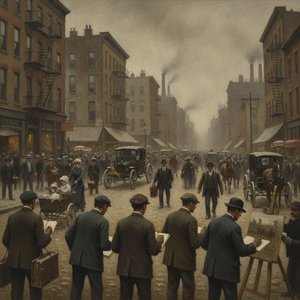
The Ashcan School: Capturing the Raw, Unfiltered Soul of Urban Life through American Realism
Discover the raw beauty of the Ashcan School. Explore how masters like Bellows and Henri captured the gritty, vibrant soul of early 20th-century New York through profound American Realism and evocative urban landscapes.

The Unvarnished Truth: A Cultural Journey Through the Soul of American Realism
Explore the profound beauty of American Realism. From the Ashcan School's urban grit to intimate portraits, discover how artists captured the authentic soul of a nation through unvarnished truth and masterful observation.
Tutustu teoksiin, jotka on järjestetty aiheiden, tyylien ja ominaisuuksien mukaan.

