


 Katso seinällä
 Lähetä
 Jaa
Jaa
 Tarkemmat tiedot
 Opas
Opas

 Lataa kuva
 Samanlaisia kohteita
 Röntgenkuvaus
 Diaesitys
 Tilastot
Summer Night
 Acrylic On Canvas
- WallArt
- American Realism
 1890
1890 102.0 x 76.0 cm
Winslow Homer’s work profoundly impacted subsequent generations of artists, establishing him as one of America’s foremost landscape painters. His meticulous attention to detail combined with expressive brushwork continues to inspire admiration and study.
 Lue lisää
Winslow Homerin upea "Auringonlasku tulessa" -maalaus vangitsee meren ja taivaan värikkään loistavuuden. Tutustu realistiseen tyyliin ja Homerin tunnetun teoksen kauneuteen!
Giclée- ja taideprintit
Museolaatuisia giclée- tai kankaitaulun tulosteita nopealla tuotannolla ja joustavilla viimeistelyvaihtoehdoilla. ( Tilaa käsinmaalattu jäljennös Siirry digitaaliseen kuvaan)




P118B €10

P118H €10

P118W €10

P438Z €10

P508JH €12

P508YH €12

P805H €10

P805Z €10

P919BZ €10

P919G €10

P919XJ €10

P959ZH €10

P968JZ €12

W106C €8

W218G €10

W218JH €8

W218Y €10

W307PJ €10

W316G €10

W316PJ €8

W316Y €10

W398PJ €8

W4111J €10

W500HY €15

W500JH €15

W692G €12

W849H €8

W940BG €15

W953PJ €8




Vakiokoko
mittatilaustyö
CM
INCH
Valitse valmiista mitoistamme sellaiset, jotka vastaavat teoksen alkuperäisiä mittasuhteita.
Loading sizes...

leveys
korkeus
Kirjoita tarvitsemasi leveys ja korkeus, jotta tuloste sopii kehyskokoon tai seinällesi. Tulostetta voidaan vain leikata, sitä ei voi koskaan tehdä suuremmaksi kuin alkuperäinen kuva, joten eri muotoinen koko aiheuttaa osan kuvasta katoamisen. Lähetämme sinulle digitaalisen mallikuvan hyväksyttäväksi ennen kuin aloitamme tulostuksen. Tällä sivulla näkyvä kuva ei näytä lopullista leikkausta — vain mallikuva näyttää sen.
Maailmanlaajuinen toimitus () 2 viikossa tavallisen 4–5 viikon sijaan. (25 lokakuu)

Ilmainen pikatoimitus ympäri maailman

Korkealaatuinen pellavakangas

Kattava kuljetusvakuutus

Tulliveron palautustakuu

Takuu täydellisestä värien vastaavuudesta

100 päivän palautusoikeus valmistusvirhetapauksissa

100% rahat takaisin -takuu

Määräalennus saatavilla
 Lasivaihtoehto on saatavilla vain alle 110 cm kokoisille teoksille

Summer Night
Giclée- ja taideprintit
Replikaatin koko
-


Kokonaishinta
€ 61
Winslow Homer’s “Summer Night”: A Symphony of Light and Sentiment
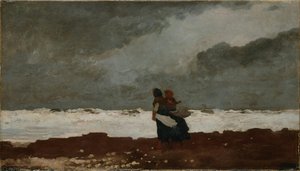
Winslow Homer (1836-1910) wasn't sculpted by the traditional European art academies that shaped so many of his contemporaries. Instead, he emerged from a distinctly American experience, one rooted in practicality and observation. His journey began not with grand historical canvases, but as a commercial illustrator at the tender age of twelve for Harper’s Weekly. This early apprenticeship was formative, honing an exceptional ability to capture scenes with clarity and detail – skills that would become hallmarks of his mature work. He wasn’t learning perspective in Paris; he was learning to *see* America, its people, and its unfolding story. The bustling streets of Boston, the quiet dignity of rural New England life, these were his first subjects, rendered with a precision born of necessity for the demands of print media. This foundation allowed him to transition into painting, initially in watercolor, before embracing oil paints as his primary medium.- Subject Matter: Homer’s “Summer Night” transports us to Maine's coastline during twilight hours. The scene depicts a woman and child strolling along the shoreline under the silvery glow of moonlight reflecting off the ocean surface. Scattered figures are subtly positioned in the background, creating an atmosphere of contemplative solitude amidst the grandeur of nature—a quintessential depiction of American life at the turn of the century.
- Style: Homer’s style embodies a masterful blend of Realism and Impressionism. While meticulously observing natural details – the texture of sand, the ripples in the water – he softens these observations with an atmospheric quality reminiscent of Impressionist painters like Monet and Renoir. This approach prioritizes capturing the feeling of a place rather than achieving photographic accuracy.
- Technique: Homer employed a technique characterized by layering thin washes of oil paint to achieve subtle gradations in tone and color. Loose brushstrokes were skillfully utilized to suggest form without rigidly defining it, allowing for an expressive rendering that conveys movement and luminosity. The artist’s meticulous attention to detail—particularly the depiction of moonlight—is palpable throughout the canvas.
Composition and Color Palette: Echoes of Impressionism
The artwork's horizontal lines dominate, mirroring the shoreline and horizon, establishing a sense of stability and grounding the viewer’s gaze. A diagonal element formed by the woman and child draws attention inward, creating visual balance while simultaneously conveying a feeling of movement. The muted color palette—primarily shades of grey, blue, and brown—reflects the subdued ambiance of twilight. Highlights of white and pale yellow illuminate the figures and capture the ethereal beauty of moonlight on the water, mirroring Impressionist painters’ fascination with capturing fleeting moments of light.
Symbolism and Emotional Resonance: A Portrait of Domestic Tranquility
"Summer Night" transcends mere visual representation; it speaks to profound themes of family, connection to nature, and the quiet contemplation inherent in rural life. The woman's protective embrace symbolizes maternal love and security—a cornerstone of Homer’s portrayal of American values. Simultaneously, the expansive ocean serves as a backdrop for introspection, hinting at the vastness of existence and inviting viewers to ponder questions of time and permanence. Ultimately, the painting evokes feelings of peace, serenity, and perhaps a touch of melancholy – emotions deeply rooted in Homer's own experiences and sensibilities.
Historical Context: The Dawn of American Impressionism
Painted in 1890, “Summer Night” represents a pivotal moment in Winslow Homer’s artistic trajectory. It marks his embrace of Impressionist techniques—specifically the layering of thin washes and loose brushstrokes—a stylistic departure from earlier Realist works that signaled a burgeoning interest in capturing subjective experience alongside objective observation. This artwork stands as one of the earliest examples of American Impressionism, demonstrating Homer's willingness to experiment with new artistic approaches while retaining his unwavering commitment to portraying the beauty and spirit of the American landscape.
Kysymykset ja vastaukset
Mitä Winslow Homer:n "Summer Night" esittää?
Teoksen "Summer Night" aiheina ovat maine coast, moonlight sea, woman dancing, coastal landscape, summer night, marine genre, american art.
Kuinka harmonisia ovat teoksen Winslow Homer:n "Summer Night" värit?
Winslow Homer:n "Summer Night" esittää Softly Mixed Palette väriharmoniaa.
Miten voin esikatsella teoksen Winslow Homer:n "Summer Night" reproduktiota?
"Summer Night"-teoksen Esikatselu -sivulla voit esikatsella teosta ennen tilaamista.
Samankaltaisia teoksia




Taiteilijan elämäkerta
A Brush with the American Spirit: The Life and Art of Winslow Homer
Winslow Homer, born in Boston in 1836, wasn’t sculpted by the traditional European art academies that shaped so many of his contemporaries. Instead, he emerged from a distinctly American experience, one rooted in practicality and observation. His journey began not with grand historical canvases, but as a commercial illustrator at the tender age of twelve for Harper's Weekly. This early apprenticeship was formative, honing an exceptional ability to capture scenes with clarity and detail – skills that would become hallmarks of his mature work. He wasn’t learning perspective in Paris; he was learning to *see* America, its people, and its unfolding story. The bustling streets of Boston, the quiet dignity of rural New England life, these were his first subjects, rendered with a precision born of necessity for the demands of print media. This foundation allowed him to transition into painting, initially in watercolor, before fully embracing the expressive potential of oil paints.From Pastoral Scenes to the Raw Power of Nature
Homer’s early paintings often depicted idyllic scenes – children playing, farmers tending their fields, quiet moments of domesticity. These works, while charming, hinted at a deeper artistic sensibility waiting to be unleashed. The catalyst for this transformation was undoubtedly the Civil War. As a war correspondent for Harper's Weekly, Homer witnessed firsthand the brutal realities of conflict. He didn’t focus on heroic battles or grand strategies; instead, he documented the everyday lives of soldiers and civilians, the quiet moments of grief and resilience amidst chaos. This experience profoundly altered his artistic vision. The pastoral scenes gave way to more challenging subjects: veterans grappling with trauma, freed slaves navigating a new world, and the stark beauty of landscapes touched by hardship. He began to explore themes of struggle, isolation, and humanity’s precar He wasn't interested in imitating European styles; he wanted to create an art that was uniquely American, reflecting its landscapes, its people, and its challenges. His style also evolved, becoming bolder and more direct, reflecting the raw emotional impact of what he had witnessed. Breezing Up (A Fair Wind), painted in 1876, exemplifies this skill – a quintessential depiction of American maritime life, brimming with energy and movement. The Gulf Stream, created decades later, is perhaps his most iconic work, a powerful and symbolic portrayal of a lone man battling the forces of nature, a metaphor for human struggle against overwhelming odds. He possessed an extraordinary ability to capture light, whether it was the dazzling glare of the sun on the ocean or the soft glow of twilight over a rural landscape. This mastery extended to his watercolors, where he achieved remarkable atmospheric effects through vibrant colors and delicate washes. Innocence, a poignant portrayal of childhood set against the backdrop of nature, and **Man of Science** are testaments to this commitment. His influence can be seen in the work of later American painters who sought to depict their own country with similar directness and emotional depth.Mastering Light, Texture, and the American Landscape
Winslow Homer's artistic technique is immediately recognizable for its solidity and texture. He wasn’t interested in fleeting impressions; he wanted to build up a sense of tangible reality on the canvas. His oil paintings are characterized by a direct painting approach – layers of paint applied with confidence, creating depth and luminosity. He wasn’t simply painting what he saw; he was conveying a feeling, an emotional truth about the human condition. His unwavering dedication to capturing the essence of American life—from the serene beauty of coastal vistas to the harrowing realities of wartime—established him as one of the foremost painters of 19th-century America and cemented his legacy as a pioneer of American Realism.A Lasting Impression: Homer’s Historical Significance
Winslow Homer's art offers a profound window into 19th-century America, providing invaluable insights into the social, political, and cultural landscape of his time. His paintings are not merely beautiful representations; they are powerful statements about human resilience, the beauty and power of nature, and the complexities of the American experience. He died in 1910, leaving behind a prolific body of work that continues to resonate with audiences today. His ability to capture the essence of a nation undergoing rapid change – from the aftermath of civil war to the dawn of a new century – ensures his place as one of America’s most important and enduring artists. He wasn't just painting pictures; he was documenting a moment in time, preserving it for generations to come.- His work continues to inspire contemporary artists.
- Homer remains a pivotal figure in the development of American Realism.

Winslow Homer
1836 - 1910 , Yhdysvallat
Tietoa taiteilijasta
- Artistic Movement Or Style: Amerikkalainen Realismi
- Artists Or Movements Influenced By This Artist: ['Amerikkalaiset maalarit']
- Artists Who Influenced This Artist:
- Barbizon koulun taideilijat
- Courbet
- Millet
- Date Of Birth: 24. helmikuuta 1836
- Date Of Death: 29. syyskuuta 1910
- Full Name: Winslow Homer
- Nationality: Amerikkalainen
- Notable Artworks:
- Breezing Up
- The Gulf Stream
- Innocence
- Place Of Birth: Boston, USA
Aiheeseen liittyvät artikkelit

Capturing the Light: A Journey Through the Soul of American Impressionism and the Hudson River School
Explore the luminous beauty of American Impressionism and the Hudson River School. Discover a curated journey through light, landscape, and history, celebrating the enduring legacy of masters through exquisite, hand-painted oil reproductions for the discerning art lover.

The Unvarnished Truth: A Cultural Journey Through the Soul of American Realism
Explore the profound beauty of American Realism. From the Ashcan School's urban grit to intimate portraits, discover how artists captured the authentic soul of a nation through unvarnished truth and masterful observation.
Tutustu teoksiin, jotka on järjestetty aiheiden, tyylien ja ominaisuuksien mukaan.


