Esikatselu
 Jaa teos
 Jaa
Jaa
 Tiedot
 Opas
Opas

 Lataa kuva
 Samanlaisia kohteita
 Röntgenkuvaus
 Diaesitys
 Q&A
Q&A Tilastot
The Country School


A tranquil window into 1871 rural America unfolds in Winslow Homer's The Country School, where soft light and focused students capture the essence of American Realism, inviting you to explore this timeless masterpiece.
 Lue lisää
Winslow Homerin upea "Auringonlasku tulessa" -maalaus vangitsee meren ja taivaan värikkään loistavuuden. Tutustu realistiseen tyyliin ja Homerin tunnetun teoksen kauneuteen!
Giclée- ja taideprintit
Museolaatuisia giclée- tai kankaitaulun tulosteita nopealla tuotannolla ja joustavilla viimeistelyvaihtoehdoilla. ( Osta käsinmaalattu taideteos Siirry digitaaliseen kuvaan)




P118B €10

P118H €10

P118W €10

P438Z €10

P508JH €12

P508YH €12

P805H €10

P805Z €10

P919BZ €10

P919G €10

P919XJ €10

P959ZH €10

P968JZ €12

W106C €8

W218G €10

W218JH €8

W218Y €10

W307PJ €10

W316G €10

W316PJ €8

W316Y €10

W398PJ €8

W4111J €10

W500HY €15

W500JH €15

W692G €12

W849H €8

W940BG €15

W953PJ €8




Vakiokoko
räätälöity
CM
INCH
Valitse valmiista mitoistamme sellaiset, jotka vastaavat teoksen alkuperäisiä mittasuhteita.
Loading sizes...

leveys
korkeus
Syötä tarvitsemasi leveys ja korkeus, jotta tuloste sopii kehyksiisi tai seinällesi. Tulostetta voidaan vain leikata, sitä ei voida koskaan suurentaa alkuperäistä kuvaa suuremmaksi, joten eri muotoinen koko aiheuttaa osan kuvasta katoamisen. Lähetämme sinulle digitaalisen mallikuvan hyväksyttäväksi ennen kuin aloitamme tulostuksen. Tällä sivulla näkyvä kuva ei näytä lopullista rajausta — vain mallikuva näyttää sen.
Maailmanlaajuinen toimitus () 2 viikossa tavallisen 4–5 viikon sijaan. (1 marraskuu)

Ilmainen pikatoimitus ympäri maailman

Korkealaatuinen pellavakangas

Kattava kuljetusvakuutus

Tulliveron palautustakuu

Takuu täydellisestä värien vastaavuudesta

100 päivän palautusoikeus (vain valmistusvirheet)

100% rahat takaisin -takuu

Määräalennus tarjolla
 Lasivaihtoehto on saatavilla vain alle 110 cm kokoisille teoksille

The Country School
Giclée- ja taideprintit
Replikaatin koko
-


Kokonaishinta
€ 61
A Window into Rural America: The Quiet Soul of Winslow Homer’s Masterpiece
In the heart of the St. Louis Art Museum hangs a window into a vanished era, a painting that breathes with the soft, rhythmic pulse of 19th-century American life. Winslow Homer’s "The Country School," completed in 1871, is far more than a mere classroom scene; it is a profound meditation on innocence, focus, and the steady march of progress. As the viewer enters the space of this oil on canvas, they are immediately enveloped by a sense of tranquil industry. The schoolroom, bathed in a gentle, diffused light, serves as a sanctuary where the outside world—the burgeoning industrialization and the rapid shifts of a growing nation—seems to pause, allowing the simple, earnest pursuit of knowledge to take center stage.
The composition is a masterclass in balanced storytelling. Homer directs our gaze through a carefully orchestrated arrangement of figures and forms, guiding us past rows of wooden desks where children are deeply immersed in their tasks. Some lean over books with furrowed brows of concentration, while others capture the fleeting moment of a pen meeting paper. This collective focus creates a powerful emotional resonance, evoking a nostalgia for the shared stillness of communal learning. An adult figure, perhaps a teacher, stands as a silent sentinel of authority and warmth, anchoring the room and providing a sense of structural stability to the lively yet quiet scene.
The Alchemy of Light and Realism
Technically, "The Country School" reveals Homer’s exceptional ability to manipulate chiaroscuro, a technique reminiscent of the Renaissance masters. He does not use light for theatrical drama, but rather to sculpt the atmosphere itself. The sunlight, filtering softly through the windows, creates a delicate interplay of light and shadow that lends the room a palpable depth. This subtle use of tonal values highlights the textures of the wooden benches, the matte surfaces of the books, and the soft, youthful features of the students, imbuing the painting with an almost tactile realism.
Homer’s background as a commercial illustrator for Harper's Weekly is evident in his meticulous attention to detail. Every element, from the placement of the benches to the way light catches a child's sleeve, is rendered with a precision that honors the truth of the subject. This commitment to American Realism allows the painting to transcend its historical moment; it does not merely document a classroom, but captures the very essence of a spirit—one of resilience, diligence, and quiet dignity. For the collector or the interior designer, this piece offers an unparalleled sense of calm and intellectual depth, making it a sophisticated centerpiece for any space that values heritage, storytelling, and the enduring beauty of the American landscape.
Kysymykset ja vastaukset
Kuka on teoksen "The Country School" tekijä ja mihin taidesuuntaukseen se kuuluu?
Teoksen "The Country School" takana ovat Winslow Homer ja American Realism-suuntaus.
Voiko teoksen "The Country School" nähdä lisätyn todellisuuden (AR) esikatseluna?
Teoksen Winslow Homer:n "The Country School" Tarkastele teosta AR-tilassa sivu käyttää lisättyä todellisuutta näyttääkseen teoksen omassa tilassasi yhteensopivalla laitteella.
Miten teoksen Winslow Homer:n "The Country School" värit liittyvät sen välittämään tunteeseen?
Winslow Homer:n "The Country School" yhdistää Earthy väripaletin ja Calm tunnelman.
Samankaltaisia teoksia


Taiteilijan elämäkerta
A Brush with the American Spirit: The Life and Art of Winslow Homer
Winslow Homer, born in Boston in 1836, wasn’t sculpted by the traditional European art academies that shaped so many of his contemporaries. Instead, he emerged from a distinctly American experience, one rooted in practicality and observation. His journey began not with grand historical canvases, but as a commercial illustrator at the tender age of twelve for Harper's Weekly. This early apprenticeship was formative, honing an exceptional ability to capture scenes with clarity and detail – skills that would become hallmarks of his mature work. He wasn’t learning perspective in Paris; he was learning to *see* America, its people, and its unfolding story. The bustling streets of Boston, the quiet dignity of rural New England life, these were his first subjects, rendered with a precision born of necessity for the demands of print media. This foundation allowed him to transition into painting, initially in watercolor, before fully embracing the expressive potential of oil paints.From Pastoral Scenes to the Raw Power of Nature
Homer’s early paintings often depicted idyllic scenes – children playing, farmers tending their fields, quiet moments of domesticity. These works, while charming, hinted at a deeper artistic sensibility waiting to be unleashed. The catalyst for this transformation was undoubtedly the Civil War. As a war correspondent for Harper's Weekly, Homer witnessed firsthand the brutal realities of conflict. He didn’t focus on heroic battles or grand strategies; instead, he documented the everyday lives of soldiers and civilians, the quiet moments of grief and resilience amidst chaos. This experience profoundly altered his artistic vision. The pastoral scenes gave way to more challenging subjects: veterans grappling with trauma, freed slaves navigating a new world, and the stark beauty of landscapes touched by hardship. He began to explore themes of struggle, isolation, and humanity’s precar He wasn't interested in imitating European styles; he wanted to create an art that was uniquely American, reflecting its landscapes, its people, and its challenges. His style also evolved, becoming bolder and more direct, reflecting the raw emotional impact of what he had witnessed. Breezing Up (A Fair Wind), painted in 1876, exemplifies this skill – a quintessential depiction of American maritime life, brimming with energy and movement. The Gulf Stream, created decades later, is perhaps his most iconic work, a powerful and symbolic portrayal of a lone man battling the forces of nature, a metaphor for human struggle against overwhelming odds. He possessed an extraordinary ability to capture light, whether it was the dazzling glare of the sun on the ocean or the soft glow of twilight over a rural landscape. This mastery extended to his watercolors, where he achieved remarkable atmospheric effects through vibrant colors and delicate washes. Innocence, a poignant portrayal of childhood set against the backdrop of nature, and **Man of Science** are testaments to this commitment. His influence can be seen in the work of later American painters who sought to depict their own country with similar directness and emotional depth.Mastering Light, Texture, and the American Landscape
Winslow Homer's artistic technique is immediately recognizable for its solidity and texture. He wasn’t interested in fleeting impressions; he wanted to build up a sense of tangible reality on the canvas. His oil paintings are characterized by a direct painting approach – layers of paint applied with confidence, creating depth and luminosity. He wasn’t simply painting what he saw; he was conveying a feeling, an emotional truth about the human condition. His unwavering dedication to capturing the essence of American life—from the serene beauty of coastal vistas to the harrowing realities of wartime—established him as one of the foremost painters of 19th-century America and cemented his legacy as a pioneer of American Realism.A Lasting Impression: Homer’s Historical Significance
Winslow Homer's art offers a profound window into 19th-century America, providing invaluable insights into the social, political, and cultural landscape of his time. His paintings are not merely beautiful representations; they are powerful statements about human resilience, the beauty and power of nature, and the complexities of the American experience. He died in 1910, leaving behind a prolific body of work that continues to resonate with audiences today. His ability to capture the essence of a nation undergoing rapid change – from the aftermath of civil war to the dawn of a new century – ensures his place as one of America’s most important and enduring artists. He wasn't just painting pictures; he was documenting a moment in time, preserving it for generations to come.- His work continues to inspire contemporary artists.
- Homer remains a pivotal figure in the development of American Realism.

Winslow Homer
1836 - 1910 , Yhdysvallat
Pähkinänkuoressa
- Artistic Movement Or Style: Amerikkalainen Realismi
- Artists Or Movements Influenced By This Artist: ['Amerikkalaiset maalarit']
- Artists Who Influenced This Artist:
- Barbizon koulun taideilijat
- Courbet
- Millet
- Date Of Birth: 24. helmikuuta 1836
- Date Of Death: 29. syyskuuta 1910
- Full Name: Winslow Homer
- Nationality: Amerikkalainen
- Notable Artworks:
- Breezing Up
- The Gulf Stream
- Innocence
- Place Of Birth: Boston, USA
Aiheeseen liittyvät artikkelit
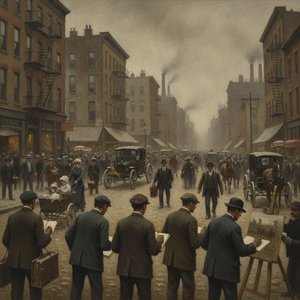
The Ashcan School: Capturing the Raw, Unfiltered Soul of Urban Life through American Realism
Discover the raw beauty of the Ashcan School. Explore how masters like Bellows and Henri captured the gritty, vibrant soul of early 20th-century New York through profound American Realism and evocative urban landscapes.

The Raw Truth: A Definitive Guide to the Power and Legacy of Social Realism Art
Explore the profound impact of Social Realism. Discover how masters like Courbet rejected idealism to capture the raw, socio-political truths of the working class through powerful, unvarnished art history and enduring visual critique.

The Unvarnished Truth: A Cultural Journey Through the Soul of American Realism
Explore the profound beauty of American Realism. From the Ashcan School's urban grit to intimate portraits, discover how artists captured the authentic soul of a nation through unvarnished truth and masterful observation.
Tutustu teoksiin, jotka on järjestetty aiheiden, tyylien ja ominaisuuksien mukaan.