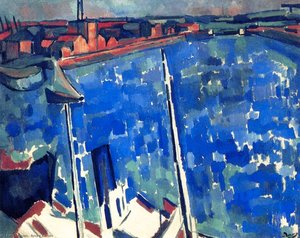
Aperçu en situation
 Partager
 Partager
 Détails
 Guide imprimable

 Télécharger
 Articles similaires
 Radiographie
 Voir le diaporama
 Statistiques
Flowers in a Vase
 Acrylic On Canvas
- WallArt
- Fauvism
 1930
1930 35.0 x 25.0 cm
 Royal Academy of Music
André Derain's 'Flowers in a Vase' (1930) is a vibrant Fauvist still life, showcasing bold colors and dynamic composition. Explore this iconic painting’s rich history & artistic significance.
 Afficher la suite
André Derain (1880-1954) : Pionnier du Fauvisme ! Découvrez ses toiles vibrantes, paysages urbains audacieux & son héritage artistique majeur.
Reproduction à l'huile faite à la main
Huile sur toile peinte à la main, avec cadre et dimensions personnalisés, réalisée sur commande par nos artistes. ( Passer au format impression Passer au format image numérique)




P118B €10

P118H €10

P118W €10

P438Z €10

P508JH €12

P508YH €12

P805H €10

P805Z €10

P919BZ €10

P919G €10

P919XJ €10

P959ZH €10

P968JZ €12

W106C €8

W218G €10

W218JH €8

W218Y €10

W307PJ €10

W316G €10

W316PJ €8

W316Y €10

W398PJ €8

W4111J €10

W500HY €15

W500JH €15

W692G €12

W849H €8

W940BG €15

W953PJ €8




Format standard
personnalisé
CM
INCH
Choisissez parmi nos formats prédéfinis qui respectent les proportions originales de l’œuvre.
Loading sizes...

largeur
hauteur
Saisissez la largeur et la hauteur souhaitées, pour s'adapter à votre cadre ou à votre mur. Cette œuvre est peinte à la main ; ainsi, pour un format de forme différente, l'artiste peut peindre un peu plus autour du tableau ou réduire légèrement les bords — c'est vous qui choisissez. Nous vous envoyons une maquette numérique pour approbation avant que la peinture ne commence. L'image présentée sur cette page ne reflète pas le résultat réel — seule la maquette le fait.
Exemples de personnalisation possibles : remplacer un visage par la photo du client ; ajouter un animal de compagnie (par exemple, remplacer un chat par un chien) ; inclure un message caché en arrière-plan ; modifier le paysage ou les éléments de l'arrière-plan.
Après la commande, l’équipe TopImpressionists.com contactera le client par e-mail pour recueillir ses instructions et lui fournira une maquette d’aperçu
Après la commande, l’équipe TopImpressionists.com contactera le client par e-mail pour recueillir ses instructions et lui fournira une maquette d’aperçu
Livraison dans le monde entier () en 3 à 4 semaines au lieu des 5 semaines habituelles. (25 octobre). Aucun compromis sur la qualité.

Livraison express gratuite dans le monde entier

Toile de lin de haute qualité

Assurance transport complète

Garantie de remboursement des droits de douane

Garantie de fidélité des couleurs

Garantie de retour de 100 jours (uniquement en cas de défaut)

Garantie de remboursement à 100%

Tarifs dégressifs sur quantité
 L'option verre n'est disponible que pour les dimensions inférieures à 110 cm.

Flowers in a Vase
Technique de reproduction
Format de la reproduction
-


Prix total final
€ 236
Flowers in a Vase by André Derain: A Symphony of Color and Light
André Derain’s “Flowers in a Vase,” painted around 1901, isn't merely a still life; it’s an explosion of Fauvist emotion captured on canvas. This intimate scene, brimming with vibrant reds, whites, and greens, transports the viewer to a world where color reigns supreme, defying traditional representation and embracing pure visual sensation. The painting, housed in the National Gallery of Art, Washington D.C., offers a captivating glimpse into the heart of this revolutionary artistic movement.
The work’s genesis lies within the burgeoning Fauvist period, a short but intensely influential era in early 20th-century art. Derain, alongside Henri Matisse, sought to liberate color from its descriptive role and use it instead as an independent expressive force. “Flowers in a Vase” exemplifies this philosophy perfectly. The colors aren’t intended to mimic reality; they are chosen for their emotional impact – the fiery red of the roses, the luminous white of the blooms, and the verdant green of the foliage all vibrate with intensity. This deliberate departure from naturalism was considered radical at the time, provoking both excitement and criticism.
A Technique of Bold Strokes and Fragmented Forms
Derain’s technique is characterized by bold, broken brushstrokes that create a sense of movement and immediacy. He applied paint directly to the canvas with little blending, resulting in a textured surface where individual strokes are visible. This impasto effect adds depth and physicality to the painting, drawing attention to the materiality of the pigments themselves. The forms within the composition – the vase, the flowers, the leaves – are not rendered with meticulous detail but rather suggested through fragmented shapes and planes of color. This simplification contributes to the overall sense of dynamism and unrestrained expression.
Notably, Derain employed a technique reminiscent of Pointillism—small dots of pure color applied side-by-side—though his approach was looser and more expressive than that of Seurat. This layering of colors creates an optical illusion of depth and luminosity, further enhancing the painting’s vibrant quality. The subtle variations in tone and hue within each color area contribute to a remarkable sense of visual richness.
Symbolism and Emotional Resonance
Beyond its purely formal qualities, “Flowers in a Vase” is rich in symbolic meaning. Flowers have long been associated with beauty, love, and mortality – themes that resonate deeply within the painting. The arrangement itself—a vibrant bouquet contained within a simple vase—suggests both abundance and fragility. The dark background serves to heighten the impact of the colors, creating a dramatic contrast that draws the viewer’s eye directly to the blossoms.
Furthermore, the inclusion of a single white flower floating on water evokes a sense of transience and ephemerality. It's a poignant reminder of the fleeting nature of beauty and life itself. The painting’s emotional impact is profound—a celebration of color, light, and the inherent joy of existence, tempered by an underlying awareness of mortality.
A Legacy of Color and Innovation
“Flowers in a Vase” stands as a pivotal work in André Derain's oeuvre and a cornerstone of Fauvist art. It demonstrates his willingness to challenge conventional artistic norms and embrace the expressive potential of color. The painting’s influence can be seen in the works of subsequent generations of artists, who continued to explore the possibilities of non-naturalistic representation. Today, it remains a powerful testament to the transformative power of color and a captivating example of early 20th-century artistic innovation.
Questions et réponses
Quel est l'usage recommandé pour une impression de « Flowers in a Vase » ?
L'utilisation recommandée d'une impression de « Flowers in a Vase » est Neutral.
Dans quelle pièce de la maison une reproduction de « Flowers in a Vase » s'intégrerait-elle bien ?
L'espace recommandé pour «Flowers in a Vase» de André Derain est un Living Room. Cette suggestion peut bien entendu être adaptée à votre intérieur.
Un téléchargement est-il disponible pour « Flowers in a Vase » ?
«Flowers in a Vase» de André Derain peut être téléchargé depuis la page Télécharger de l'œuvre, en tant que un téléchargement d'image numérique haute résolution.


Biographie de l'artiste
Premières années et formation
- Naissance et famille : André Derain est né le 10 juin 1880 à Chatou, dans les Yvelines, près de Paris.
- Études indépendantes : Contrairement à certaines affirmations, Derain a commencé à peindre indépendamment en 1895, avant de rencontrer Vlaminck ou Matisse. Il effectuait occasionnellement des sorties artistiques avec le père Jacomin et ses fils.
- Formation académique : En 1898, il étudia l'ingénierie à l'Académie Camillo, où il rencontra Henri Matisse puis suivit des cours de peinture sous la direction d'Eugène Carrière.
- Abandon de l’ingénierie : Après son service militaire (1901-1904), Matisse le persuada d'abandonner sa carrière d'ingénieur pour se consacrer à la peinture. Il fréquenta ensuite l'Académie Julian.
Fauvisme et développement artistique précoce
- Collaboration avec Matisse : Derain collabora étroitement avec Henri Matisse, notamment pendant l’été 1905 à Collioure, ce qui donna naissance à des œuvres telles que "Montagnes à Collioure".
- Salon d'Automne (1905) : Leur exposition au Salon d'Automne marqua un moment décisif, conduisant le critique Louis Vauxcelles à inventer le terme « Fauves » (« bêtes sauvages ») en raison de leur utilisation audacieuse et non conventionnelle des couleurs.
- Peintures de Londres : En 1906, Ambroise Vollard envoya Derain à Londres, où il produisit une série de peintures représentant la ville d'une manière nouvelle et frappante, en se concentrant sur la Tamise et le Tower Bridge. Ces œuvres sont considérées comme faisant partie de ses plus importantes réalisations.
- Influences et style : Le travail fauve précoce est caractérisé par des couleurs intenses et non naturalistes ainsi que par des coups de pinceau expressifs. Derain fut influencé par des artistes tels que Van Gogh et Cézanne.
Évolution du style et œuvres ultérieures
- Virage vers le classicisme : Après 1907, le style de Derain commença à évoluer, s'éloignant de la palette purement fauve vers des tons plus atténués et une plus grande emphase sur la forme. Cette période (1911-1914) est parfois appelée sa « phase gothique ».
- Influence du Cubisme et des Maîtres anciens : Le travail de Derain pendant cette période reflétait son étude des maîtres anciens, intégrant des éléments du cubisme et un regain d'intérêt pour les formes classiques.
- Conception de ballet : En 1919, il conçut le décor et les costumes du ballet "La Boutique Fantasque" pour Diaghilev, démontrant sa polyvalence en tant qu’artiste.
- Œuvres notables : Parmi les œuvres clés de cette période figurent "Arlequin et Pierrot", "Le Retour d'Ulysse" (une grande fresque murale) ainsi que divers paysages et natures mortes qui témoignent de son style en évolution.
Héritage et signification historique
- Co-fondateur du Fauvisme : Derain est reconnu comme une figure clé dans le développement du fauvisme, aux côtés de Matisse, contribuant de manière significative au mouvement artistique moderne du début du XXe siècle.
- Vision unique de Londres : Sa série de peintures représentant Londres a offert une perspective nouvelle et distinctive sur la ville, s'écartant des représentations artistiques antérieures.
- Reconnaissance d’après-guerre : Après la Première Guerre mondiale, Derain regagna en popularité pour ses contributions à un retour au classicisme dans l'art.
- Dernières années et controverse : Malgré le prix Carnegie remporté en 1928, Derain fit face à des controverses pendant la Seconde Guerre mondiale en raison de sa présence en Allemagne et fut par la suite ostracisé par certains de ses anciens partisans.
- Décès et souvenir : André Derain est décédé le 8 septembre 1954. Son œuvre continue d'être célébrée pour ses couleurs audacieuses, ses compositions expressives et sa contribution significative à l’histoire de l’art moderne.

André Derain
1880 - 1954 , France
En bref
- Artistes Influents:
- Henri Matisse
- Vincent van Gogh
- Paul Cézanne
- Date De Décès: 8 septembre 1954
- Date De Naissance: 10 juin 1880
- Lieu De Naissance: Chatou, France
- Mouvement Artistique: Fauvisme
- Nationalité: Française
- Nom Complet: André Derain
- Oeuvres Notables:
- Arlequin et Pierrot
- Pont Westminster, Londres
- Falaises
- Retour d'Ulysse
Articles connexes

Silent Narratives: Exploring the Enduring Appeal of Still Life Painting Across Centuries
Explore the rich history of still life painting with TopImpressionists. Discover Dutch Masters, decode vanitas symbolism & learn about collecting timeless art. Expert insights and museum-quality reproductions.

Blossoming Symbolism: A Historical Journey Through Flowers in Western Painting
Explore the rich history of flower symbolism in Western painting! Discover how artists from the Renaissance to Modernism used blossoms to convey meaning, emotion & beauty. Learn about iconic artworks and movements.

Les 10 Chefs-d'œuvre Fauves : Couleurs Émotionnelles et Décor d'Art Intemporel
Plongez au cœur du Fauvisme avec les 10 œuvres majeures de Matisse, Derain et Vlaminck. Découvrez l'histoire, la technique et l'impact émotionnel de ces chefs-d’œuvre colorés. Reproductions d'art exceptionnelles sur TopImpressionists.com.
Les 10 Chefs-d'œuvre Fauves qui ont Révolutionné l'Art Moderne |
Plongez au cœur du Fauvisme avec ! Découvrez les 10 chefs-d'œuvre de Matisse, Derain et Vlaminck qui ont révolutionné l'art. Couleurs vives, émotion pure : trouvez votre reproduction idéale pour une décoration intérieure unique. Explorez la collection sur

André Derain: Fauvism's Bold Visionary & the Evolution of Modern Color
Explore the revolutionary art of André Derain, co-founder of Fauvism. Discover his bold use of color, evolution from radical expressionism to classicism, and lasting influence on modern art history. Learn more at TopImpressionists.
Explorez des œuvres d'art classées par thèmes, styles et caractéristiques.