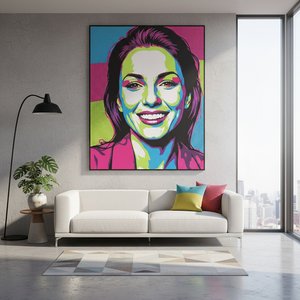
Description de l'œuvre
Andy Warhol’s ‘Mao’: A Revolutionary Icon Reimagined
Andy Warhol's series of portraits depicting Chairman Mao Zedong stands as one of the most provocative and intellectually stimulating achievements of Pop Art. Created between 1972 and 1973, these silkscreen prints weren’t merely artistic exercises; they were bold statements about politics, celebrity culture, and the very nature of image-making in the 20th century. The work emerged during a pivotal moment in global affairs – President Richard Nixon's historic visit to China, an event that dramatically shifted Cold War dynamics and opened up a previously inaccessible nation to the West. Warhol, ever attuned to the pulse of contemporary society, seized upon this cultural phenomenon, transforming one of the most recognizable political figures into a subject for his signature style.
The Technique of Repetition and Appropriation
Warhol’s technique in the ‘Mao’ series is quintessential Pop. He employed silkscreen printing, a method borrowed from commercial advertising, to reproduce Mao's image repeatedly. The source material was a ubiquitous photograph of Mao widely circulated during China’s Cultural Revolution – an image intended to inspire reverence and obedience. However, Warhol deliberately subverted this intention through vibrant, often unnatural color palettes. He layered hues of pink, blue, and even garish yellows onto the iconic portrait, stripping it of its original ideological weight. This repetition, combined with the bold coloration, transforms Mao from a formidable leader into a consumable commodity, mirroring the mass production and visual saturation that Warhol so keenly observed in American consumer culture. The slight imperfections inherent in the silkscreen process – smudges, misalignments – further emphasize this deconstruction of authority, suggesting the fallibility of even the most powerful images.
Symbolism and Cultural Commentary
The choice of Mao Zedong as a subject is laden with symbolism. Warhol’s decision to portray Mao in such an unconventional manner—using bold colors and replicating the image countless times—was a deliberate challenge to traditional artistic conventions and political iconography. It reflects Warhol's fascination with celebrity culture and his ability to distill complex ideas into instantly recognizable visual forms. The series speaks to the anxieties of the Cold War era, highlighting the pervasive influence of propaganda and the blurring lines between art and ideology. Furthermore, Warhol’s appropriation of Mao’s photograph underscores the broader trend toward repurposing existing images for new artistic purposes—a hallmark of Pop Art's rebellious spirit.
Historical Context: Nixon’s China Visit
The creation of ‘Mao’ coincided with President Richard Nixon’s groundbreaking trip to Beijing in 1972, marking the first official diplomatic relations between the United States and Communist China after decades of hostility. Warhol recognized the significance of this event as a catalyst for cultural exchange and celebrated it through his artwork. The bold colors and repetition of Mao's image mirrored the optimism surrounding Nixon’s negotiations—a desire to bridge divides and foster understanding amidst geopolitical tensions. Warhol’s work captures not only the aesthetic sensibilities of the time but also its intellectual preoccupation with questions of identity, representation, and the role of art in shaping public opinion.
Emotional Impact: Deconstructing Hero Worship
Ultimately, Warhol's ‘Mao’ transcends mere stylistic imitation; it compels viewers to confront uncomfortable truths about hero worship and the manipulation of images for political ends. By stripping Mao’s portrait of its solemn dignity and transforming it into a playful spectacle of color, Warhol undermines the reverence traditionally accorded to political leaders—a gesture that anticipates Warhol's broader critique of consumer culture and celebrity obsession. The artwork remains a powerful reminder that art can serve as both a mirror reflecting societal values and a tool for challenging them.



 Commander la reproduction
 Partager
 Partager
 Détails de l'œuvre

 Télécharger
 Articles similaires
 Radiographie
 Diaporama

 Afficher la suite






































 L'option verre n'est disponible que pour les dimensions inférieures à 110 cm.