


 Partager
 Partager
 Détails
 Guide imprimable

 Télécharger
 Articles similaires
 Voir le diaporama
 Statistiques
Venus and Mars


Marvel at Antonio Canova's 'Venus and Mars,' a neoclassical sculpture celebrating peace & harmony. This iconic marble masterpiece, commissioned by the Prince Regent, embodies love and war’s union.
 Afficher la suite
Découvrez Antonio Canova (1757-1822), sculpteur néoclassique inégalé ! Admirez ses statues en marbre sublimes comme Cupidon et Psyché, Les Grâces & plus. Explorez sa vie et son héritage !
Reproduction à l'huile faite à la main
Huile sur toile peinte à la main, avec cadre et dimensions personnalisés, réalisée sur commande par nos artistes. ( Passer au format impression Passer au format image numérique)




































Format standard
personnalisé
CM
INCH
Choisissez parmi nos formats prédéfinis qui respectent les proportions originales de l’œuvre.
Loading sizes...

largeur
hauteur
Vous pouvez saisir vos propres dimensions pour l'adapter à un cadre ou à un espace spécifique. Si la taille sélectionnée ne correspond pas aux proportions de l'image d'origine, nous recadrerons l'œuvre ou prolongerons la peinture avec des éléments peints à la main supplémentaires. Une maquette numérique vous sera envoyée pour approbation avant le début de la production.
Veuillez noter que l'aperçu à l'écran ne reflète pas le recadrage ou l'extension réels. Seule la maquette montrera fidèlement la composition finale.
Bien que des tailles personnalisées soient disponibles, nous vous recommandons de sélectionner une dimension dans la liste prédéfinie afin de préserver les proportions d'origine.
Exemples de personnalisation possibles : remplacer un visage par la photo du client ; ajouter un animal de compagnie (par exemple, remplacer un chat par un chien) ; inclure un message caché en arrière-plan ; modifier le paysage ou les éléments de l'arrière-plan.
Après la commande, l’équipe TopImpressionists.com contactera le client par e-mail pour recueillir ses instructions et lui fournira une maquette d’aperçu
Après la commande, l’équipe TopImpressionists.com contactera le client par e-mail pour recueillir ses instructions et lui fournira une maquette d’aperçu
Livraison dans le monde entier () en 3 à 4 semaines au lieu des 5 semaines habituelles. (10 octobre). Aucun compromis sur la qualité.

Livraison express gratuite dans le monde entier

Toile de lin de haute qualité

Assurance transport complète

Garantie de remboursement des droits de douane

Garantie de fidélité des couleurs

Garantie de retour de 100 jours (uniquement en cas de défaut)

Garantie de remboursement à 100%

Tarifs dégressifs sur quantité
 L'option verre n'est disponible que pour les dimensions inférieures à 110 cm.

Venus and Mars
Technique de reproduction
Format de la reproduction
-


Prix total final
€ 232
A Moment of Divine Union: Antonio Canova’s “Venus and Mars”
Antonio Canova's "Venus and Mars," completed in 1822, is more than just a sculpture; it’s a carefully orchestrated tableau of opposing forces achieving an unexpected harmony. This magnificent marble work, currently residing within the Royal Collection at Buckingham Palace, offers a profound meditation on love, war, peace, and the enduring power of artistic creation. Commissioned by Prince Regent George IV during his visit to London, the sculpture represents a pivotal moment in Canova’s career – a bold departure from the rigid formality of Neoclassicism while firmly rooted in classical ideals.
The subject matter itself is strikingly original for its time. Rather than depicting Venus and Mars engaged in battle or mythological drama, as was common in earlier representations, Canova presents them in an intimate embrace. The goddess Venus, a figure synonymous with beauty, fertility, and love, is rendered with exquisite sensuality – her flesh soft and yielding, her limbs draped in delicate folds of fabric that hint at both vulnerability and power. Her gaze is directed towards Mars, the god of war, creating a dynamic tension within the composition. Mars, traditionally portrayed as a stern and imposing figure, stands powerfully upright, his musculature meticulously sculpted to convey strength and resolve. He holds his spear firmly in one hand, a symbol of his dominion over conflict, yet his posture suggests a willingness to yield to the allure of Venus’s affection.
The Neoclassical Masterstroke: Technique and Form
Canova's mastery of marble carving is immediately evident. The sheer scale of “Venus and Mars” – standing nearly two meters tall – commands attention, while the intricate detail of each muscle fiber, wrinkle, and drapery fold speaks to his unparalleled skill. The sculpture exemplifies the Neoclassical style, drawing inspiration from the idealized forms and balanced compositions of ancient Greek and Roman art. However, Canova transcends mere imitation; he infuses these classical elements with a profound sense of emotion and psychological depth. The smooth, polished surface of the marble creates an illusion of life, capturing the subtle nuances of human expression and movement.
The technique employed is particularly noteworthy. Canova utilized a subtractive method, carefully removing material from a larger block of Carrara marble to reveal the desired form. This process demanded immense patience and precision, allowing him to achieve an astonishing level of realism and anatomical accuracy. The subtle gradations in tone – achieved through meticulous polishing and shading – further enhance the sculpture’s three-dimensionality, creating a captivating interplay of light and shadow.
A Symbol of Reconciliation: Historical Context and Meaning
The creation of “Venus and Mars” coincided with the Congress of Vienna (1814–1815), an international conference that reshaped Europe after Napoleon’s defeat. The sculpture, therefore, can be interpreted as a potent symbol of reconciliation – a visual representation of the end of war and the dawn of a new era of peace. Venus, representing love and harmony, gently embraces Mars, signifying the triumph of diplomacy over conflict. This theme resonated deeply with Prince George IV, who commissioned the work to celebrate the restored stability of Europe.
Furthermore, Canova’s choice of depicting the figures in the nude was a deliberate artistic statement. In classical art, nudity served as a means of celebrating human beauty and virtue, stripping away artificial conventions to reveal the inherent dignity of the human form. By presenting Venus and Mars unclothed, Canova elevates their union to a realm of pure emotion and spiritual significance.
An Enduring Legacy: Emotional Impact and Artistic Significance
“Venus and Mars” continues to captivate viewers with its profound emotional resonance. The sculpture’s inherent tension – the interplay between love and war, beauty and strength – invites contemplation on the complexities of human nature. The figures' embrace is not merely a physical gesture; it represents a merging of opposing forces, suggesting that even the most seemingly irreconcilable elements can find harmony within themselves.
Beyond its historical and symbolic significance, “Venus and Mars” stands as a testament to Canova’s artistic genius. It remains one of his most celebrated works, admired for its technical brilliance, emotional depth, and enduring beauty. Reproductions of this iconic sculpture offer an opportunity to experience the power and grace of Canova's vision in any setting – a timeless reminder of the transformative potential of art.
Questions et réponses
Où puis-je télécharger «Venus and Mars» de Antonio Canova ?
Un téléchargement est disponible pour « Venus and Mars » : la page Télécharger de l'œuvre propose un téléchargement d'image numérique haute résolution.
Qui est l'auteur de « Venus and Mars », et dans quel mouvement ?
« Venus and Mars » a été créé par Antonio Canova dans le style Neoclassical Sculpture. L'artiste et le mouvement définissent la tradition de l'œuvre.
En quelle année "Venus and Mars" a-t-il été réalisé ?
«Venus and Mars» de Antonio Canova a été créé en 1816.
Qui a créé "Venus and Mars" ?
« Venus and Mars » est attribué à Antonio Canova.
Quelle est la notoriété de « Venus and Mars » par Antonio Canova ?
«Venus and Mars» de Antonio Canova possède un niveau de popularité Iconic. Cette classification reflète l'étendue de la reconnaissance de l'œuvre.
Quel âge avait Antonio Canova lors de la création de « Venus and Mars » en 1816 ?
Antonio Canova avait 59 ans lors de la création de « Venus and Mars » en 1816. L'âge est calculé à partir de l'année de naissance de l'artiste, 1757.
Est-ce que «Venus and Mars» de Antonio Canova est dans le domaine public ?
Le statut des droits d'auteur pour «Venus and Mars» de Antonio Canova : l'œuvre est dans le dans le domaine public - ses droits d'auteur ont expiré. Cela détermine si les reproductions de l'image peuvent être réalisées librement.
Biographie de l'artiste
Antonio Canova : Une Vie en Marbre
- Né: Possagno, Italie (1757)
- Décédé: 1822
Antonio Canova se dresse comme une figure imposante dans l'histoire de l'art occidental, largement considéré comme le sculpteur néoclassique par excellence. Sa maîtrise du travail du marbre et sa capacité à infuser les formes classiques d'émotions profondes ont assuré sa place parmi les plus grands artistes de tous les temps. Né à Possagno, en Italie, de Pietro Canova, maçon, la vie précoce de Canova a été façonnée par l'environnement artistique qui l'entourait.
Jeunesse et Formation
- Origines Familiales: La profession de son père lui a offert une première exposition à la sculpture sur pierre, et son grand-père, Pasino Canova, sculpteur spécialisé dans les autels et bas-reliefs, a joué un rôle crucial dans le développement de son talent.
- Développement Artistique Précoce: Avant même l'âge de dix ans, Canova a démontré une compétence remarquable en créant de petits sanctuaires en marbre qui mettaient en valeur sa capacité innée. Il a fait son apprentissage auprès de Giuseppe Bernardi ('Torretto') et Giovanni Ferrari, perfectionnant ainsi ses compétences.
- Études à l'Académie: Ses études à l'Accademia di Belle Arti di Venezia lui ont valu de nombreux prix, consolidant sa réputation de jeune artiste prometteur. Un atelier au sein d'un monastère lui a fourni un espace pour développer son art.
- Premières Commandes: Les premières commandes, telles que les statues d'Orphée et Eurydice pour le sénateur Giovanni Falier (1775-1777), ont démontré un style rococo émergent, préfigurant son raffinement néoclassique ultérieur.
L’Ascension Vers la Prominence et le Style Néoclassique
- Définition du Néoclassicisme: L'œuvre de Canova se caractérise par ses formes élégantes, ses figures idéalisées et un retour aux principes esthétiques de la Grèce et de la Rome antiques. Il a habilement évité le mélodrame de l'art baroque tout en résistant à la froideur souvent associée aux tentatives antérieures de renouveau classique.
- Œuvres Clés & Reconnaissance: Des sculptures telles que Cupidon et Psyché (c. 1787-1793), la Magdalène pénitente, et Hercule et Lichas ont établi sa réputation dans toute l'Europe. Son travail était très recherché par la royauté et la noblesse.
- Promotion de Sa Réputation: Canova a stratégiquement promu sa carrière grâce à la publication de gravures de ses œuvres et à la création de versions en marbre des moulages en plâtre, assurant ainsi une large diffusion de son art.
- Acclamation Internationale: Les commandes venues d'Europe entière, dont une statue de Thesee et du Minotaure pour Girolamo Zulian (ambassadeur vénitien à Rome), ont cimenté son statut l’un des artistes les plus célébrés d’Europe.
Œuvres Majeures et Héritage
- Sculptures Notables: Au-delà de celles déjà mentionnées, ses œuvres importantes incluent Vénus Italica, La Muse Polyhymnie, Les Trois Grâces dansantes, et sa représentation poignante d'Eurydice.
- Commandes Monumentales: Il a reçu des commandes prestigieuses pour des tombeaux, notamment l’élaborate Tombeau du pape Clément XIII à la basilique Saint-Pierre, Rome – un témoignage de ses compétences tant en sculpture qu'en architecture.
- Gipsoteca Antonio Canova: Le musée Gipsoteca Antonio Canova abrite la collection la plus importante de ses œuvres, offrant un aperçu précieux de son processus créatif et de son évolution artistique.
- Influence sur les Générations Futures: L'influence de Canova s’est étendue bien au-delà de sa vie, façonnant le cours de la sculpture néoclassique et inspirant des générations d’artistes par sa maîtrise technique et sa puissance expressive.
Signification Historique
- Emblème du Néoclassicisme: Antonio Canova est devenu synonyme du mouvement néoclassique, incarnant ses idéaux d'ordre, de clarté et un retour à l'Antiquité classique.
- Sculpteur de Cour & Diplomate: Sa position de sculpteur de cour auprès de nombreux souverains européens lui a conféré une influence politique considérable et lui a permis de façonner les goûts artistiques sur le continent.
- Innovation Technique: Le talent inégalé de Canova dans le travail du marbre a repoussé les limites de ce qui était considéré comme possible, établissant une nouvelle norme d'excellence sculpturale.
- Héritage Artistique Durable: Ses sculptures continuent de captiver le public dans le monde entier, consolidant sa place parmi les artistes les plus importants et influents de l’histoire.

Antonio Canova
1757 - 1822 , Italie
En bref
- Artistic Movement Or Style: Néoclassicisme
- Artists Or Movements Influenced By This Artist: ['Artistes néoclassiques ultérieurs']
- Artists Who Influenced This Artist: ['Sculpteurs de la fin baroque']
- Date Of Birth: 1757
- Date Of Death: 1822
- Full Name: Antonio Canova
- Nationality: Italienne
- Notable Artworks:
- Cupidon et Psyché
- La Madone pénitente
- Hercule et Lichas
- Theseus et le Minotaure
- Les Trois Grâces dansantes
- Eurydice
- Vénus Italique
- Place Of Birth (City And Country): Possagno, Italie
Articles similaires
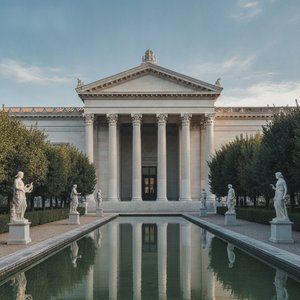
Neoclassicism Unveiled: Discovering the Timeless Elegance and Rational Order of Classical Art
Unveil the timeless elegance of Neoclassicism. Journey through an era defined by reason, order, and the revival of Greco-Roman ideals. Our expert exploration offers a sophisticated look at the transition from Rococo excess to classical precision for the true art enthusiast.

The Timeless Elegance of Academic Classicism: A Journey Through Order, Precision, and the Pursuit of Perfection
Explore the profound beauty of Academic Classicism. Discover how masters used order, precision, and classical ideals to achieve timeless perfection in art history, from Neoclassical portraits to the pursuit of ideal beauty.

The Eternal Beauty of Marble: A Guide to Sculpting Light, Stone, and the Soul of Art History
Explore the sublime artistry of marble sculpture. From Greek antiquity to the masters of light, discover how stone captures the eternal essence of human beauty and emotion through expert craftsmanship and historical mastery.
Explorez des œuvres d'art classées par thèmes, styles et caractéristiques.


