

 Aperçu en situation
 Envoyer
 Partager
 Détails de l'œuvre
 Guide
Guide

 Télécharger l'image
 Articles similaires
 Radiographie
 Diaporama
 Questions et réponses
 Statistiques
Sadhu Kokila

- 25.0 x 33.0 cm


Découvrez Sadhu Kokila, une œuvre emblématique de l'acteur et musicien indien Sadhu Kokila, reconnu pour ses rôles comiques dans le cinéma kannada et sa contribution à la musique populaire.
 Lire la suite
António Xavier Trindade (1870-1935), peintre de Goa, figure emblématique de la École de Bombay. Réputé 'Rembrandt de l'Orient', il fusionne réalisme et sensibilité indienne dans ses portraits et paysages captivants.
Giclées et impressions d'art
Impressions giclées ou sur toile de qualité musée, avec une production rapide et des finitions au choix. ( Commander la reproduction peinte à la main Passer au format numérique)




P118B €10

P118H €10

P118W €10

P438Z €10

P508JH €12

P508YH €12

P805H €10

P805Z €10

P919BZ €10

P919G €10

P919XJ €10

P959ZH €10

P968JZ €12

W106C €8

W218G €10

W218JH €8

W218Y €10

W307PJ €10

W316G €10

W316PJ €8

W316Y €10

W398PJ €8

W4111J €10

W500HY €15

W500JH €15

W692G €12

W849H €8

W940BG €15

W953PJ €8




Format standard
sur mesure
CM
INCH
Choisissez parmi nos formats prédéfinis qui respectent les proportions originales de l’œuvre.
Loading sizes...

largeur
hauteur
Saisissez la largeur et la hauteur souhaitées pour qu'elles s'adaptent à votre cadre ou à votre mur. Une impression peut être recadrée, mais jamais agrandie au-delà de l'image originale ; ainsi, un format de forme différente entraînera la perte d'une partie de l'image. Nous vous envoyons une maquette numérique pour approbation avant toute impression. L'image présentée sur cette page ne montre pas le recadrage réel — seule la maquette le permet.
Livraison dans le monde entier () en 2 semaines au lieu des 4/5 semaines habituelles. (7 novembre)

Livraison express gratuite dans le monde entier

Toile de lin de qualité supérieure

Assurance transport complète

Garantie de remboursement des droits de douane

Garantie de fidélité des couleurs

Politique de retour de 100 jours (uniquement en cas de défaut)

Garantie de remboursement à 100%

Offre de tarifs dégressifs
 L'option verre n'est disponible que pour les dimensions inférieures à 110 cm.

Sadhu Kokila
Giclées et impressions d'art
Format de la reproduction
-


Prix total
€ 62
António Xavier Trindade : Un Maître Rembrandt de l'Est et la Lumière Éternelle du Sentiment
António Xavier Trindade demeure une figure emblématique de l’histoire artistique indienne du début du XXe siècle, bien plus qu’un simple peintre ; il fut un pont culturel entre deux mondes. Né à Sanguem, Goa, en 1870 dans une famille catholique franco-portugaise, son parcours commença au cœur des paysages luxuriants et de la complexité coloniale du Portugal. Cette éducation initiale façonna profondément sa vision artistique, nourrissant un mélange unique d’entraînement académique occidental avec une compréhension intrinsèque de la vie et du caractère indien.
Son talent précoce lui ouvrit les portes de l’École Supérieure d’Art de Bombay, établissement prestigieux qui lui révéla les traditions naturalistes européennes tout en cultivant une génération entière d’artistes indiens. À ces murs sacrés, il affina ses compétences, maîtrisant des techniques qui allaient définir son style caractéristique et lui valoir des récompenses telles que la médaille argentée de Mayo pour mérite artistique en 1892 – une reconnaissance exceptionnelle pour un jeune artiste à cette époque.
- Style : Trindade incarnait le réalisme bombayien, une esthétique influencée par les mouvements artistiques européens de son temps mais profondément ancrée dans la culture locale. Il privilégiait des portraits et des paysages qui capturaient avec précision les nuances émotionnelles et les détails environnementaux.
- Technique : Son maître était l’utilisation magistrale du dessin à l’huile sur toile, une méthode qu'il maîtrisait avec une patience et une attention aux détails remarquables. Il utilisait des couleurs vives et lumineuses pour créer des œuvres imprégnées de chaleur humaine et d’une sensibilité particulière.
- Contexte Historique : Trindade vécut à l’époque du déclin de la puissance coloniale britannique en Inde et de la naissance de la République indépendante, une période marquée par les bouleversements sociaux et politiques qui influencèrent son œuvre. Il témoigna avec élégance ces changements, exprimant sa propre époque dans ses peintures.
- Symbolisme : Ses œuvres étaient riches en références religieuses et philosophiques, notamment l’utilisation du triangle comme symbole de la Trinité chrétienne. Cette approche originale reflétait une recherche constante de beauté et d'harmonie intérieure.
Ses peintures sont devenues célèbres pour leur capacité à évoquer des sentiments profonds chez le spectateur : nostalgie, sérénité, émerveillement devant la beauté naturelle et la puissance spirituelle. Ils témoignent d’une œuvre qui dépasse les limites du temps et de l’espace, célébrant la lumière éternelle du sentiment.
La Fondation Oriente à Goa conserve une collection remarquable de ses œuvres, offrant aux visiteurs une occasion unique de découvrir le génie artistique d'António Xavier Trindade et son héritage culturel. Une reproduction haute qualité permettrait de faire vivre cette œuvre exceptionnelle dans un intérieur contemporain.
Questions et réponses
Où puis-je trouver des œuvres d'art similaires à «Sadhu Kokila» de António Xavier Trindade ?
La page Œuvres similaires de «Sadhu Kokila» de António Xavier Trindade présente des œuvres similaires.
Quelle ambiance "Sadhu Kokila" apporterait-elle à une pièce ?
«Sadhu Kokila» de António Xavier Trindade dégage une atmosphère Sérénité et s'intègre parfaitement dans une Salon. Cette ambiance reflète l'émotion que l'œuvre apporte à l'espace qui l'entoure.
Quel âge avait António Xavier Trindade lors de la création de « Sadhu Kokila » ?
António Xavier Trindade a réalisé « Sadhu Kokila » à l'âge de 51. L'artiste est né en 1870 et l'œuvre date de 1921.
Biographie de l'artiste
A Life Etched in Light: The World of António Xavier Trindade
António Xavier Trindade, a name resonating with quiet power within the annals of Indian art history, was more than just a painter; he was a cultural bridge. Born in Sanguem, Goa, in 1870 to Catholic parents, his journey began amidst the lush landscapes and complex colonial tapestry of Portuguese India. This formative environment would indelibly shape his artistic vision, fostering a unique blend of Western academic training with an intrinsic understanding of Indian life and character. Trindade’s early promise led him to the prestigious Sir Jamsetjee Jeejeebhoy School of Art in Bombay, a pivotal institution that exposed him to European naturalism while simultaneously nurturing a growing generation of Indian artists. It was here, within those hallowed halls, that he honed his skills, mastering techniques that would later define his signature style and earn him accolades like the Mayo Silver Medal for artistic merit in 1892—a testament to his burgeoning talent.The Bombay School and a Rising Star
Trindade’s ascent within the Bombay art scene was swift and assured. Appointed as a teacher of drawing and painting at the Sir J.J. School of Art in 1898, he not only contributed to the education of future generations but also solidified his position as a leading figure in the burgeoning Bombay School. He became deeply involved in shaping the artistic landscape of the city, fostering a sense of community among artists and encouraging experimentation with new styles and techniques. Later, assuming the role of Superintendent of the Reay Workshop of Art from 1914 to 1926, he further influenced artistic production and pedagogy, establishing rigorous standards and providing invaluable guidance to aspiring artists. However, it wasn’t merely institutional recognition that marked his success; it was the captivating quality of his work itself. Initially embracing traditional portraiture and landscapes, Trindade gradually developed a style characterized by its realism, sensitivity to light, and an ability to capture the psychological depth of his subjects—a departure from purely academic approaches. He became particularly renowned for portraying Indian women with a dignity and intimacy rarely seen in colonial-era art, offering glimpses into their lives beyond the confines of societal expectations and revealing a profound respect for their inner worlds. This earned him the affectionate title “Rembrandt of the East,” acknowledging both his technical mastery and his deep understanding of human emotion.Themes and Techniques: A Synthesis of Worlds
The 1920s witnessed a maturation in Trindade’s artistic expression, marked by an increasing focus on portraits, landscapes, and still lifes. His canvases became windows into the lives of his contemporaries—wealthy patrons, family members, and everyday individuals—each rendered with meticulous detail and a subtle yet powerful emotional resonance. Dolce Farniente (Flora or Mother Reclining), awarded the Bombay Art Society’s gold medal in 1920, exemplifies this period; it is not merely a depiction of a woman at rest but an exploration of motherhood, serenity, and the quiet beauty of domestic life. The painting captures a moment of profound intimacy, suggesting a connection between the artist, his wife, and their children—a rare portrayal of familial warmth within the context of colonial India. Similarly, New Year’s Song (1928) and Hindu Girl (1930), recipients of the Governor’s prize, showcase his ability to capture cultural nuances and individual personalities with remarkable sensitivity. Trindade's technique was rooted in Western academic principles—a mastery of chiaroscuro, precise draftsmanship, and a sophisticated understanding of color theory—but he infused these elements with an Indian sensibility, creating a unique visual language that transcended stylistic boundaries. He wasn’t simply replicating what he had learned; he was transforming it, imbuing it with the spirit of his homeland. His use of light, in particular, became a defining characteristic of his work, often employed to create a sense of atmosphere and mood—a hallmark of Rembrandt's own style.Notable Works and Legacy
Trindade’s oeuvre encompasses a diverse range of subjects and styles, reflecting his evolving artistic vision over several decades. Beyond the aforementioned masterpieces, notable works include Girl with a Vase (1923), a poignant portrait capturing the quiet dignity of a young woman; Self-portrait in Green (1912), offering a rare glimpse into the artist’s own self-perception; and a series of evocative *Nasik Scenes* (c. 1920s-1930s) documenting the diverse communities and religious practices of the Indian subcontinent—a testament to his commitment to representing the richness and complexity of his homeland. His work gained further recognition with an exhibition at the Festival of the Empire in Wembley, London, in 1934, bringing his art to an international audience. Despite facing personal challenges—including declining health and eventual blindness in later life—Trindade continued to paint, supported by his daughter Ângela Trindade, herself a talented artist who carried on her father’s legacy. His influence extends beyond mere aesthetic appreciation; he represents a pivotal moment in Indian art history, a time when artists began to forge their own identities, blending tradition with modernity and challenging the prevailing colonial gaze. Trindade's life and work stand as a testament to the power of artistic expression to transcend cultural boundaries and illuminate the shared human experience.A Lasting Impression
António Xavier Trindade passed away in his family home in Mahim, Bombay, on March 16th, 1935. His legacy endures through his paintings, which are now housed in prestigious collections around the world, and through the continued influence of the Bombay School of Art, which he helped to shape and nurture. The Fundação Oriente in Goa has played a crucial role in preserving and promoting his work, establishing permanent exhibitions that allow audiences to experience the beauty and depth of his artistic vision firsthand. His paintings continue to resonate with viewers today, offering a poignant glimpse into the lives and times of colonial India—a testament to the enduring power of art to connect us across cultures and generations.
António Xavier Trindade
1870 - 1935 , Inde
L'essentiel de l'artiste
- Artistic Movement Or Style: École de Bombay, Réalisme
- Date Of Birth: 1870
- Date Of Death: 1935
- Full Name: António Xavier Trindade
- Nationality: Portugais
- Notable Artworks:
- Dolce Farniente
- Nouvel An
- Fille hindoue
- Place Of Birth: Sanquém, Inde
Articles connexes

The Barbizon School: The Soulful Origins of Impressionism's Natural Light and Atmospheric Mastery
Discover the profound influence of the Barbizon School on Impressionism. Explore how these masters captured natural light and atmospheric beauty through plein air painting, paving the way for Monet and Renoir. A journey into the soulful origins of landscape art history.

Capturing the Light: A Journey Through the Soul of American Impressionism and the Hudson River School
Explore the luminous beauty of American Impressionism and the Hudson River School. Discover a curated journey through light, landscape, and history, celebrating the enduring legacy of masters through exquisite, hand-painted oil reproductions for the discerning art lover.
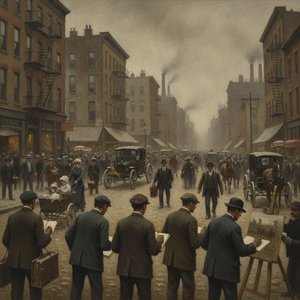
The Ashcan School: Capturing the Raw, Unfiltered Soul of Urban Life through American Realism
Discover the raw beauty of the Ashcan School. Explore how masters like Bellows and Henri captured the gritty, vibrant soul of early 20th-century New York through profound American Realism and evocative urban landscapes.
Explorez des œuvres d'art classées par thèmes, styles et caractéristiques.


