

 Aperçu en situation
 Envoyer
 Partager
 Détails de l'œuvre
 Guide
Guide

 Télécharger l'image
 Articles similaires
 Radiographie
 Diaporama
 Questions et réponses
 Statistiques
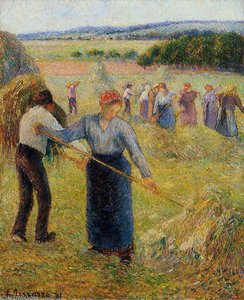
Haymaking 1


Experience Camille Pissarro’s idyllic Haymaking 1, a vibrant Impressionist scene capturing rural teamwork and the beauty of harvest time – perfect for art lovers and collectors seeking a timeless pastoral masterpiece.
 Lire la suite
Explorez l'art de Camille Pissarro : paysages et scènes de la vie quotidienne impressionnistes et néo-impressionnistes. Figure clé influençant Van Gogh, Cézanne et bien d'autres.
Giclées et impressions d'art
Impressions giclées ou sur toile de qualité musée, avec une production rapide et des finitions au choix. ( Commander la reproduction peinte à la main Passer au format numérique)




P118B €10

P118H €10

P118W €10

P438Z €10

P508JH €12

P508YH €12

P805H €10

P805Z €10

P919BZ €10

P919G €10

P919XJ €10

P959ZH €10

P968JZ €12

W106C €8

W218G €10

W218JH €8

W218Y €10

W307PJ €10

W316G €10

W316PJ €8

W316Y €10

W398PJ €8

W4111J €10

W500HY €15

W500JH €15

W692G €12

W849H €8

W940BG €15

W953PJ €8




Format standard
sur mesure
CM
INCH
Choisissez parmi nos formats prédéfinis qui respectent les proportions originales de l’œuvre.
Loading sizes...

largeur
hauteur
Saisissez la largeur et la hauteur souhaitées pour qu'elles s'adaptent à votre cadre ou à votre mur. Une impression peut être recadrée, mais jamais agrandie au-delà de l'image originale ; ainsi, un format de forme différente entraînera la perte d'une partie de l'image. Nous vous envoyons une maquette numérique pour approbation avant toute impression. L'image présentée sur cette page ne montre pas le recadrage réel — seule la maquette le permet.
Livraison dans le monde entier () en 2 semaines au lieu des 4/5 semaines habituelles. (3 novembre)

Livraison express gratuite dans le monde entier

Toile de lin de qualité supérieure

Assurance transport complète

Garantie de remboursement des droits de douane

Garantie de fidélité des couleurs

Politique de retour de 100 jours (uniquement en cas de défaut)

Garantie de remboursement à 100%

Offre de tarifs dégressifs
 L'option verre n'est disponible que pour les dimensions inférieures à 110 cm.

Haymaking 1
Giclées et impressions d'art
Format de la reproduction
-


Prix total
€ 62
Camille Pissarro’s ‘Haymaking 1’: A Symphony of Rural Labor
Haymaking 1, a captivating depiction of rural life by Camille Pissarro, offers a poignant glimpse into the heart of Impressionist observation. Painted around 1892, this artwork transcends a simple representation of agricultural work; it’s an exploration of human connection, community, and the enduring rhythms of nature. The scene unfolds with remarkable clarity – a bustling farmyard bathed in the warm light of a summer afternoon. Nine figures, rendered with Pissarro's characteristic loose brushstrokes and vibrant palette, are engaged in the meticulous task of gathering hay, their movements suggesting both industry and camaraderie. The sheer abundance of golden hay, meticulously scattered across the field, immediately draws the eye, creating a visual feast that speaks to the bounty of the land.
Impressionist Technique and Color
Pissarro’s mastery lies in his ability to capture fleeting moments and atmospheric effects. Executed with the hallmark Impressionistic technique, Haymaking 1 showcases broken color applied in short, visible strokes. This method wasn't merely a stylistic choice; it was a deliberate attempt to record the way light interacts with surfaces – the shimmering reflections on the hay, the subtle gradations of tone in the sky, and the warmth radiating from the figures themselves. The artist’s use of complementary colors—the blues and oranges—intensifies the vibrancy of the scene, creating a dynamic visual experience. The loose brushwork contributes to an overall sense of movement and immediacy, as if we are witnessing this rural activity unfold before our eyes.
Historical Context: Pissarro and the Rise of Impressionism
Painted in the late 1890s, Haymaking 1 reflects Pissarro’s pivotal role in the development of Impressionism. Having initially embraced Realist principles, he gradually shifted his focus towards capturing the subjective experience of light and color. This work aligns with a period where Pissarro was increasingly interested in depicting everyday scenes of rural life – a departure from the grand historical or mythological subjects favored by earlier generations of artists. His connection to the Société des Artistes Indépendants, a group that championed independent artistic expression, further solidified his position as a key figure in challenging established artistic conventions. The painting’s subject matter—a common, unromanticized view of peasant labor—was deliberately chosen to reflect the burgeoning interest in social realism within the Impressionist movement.
Symbolism and Emotional Impact
Beyond its technical brilliance, Haymaking 1 carries a profound symbolic weight. The act of haymaking itself represents more than just harvesting; it embodies hard work, community cooperation, and the cyclical nature of life. The figures’ engaged postures and shared task evoke a sense of unity and purpose. The painting's emotional impact is one of quiet contentment and appreciation for the simple pleasures of rural existence. It’s a reminder of a time when labor was inextricably linked to sustenance and connection – values increasingly absent in modern society. This artwork offers a serene and evocative portrayal of a timeless scene, inviting viewers to contemplate the beauty and significance of everyday life.
Questions et réponses
«Haymaking 1» de Camille Pissarro est-elle une œuvre lumineuse ou sombre ?
En termes de luminosité perçue, «Haymaking 1» de Camille Pissarro est bright.
Quelle est la situation du droit d'auteur pour «Haymaking 1» de Camille Pissarro ?
Le statut du droit d'auteur de « Haymaking 1 » - dans le domaine public - ses droits d'auteur sont tombés dans le domaine public - découle du décès de l'artiste en 1903.
L'œuvre « Haymaking 1 » est-elle dans le domaine public ?
Concernant les droits d'auteur, « Haymaking 1 » est dans le dans le domaine public - ses droits d'auteur sont tombés dans le domaine public.
Œuvres similaires




Biographie de l'artiste
Camille Pissarro : Une Vie dans l'Art
Jeunesse et Formation
Jacob Abraham Camille Pissarro est né le 10 juillet 1830 à Charlotte Amalie, sur Saint-Thomas (alors les Indes occidentales danoises, aujourd’hui les îles Vierges américaines). Son père, Frederick Abraham Gabriel Pissarro, était d'ascendance juive portugaise de nationalité française, et sa mère, Rachel Manzano-Pomié, venait d'une famille juive française. Son éducation fut quelque peu atypique en raison du mélange de ses origines et des circonstances de sa famille. Il reçut sa formation artistique précoce à l’Académie Savary à Passy près de Paris, où il développa une appréciation pour les maîtres de l'art français et fut encouragé à dessiner de la nature.
À 17 ans, Pissarro revint à Saint-Thomas et continua à dessiner pendant ses pauses tout en travaillant comme employé de chargement. Cette période lui a inculqué une observation attentive de la vie quotidienne et du monde naturel – des thèmes qui deviendront centraux dans son art.
Développement Artistique et Influences
En 1855, Pissarro s'installa à nouveau à Paris, où il travailla comme assistant du peintre danois Anton Melbye. Il étudia les œuvres de Gustave Courbet, Jean-Baptiste-Camille Corot, Honoré Daumier, et Charles-François Daubigny, dont les styles ont profondément influencé son travail précoce. Il trouva l'enseignement artistique formel dans des institutions comme l’École des Beaux-Arts étouffant et rechercha une instruction alternative auprès de Corot.
Initialement, les peintures de Pissarro adhéraient aux normes traditionnelles et étaient exposées au Salon de Paris. Sa première peinture fut acceptée en 1859. Cependant, il commença rapidement à expérimenter avec des coups de pinceau plus libres et un accent sur la capture des effets fugaces de la lumière – des caractéristiques propres à l'impressionnisme.
Contribution à l’Impressionnisme et Au-delà
Camille Pissarro est considéré comme une figure clé tant de l’Impressionnisme que du Post-Impressionnisme. Il est le seul artiste à avoir exposé à toutes les huit expositions impressionistes de Paris (1874-1886), agissant comme une force stabilisatrice au sein du groupe. Il n'était pas seulement un exposant ; il encourageait et soutenait activement ses camarades, ce qui lui a valu le surnom de « figure paternelle » du mouvement.
Plus tard dans sa carrière, Pissarro a exploré le néo-impressionnisme, influencé par Georges Seurat et Paul Signac, en employant une technique pointilliste pendant un certain temps avant de revenir à un style plus personnel.
Réalisations Majeures et Thèmes
- Paysages : Pissarro est renommé pour ses représentations de paysages ruraux et urbains, se concentrant souvent sur des scènes de la vie quotidienne.
- Scènes de Vie Parisienne : Il a capturé l'atmosphère animée et les rues bondées de Paris pendant une période de changements rapides.
- Vie Paysanne : Ses peintures dépeignent fréquemment la vie et le travail des paysans, reflétant sa conscience sociale.
- Influence sur les Jeunes Artistes : Pissarro a encadré et influencé profondément Paul Cézanne, Vincent van Gogh, et Paul Gauguin, façonnant leur développement artistique.
Signification Historique et Héritage
L'héritage de Camille Pissarro s’étend au-delà de ses magnifiques peintures. Il a été un champion de la liberté artistique et de l'innovation, jouant un rôle crucial dans le développement de l'art moderne. Son engagement à peindre *en plein air* (à l'extérieur) et à capturer l'expérience immédiate a révolutionné la peinture de paysages. Sa volonté d’expérimenter différents styles et techniques témoigne de sa curiosité intellectuelle et de son courage artistique.
Aujourd'hui, les œuvres de Pissarro sont conservées dans de nombreux musées du monde entier, notamment le Museum Kunstsalon Franke Schenk et le Museum Frieder Burda, inspirant toujours les artistes et les amateurs d’art. Il reste une figure célèbre dont les contributions sont continuellement étudiées et appréciées.

Camille Pissarro
1830 - 1903 , United States of America
L'essentiel de l'artiste
- Artistes Influents:
- Gustave Courbet
- Jean-Baptiste Corot
- Honoré Daumier
- Date De Décès: 13 novembre 1903
- Date De Naissance: 10 juillet 1830
- Influence Sur Les Artistes:
- Paul Cézanne
- Vincent van Gogh
- Paul Gauguin
- Lieu De Naissance: Charlotte Amalie, États-Unis
- Nationalité: Danois-français
- Nom Complet: Camille Pissarro
- Oeuvres Notables:
- Neige à Montfoucault
- La Laveuse au Bord de la Rivière
- Le port intérieur de Dieppe
- La Jeune Fille
- Autoportrait
- Jardin de Légumes
- La cour de Lucien
- Paysage d'hiver vallonné
- Nature Morte
- Champ de Seigle
- Style Artistique: Impressionnisme, Néo-impressionnisme
Articles connexes

Capturing the Soul: The Most Emotionally Moving Impressionist and Post-Impressionist Masterpieces
Discover the profound emotional depth of Impressionist and Post-Impressionist masterpieces. Explore how legends like Monet, Van Gogh, and Gauguin captured light and soul through evocative landscapes and vibrant brushwork for a timeless connection to art history.

TopImpressionists.com F.A.Q. : L'éclat et la précision spectrale de nos impressions d'art premium
Maîtrisez la précision spectrale et la pérennité de vos reproductions d'art. Garantissez l'excellence de vos projets dès maintenant.

L'Élégance Impressionniste à Petit Prix : Guide pour Décorer vos Intérieurs avec des Toiles d'Exception
Sublimez votre intérieur avec l'élégance de l'impressionnisme. Découvrez nos reproductions artisanales à l'huile, peintes à la main par des maîtres pour créer un héritage intemporel dans votre foyer. Qualité musée et expertise artistique au service de votre décoration.

L'Âme de la Pierre : Comment la Lithographie Capture la Lumière Impressionniste
Découvrez les secrets de la lithographie et son lien avec l'impressionnisme. Explorez la magie de la pierre dès maintenant.

L’Éclat du Giclée : La Fidélité de l’Impression d’Art de Haute Qualité aux Nuances de l’Impressionnisme
Découvrez l'excellence technique du Giclée et sa fidélité aux maîtres impressionnistes. Explorez la science de l'art d'exception.
Explorez des œuvres d'art classées par thèmes, styles et caractéristiques.


