


 Aperçu en situation
 Partager
 Partager
 Détails
 Guide imprimable

 Télécharger
 Articles similaires
 Radiographie
 Voir le diaporama
 Statistiques
haystack- eragny.


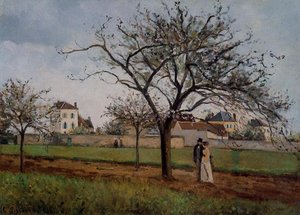
Discover Camille Pissarro’s 'Haystack-Eragny' (1895), a serene Pointillist landscape showcasing rural tranquility & harmonious color. Admire its geometric forms & atmospheric haze. A beautiful addition to any art collection.
 Afficher la suite
Explorez l'art de Camille Pissarro : paysages et scènes de la vie quotidienne impressionnistes et néo-impressionnistes. Figure clé influençant Van Gogh, Cézanne et bien d'autres.
Reproduction à l'huile faite à la main
Huile sur toile peinte à la main, avec cadre et dimensions personnalisés, réalisée sur commande par nos artistes. ( Passer au format impression Passer au format image numérique)




P118B €10

P118H €10

P118W €10

P438Z €10

P508JH €12

P508YH €12

P805H €10

P805Z €10

P919BZ €10

P919G €10

P919XJ €10

P959ZH €10

P968JZ €12

W106C €8

W218G €10

W218JH €8

W218Y €10

W307PJ €10

W316G €10

W316PJ €8

W316Y €10

W398PJ €8

W4111J €10

W500HY €15

W500JH €15

W692G €12

W849H €8

W940BG €15

W953PJ €8




Format standard
personnalisé
CM
INCH
Choisissez parmi nos formats prédéfinis qui respectent les proportions originales de l’œuvre.
Loading sizes...

largeur
hauteur
Saisissez la largeur et la hauteur souhaitées, pour s'adapter à votre cadre ou à votre mur. Cette œuvre est peinte à la main ; ainsi, pour un format de forme différente, l'artiste peut peindre un peu plus autour du tableau ou réduire légèrement les bords — c'est vous qui choisissez. Nous vous envoyons une maquette numérique pour approbation avant que la peinture ne commence. L'image présentée sur cette page ne reflète pas le résultat réel — seule la maquette le fait.
Exemples de personnalisation possibles : remplacer un visage par la photo du client ; ajouter un animal de compagnie (par exemple, remplacer un chat par un chien) ; inclure un message caché en arrière-plan ; modifier le paysage ou les éléments de l'arrière-plan.
Après la commande, l’équipe TopImpressionists.com contactera le client par e-mail pour recueillir ses instructions et lui fournira une maquette d’aperçu
Après la commande, l’équipe TopImpressionists.com contactera le client par e-mail pour recueillir ses instructions et lui fournira une maquette d’aperçu
Livraison dans le monde entier () en 3 à 4 semaines au lieu des 5 semaines habituelles. (22 octobre). Aucun compromis sur la qualité.

Livraison express gratuite dans le monde entier

Toile de lin de haute qualité

Assurance transport complète

Garantie de remboursement des droits de douane

Garantie de fidélité des couleurs

Garantie de retour de 100 jours (uniquement en cas de défaut)

Garantie de remboursement à 100%

Tarifs dégressifs sur quantité
 L'option verre n'est disponible que pour les dimensions inférieures à 110 cm.

haystack- eragny.
Technique de reproduction
Format de la reproduction
-


Prix total final
€ 235
Camille Pissarro's *Haystack – Eragny*: A Symphony of Light and Rural Life
Camille Pissarro’s *Haystack – Eragny*, painted in 1895, is more than just a depiction of a rural French landscape; it’s a meticulously constructed meditation on light, color, and the quiet beauty of everyday life. Executed with the precision characteristic of his mature Pointillist style, this pastel-toned canvas transports the viewer to the fields surrounding Eragny, a village in Normandy where Pissarro spent much of his artistic career. The scene unfolds with a remarkable serenity – a vast expanse of golden fields punctuated by a central haystack, its form rendered through an astonishingly delicate application of tiny dots of pigment. Two figures, small and indistinct, traverse the foreground, adding a subtle narrative element to this otherwise contemplative composition.
- The Pointillist Technique: Pissarro’s mastery of Pointillism is immediately apparent. He employs the optical blending method championed by Seurat and Signac, meticulously layering minuscule dots of pure color – blues, greens, yellows, and browns – to create an illusion of depth, texture, and luminosity. This technique demands immense patience and control, resulting in a shimmering surface that seems to vibrate with reflected light.
- A Normandy Landscape: Eragny itself held a profound significance for Pissarro. He frequently depicted the landscapes surrounding the village, capturing its distinctive character – the rolling hills, the expansive skies, and the rhythms of rural life. This particular view offers a glimpse into the agricultural heartland of France, a subject that resonated deeply with Pissarro’s interest in depicting the lives of ordinary people.
- Atmospheric Perspective: The artist skillfully utilizes atmospheric perspective to create a sense of depth. The distant hills are rendered in paler, cooler tones, while the foreground elements retain their richer colors and sharper details. This technique effectively simulates the way light scatters through the atmosphere, enhancing the illusion of space.
Historical Context: Impressionism’s Evolution
*Haystack – Eragny* represents a pivotal moment in Pissarro's artistic journey. While he had experimented with Impressionistic techniques earlier in his career, this work firmly establishes him as one of the leading figures in Pointillism. The late 1890s witnessed a resurgence of interest in scientific approaches to painting, fueled by theories about color perception and optics. Pissarro, along with Seurat and Signac, embraced these ideas, developing a highly systematic and rigorous style that distinguished them from their Impressionist predecessors. This period marked a shift away from the spontaneous brushstrokes of earlier Impressionism towards a more calculated and controlled approach to representation.
- The Rise of Scientific Painting: The Pointillist movement was influenced by scientific theories about color perception, particularly those proposed by Eugène-Louis Mellegren. Artists sought to understand how the eye perceives color and used this knowledge to create paintings that would appear vibrant and luminous when viewed from a distance.
- Pissarro’s Continued Innovation: Despite his association with Pointillism, Pissarro remained open to experimentation and continued to evolve his style throughout his career. *Haystack – Eragny* demonstrates his ability to seamlessly integrate elements of both Impressionism and Pointillism, creating a unique and compelling visual experience.
Symbolic Resonance and Emotional Impact
Beyond its technical brilliance, *Haystack – Eragny* possesses a quiet emotional resonance. The scene evokes feelings of tranquility, nostalgia, and connection to the natural world. The haystack itself, a symbol of rural abundance and agricultural labor, anchors the composition and provides a focal point for the viewer’s gaze. The muted color palette and soft lighting contribute to the painting's serene atmosphere, inviting contemplation and reflection. It is a testament to Pissarro’s ability to capture not just the appearance of a landscape but also its underlying spirit – a celebration of simple beauty and the enduring rhythms of rural life.
- The Pastoral Ideal: The painting embodies the traditional pastoral ideal, depicting an idealized vision of rural life that has resonated throughout Western art history.
- A Moment of Stillness: The composition’s stillness suggests a moment of respite – a pause in the relentless pace of modern life.
Perfect for Your Space
A hand-painted reproduction of *Haystack – Eragny* offers a unique opportunity to bring this iconic work of art into your home or office. The meticulous detail and vibrant colors will transform any space, evoking the tranquility and beauty of Pissarro’s vision. Whether you are an admirer of Impressionism, a collector of fine art, or simply seeking to add a touch of elegance and sophistication to your décor, this reproduction is sure to be a treasured addition to your collection.
Questions et réponses
Où puis-je télécharger «haystack- eragny.» de Camille Pissarro ?
«haystack- eragny.» de Camille Pissarro peut être téléchargé depuis la page Télécharger de l'œuvre, en tant que un téléchargement d'image numérique haute résolution.
À quel point la palette de "haystack- eragny." est-elle saturée ?
La palette de « haystack- eragny. » présente une saturation Subtle Color.
De quelle période date «haystack- eragny.» de Camille Pissarro ?
La période historique de «haystack- eragny.» de Camille Pissarro est 19th Century. Cette classification situe l'œuvre dans l'histoire de l'art.
Œuvres similaires




Biographie de l'artiste
Camille Pissarro : Une Vie dans l'Art
Jeunesse et Formation
Jacob Abraham Camille Pissarro est né le 10 juillet 1830 à Charlotte Amalie, sur Saint-Thomas (alors les Indes occidentales danoises, aujourd’hui les îles Vierges américaines). Son père, Frederick Abraham Gabriel Pissarro, était d'ascendance juive portugaise de nationalité française, et sa mère, Rachel Manzano-Pomié, venait d'une famille juive française. Son éducation fut quelque peu atypique en raison du mélange de ses origines et des circonstances de sa famille. Il reçut sa formation artistique précoce à l’Académie Savary à Passy près de Paris, où il développa une appréciation pour les maîtres de l'art français et fut encouragé à dessiner de la nature.
À 17 ans, Pissarro revint à Saint-Thomas et continua à dessiner pendant ses pauses tout en travaillant comme employé de chargement. Cette période lui a inculqué une observation attentive de la vie quotidienne et du monde naturel – des thèmes qui deviendront centraux dans son art.
Développement Artistique et Influences
En 1855, Pissarro s'installa à nouveau à Paris, où il travailla comme assistant du peintre danois Anton Melbye. Il étudia les œuvres de Gustave Courbet, Jean-Baptiste-Camille Corot, Honoré Daumier, et Charles-François Daubigny, dont les styles ont profondément influencé son travail précoce. Il trouva l'enseignement artistique formel dans des institutions comme l’École des Beaux-Arts étouffant et rechercha une instruction alternative auprès de Corot.
Initialement, les peintures de Pissarro adhéraient aux normes traditionnelles et étaient exposées au Salon de Paris. Sa première peinture fut acceptée en 1859. Cependant, il commença rapidement à expérimenter avec des coups de pinceau plus libres et un accent sur la capture des effets fugaces de la lumière – des caractéristiques propres à l'impressionnisme.
Contribution à l’Impressionnisme et Au-delà
Camille Pissarro est considéré comme une figure clé tant de l’Impressionnisme que du Post-Impressionnisme. Il est le seul artiste à avoir exposé à toutes les huit expositions impressionistes de Paris (1874-1886), agissant comme une force stabilisatrice au sein du groupe. Il n'était pas seulement un exposant ; il encourageait et soutenait activement ses camarades, ce qui lui a valu le surnom de « figure paternelle » du mouvement.
Plus tard dans sa carrière, Pissarro a exploré le néo-impressionnisme, influencé par Georges Seurat et Paul Signac, en employant une technique pointilliste pendant un certain temps avant de revenir à un style plus personnel.
Réalisations Majeures et Thèmes
- Paysages : Pissarro est renommé pour ses représentations de paysages ruraux et urbains, se concentrant souvent sur des scènes de la vie quotidienne.
- Scènes de Vie Parisienne : Il a capturé l'atmosphère animée et les rues bondées de Paris pendant une période de changements rapides.
- Vie Paysanne : Ses peintures dépeignent fréquemment la vie et le travail des paysans, reflétant sa conscience sociale.
- Influence sur les Jeunes Artistes : Pissarro a encadré et influencé profondément Paul Cézanne, Vincent van Gogh, et Paul Gauguin, façonnant leur développement artistique.
Signification Historique et Héritage
L'héritage de Camille Pissarro s’étend au-delà de ses magnifiques peintures. Il a été un champion de la liberté artistique et de l'innovation, jouant un rôle crucial dans le développement de l'art moderne. Son engagement à peindre *en plein air* (à l'extérieur) et à capturer l'expérience immédiate a révolutionné la peinture de paysages. Sa volonté d’expérimenter différents styles et techniques témoigne de sa curiosité intellectuelle et de son courage artistique.
Aujourd'hui, les œuvres de Pissarro sont conservées dans de nombreux musées du monde entier, notamment le Museum Kunstsalon Franke Schenk et le Museum Frieder Burda, inspirant toujours les artistes et les amateurs d’art. Il reste une figure célèbre dont les contributions sont continuellement étudiées et appréciées.

Camille Pissarro
1830 - 1903 , United States of America
En bref
- Artistes Influents:
- Gustave Courbet
- Jean-Baptiste Corot
- Honoré Daumier
- Date De Décès: 13 novembre 1903
- Date De Naissance: 10 juillet 1830
- Influence Sur Les Artistes:
- Paul Cézanne
- Vincent van Gogh
- Paul Gauguin
- Lieu De Naissance: Charlotte Amalie, États-Unis
- Nationalité: Danois-français
- Nom Complet: Camille Pissarro
- Oeuvres Notables:
- Neige à Montfoucault
- La Laveuse au Bord de la Rivière
- Le port intérieur de Dieppe
- La Jeune Fille
- Autoportrait
- Jardin de Légumes
- La cour de Lucien
- Paysage d'hiver vallonné
- Nature Morte
- Champ de Seigle
- Style Artistique: Impressionnisme, Néo-impressionnisme
Articles connexes

Constable : Les 25 Chefs-d'Œuvre du Maître Anglais | TopImpressionists
Plongez dans l'univers de John Constable avec les 25 œuvres incontournables du maître anglais. Découvrez l'histoire, la technique et l'émotion derrière ses paysages romantiques. Reproductions de qualité muséale sur TopImpressionists.com.

Camille Pissarro : Pionnier de l'Impressionnisme et Père de l'Art Moderne – Une Exploration de son Héritage
Explorez l'héritage de Camille Pissarro, pionnier de l'impressionnisme et figure clé de l'art moderne. Découvrez sa vie, ses œuvres emblématiques et son influence durable sur le monde artistique. Analyse approfondie pour collectionneurs et passionnés.

Évocations de lieux : Un voyage historique à travers l'art du paysage
Explorez l'histoire fascinante de la peinture de paysage à travers les chefs-d'œuvre du Romantisme. Découvrez Friedrich, Turner et Aivazovski et laissez-vous inspirer par la beauté sauvage et le sublime. Reproduction d'art de qualité chez TopImpressionists.

Les 10 Chefs-d'œuvre du Paysage Romantique : Artistes et Décor d'Intérieur
Plongez dans l'émotion du Romantisme avec les 10 plus beaux paysages de Friedrich, Turner & Delacroix. Découvrez leur histoire et trouvez l'inspiration déco idéale sur TopImpressionists.com !

Cultivating Visions: A Historical Journey Through Rural Landscapes in Art
Explore the rich history of rural landscape painting with TopImpressionists. Discover Impressionist masterpieces, key artists & movements. Find your perfect serene artwork and bring nature's beauty home.
Explorez des œuvres d'art classées par thèmes, styles et caractéristiques.


