Aperçu en situation
 Envoyer
 Partager
 Détails de l'œuvre
 Guide
Guide

 Télécharger l'image
 Articles similaires
 Radiographie
 Diaporama
 Questions et réponses
 Statistiques
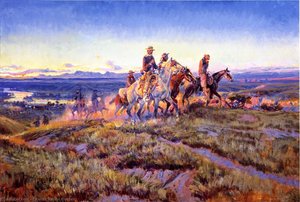
The Picture Robe

- 37.0 x 27.0 cm


Explore 'The Picture Robe' by Charles Marion Russell (1899). A stunning pen & ink Native American artwork showcasing intricate beadwork & cultural detail. Admire realism & historical significance.
 Lire la suite
Découvrez Charles Marion Russell (1864-1926), artiste américain emblématique de l'Ouest sauvage ! Cowboys, Amérindiens & paysages grandioses capturés avec authenticité. Explorez ses œuvres iconiques sur TopImpressionists.
Giclées et impressions d'art
Impressions giclées ou sur toile de qualité musée, avec une production rapide et des finitions au choix. ( Commander la reproduction peinte à la main Passer au format numérique)




P118B €10

P118H €10

P118W €10

P438Z €10

P508JH €12

P508YH €12

P805H €10

P805Z €10

P919BZ €10

P919G €10

P919XJ €10

P959ZH €10

P968JZ €12

W106C €8

W218G €10

W218JH €8

W218Y €10

W307PJ €10

W316G €10

W316PJ €8

W316Y €10

W398PJ €8

W4111J €10

W500HY €15

W500JH €15

W692G €12

W849H €8

W940BG €15

W953PJ €8




Format standard
sur mesure
CM
INCH
Choisissez parmi nos formats prédéfinis qui respectent les proportions originales de l’œuvre.
Loading sizes...

largeur
hauteur
Saisissez la largeur et la hauteur souhaitées pour qu'elles s'adaptent à votre cadre ou à votre mur. Une impression peut être recadrée, mais jamais agrandie au-delà de l'image originale ; ainsi, un format de forme différente entraînera la perte d'une partie de l'image. Nous vous envoyons une maquette numérique pour approbation avant toute impression. L'image présentée sur cette page ne montre pas le recadrage réel — seule la maquette le permet.
Livraison dans le monde entier () en 2 semaines au lieu des 4/5 semaines habituelles. (4 novembre)

Livraison express gratuite dans le monde entier

Toile de lin de qualité supérieure

Assurance transport complète

Garantie de remboursement des droits de douane

Garantie de fidélité des couleurs

Politique de retour de 100 jours (uniquement en cas de défaut)

Garantie de remboursement à 100%

Offre de tarifs dégressifs
 L'option verre n'est disponible que pour les dimensions inférieures à 110 cm.

The Picture Robe
Giclées et impressions d'art
Format de la reproduction
-


Prix total
€ 62
A Portrait of Craft and Culture: Charles Marion Russell’s “The Picture Robe”
Charles Marion Russell's "The Picture Robe," painted in 1899, isn’t merely a depiction of two Native American figures engaged in beadwork; it’s a meticulously rendered snapshot of a vanishing world – a poignant testament to the artistry and traditions of the Plains tribes during a rapidly changing era. The artwork immediately draws the eye with its stark monochrome palette, dominated by shades of gray and black, achieved through the masterful application of pen and ink. This deliberate choice lends an air of solemnity and gravitas, mirroring the quiet dignity of the subjects themselves. Russell’s technique is characterized by an almost obsessive attention to detail; every bead, every stitch, every fold in the clothing is rendered with painstaking precision, a testament to his deep respect for the craftspeople he portrays.
The composition itself is deceptively simple yet profoundly effective. The two figures, positioned within what appears to be a dimly lit interior space – perhaps a tent or dwelling – are framed by intricate patterns and textures that dominate the canvas. Russell’s use of hatching and cross-hatching creates an incredible sense of depth and volume, giving the impression that one could almost reach out and touch the rough wool of their garments or feel the cool smoothness of the beads. The flattened perspective, prioritizing clarity and detail over strict three-dimensional representation, serves to heighten the viewer’s engagement with the subject matter – forcing us to truly *see* the intricate work being performed.
The Cowboy Artist and His Native American Subjects
Understanding “The Picture Robe” requires acknowledging the unique position of Charles Marion Russell within the history of American art. Born in St. Louis in 1864, Russell’s early life was far removed from the rugged landscapes he would later immortalize. He spent his youth as a working cowboy in Montana's Judith Basin, an experience that profoundly shaped his artistic vision and instilled in him a deep appreciation for the West’s history and culture. This immersion wasn’t simply observational; Russell actively sought to understand the lives of the people who inhabited this land – particularly the Native American tribes. His fascination with these cultures led him to spend considerable time among the Blood Indians, absorbing their customs, beliefs, and artistic practices.
Russell's relationship with Native Americans was complex and evolving. While he initially depicted them through a romanticized lens, influenced by prevailing stereotypes of the era, he later became a vocal advocate for their rights and a staunch defender of their traditions. “The Picture Robe” reflects this shift in perspective – it’s not simply a portrait; it's an attempt to document and celebrate a vanishing way of life. The meticulous detail with which Russell renders the beadwork and quillwork speaks volumes about his respect for these ancient crafts, suggesting a desire to preserve them before they were lost to time.
Symbolism and Historical Context
The title itself, “The Picture Robe,” hints at the artwork’s deeper significance. Historically, robes – often adorned with intricate beadwork and quillwork – held immense cultural importance for Native American tribes, serving as symbols of status, identity, and spiritual connection. They were not merely garments; they were works of art in their own right, imbued with layers of meaning and tradition. Russell’s choice to focus on this particular robe underscores the profound value he placed on these artistic practices.
Painted in 1899, “The Picture Robe” captures a specific moment in American history – a period of rapid westward expansion and increasing conflict between settlers and Native Americans. The artwork serves as a poignant reminder of the cultural exchange that occurred during this time, but also highlights the tragic loss of indigenous traditions and ways of life. Russell’s work, therefore, transcends its aesthetic qualities; it offers a valuable glimpse into a complex and often overlooked chapter in American history.
A Legacy Preserved: Reproduction and Appreciation
Today, “The Picture Robe” stands as a testament to Charles Marion Russell's artistic skill and his enduring fascination with the American West. High-quality reproductions of this iconic artwork offer a remarkable opportunity to experience its beauty and significance firsthand. Whether displayed in a private residence or a public space, this piece invites contemplation on themes of cultural heritage, craftsmanship, and the ever-changing landscape of America.
Questions et réponses
Quelle est la saturation des couleurs de «The Picture Robe» de Charles Marion Russell ?
«The Picture Robe» de Charles Marion Russell présente une saturation Atténué.
Sous quels autres noms ou pseudonymes Charles Marion Russell est-il connu ?
Charles Marion Russell est également connu sous le nom de C.M. Russell, Charlie Russell, Kid Russell, Charles M. Russell.
Existe-t-il une fiche informative sur «The Picture Robe» de Charles Marion Russell destinée aux étudiants ?
La page Fiche pédagogique de «The Picture Robe» de Charles Marion Russell propose une fiche pédagogique imprimable en deux volets : l'œuvre accompagnée de sa fiche d'identité, une frise chronologique la situant dans la vie de l'artiste, d'autres œuvres de l'artiste, la palette de couleurs mesurée, ainsi que des citations prêtes à être copiées en quatre styles différents.
Biographie de l'artiste
Premières années et inspirations
Charles Marion Russell, un artiste américain renommé, a laissé une marque indélébile sur le monde de l'art avec ses représentations captivantes de l'ouest américain. Né le 19 mars 1864 à St. Louis, dans le Missouri, la vie de Russell témoigne de sa passion pour l'art et le Far West.Carrière artistique et œuvres notables
La carrière artistique de Russell s'est étendue sur plusieurs médiums, notamment la peinture et la sculpture en bronze. Ses œuvres se caractérisent par leurs représentations vives des cow-boys, des Amérindiens et des paysages situés dans l'ouest américain et en Alberta, au Canada. Parmi ses œuvres notables, on peut citer :- A Bad Hoss (1904) - un exemple typique de la capacité de Russell à capturer l'esprit de l'ouest américain. (voir des œuvres similaires sur TopImpressionists)
- Battle of Belly River (1905) - cette peinture met en valeur la capacité de Russell à représenter des scènes dramatiques avec précision et détail. (explorer d'autres œuvres d'art de l'ouest sur TopImpressionists)
- Lewis and Clark Meeting Indians at Ross' Hole (1916) - une fresque remarquable qui orne les chambres de la maison du Capitole du Montana à Helena, mettant en valeur le style narratif historique de Russell. (découvrir d'autres œuvres d'art américaines sur TopImpressionists)
Évolution artistique et influences
Russell a commencé sa carrière en produisant des illustrations pour des magazines, ce qui lui a permis de développer ses compétences techniques et de gagner une reconnaissance précoce. Ses premières œuvres étaient souvent influencées par l'art populaire et les gravures sur bois, mais il a rapidement développé son propre style distinctif caractérisé par un réalisme vif et une attention particulière aux détails. L’influence des artistes comme Frederic Remington est visible dans ses premières peintures, mais Russell s’est rapidement démarqué en capturant avec plus de précision la vie quotidienne des cow-boys et des Amérindiens. Son expérience directe du Far West a été cruciale pour son développement artistique, lui permettant de représenter les paysages, les animaux et les personnages avec une authenticité inégalée.Héritage et collections
L'héritage de Russell est préservé à travers diverses collections, notamment :- le complexe du musée C. M. Russell à Great Falls, Montana, qui abrite plus de 2 000 œuvres d'art de Russell, des objets personnels et des artefacts.
- la société historique du Montana à Helena, Montana, qui présente une collection importante d'œuvres de Russell.
- le centre Buffalo Bill du Far West à Cody, Wyoming, qui présente l'art de Russell et le Far West américain.
Conclusion
L'héritage artistique de Charles Marion Russell continue de captiver le public grâce à sa représentation authentique du Far West américain. À travers ses œuvres, nous expérimentons l'essence d'une époque révolue, préservée à jamais dans le domaine de l'art. Explorez davantage les œuvres de Russell et d'autres chefs-d'œuvre de l'ouest sur TopImpressionists.
Charles Marion Russell
1864 - 1926 , États-Unis d'Amérique
L'essentiel de l'artiste
- Artistic Movement Or Style: Art occidental
- Date Of Birth: 19 mars 1864
- Date Of Death: 24 octobre 1926
- Full Name: Charles Marion Russell
- Nationality: Américain
- Notable Artworks:
- A Bad Hoss
- Battle of Belly River
- Lewis and Clark Meeting Indians
- Place Of Birth (City And Country): St. Louis, États-Unis
Articles connexes

Charles Marion Russell: Capturing the American West Through a Romantic Lens
Explore the captivating world of Charles Marion Russell, 'the cowboy artist.' Discover his life, iconic paintings, advocacy for Native Americans, and investment potential. A guide for discerning art collectors.

Grant Wood & American Regionalism: Identity, Myth & the Rural Landscape
Explore the world of Grant Wood & American Regionalism with TopImpressionists. Discover the symbolism behind 'American Gothic', recurring themes, and the movement's lasting impact on art history. High-quality reproductions available.

Charles Bird King: Capturing Native American Dignity Through Portraiture & Cultural Exchange
Explore the captivating portraits of Charles Bird King, renowned for his depictions of Native American leaders. Discover the historical context, artistic techniques, and collecting value of these significant 19th-century artworks.

The Alchemy of Ink: Mastering the Timeless Beauty and Art History of Paper and Brush
Embark on a sophisticated exploration of ink wash painting and Sumi-e. Uncover the profound historical lineages, Zen philosophies, and technical mastery behind this timeless medium in our authoritative guide for fine art enthusiasts.

Réalisme Américain : 10 Chefs-d'œuvre Incontournables pour une Déco Inspirée
Plongez au cœur du Réalisme Américain avec 10 chefs-d'œuvre d'Edward Hopper, Andrew Wyeth et plus. Découvrez l'histoire et les techniques de ces artistes emblématiques. Reproductions de tableaux de qualité musée sur TopImpressionists.com !
Explorez des œuvres d'art classées par thèmes, styles et caractéristiques.


![L'Homme-Médecine [N° 4]](/media/artworks/images-thumb/6e/fe/6efedbb165498f96fba48e9e2adb404b.jpg)
![La chasse au bison [No. 39]](/media/artworks/images-thumb/f1/81/f1813563c9200329e01ac61f10ee148f.jpg)

![Chasseurs de chevaux sauvages [N° 2]](/media/artworks/images-thumb/c2/49/c2497737fcda094617b952f27aa21547.jpg)