

 Aperçu en situation
 Envoyer
 Partager
 Détails de l'œuvre
 Guide
Guide

 Télécharger l'image
 Articles similaires
 Radiographie
 Diaporama
 Statistiques
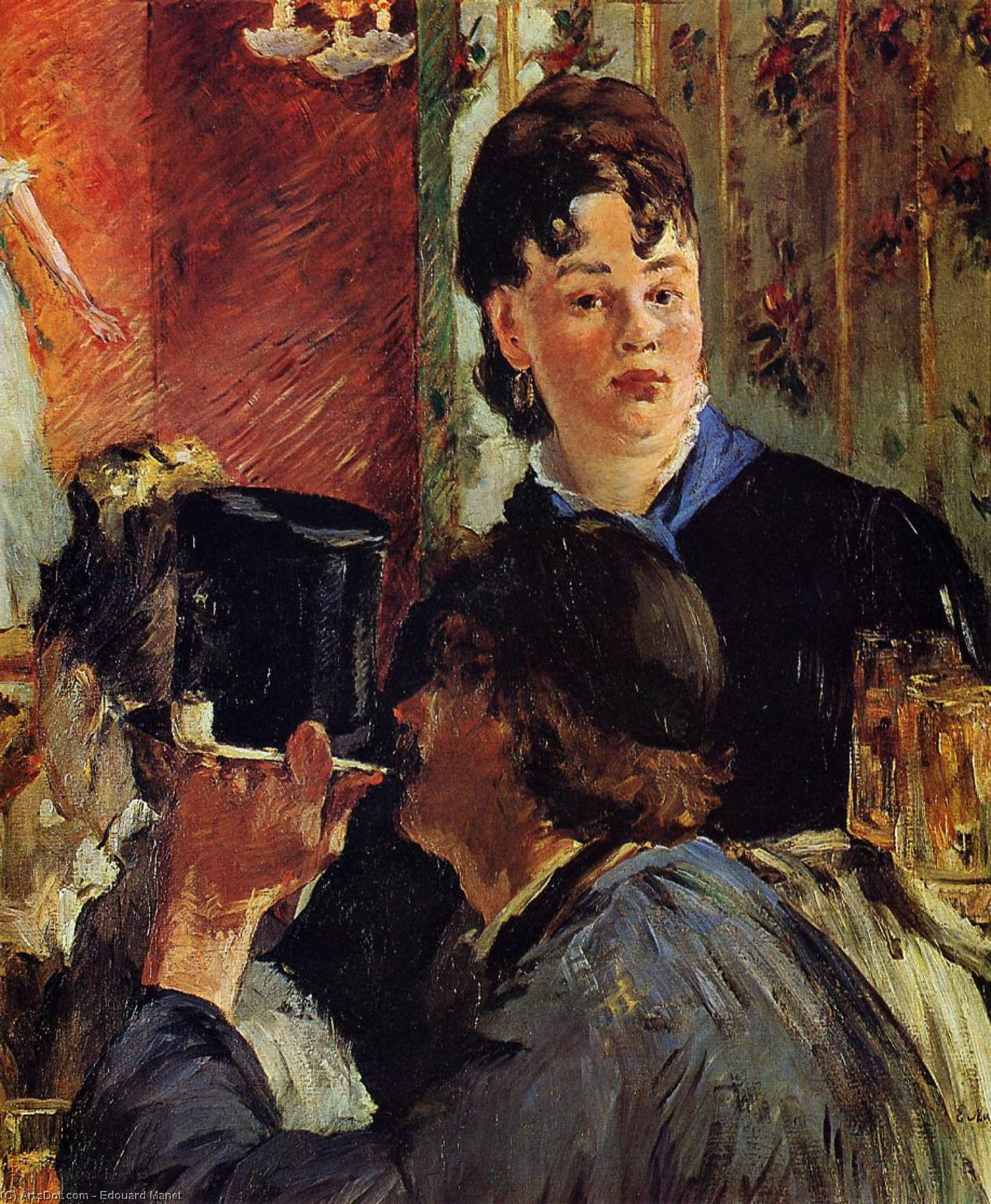
La Serveuse de bocks


"La Serveuse de bocks" par Édouard Manet : Une œuvre emblématique du mouvement impressionniste capturant une scène quotidienne parisienne avec une lumière douce et une composition innovante. Découvrez cette peinture au Louvre !
 Lire la suite
Explorez l'art révolutionnaire d'Édouard Manet (1832-1883), une figure clé de la transition du Réalisme à l'Impressionnisme. Découvrez ses chefs-d’œuvre controversés tels que 'Le Déjeuner sur l'herbe' et 'Olympia', ainsi que son influence durable sur l'art moderne.
Giclées et impressions d'art
Impressions giclées ou sur toile de qualité musée, avec une production rapide et des finitions au choix. ( Commander la reproduction peinte à la main Passer au format numérique)




P118B €10

P118H €10

P118W €10

P438Z €10

P508JH €12

P508YH €12

P805H €10

P805Z €10

P919BZ €10

P919G €10

P919XJ €10

P959ZH €10

P968JZ €12

W106C €8

W218G €10

W218JH €8

W218Y €10

W307PJ €10

W316G €10

W316PJ €8

W316Y €10

W398PJ €8

W4111J €10

W500HY €15

W500JH €15

W692G €12

W849H €8

W940BG €15

W953PJ €8




Format standard
sur mesure
CM
INCH
Choisissez parmi nos formats prédéfinis qui respectent les proportions originales de l’œuvre.
Loading sizes...

largeur
hauteur
Saisissez la largeur et la hauteur souhaitées pour qu'elles s'adaptent à votre cadre ou à votre mur. Une impression peut être recadrée, mais jamais agrandie au-delà de l'image originale ; ainsi, un format de forme différente entraînera la perte d'une partie de l'image. Nous vous envoyons une maquette numérique pour approbation avant toute impression. L'image présentée sur cette page ne montre pas le recadrage réel — seule la maquette le permet.
Livraison dans le monde entier () en 2 semaines au lieu des 4/5 semaines habituelles. (25 octobre)

Livraison express gratuite dans le monde entier

Toile de lin de qualité supérieure

Assurance transport complète

Garantie de remboursement des droits de douane

Garantie de fidélité des couleurs

Politique de retour de 100 jours (uniquement en cas de défaut)

Garantie de remboursement à 100%

Offre de tarifs dégressifs
 L'option verre n'est disponible que pour les dimensions inférieures à 110 cm.

La Serveuse de bocks
Giclées et impressions d'art
Format de la reproduction
-


Prix total
€ 61
The Painting and Its Context
Édouard Manet’s “The Waitress” (also known as “The Beer Serving Girl”), created in 1878, stands as a pivotal work within the burgeoning Impressionist movement. Housed at the Musée du Louvre in Paris, France, this painting transcends mere depiction; it captures a fleeting moment of everyday life—a scene from a Parisian café-concert—and embodies Manet’s innovative approach to artistic representation.
Manet skillfully blended elements of Realism and Impressionism, marking him as a transitional figure between these dominant art styles. Unlike the idealized portrayals favored by academic painters, “The Waitress” presents a raw observation of reality, prioritizing light and atmosphere over meticulous detail. This stylistic choice reflects Manet’s desire to move beyond traditional conventions and engage with the dynamism of modern urban life.
The Composition and Details
The painting's composition is deceptively simple yet profoundly effective. Three figures occupy a dining table, establishing a central focal point. The primary subject is a woman dressed in black attire—a hat perched atop her head—who performs the task of serving drinks or food. Alongside her sits another gentleman, while a third individual stands behind him, adding to the sense of movement and interaction.
Manet’s meticulous attention to detail contributes to the painting's realism. The inclusion of objects like chairs and bottles reinforces the café-concert setting, immersing the viewer in the atmosphere of the time. Furthermore, Manet skillfully employs Impressionist techniques—particularly the dappled brushstrokes—to convey the subtle nuances of light and color, capturing the ephemeral quality of the scene.
Artistic Significance
“The Waitress” sparked considerable controversy upon its debut at the Salon of 1879 due to its unconventional depiction of female nudity. Critics questioned Manet’s artistic license and challenged prevailing societal norms regarding representation. However, this reaction ultimately solidified “The Waitress’” place in art history as a courageous assertion of artistic freedom and a rejection of academic dogma.
Beyond its controversial reception, “The Waitress” exemplifies Manet's commitment to portraying the human experience with honesty and sensitivity. It serves as a testament to his ability to capture not only visual appearances but also psychological states—the quiet contemplation of the woman gazing out at the viewer—making it an enduring symbol of Impressionist innovation.
Other Notable Works by Manet
Manet’s artistic legacy extends far beyond “The Waitress,” encompassing masterpieces such as “Le Déjeuner sur l'herbe” and “Olympia.” These paintings similarly challenged conventions and provoked critical debate, cementing Manet’s reputation as a trailblazer of modern art.
"Le Déjeuner sur l'herbe," exhibited at the Salon of 1863, depicted nude figures in a pastoral setting—a daring departure from academic tradition. Its provocative imagery ignited discussions about artistic morality and challenged viewers to confront uncomfortable truths about societal attitudes toward sexuality.
"Olympia," unveiled at the Salon of 1865, presented a scandalous portrait of a prostitute reclining on a chaise longue—further fueling controversy and prompting scrutiny of Manet’s artistic choices. Like “The Waitress,” Olympia exemplifies Manet's willingness to confront societal prejudices and champion artistic experimentation.
Relevance to TopImpressionists.com
TopImpressionists.com offers exceptional reproductions of Édouard Manet’s iconic artworks, allowing enthusiasts to appreciate these masterpieces in stunning detail. Our skilled artisans meticulously recreate “The Waitress” using traditional oil painting techniques—capturing the essence of Manet's vision with unparalleled accuracy.
Conclusion
"The Waitress" remains a cornerstone of Impressionist art history—a testament to Édouard Manet’s artistic courage and his unwavering dedication to portraying the complexities of modern life. For those seeking to adorn their homes with a piece of art history, TopImpressionists.com presents an unparalleled opportunity to acquire a beautifully crafted reproduction that honors Manet's legacy.
Questions et réponses
Quelle taille est recommandée pour "La Serveuse de bocks" dans un(e) Salon ?
Pour une Salon, la taille d'impression recommandée pour «La Serveuse de bocks» de Édouard Manet est Grand format.
Que représente "La Serveuse de bocks" et quelle atmosphère s'en dégage ?
«La Serveuse de bocks» met en scène café-concert, waitress, parisian life, 19th century, serving drinks, everyday scene, social commentary, et l'atmosphère qui s'en dégage est Élégance classique.
Comment la composition chromatique de «La Serveuse de bocks» de Édouard Manet est-elle construite ?
La composition chromatique de «La Serveuse de bocks» de Édouard Manet allie un contraste Équilibré à une harmonie Harmonie équilibrée.
Œuvres similaires


Biographie de l'artiste
jeune vie et carrière
Édouard Manet, peintre moderniste français, est né le 23 janvier 1832 à Paris. Dépassant ses racines de la haute société et une voie navale prédéterminée, Manet s'est affirmé comme un audacieux peintre moderniste dont les toiles capturaient l'animation de la vie au XIXe siècle. Il est largement salué pour son rôle pionnier dans l'impressionnisme, orientant l'art hors des sentiers battus du réalisme.œuvres notables
Les premières œuvres majeures de Manet, Le déjeuner sur l'herbe (1863) et Olympia (1865), étaient radicales, remettant en question les normes artistiques établies et provoquant l'indignation des traditionalistes. Ces œuvres provocantes ont valu l’approbation de pairs visionnaires, semant les graines de l'impressionnisme. * Le déjeuner sur l'herbe (1863) - une peinture qui a suscité la controverse auprès des critiques et de l’Académie des Beaux-Arts. * Olympia (1865) - un travail qui a provoqué de vives réactions en raison de sa représentation d'une femme nue blanche, accompagnée d'une servante noire.musées et collections
Les œuvres de Manet se trouvent dans divers musées du monde entier, notamment : * Musée d'Orsay (Paris, France) - abritant une vaste collection de peintures de Manet, dont Olympia. * Musée des Beaux-Arts (Boston, États-Unis) - présente le portrait de Victorine Meurent, une œuvre notable dans son œuvre.Héritage et influence
Le style innovant de Manet, caractérisé par des coups de pinceau larges et rapides, un éclairage en studio et une profondeur superficielle, a été une influence majeure sur les peintres futurs. Son héritage peut être vu dans les œuvres de nombreux artistes qui l'ont suivi.- Impressionnisme : son travail pionnier dans ce style lui a valu le titre d’artiste connu par tous parmi les amateurs d’art.
- Réalisme : son rejet des approches réalistes traditionnelles a ouvert la voie à une nouvelle génération d'artistes.
- Art moderne : les contributions de Manet à l'évolution de l'art moderne sont indéniables, assurant sa place dans les annales de l’histoire de l’art.
lecture et exploration supplémentaires
* Découvrez plus sur la vie et les œuvres d'Édouard Manet sur TopImpressionists. * Explorez la collection du Musée d'Orsay, présentant une vaste gamme de peintures de Manet, dont Olympia, sur la page musée de TopImpressionists.
Édouard Manet
1832 - 1883 , France
L'essentiel de l'artiste
- Artistes Influents:
- Caravaggio
- Diego Velázquez
- Gustave Courbet
- Date De Décès: 1883
- Date De Naissance: 23 janvier 1832
- Influence Sur Les Artistes:
- Claude Monet
- Pierre-Auguste Renoir
- Edgar Degas
- Lieu De Naissance: Paris, France
- Mouvement Artistique: Réalisme et Impressionnisme
- Nationalité: Française
- Nom Complet: Édouard Manet
- Oeuvres Notables:
- Le Déjeuner sur l'herbe
- Olympia
- Madame Manet à Bellevue
- Portrait de Mery Laurent
Articles connexes

Édouard Manet : Les 25 Œuvres Maîtresses du Réalisme Parisien | TopImpressionists
Plongez dans l'univers de Édouard Manet avec les 25 œuvres les plus emblématiques du réalisme parisien. Découvrez l'histoire, la technique et l'impact de chefs-d'œuvre comme 'Le Déjeuner sur l'herbe'. Reproductions de qualité musée disponibles sur TopImpressionists.com.

Réalisme en Peinture : Top 10 des Œuvres Maîtresses à Redécouvrir
Plongez au cœur du réalisme en peinture ! Découvrez 10 œuvres majeures de Courbet, Millet et autres maîtres. Explorez l'histoire, les techniques & trouvez l'inspiration déco sur TopImpressionists.com.

Impressionnisme : Les 10 Chefs-d'œuvre Incontournables pour une Déco Élégante
Plongez au cœur de l'Impressionnisme avec les 10 chefs-d'œuvre incontournables de Monet, Renoir & Degas. Découvrez l'histoire et la lumière unique de ces peintures célèbres. Reproductions d'art de qualité muséale sur .

Édouard Manet : Entre Réalisme et Modernité – Une Révolution Picturale au Cœur de Paris
Découvrez Édouard Manet, figure clé de la peinture moderne et précurseur de l'impressionnisme. Analyse approfondie de ses œuvres controversées, son influence artistique et conseils pour collectionner ses tableaux.

Impressionistic Realism's Finest: 10 Masterpieces for Your Home | TopImpressionists
Journey through Impressionistic Realism with 10 iconic masterpieces by Monet, Renoir & Van Gogh. Explore art history, techniques & find museum-quality reproductions for your home at TopImpressionists.com. Discover all masterpieces online!
Explorez des œuvres d'art classées par thèmes, styles et caractéristiques.


