


 Aperçu en situation
 Partager
 Partager
 Détails
 Guide
Guide

 Télécharger
 Articles similaires
 Radiographie
 Voir le diaporama
 Statistiques
Poires


Édouard Manet capture la beauté simple des pêches dans cette œuvre impressionniste. Un tableau élégant, témoin de son style novateur et influencé par les maîtres anciens.
 Afficher la suite
Explorez l'art révolutionnaire d'Édouard Manet (1832-1883), une figure clé de la transition du Réalisme à l'Impressionnisme. Découvrez ses chefs-d’œuvre controversés tels que 'Le Déjeuner sur l'herbe' et 'Olympia', ainsi que son influence durable sur l'art moderne.
Giclées et impressions d'art
Impressions giclées ou sur toile de qualité musée, avec une production rapide et des finitions au choix. ( Acheter la peinture faite à la main Passer au format image numérique)




P118B $10

P118H $10

P118W $10

P438Z $10

P508JH $12

P508YH $12

P805H $10

P805Z $10

P919BZ $10

P919G $10

P919XJ $10

P959ZH $10

P968JZ $12

W106C $8

W218G $10

W218JH $8

W218Y $10

W307PJ $10

W316G $10

W316PJ $8

W316Y $10

W398PJ $8

W4111J $10

W500HY $15

W500JH $15

W692G $12

W849H $8

W940BG $15

W953PJ $8




Format standard
personnalisé
CM
INCH
Choisissez parmi nos formats prédéfinis qui respectent les proportions originales de l’œuvre.
Loading sizes...

largeur
hauteur
Vous pouvez saisir vos propres dimensions pour vous adapter à un cadre ou à un espace spécifique. Si la taille sélectionnée ne correspond pas aux proportions de l'image originale, nous recadrerons l'œuvre ou étendrons l'image avec une bordure en miroir ou une couleur unie. Une maquette numérique vous sera envoyée pour approbation avant le début de la production.
Veuillez noter que l'aperçu à l'écran ne reflète pas le recadrage ou l'extension réelle. Seule la maquette montrera avec précision la composition finale.
Bien que des tailles personnalisées soient disponibles, nous vous recommandons de choisir une dimension dans la liste prédéfinie afin de préserver les proportions originales.
Livraison dans le monde entier () en 2 semaines au lieu des 4/5 semaines habituelles. (25 septembre)

Livraison express gratuite dans le monde entier

Toile de lin de haute qualité

Assurance transport complète

Garantie de remboursement des droits de douane

Garantie de fidélité des couleurs

Garantie de retour de 100 jours (uniquement en cas de défaut)

Garantie de remboursement à 100%

Tarifs dégressifs sur quantité
 L'option verre n'est disponible que pour les dimensions inférieures à 110 cm.

Poires
Giclées et impressions d'art
Format de la reproduction
-


Prix total final
$ 69
Peaches by Édouard Manet : A Still Life of Simplicity and Modernity
Édouard Manet’s “Peaches,” painted in 1882, is more than just a depiction of fruit; it's a pivotal moment in the evolution of modern art. This seemingly simple still life—three peaches arranged on a table against a serene blue sky—holds within it a wealth of artistic innovation and a profound reflection of Manet’s revolutionary approach to painting. It represents a deliberate departure from the academic traditions that dominated the French Salon, signaling a shift towards capturing the immediacy of modern life with an unprecedented level of realism and psychological depth.
Manet's style at this period is characterized by a remarkable looseness—a rejection of the meticulous detail and smooth transitions favored by his predecessors. Notice the broad, visible brushstrokes that define the peaches themselves, their surfaces rendered with a vibrant immediacy rather than carefully blended tones. He deliberately suppressed transitional shades, opting instead for bold contrasts of color to create an effect of luminous freshness. This technique, heavily influenced by the Impressionists and particularly by artists like Diego Velázquez, who he deeply admired for his ability to capture light and atmosphere, is central to Manet’s distinctive vision.
The composition itself is deceptively straightforward. The peaches, arranged in a loose triangle, command attention with their rich hues—a deep crimson, a pale yellow, and a blush of pink. Their placement on the table, bathed in soft light, invites us to contemplate their beauty and fragility. Yet, it’s not merely an exercise in botanical observation. Manet imbues these simple objects with a subtle sense of melancholy and transience—a poignant reminder of the fleeting nature of beauty and life itself. The blue sky serves as a backdrop that is both calming and slightly melancholic, adding depth to the scene.
Manet’s Influence: From Old Masters to Modern Vision
To fully appreciate “Peaches,” it's crucial to understand Manet’s artistic lineage. He was deeply influenced by the Old Masters, particularly Diego Velázquez and Frans Hals. Velázquez’s mastery of light and shadow, his ability to capture the essence of a subject with minimal detail, served as a model for Manet’s own approach. Similarly, Hals' dynamic brushwork and focus on capturing fleeting moments resonated with Manet’s desire to depict modern life with immediacy and vitality.
However, Manet didn’t simply imitate the Old Masters; he transformed their techniques to suit his own artistic vision. He rejected the idealized forms and mythological subjects that were prevalent in academic painting, instead choosing to portray everyday scenes—peaches on a table, street vendors, café life—with unflinching honesty. This bold decision paved the way for Impressionism and subsequent movements in modern art, demonstrating how artists could break free from tradition and explore new ways of seeing and representing the world.
Still Life as a Revolutionary Form
Manet’s still lifes were not merely decorative arrangements; they were carefully constructed statements about art itself. Unlike traditional still life paintings that sought to emulate the meticulous detail of Flemish masters, Manet's works prioritized capturing the *impression* of light and color—the fleeting effects of atmosphere and emotion. “Peaches” exemplifies this approach perfectly, demonstrating how a simple subject can be transformed into a profound meditation on perception and representation.
Consider his other notable still life paintings, such as "Still Life with Melon and Peaches" (housed at the National Gallery of Art in Washington, D.C.) and “Almonds, currants and peaches,” which further showcase Manet’s ability to elevate ordinary objects into extraordinary works of art. These pieces demonstrate a deliberate rejection of academic conventions, prioritizing direct observation and emotional resonance over technical perfection.
A Reproduction for Your Space
TopImpressionists offers meticulously crafted oil painting reproductions of “Peaches” by Édouard Manet, allowing you to bring this iconic artwork into your home or office. Our hand-painted reproductions capture the essence of Manet’s style—the loose brushstrokes, vibrant colors, and subtle nuances of light and shadow—with remarkable fidelity. Each reproduction is created using archival-quality materials, ensuring that it will retain its beauty and vibrancy for generations to come.
Whether you are an art enthusiast, a collector, or simply seeking to add a touch of artistic sophistication to your space, a TopImpressionists reproduction of “Peaches” is a timeless investment. Explore our collection today and discover the enduring power of Manet’s vision.
Œuvres similaires


Biographie de l'artiste
jeune vie et carrière
Édouard Manet, peintre moderniste français, est né le 23 janvier 1832 à Paris. Dépassant ses racines de la haute société et une voie navale prédéterminée, Manet s'est affirmé comme un audacieux peintre moderniste dont les toiles capturaient l'animation de la vie au XIXe siècle. Il est largement salué pour son rôle pionnier dans l'impressionnisme, orientant l'art hors des sentiers battus du réalisme.œuvres notables
Les premières œuvres majeures de Manet, Le déjeuner sur l'herbe (1863) et Olympia (1865), étaient radicales, remettant en question les normes artistiques établies et provoquant l'indignation des traditionalistes. Ces œuvres provocantes ont valu l’approbation de pairs visionnaires, semant les graines de l'impressionnisme. * Le déjeuner sur l'herbe (1863) - une peinture qui a suscité la controverse auprès des critiques et de l’Académie des Beaux-Arts. * Olympia (1865) - un travail qui a provoqué de vives réactions en raison de sa représentation d'une femme nue blanche, accompagnée d'une servante noire.musées et collections
Les œuvres de Manet se trouvent dans divers musées du monde entier, notamment : * Musée d'Orsay (Paris, France) - abritant une vaste collection de peintures de Manet, dont Olympia. * Musée des Beaux-Arts (Boston, États-Unis) - présente le portrait de Victorine Meurent, une œuvre notable dans son œuvre.Héritage et influence
Le style innovant de Manet, caractérisé par des coups de pinceau larges et rapides, un éclairage en studio et une profondeur superficielle, a été une influence majeure sur les peintres futurs. Son héritage peut être vu dans les œuvres de nombreux artistes qui l'ont suivi.- Impressionnisme : son travail pionnier dans ce style lui a valu le titre d’artiste connu par tous parmi les amateurs d’art.
- Réalisme : son rejet des approches réalistes traditionnelles a ouvert la voie à une nouvelle génération d'artistes.
- Art moderne : les contributions de Manet à l'évolution de l'art moderne sont indéniables, assurant sa place dans les annales de l’histoire de l’art.
lecture et exploration supplémentaires
* Découvrez plus sur la vie et les œuvres d'Édouard Manet sur TopImpressionists. * Explorez la collection du Musée d'Orsay, présentant une vaste gamme de peintures de Manet, dont Olympia, sur la page musée de TopImpressionists.
Édouard Manet
1832 - 1883 , France
En bref
- Artistes Influents:
- Caravaggio
- Diego Velázquez
- Gustave Courbet
- Date De Décès: 1883
- Date De Naissance: 23 janvier 1832
- Influence Sur Les Artistes:
- Claude Monet
- Pierre-Auguste Renoir
- Edgar Degas
- Lieu De Naissance: Paris, France
- Mouvement Artistique: Réalisme et Impressionnisme
- Nationalité: Française
- Nom Complet: Édouard Manet
- Oeuvres Notables:
- Le Déjeuner sur l'herbe
- Olympia
- Madame Manet à Bellevue
- Portrait de Mery Laurent
Articles similaires

Édouard Manet : Les 25 Œuvres Maîtresses du Réalisme Parisien | TopImpressionists
Plongez dans l'univers de Édouard Manet avec les 25 œuvres les plus emblématiques du réalisme parisien. Découvrez l'histoire, la technique et l'impact de chefs-d'œuvre comme 'Le Déjeuner sur l'herbe'. Reproductions de qualité musée disponibles sur TopImpressionists.com.
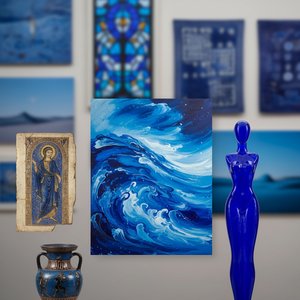
The Allure of Azure: Exploring the Symbolic & Aesthetic Depths of Blue in Art History
Explore the rich history of blue in art! Discover its symbolism, from ancient pigments to modern masterpieces by Kandinsky & Seurat. Uncover the psychological impact and cultural meanings behind this captivating hue.

Les 10 Chefs-d'œuvre Dominés par le Bleu Ardoise : Art, Histoire & Décor
Plongez dans l'univers fascinant des 10 plus beaux tableaux dominés par le bleu ardoise. Découvrez l'histoire, les artistes et les techniques de ces chefs-d'œuvre impressionnistes et contemporains. Inspirez votre décoration intérieure avec !

Paul Cézanne : Les 25 Œuvres Maîtresses d'un Génie Révolutionnaire | TopImpressionists
Plongez dans l'univers de Paul Cézanne avec les 25 œuvres incontournables du maître post-impressionniste. Découvrez l'histoire, la technique et l'émotion derrière ses tableaux iconiques comme 'Les Baigneuses' ou 'Mont Sainte-Victoire'. Reproductions d'art haute qualité sur TopImpressionists.com.

Impressionnisme : Top 10 des Œuvres Incontournables pour une Décoration Raffinée
Plongez dans l'univers vibrant de l'impressionnisme avec notre sélection des 10 œuvres les plus emblématiques : Monet, Renoir, Degas… Découvrez l'histoire et la magie de ces chefs-d'œuvre. Reproductions d'art de qualité muséale sur TopImpressionists.com
Explorez des œuvres d'art classées par thèmes, styles et caractéristiques.


