Aperçu en situation
 Envoyer
 Partager
 Détails de l'œuvre
 Guide
Guide

 Télécharger l'image
 Articles similaires
 Radiographie
 Diaporama
 Q&A
Q&A Statistiques
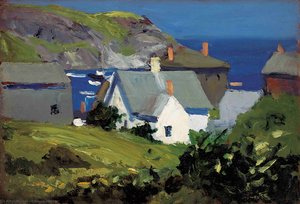
The Camel's Hump
 Acrylique sur toile
- Décoration murale
- American Realism
 1931
1931 127.0 x 81.0 cm
Edward Hopper's 'The Camel’s Hump' captures a serene American landscape with a solitary car amidst towering mountains, reflecting themes of isolation and modern life. Explore the iconic realism of this 1931 masterpiece.
 Lire la suite
Explorez les peintures réalistes américaines emblématiques d'Edward Hopper (1882-1967). Connu pour ses scènes urbaines et rurales évocatrices, son utilisation magistrale de la lumière et ses thèmes de solitude et de vie moderne. Découvrez 'House by the Railroad' et bien plus encore chez TopImpressionists.
L’œuvre d'art présentée sur cette page est protégée par le droit d'auteur, ce qui signifie que nous ne pouvons légalement créer ou vendre de reproduction identique. Cette protection est appliquée en vertu d'accords internationaux tels que la Convention de Berne et par les lois nationales, notamment celles énoncées par le Loi américaine sur le droit d'auteur - Titre 17.
Cette méthode est pleinement conforme aux réglementations sur le droit d'auteur car elle ne repose pas sur la copie ou la duplication de l'œuvre protégée. Il s'agit plutôt d'une réinterprétation créative — une nouvelle peinture qui s'inspire de l'original sans pour autant lui être identique.
Giclées et impressions d'art
Impressions giclées ou sur toile de qualité musée, avec une production rapide et des finitions au choix. ( Commander la reproduction peinte à la main Passer au format numérique)




P118B €10

P118H €10

P118W €10

P438Z €10

P508JH €12

P508YH €12

P805H €10

P805Z €10

P919BZ €10

P919G €10

P919XJ €10

P959ZH €10

P968JZ €12

W106C €8

W218G €10

W218JH €8

W218Y €10

W307PJ €10

W316G €10

W316PJ €8

W316Y €10

W398PJ €8

W4111J €10

W500HY €15

W500JH €15

W692G €12

W849H €8

W940BG €15

W953PJ €8




Format standard
sur mesure
CM
INCH
Choisissez parmi nos formats prédéfinis qui respectent les proportions originales de l’œuvre.
Loading sizes...

largeur
hauteur
Saisissez la largeur et la hauteur souhaitées pour qu'elles s'adaptent à votre cadre ou à votre mur. Une impression peut être recadrée, mais jamais agrandie au-delà de l'image originale ; ainsi, un format de forme différente entraînera la perte d'une partie de l'image. Nous vous envoyons une maquette numérique pour approbation avant toute impression. L'image présentée sur cette page ne montre pas le recadrage réel — seule la maquette le permet.
Livraison dans le monde entier () en 2 semaines au lieu des 4/5 semaines habituelles. (30 octobre)

Livraison express gratuite dans le monde entier

Toile de lin de qualité supérieure

Assurance transport complète

Garantie de remboursement des droits de douane

Garantie de fidélité des couleurs

Politique de retour de 100 jours (uniquement en cas de défaut)

Garantie de remboursement à 100%

Offre de tarifs dégressifs
 L'option verre n'est disponible que pour les dimensions inférieures à 110 cm.

The Camel's Hump
Giclées et impressions d'art
Format de la reproduction
-


Prix total
€ 61
The Camel’s Hump: A Silent Landscape of Modern Isolation
Edward Hopper's "The Camel’s Hump," painted in 1931, isn’t merely a depiction of a mountain range; it’s a distilled essence of American loneliness and the quiet drama unfolding within the vastness of the modern world. This oil on canvas transports us to a remote corner of Vermont, yet the scene resonates with a profound sense of solitude that speaks volumes about Hopper's masterful ability to capture the unspoken anxieties of his time. The painting’s enduring appeal lies in its deceptively simple composition – a winding road cutting through a rugged landscape dominated by towering, yellowish-hued mountains – and the subtle narrative it suggests, hinting at journeys both literal and metaphorical.
Hopper's New Realism style is powerfully evident here. He eschews romanticized landscapes in favor of an objective portrayal of reality, prioritizing light, shadow, and form over emotional embellishment. The meticulous attention to detail—the texture of the road surface, the subtle variations in color across the mountainsides, the slight curve of the distant trees—creates a remarkably convincing illusion of depth and space. The use of muted tones, punctuated by the warm glow of the sunlight, contributes significantly to the painting’s melancholic atmosphere. It's a world rendered with precision but imbued with an underlying sense of detachment.
A Road Less Traveled: Symbolism and Context
The presence of a solitary car on the road is arguably the most significant element within "The Camel’s Hump." It immediately establishes a theme of travel, not necessarily towards a destination, but rather as an act of seeking—or perhaps fleeing. The car's diminutive size in relation to the immense mountains reinforces this feeling of isolation and vulnerability. It suggests a human presence dwarfed by the power and indifference of nature. This motif aligns perfectly with Hopper’s broader exploration of themes of alienation and urban loneliness, prevalent concerns during the interwar period.
The painting's setting—the Green Mountains of Vermont—adds another layer of meaning. These rugged peaks have a long history as symbols of wilderness and escape, yet here they are presented with a certain stoicism, reflecting the challenges faced by those who venture into them. The choice of this specific location speaks to Hopper’s fascination with the American landscape and his desire to capture its inherent beauty alongside its underlying sense of melancholy. Interestingly, the painting's title itself—borrowed from a prominent Vermont mountain—further anchors it within the regional context, grounding the abstract themes in a tangible place.
The Poetics of Light and Shadow
Hopper’s masterful manipulation of light is central to the painting’s emotional impact. The strong directional lighting casts deep shadows across the mountainsides, creating a dramatic interplay between illumination and darkness. This technique not only enhances the sense of depth but also subtly emphasizes the isolation of the figures within the landscape. The warm glow emanating from the sun suggests a fleeting moment of beauty amidst an otherwise bleak scene, hinting at a transient joy that is quickly overshadowed by the pervasive feeling of solitude.
Furthermore, Hopper’s use of color—primarily earthy tones punctuated by hints of yellow and blue—contributes to the painting's overall mood. The muted palette evokes a sense of quiet contemplation, while the subtle variations in hue create a visually engaging experience for the viewer. The careful orchestration of these elements transforms "The Camel’s Hump" into more than just a landscape; it becomes a poignant meditation on the human condition.
A Timeless Masterpiece: Reproduction and Beyond
"The Camel's Hump" remains one of Edward Hopper’s most iconic works, captivating audiences with its evocative portrayal of American life. TopImpressionists offers meticulously crafted hand-painted reproductions that faithfully capture the painting’s original beauty and emotional depth. These reproductions are not merely copies; they are artistic interpretations created by skilled artisans who understand Hopper's techniques and vision.
Whether you’re an art enthusiast, a collector seeking to expand your collection, or simply someone drawn to Hopper’s timeless aesthetic, a TopImpressionists reproduction of "The Camel’s Hump" provides a stunning way to experience this masterpiece in your own home. It's a piece that invites contemplation, sparking conversations about loneliness, isolation, and the enduring beauty of the American landscape.
Questions et réponses
Quel est le niveau de contraste dans «The Camel's Hump» de Edward Hopper ?
Le contraste clair-obscur de « The Camel's Hump » est évalué à Niveau de contraste. Le contraste décrit l'intensité de la différence entre les zones claires et les zones sombres.
Quel type d'œuvre est "The Camel's Hump" ?
Dans le catalogue, «The Camel's Hump» de Edward Hopper est répertorié sous la catégorie Décoration murale. Cette classification permet de découvrir des œuvres similaires.
Quelle taille de reproduction est suggérée pour «The Camel's Hump» de Edward Hopper ?
Pour «The Camel's Hump», un format d'impression de Grand format est recommandé. D'autres tailles sont disponibles avec les mêmes proportions.
Biographie de l'artiste
**jeunesse et influences**
Edward Hopper, peintre et graveur américain réaliste de premier plan, est né le 22 juillet 1882 à Upper Nyack, New York. Sa famille, d'ascendance principalement néerlandaise, lui a offert une éducation confortable qui lui a permis de poursuivre ses inclinations artistiques dès son plus jeune âge. - **inspirations :** L’œuvre de Hopper a été influencée par les écrits de Ralph Waldo Emerson et des maîtres impressionnistes français Édouard Manet et Edgar Degas. - **formation précoce :** Il a commencé à étudier l'art grâce à un cours par correspondance en 1899, puis est passé à l’École d'Art et de Conception de New York.**style artistique et thèmes**
Edward Hopper's rendus sobres et soigneusement calculés reflétaient sa vision personnelle de la vie américaine moderne. Son travail peut être caractérisé par : - **scènes urbaines et rurales :** Les deux ensembles étaient dépeints avec un mélange unique de réalisme et d’émotion profonde. - **lumière :** Maîtrise de la lumière, souvent utilisée pour évoquer des sentiments d'isolement ou de contemplation. - **figures :** Souvent sans visage ou en arrière-plan, mettant l'accent sur l'environnement plutôt que sur les figures.**œuvres notables et leur signification**
- House by the Railroad (Musée d'Art Moderne, New York, États-Unis), un exemple de la capacité de Hopper à évoquer un sentiment de mélancolie grâce à une composition simple mais puissante. - Reclining Nude (50 x 35 cm, Nouveau Réalisme, aquarelle), mettant en valeur sa versatilité pour capturer la forme humaine.**Héritage et influence**
- **Influence sur les artistes futurs :** Le style unique de Hopper a influencé de nombreux artistes, dont Pierre Sanford Ross, connu pour ses scènes urbaines et rurales. - **Popularité durable :** Ses œuvres continuent de captiver le public par leurs thèmes intemporels de solitude et de la condition humaine.**Explorez davantage sur TopImpressionists**
- [https://TopImpressionists.com/@/edward-hopper](Œuvres d'Edward Hopper) - /fr/art/show/art-8xyffg-fr/Achetez de l'art inspiré par les maîtres]- Plongez dans le monde de l'art grâce à la vaste collection de TopImpressionists.
- Découvrez comment l'héritage d' Edward Hopper continue d'inspirer les artistes et les amateurs d'art.
**Références**
- [https://TopImpressionists.com/@/edward-hopper](Wikipedia : Edward Hopper) - [https://en.wikipedia.org/wiki/edward_hopper](Biographie d'Edward Hopper sur Wikipédia)
Edward Hopper
1931 - 1967 , États-Unis d'Amérique
L'essentiel de l'artiste
- Artistes Influents:
- Ralph Waldo Emerson
- Édouard Manet
- Edgar Degas
- Date De Décès: 1967
- Date De Naissance: 22 juillet 1882
- Influence Sur Les Artistes: ['Pierre Sanford Ross']
- Lieu De Naissance: Upper Nyack, États-Unis
- Nationalité: Américaine
- Nom Complet: Edward Hopper
- Oeuvres Notables:
- House by the Railroad
- Nighthawks
- Gas
- Chop Suey
- Summertime
- Style Artistique: Réalisme américain
Articles connexes

Capturing the Soul of Nature: A Journey Through the Sublime Majesty of American Romanticism
Explore the breathtaking beauty of American Romanticism. Discover how Hudson River School masters captured the sublime spirit of the wilderness through luminous oil landscapes and emotional depth. A journey into the soul of nature for the true art enthusiast.

The Unvarnished Truth: A Cultural Journey Through the Soul of American Realism
Explore the profound beauty of American Realism. From the Ashcan School's urban grit to intimate portraits, discover how artists captured the authentic soul of a nation through unvarnished truth and masterful observation.
Explorez des œuvres d'art classées par thèmes, styles et caractéristiques.