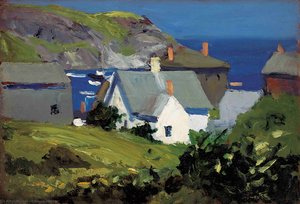
Aperçu en situation
 Partager
 Partager
 Détails
 Guide
Guide

 Télécharger
 Articles similaires
 Radiographie
 Voir le diaporama
 Statistiques
the el station


Edward Hopper’s evocative painting captures the stillness of an old train station, bathed in muted light—a hallmark of American Realism—revealing a poignant glimpse into urban solitude and prompting contemplation on connection amidst isolation.
 Afficher la suite
Explorez les peintures réalistes américaines emblématiques d'Edward Hopper (1882-1967). Connu pour ses scènes urbaines et rurales évocatrices, son utilisation magistrale de la lumière et ses thèmes de solitude et de vie moderne. Découvrez 'House by the Railroad' et bien plus encore chez TopImpressionists.
Giclées et impressions d'art
Impressions giclées ou sur toile de qualité musée, avec une production rapide et des finitions au choix. ( Acheter la peinture faite à la main Passer au format image numérique)




P118B $10

P118H $10

P118W $10

P438Z $10

P508JH $12

P508YH $12

P805H $10

P805Z $10

P919BZ $10

P919G $10

P919XJ $10

P959ZH $10

P968JZ $12

W106C $8

W218G $10

W218JH $8

W218Y $10

W307PJ $10

W316G $10

W316PJ $8

W316Y $10

W398PJ $8

W4111J $10

W500HY $15

W500JH $15

W692G $12

W849H $8

W940BG $15

W953PJ $8




Format standard
personnalisé
CM
INCH
Choisissez parmi nos formats prédéfinis qui respectent les proportions originales de l’œuvre.
Loading sizes...

largeur
hauteur
Vous pouvez saisir vos propres dimensions pour vous adapter à un cadre ou à un espace spécifique. Si la taille sélectionnée ne correspond pas aux proportions de l'image originale, nous recadrerons l'œuvre ou étendrons l'image avec une bordure en miroir ou une couleur unie. Une maquette numérique vous sera envoyée pour approbation avant le début de la production.
Veuillez noter que l'aperçu à l'écran ne reflète pas le recadrage ou l'extension réelle. Seule la maquette montrera avec précision la composition finale.
Bien que des tailles personnalisées soient disponibles, nous vous recommandons de choisir une dimension dans la liste prédéfinie afin de préserver les proportions originales.
Livraison dans le monde entier () en 2 semaines au lieu des 4/5 semaines habituelles. (25 septembre)

Livraison express gratuite dans le monde entier

Toile de lin de haute qualité

Assurance transport complète

Garantie de remboursement des droits de douane

Garantie de fidélité des couleurs

Garantie de retour de 100 jours (uniquement en cas de défaut)

Garantie de remboursement à 100%

Tarifs dégressifs sur quantité
 L'option verre n'est disponible que pour les dimensions inférieures à 110 cm.

the el station
Giclées et impressions d'art
Format de la reproduction
-


Prix total final
$ 69
A Study in Urban Solitude
In the quiet, heavy atmosphere of Edward Hopper’s “The El Station,” we are invited into a moment suspended in time, where the bustling energy of the American metropolis is distilled into a singular, poignant observation of stillness. The painting presents a quintessential urban landscape, capturing a train station platform bathed in the muted, melancholic glow of late afternoon light. At its heart, the work depicts a scene that feels both deeply familiar and hauntingly distant; several figures inhabit the space, yet they exist in separate worlds. There is no shared glance, no whispered conversation—only the quiet dignity of individuals absorbed in their own private rhythms. This tableau of modern life serves as a profound meditation on the nature of presence and absence within the crowded architecture of the city.
Hopper’s mastery lies in his ability to manipulate light to evoke what he termed “luminosity.” Eschewing the frantic, broken brushstrokes of the Impressionists, he employs a signature style of stark realism that prioritizes form and structural clarity. Through a deliberate use of shadow, he creates a sense of depth that is as much psychological as it is physical. The technique involves a meticulous layering of oil paints on canvas, building up tonal gradations that breathe life into the weathered red brick of the station’s façade and the diffused, amber light that spills across the platform. This precision allows the texture of the urban environment—the grit of the station, the weight of the architecture—to feel palpable, inviting the viewer to step into the scene and feel the cool, evening air.
The Echoes of a Changing Era
Painted in 1927, “The El Station” emerged during a period of seismic shifts in the American consciousness. As industrialization and rapid urbanization transformed the landscape, they simultaneously birthed a new kind of social anxiety: the fear of anonymity. The painting captures this tension perfectly, acting as a window into the Jazz Age’s more introspective side. While the era is often remembered for its frantic energy, Hopper focuses on the shadow cast by progress—the sense of being alone even when surrounded by others. The solitary figures on the platform become symbols of the modern condition, representing individuals adrift in the vastness of an expanding world, grappling with the unspoken emotions of a life lived in transit.
For the discerning collector or interior designer, this piece offers more than mere decoration; it provides a focal point of profound emotional resonance. The painting’s palette of muted earth tones and dramatic shadows makes it a versatile and sophisticated addition to any curated space, particularly those seeking to introduce a sense of contemplative calm or intellectual depth. Whether placed in a contemporary gallery setting or a classic study, “The El Station” commands attention through its quiet strength. It is an invitation to pause, to reflect, and to find beauty in the subtle, often overlooked nuances of the human experience.
Biographie de l'artiste
**jeunesse et influences**
Edward Hopper, peintre et graveur américain réaliste de premier plan, est né le 22 juillet 1882 à Upper Nyack, New York. Sa famille, d'ascendance principalement néerlandaise, lui a offert une éducation confortable qui lui a permis de poursuivre ses inclinations artistiques dès son plus jeune âge. - **inspirations :** L’œuvre de Hopper a été influencée par les écrits de Ralph Waldo Emerson et des maîtres impressionnistes français Édouard Manet et Edgar Degas. - **formation précoce :** Il a commencé à étudier l'art grâce à un cours par correspondance en 1899, puis est passé à l’École d'Art et de Conception de New York.**style artistique et thèmes**
Edward Hopper's rendus sobres et soigneusement calculés reflétaient sa vision personnelle de la vie américaine moderne. Son travail peut être caractérisé par : - **scènes urbaines et rurales :** Les deux ensembles étaient dépeints avec un mélange unique de réalisme et d’émotion profonde. - **lumière :** Maîtrise de la lumière, souvent utilisée pour évoquer des sentiments d'isolement ou de contemplation. - **figures :** Souvent sans visage ou en arrière-plan, mettant l'accent sur l'environnement plutôt que sur les figures.**œuvres notables et leur signification**
- House by the Railroad (Musée d'Art Moderne, New York, États-Unis), un exemple de la capacité de Hopper à évoquer un sentiment de mélancolie grâce à une composition simple mais puissante. - Reclining Nude (50 x 35 cm, Nouveau Réalisme, aquarelle), mettant en valeur sa versatilité pour capturer la forme humaine.**Héritage et influence**
- **Influence sur les artistes futurs :** Le style unique de Hopper a influencé de nombreux artistes, dont Pierre Sanford Ross, connu pour ses scènes urbaines et rurales. - **Popularité durable :** Ses œuvres continuent de captiver le public par leurs thèmes intemporels de solitude et de la condition humaine.**Explorez davantage sur TopImpressionists**
- [https://TopImpressionists.com/@/edward-hopper](Œuvres d'Edward Hopper) - /fr/art/show/art-8xyffg-fr/Achetez de l'art inspiré par les maîtres]- Plongez dans le monde de l'art grâce à la vaste collection de TopImpressionists.
- Découvrez comment l'héritage d' Edward Hopper continue d'inspirer les artistes et les amateurs d'art.
**Références**
- [https://TopImpressionists.com/@/edward-hopper](Wikipedia : Edward Hopper) - [https://en.wikipedia.org/wiki/edward_hopper](Biographie d'Edward Hopper sur Wikipédia)
Edward Hopper
1931 - 1967 , États-Unis d'Amérique
En bref
- Artistes Influents:
- Ralph Waldo Emerson
- Édouard Manet
- Edgar Degas
- Date De Décès: 1967
- Date De Naissance: 22 juillet 1882
- Influence Sur Les Artistes: ['Pierre Sanford Ross']
- Lieu De Naissance: Upper Nyack, États-Unis
- Nationalité: Américaine
- Nom Complet: Edward Hopper
- Oeuvres Notables:
- House by the Railroad
- Nighthawks
- Gas
- Chop Suey
- Summertime
- Style Artistique: Réalisme américain
Articles similaires
The Ashcan School: Capturing the Raw, Unfiltered Soul of Urban Life through American Realism
Discover the raw beauty of the Ashcan School. Explore how masters like Bellows and Henri captured the gritty, vibrant soul of early 20th-century New York through profound American Realism and evocative urban landscapes.

The Unvarnished Truth: A Cultural Journey Through the Soul of American Realism
Explore the profound beauty of American Realism. From the Ashcan School's urban grit to intimate portraits, discover how artists captured the authentic soul of a nation through unvarnished truth and masterful observation.
Explorez des œuvres d'art classées par thèmes, styles et caractéristiques.